

• Advertise
  • About us
  • Terms and Conditions
  • Contact us
Saturday, December 6, 2025
Australian Times News
  • News
    • Weather
    • Sport
    • Technology
    • Business & Finance
      • Currency Zone
    • Lotto Results
      • The Lott
  • Lifestyle
    • Entertainment
    • Horoscopes
    • Health & Wellness
    • Recipes
  • Travel
  • Expat Life
  • Move to Australia
No Result
View All Result
  • News
    • Weather
    • Sport
    • Technology
    • Business & Finance
      • Currency Zone
    • Lotto Results
      • The Lott
  • Lifestyle
    • Entertainment
    • Horoscopes
    • Health & Wellness
    • Recipes
  • Travel
  • Expat Life
  • Move to Australia
No Result
View All Result
Australian Times News
No Result
View All Result
Home News

There aren’t enough batteries to electrify all cars — focus on trucks and buses instead

Road transportation is a major consumer of fossil fuels, contributing 16 per cent of all human-caused greenhouse gas emissions, which warm up the Earth’s atmosphere and cause changes to the climate.

The Conversation by The Conversation
02-08-2020 06:11
in News
There aren’t enough batteries to electrify all cars

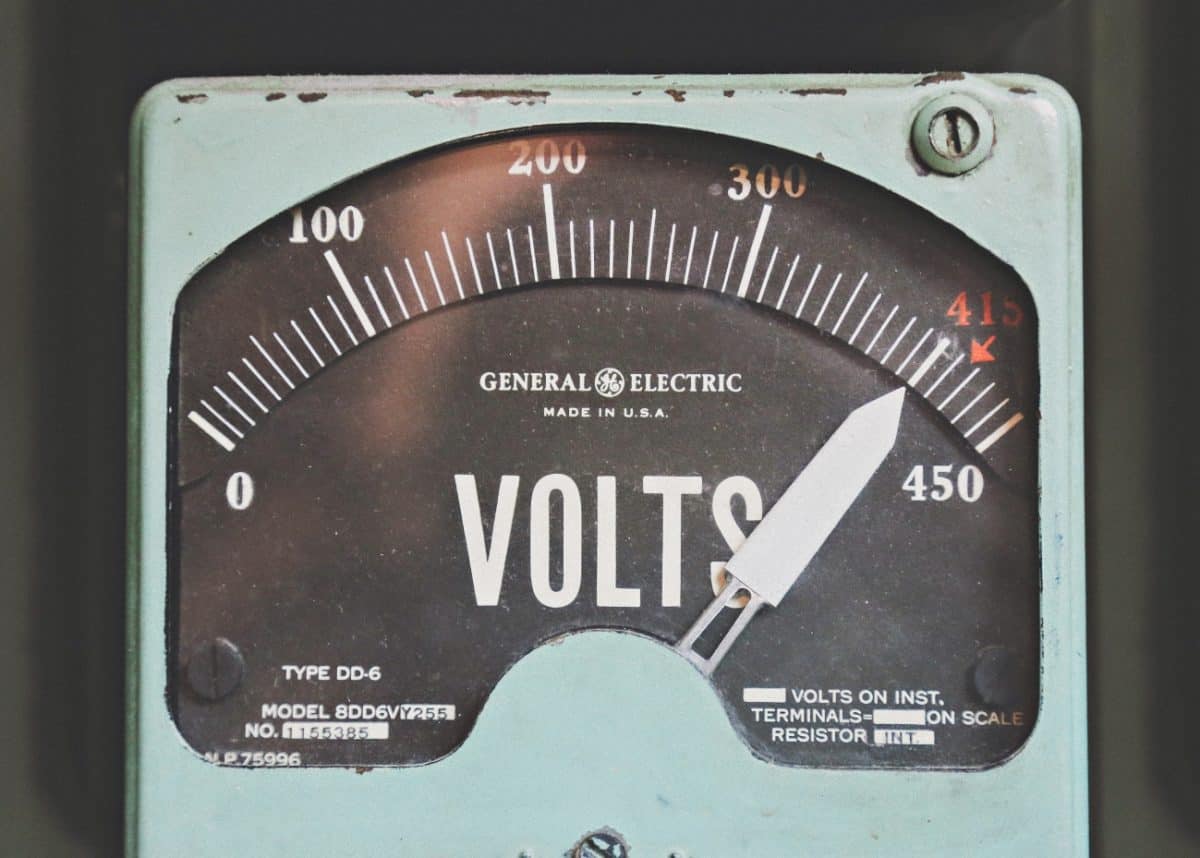
There aren’t enough batteries to electrify all cars Photo by Thomas Kelley on Unsplash

Cameron Roberts, Carleton University

We need to change our transportation system, and we need to do it quickly.
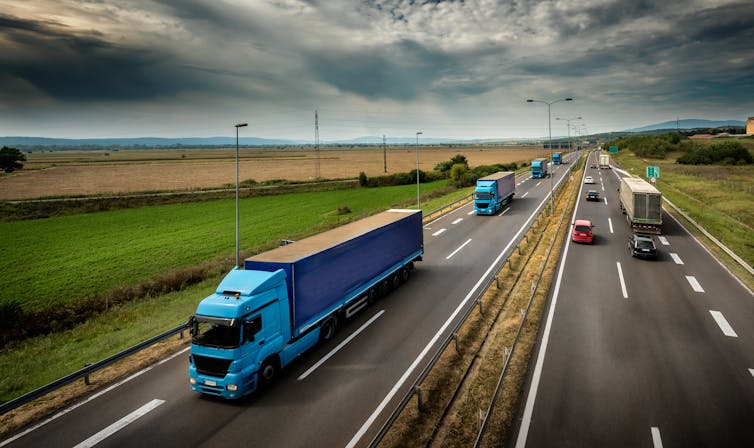
Garbage trucks, buses and the van that delivers your Amazon purchases are all prime candidates for electrification. (Shutterstock)

Road transportation is a major consumer of fossil fuels, contributing 16 per cent of all human-caused greenhouse gas emissions, which warm up the Earth’s atmosphere and cause changes to the climate. It also pollutes the air, threatening health and costing taxpayers billions of dollars annually.

At the same time, electric vehicles are getting cheaper, and vehicle range and the availability of charging stations are improving. This is exciting for many because it seems to suggest an easy and convenient answer to the problem of transportation emissions: if everyone swapped their fossil-fuelled vehicle for an electric equivalent, we could all keep driving, safe in the knowledge that we are no longer killing the planet by doing so — and all while enjoying a new car that is quiet, cheap to power and fun to drive.

Everybody wins, right? Unfortunately, it’s unlikely to be that simple.

The battery supply crunch

Electric vehicles still produce air pollution and greenhouse gases from their brakes, tires, the electricity that powers them and the factories that build them. Even if we can address (or ignore) these problems, there is a much larger stumbling block facing personal electric vehicles as a solution for climate change.

In 2019, the world produced about 160 gigawatt hours (GWh) of lithium-ion batteries. That’s enough for a little more than three million standard-range Tesla Model 3s — and only if we use those batteries for cars, and don’t build any smart-phones, laptops or grid storage facilities.


AlsoRead...

Ryan: Building real freedom through e-commerce

Ryan: Building real freedom through e-commerce

27 November 2025
Design Australia Group: Redefining Drafting as the engine of housing growth

Design Australia Group: Redefining Drafting as the engine of housing growth

26 November 2025

The battery production capacity currently under construction will allow the production of the equivalent of 40 million electric vehicles annually by 2028, according to one estimate.
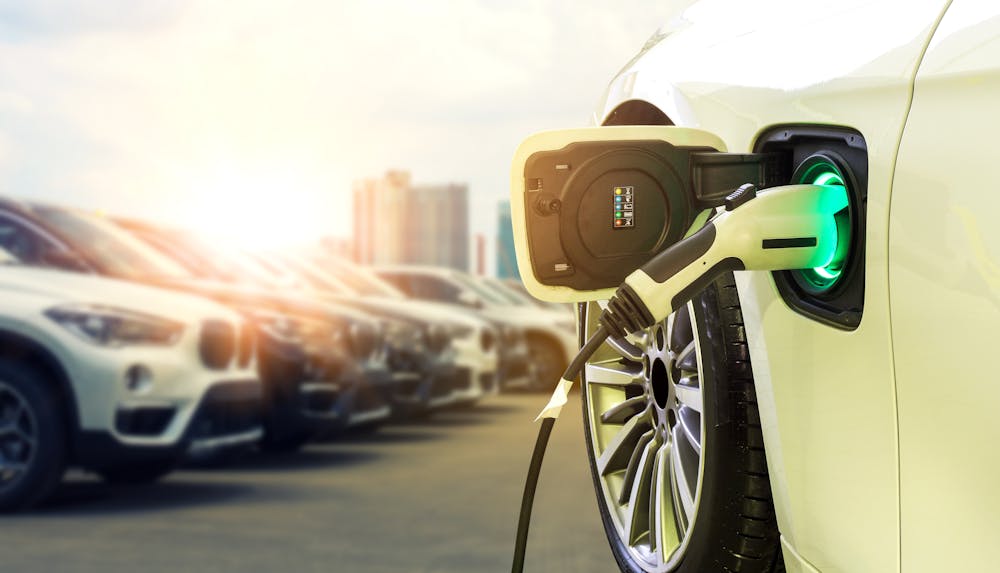
An electric car being charged in a parking lot.
Battery production could increase to cover 40 million electric vehicles annually by 2028, but there are over one billion vehicles on roads today. (Shutterstock)

That sounds like a lot until you see that the world produced nearly 100 million cars, vans, buses and trucks in 2019 alone. There are around 1.4 billion motor vehicles in the world today — a number that will almost certainly continue to increase if we don’t take major steps to shift transportation onto other modes.

Even at the projected 2028 level of battery production capacity, it would take us 35 years to replace this global vehicle fleet with electric models. That’s not nearly fast enough to avoid the worst consequences of climate change.

Maximizing climate impact

The unavoidable conclusion is that we will not be able to electrify all of our transportation in the timeframe necessary to deal with climate change. Some journeys will have to be decarbonized through other means, such as cycling, walking, public transit or telecommuting.

A bike and three electric scooters on the street
Electric scooters could help cities move towards zero-carbon mobility. (Shutterstock)

Lithium-ion batteries should therefore go primarily to vehicles intended for long distances or large cargo loads. Garbage trucks, buses, pickup trucks used by skilled tradespeople to get to job sites and the van that delivers your Amazon purchases are all prime candidates for electrification.

That Nissan Leaf you’ve been eyeing, unfortunately is not. You can probably travel on a bicycle or a city bus much more easily than a truckload of power tools, parcels or municipal waste can.

A win-win scenario

There are a lot of side benefits to focusing on commercial vehicles for electrification. Currently, these vehicles often burn diesel, which produces 100 times more particulate pollution than gasoline vehicles.

Diesel vehicles were responsible for approximately 83 per cent of all deaths due to air pollution from road vehicles in 2015, according to the World Health Organization. Diesel freight vehicles also tend to be noisy — a problem that is almost entirely eliminated by going electric.
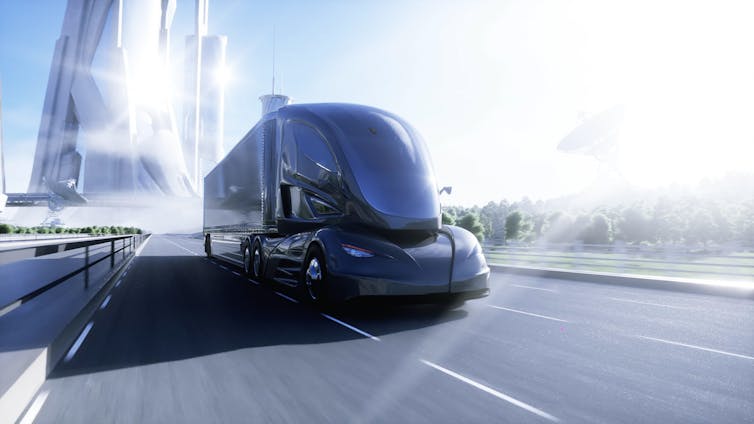
A futuristic electric truck on a highway near a city
Replacing diesel-powered transport trucks with electric ones could cut noise, air pollution and carbon emissions. (Shutterstock)

For us in Canada, perhaps the greatest benefit to a focus on electrifying the commercial vehicle fleet is that several companies here are already emerging as leaders in developing and building them. Lion Electric, in Saint-Jérôme, Que., makes electric buses, trucks and school buses. New Flyer, based in Winnipeg, has already sold electric transit buses to several major American cities.

And Green Jobs Oshawa has already developed a plan to convert the Oshawa General Motors facility to the produce electric vehicles for the Canadian public sector. Our car sector is struggling, but a focus on building commercial electric vehicles could bring jobs back to this area in a big way.

There’s no way around it: We need fewer cars

As for the rest of us, the solution to zero-carbon mobility looks much more like a bike, a bus seat, a home office, a mobility scooter or a well-worn pair of shoes than a shiny new Tesla.

Some of these solutions can still take advantage of electric mobility without straining the global battery budget. With just over five per cent of 2019’s lithium-ion battery production, for example, there would be enough batteries to provide an Urban Machina electric scooter to every Canadian.

There is already talk of a federal government bail-out of the Canadian car industry, with stakeholders suggesting that this could be an opportunity to encourage the development of electric vehicle production in Canada.

If the government wants to do this in a way that has the greatest impact on the climate, it should look beyond supporting fancy personal vehicles, and turn its attention instead to the unglamorous workhorses that make our society function.

Cameron Roberts, Researcher in Sustainable Transportation, Carleton University

This article is republished from The Conversation under a Creative Commons license. Read the original article.


Tags: SB001
DMCA.com Protection Status

SUBSCRIBE to our NEWSLETTER

[mc4wp_form id=”2384248″]

Don't Miss

The evolution of Aesthetic Surgery through the lens of Dr Kourosh Tavakoli

by Pauline Torongo
4 December 2025
The evolution of Aesthetic Surgery through the lens of Dr. Kourosh Tavakoli
Health & Wellness

As global interest in Australian cosmetic surgery continues to grow, the combination of regulation, research and emerging digital tools is...

Read moreDetails

Ryan: Building real freedom through e-commerce

by Pauline Torongo
27 November 2025
Ryan: Building real freedom through e-commerce
Business & Finance

Ryan’s greatest achievement isn’t any single business or revenue milestone — it’s the ecosystem he’s built through the Change community.

Read moreDetails

Design Australia Group: Redefining Drafting as the engine of housing growth

by Pauline Torongo
26 November 2025
Design Australia Group: Redefining Drafting as the engine of housing growth
Business & Finance

Australia is under pressure to build homes faster, but design bottlenecks slow progress. Design Australia Group is fixing this by...

Read moreDetails

Louis Guy Detata builds Global Trading Empires through autonomous systems and disciplined leadership

by Pauline Torongo
25 November 2025
Louis Guy Detata builds Global Trading Empires through autonomous systems and disciplined leadership
Business & Finance

The path from investment banking to leading a global trading platform has taught Louis Detata that sustainable success requires more...

Read moreDetails

Burning Eucalyptus Wood: Tips, Advantages, Disadvantages & Alternatives

by Fazila Olla-Logday
20 November 2025
Image Supplied
Enviroment

Learn about burning eucalyptus wood for stoves and fireplaces. Discover benefits, drawbacks, harvesting tips, and better alternative firewood options for...

Read moreDetails

Everything Parents Need to Know About Baby Soft Play and Why It’s a Game Changer

by Fazila Olla-Logday
11 November 2025
Everything Parents Need to Know About Baby Soft Play
Health & Wellness

Baby soft play is a fun, safe, and educational way for little ones to explore and grow. Discover the benefits...

Read moreDetails

WOMAD Sets Up a New Camp in Wiltshire – Australian festival fans take note!

by Kris Griffiths
11 November 2025
Kumbia Boruka brought their reggae and dancehall flavour to the Taste the World Stage at WOMAD 2024 - Credit - Mike Massaro
Entertainment

With its 2026 edition moving to Neston Park in England, WOMAD offers Aussie music lovers a chance to reconnect with global...

Read moreDetails
Load More

Copyright © Blue Sky Publications Ltd. All Rights Reserved.
australiantimes.co.uk is a division of Blue Sky Publications Ltd. Reproduction without permission prohibited. DMCA.com Protection Status

  • About us
  • Write for Us
  • Advertise
  • Contact us
  • T&Cs, Privacy and GDPR
No Result
View All Result
  • News
    • Weather
    • Sport
    • Technology
    • Business & Finance
      • Currency Zone
    • Lotto Results
      • The Lott
  • Lifestyle
    • Entertainment
    • Horoscopes
    • Health & Wellness
    • Recipes
  • Travel
  • Expat Life
  • Move to Australia

Copyright © Blue Sky Publications Ltd. All Rights Reserved.
australiantimes.co.uk is a division of Blue Sky Publications Ltd. Reproduction without permission prohibited. DMCA.com Protection Status

No Result
View All Result
  • News
    • Weather
    • Sport
    • Technology
    • Business & Finance
      • Currency Zone
    • Lotto Results
      • The Lott
  • Lifestyle
    • Entertainment
    • Horoscopes
    • Health & Wellness
    • Recipes
  • Travel
  • Expat Life
  • Move to Australia

Copyright © Blue Sky Publications Ltd. All Rights Reserved.
australiantimes.co.uk is a division of Blue Sky Publications Ltd. Reproduction without permission prohibited. DMCA.com Protection Status





