• Advertise
  • About us
  • Terms and Conditions
  • Contact us
Sunday, December 7, 2025
Australian Times News
  • News
    • Weather
    • Sport
    • Technology
    • Business & Finance
      • Currency Zone
    • Lotto Results
      • The Lott
  • Lifestyle
    • Entertainment
    • Horoscopes
    • Health & Wellness
    • Recipes
  • Travel
  • Expat Life
  • Move to Australia
No Result
View All Result
  • News
    • Weather
    • Sport
    • Technology
    • Business & Finance
      • Currency Zone
    • Lotto Results
      • The Lott
  • Lifestyle
    • Entertainment
    • Horoscopes
    • Health & Wellness
    • Recipes
  • Travel
  • Expat Life
  • Move to Australia
No Result
View All Result
Australian Times News
No Result
View All Result
Home News

The recent appearance of unexplained monoliths offers connections to the ancient past

In November, news outlets reported the puzzling appearance of several peculiar, highly polished metal monoliths in remote landscapes around the world.
The Conversation by The Conversation
05-01-2021 01:35
in News
The recent appearance of unexplained monoliths

The recent appearance of unexplained monoliths Photo by Hulki Okan Tabak on Unsplash

Andrew Roddick, McMaster University and Anna Guengerich, Eckerd College

In November, news outlets reported the puzzling appearance of several peculiar, highly polished metal monoliths in remote landscapes around the world.

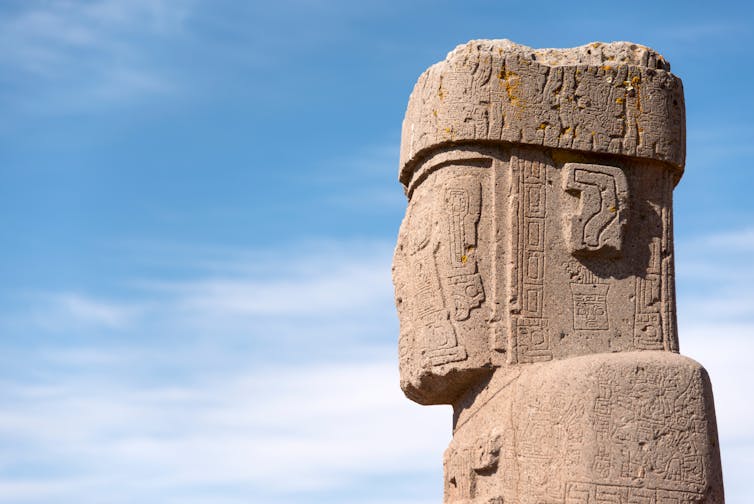
The head of a monumental stone statue from Tiwanaku, Bolivia. (Shutterstock)

Some, naturally, blamed aliens. Others saw similarities with Stanley Kubrick’s iconic metal monolith of 2001: A Space Odyssey. https://www.youtube.com/embed/8Dsw8XBBjSA?wmode=transparent&start=0 A Global News report on the appearance and disappearance of monoliths.

As archeologists, we watched these events with some amusement. Imposing, isolated standing stones have been important in many historical cultures of the world, from Mongolia to the British Isles.

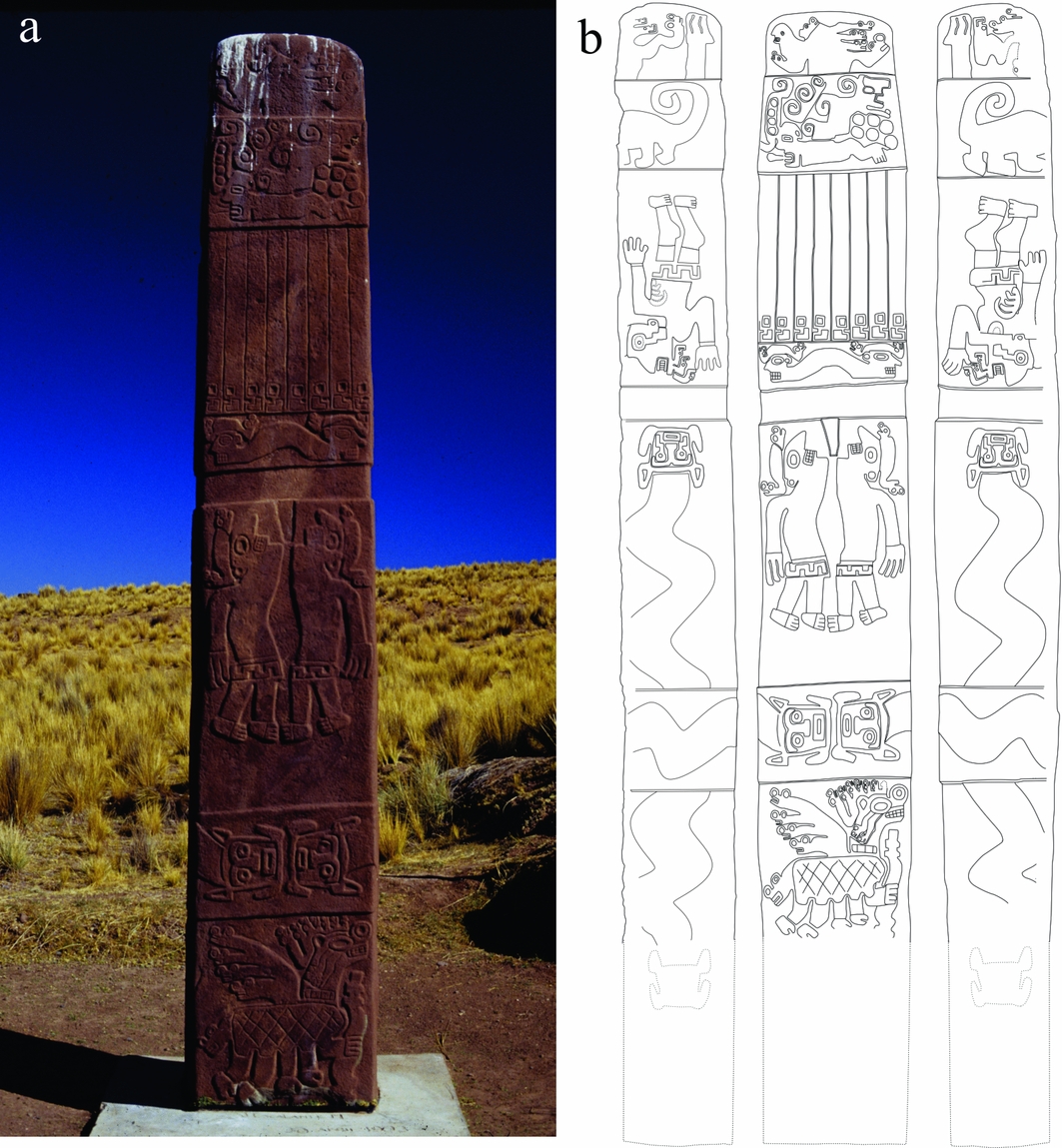
Our expertise lies in the monoliths of the South American Andes: monumental, human-like figures carved of single blocks of stone that are remarkable not only in their form and style, but also in the stories they tell.

The archeology of Bolivia’s monoliths

The monoliths of highland Bolivia served as the focal point of public religious rituals as far back as 800 BCE and have remained a source of fascination ever since. When Inca armies conquered this area in the 15th century, they saw them as leftovers from the world’s creation.

In the 16th century, the next set of invaders — Spanish conquistadors — were told that they were the work of giants. Over the next centuries, they were dynamited to build railroads, stolen by foreign collectors and even used as target practice by the Bolivian army.


AlsoRead...

Ryan: Building real freedom through e-commerce

Ryan: Building real freedom through e-commerce

27 November 2025
Design Australia Group: Redefining Drafting as the engine of housing growth

Design Australia Group: Redefining Drafting as the engine of housing growth

26 November 2025

Since the early 20th century, however, a number of new monoliths have come to light during excavations by Bolivian and foreign archeologists, and by local residents during the course of everyday activities such as farming fields and building houses. Many dating to over 2,000 years ago, some quite elaborately carved, have been found throughout the region.
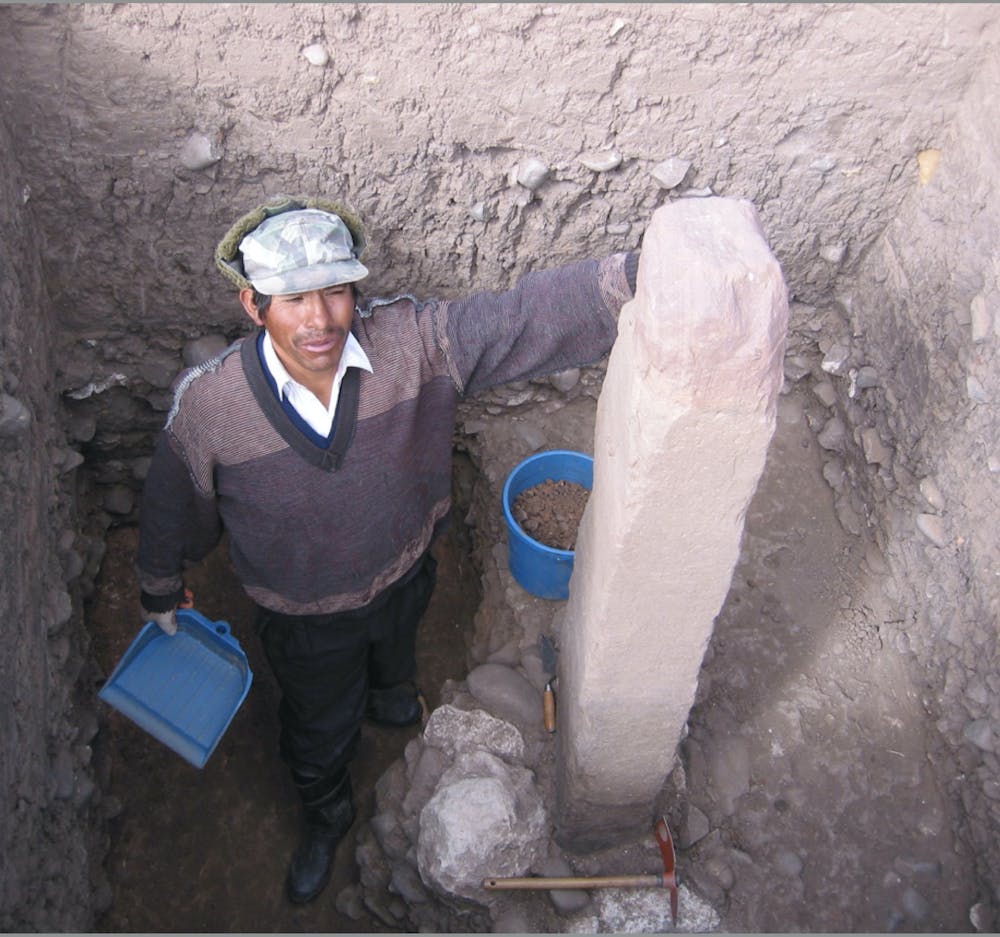
a man in a pit standing next to a monolith
This red sandstone monolith dates to the 7th century BCE, but was poking its head out of the soil before being excavated from a hilltop in 2003. (Taraco Archaeology Project), Author provided

The best known monoliths are those of the UNESCO site of Tiwanaku in Bolivia, a place that was famous in its heyday (400-1000) for attracting pilgrims from across the Andes despite its lung-crushing setting at 3,800 metres above sea level. Many of these volcanic stone monoliths are intricately carved. The largest of these, the Bennett Monolith — recently returned to its original site — stands a staggering seven metres high. Other smaller monoliths are found scattered around the site, but also in house patios in the modern town.

Animate stones

The opportunity to interact with monoliths may have been the main attraction of Tiwanaku for its religious devotees. For many Indigenous Peoples of the Andes, stones and mountains are understood as powerful beings that can intervene in human lives.

And like the mysterious metal monoliths, the importance of the monoliths is associated with their natural environments. Chemical analyses confirm that the stone for Tiwanaku monoliths comes from mountains that the Aymara people see as sacred, living beings with distinct personalities. In the past, devotees likely sought to interact with these beings in their form as monoliths under altered states of consciousness through drugs, alcohol or musically induced trance.

The principal monoliths of Tiwanaku hold in one hand a drinking vessel — similar to a modern pilsner glass — and in the other a flat tablet for inhaling hallucinogenic snuff. Archeologists have found both types of artifacts, and even psychotropic drugs, at Tiwanaku and other sites in Bolivia, Chile and Peru.
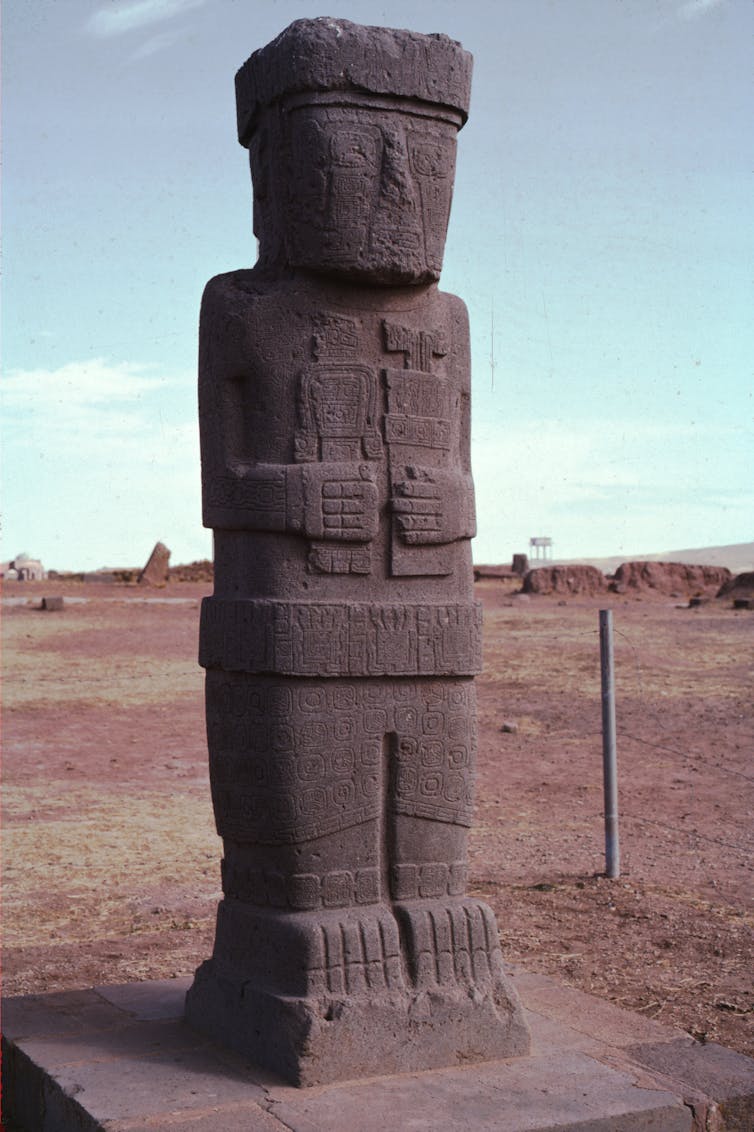
An intricately carved monolith of a person holding an item in each hand.
The Ponce monolith presenting a drinking vessel (right) and a snuff tablet (left). (John W. Janusek). Author provided.

When Tiwanaku’s government collapsed around 1000, monoliths appear to have borne the brunt of people’s anger. Many were decapitated, defaced or broken apart. One broken monolith was united in the late 1970s with its other half: the 998-kilogram upper portion was found 220 kilometres away, across Lake Titicaca, and identified via microscopic analysis. Other monoliths survived, only to suffer under later Spanish invaders, who pried off gold plating and, in some cases, inscribed them with crosses and dates, and ceremoniously buried them.

For many Bolivian Aymara, stone monoliths continue to live in the present. Current residents of the town near Tiwanaku have told our collaborators of monoliths coming to life at night, wandering the streets. In 2006, Evo Morales — Bolivia’s first Indigenous president — was sworn in at Tiwanaku under the watchful eye of the Ponce Monolith.

Monoliths for this century

Elsewhere, new monoliths are still being born.

In 2007, sculptor Ruben Herrera signed a contract with the municipality of Guaqui to chisel a replica of the Bennett Monolith. He extracted a 20-tonne rock from a nearby hill using traditional techniques. Despite working for 20 months, he was never paid. The monolith remains in its place of production, but is now incorporated into a property wall.

Villagers told the press that Herrera had a sickness caused by the stone entering his body, and he could only be healed by local shamans (or yatiris). Today, people place candles and flowers at the foot of the replica, and yatiris pour grain alcohol on his work.
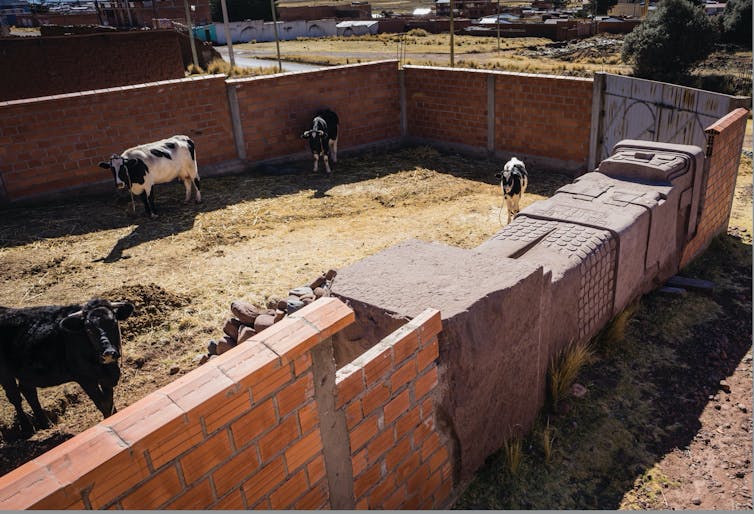
A carved monolith lies on its back and forms part of a wall.
A replica of the famous Bennett Monolith now sits in a house wall. (Andrew Roddick) Author provided.

In our current moment, we are becoming ever more reliant on new and remote technologies. It seems incredible that we still find ourselves entranced by monoliths of metal and stone and the qualities of objects that seem to emerge magically out of the earth.

As archeologists, however, we don’t find this mystifying at all. Artifacts and art like the animate Andean monoliths possess an extraordinary power to capture our attention even as civilizations rise and fall, and remind us of our connections to the places we inhabit.

Andrew Roddick, Associate Professor of Anthropology, McMaster University and Anna Guengerich, Assistant professor, Eckerd College

This article is republished from The Conversation under a Creative Commons license. Read the original article.


Tags: SB001
DMCA.com Protection Status

SUBSCRIBE to our NEWSLETTER

[mc4wp_form id=”2384248″]

Don't Miss

The evolution of Aesthetic Surgery through the lens of Dr Kourosh Tavakoli

by Pauline Torongo
4 December 2025
The evolution of Aesthetic Surgery through the lens of Dr. Kourosh Tavakoli
Health & Wellness

As global interest in Australian cosmetic surgery continues to grow, the combination of regulation, research and emerging digital tools is...

Read moreDetails

Ryan: Building real freedom through e-commerce

by Pauline Torongo
27 November 2025
Ryan: Building real freedom through e-commerce
Business & Finance

Ryan’s greatest achievement isn’t any single business or revenue milestone — it’s the ecosystem he’s built through the Change community.

Read moreDetails

Design Australia Group: Redefining Drafting as the engine of housing growth

by Pauline Torongo
26 November 2025
Design Australia Group: Redefining Drafting as the engine of housing growth
Business & Finance

Australia is under pressure to build homes faster, but design bottlenecks slow progress. Design Australia Group is fixing this by...

Read moreDetails

Louis Guy Detata builds Global Trading Empires through autonomous systems and disciplined leadership

by Pauline Torongo
25 November 2025
Louis Guy Detata builds Global Trading Empires through autonomous systems and disciplined leadership
Business & Finance

The path from investment banking to leading a global trading platform has taught Louis Detata that sustainable success requires more...

Read moreDetails

Burning Eucalyptus Wood: Tips, Advantages, Disadvantages & Alternatives

by Fazila Olla-Logday
20 November 2025
Image Supplied
Enviroment

Learn about burning eucalyptus wood for stoves and fireplaces. Discover benefits, drawbacks, harvesting tips, and better alternative firewood options for...

Read moreDetails

Everything Parents Need to Know About Baby Soft Play and Why It’s a Game Changer

by Fazila Olla-Logday
11 November 2025
Everything Parents Need to Know About Baby Soft Play
Health & Wellness

Baby soft play is a fun, safe, and educational way for little ones to explore and grow. Discover the benefits...

Read moreDetails

WOMAD Sets Up a New Camp in Wiltshire – Australian festival fans take note!

by Kris Griffiths
11 November 2025
Kumbia Boruka brought their reggae and dancehall flavour to the Taste the World Stage at WOMAD 2024 - Credit - Mike Massaro
Entertainment

With its 2026 edition moving to Neston Park in England, WOMAD offers Aussie music lovers a chance to reconnect with global...

Read moreDetails
Load More

Copyright © Blue Sky Publications Ltd. All Rights Reserved.
australiantimes.co.uk is a division of Blue Sky Publications Ltd. Reproduction without permission prohibited. DMCA.com Protection Status

  • About us
  • Write for Us
  • Advertise
  • Contact us
  • T&Cs, Privacy and GDPR
No Result
View All Result
  • News
    • Weather
    • Sport
    • Technology
    • Business & Finance
      • Currency Zone
    • Lotto Results
      • The Lott
  • Lifestyle
    • Entertainment
    • Horoscopes
    • Health & Wellness
    • Recipes
  • Travel
  • Expat Life
  • Move to Australia

Copyright © Blue Sky Publications Ltd. All Rights Reserved.
australiantimes.co.uk is a division of Blue Sky Publications Ltd. Reproduction without permission prohibited. DMCA.com Protection Status

No Result
View All Result
  • News
    • Weather
    • Sport
    • Technology
    • Business & Finance
      • Currency Zone
    • Lotto Results
      • The Lott
  • Lifestyle
    • Entertainment
    • Horoscopes
    • Health & Wellness
    • Recipes
  • Travel
  • Expat Life
  • Move to Australia

Copyright © Blue Sky Publications Ltd. All Rights Reserved.
australiantimes.co.uk is a division of Blue Sky Publications Ltd. Reproduction without permission prohibited. DMCA.com Protection Status