


Barbara Jacquelyn Sahakian, University of Cambridge; Christelle Langley, University of Cambridge, and Katrin Amunts, Forschungszentrum Jülich
While humans have walked on the Moon and sent probes all over the solar system, our understanding of our own brain is still severely lacking. We do not have complete knowledge of how brain structure, chemicals and connectivity interact to produce our thoughts and behaviours.
But this isn’t from an absence of ambition. It is nearly eight years since the start of the Human Brain Project (HBP) in Europe, which aims to unravel the brain’s mysteries. After a difficult start, the project has made substantial discoveries and innovation, relevant for tackling clinical disorders, as well as technological advances – and it has two more years to go.
It has also created EBRAINS, an open research infrastructure built on the scientific advances and tools developed by the project’s research teams, and making them available to the scientific community via a shared digital platform – a new achievement for collaborative research and instrumental in the achievements listed below.
1. Human brain atlas
The project has created a unique multilevel human brain atlas based on several aspects of brain organisation, including its structure on the smallest of scales, its function and connectivity. This atlas provides a large number of tools to visualise data and work with them.
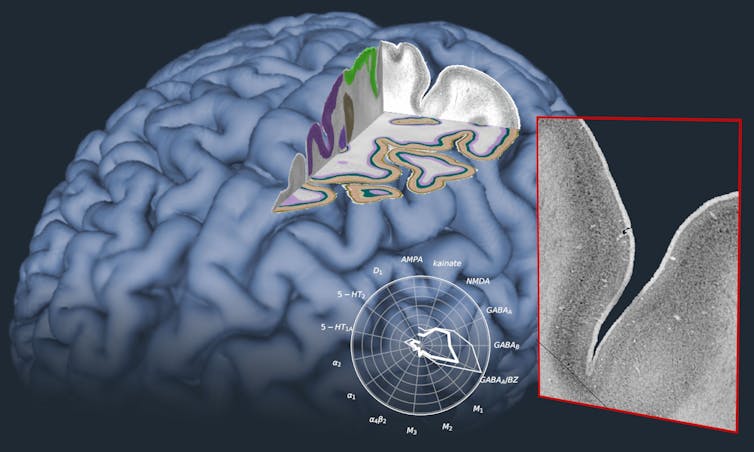
Researchers can automatically extract data from the atlas using a special tool to run a simulation for modelling the brains of specific patients. This can help to inform clinicians of the optimal treatment option.
2. Synapses in the hippocampus
Using electron microscopy, a technique to study brain tissue at ultrahigh resolution, researchers have published detailed 3D-maps of around 25,000 synapses – electrical and chemical signals between brain cells – in the human hippocampus. This region of the brain is involved in memory, learning and spatial navigation, and one of the first areas to be damaged early in Alzheimer’s disease.


The Human Brain Project is the first to provide a detailed picture of synaptic structure in this important area of the brain. This could allow for a better understanding of diseases such as dementia, as well as aid in the development of computational models of the brain.
3. Robotic hands
Due to its complexity, the human hand is one of the most difficult body parts to imitate. While even small children can pick up and manipulate items, such as a cup of water, this has been a very difficult problem for robot hands. The Shadow Robot Company, which participates in the Human Brain Project, designs and develops highly dexterous robotic hands to imitate the human hand as closely as possible.
One of the company’s recent inventions is the world’s first touch-based telerobot hand (see video above). The robotic hand has 129 sensors and 24 joints and has very similar movements to those of human hands. This allows for the ideal use of force and much finer manipulation of objects than that of previous robot hands.
This invention will be important in prosthetics, and also in industry including in manufacturing, space exploration, medicine and work in hazardous environments where you wouldn’t want to use your real hands – such as nuclear waste and with biologically dangerous substances.
4. A neuro-inspired computer
The human brain comprises nearly 100 billion interconnected brain cells, which is part of the reason it is so difficult to model and understand. Innovative computing has helped to further our understanding by simulating the exchange of signals between neurons, but even the best software run on the fastest supercomputers to date can only simulate 1% of the human brain.
The million-processor-core Spiking Neural Network Architecture or “SpiNNaker” machine boasts 100 million transistors on each of its 30,000 chips. One such chip can simulate 16,000 neurons and 8 million synapses in real time. This is comparable or even better than the best brain-simulation supercomputer software currently used for neural-signaling research so far. https://www.youtube.com/embed/EhPpxsK2Ia0?wmode=transparent&start=3
But this is only the beginning. The unique SpiNNaker doesn’t communicate by sending large amounts of information from point A to B via a standard network. Instead it works more like the human brain and sends billions of small amounts of information simultaneously to thousands of different destinations, completely rethinking the way traditional computers work.
The SpiNNakker has the potential to overcome speed and power consumption problems of conventional supercomputers – something that is much needed if we are to crack the enigma of the human brain. Ultimately, it could advance our understanding of neural processing in the brain, including in learning and neurological diseases such as Alzheimer’s.
5. Virtual epileptic patient
Another important EBRAINS application was the development of a Virtual Epileptic Patient (VEP). This is a computer program based on personalised brain network models from individual patients. This is achieved by integrating brain connectivity areas responsible for seizures and lesions for individual patients, detected by MRI.
Currently, clinicians use electroencephalogram (EEG), which provides a recording of brain activity, and helps to identify when and where a seizure begins. However, this information alone does not tell the clinician all that they need for determining the type of seizure and making the best decisions in regard to treatment.
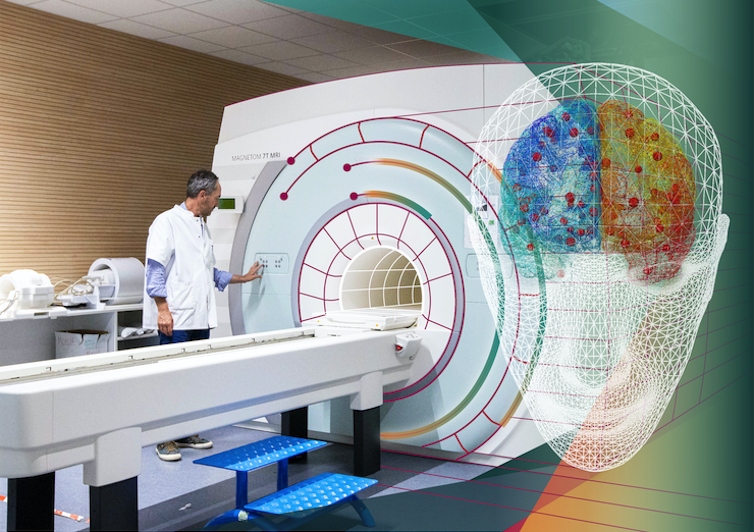
The model provides a personalised prediction of the impact of a surgical treatment for a certain patient. The surgeon is then able to evaluate the impact of multiple different therapeutic strategies and determine the best treatment option, with the most successful outcome. The program is close to commercial release.
6. Scientific output
As of September 2021, 1,497 peer-reviewed journal articles, many in high-impact journals, cite the Human Brain Project. For example, in 2018 researchers published impressive work on neurotechnology restoring walking in patients with spinal cord injury in Nature. In 2020, a team published in Science the most comprehensive atlas on the cellular architecture of the brain. In the same year, researchers also discovered a specific type of action potentials in brain cells known as pyramidal cells and disclosed an important memory mechanism in the hippocampus.
A key objective going forward is to develop “foresight”, which is the practice of looking ahead to envision potential future developments and change. Hopefully, we will one day crack the monumental challenge of understanding the human brain and discovering novel treatments for neurological diseases and psychiatric disorders. But it won’t be easy – it is, after all, harder than rocket science.
We would like to thank the Director General of the Human Brain Project and the CEO of EBRAINS, Pawel Swieboda, for contributing to the information on EBRAINS.
Barbara Jacquelyn Sahakian, Professor of Clinical Neuropsychology, University of Cambridge; Christelle Langley, Postdoctoral Research Associate, Cognitive Neuroscience, University of Cambridge, and Katrin Amunts, Professor of Neuroscience, Forschungszentrum Jülich
This article is republished from The Conversation under a Creative Commons license. Read the original article.







