• Advertise
  • About us
  • Terms and Conditions
  • Contact us
Tuesday, March 24, 2026
Australian Times News
  • News
    • Weather
    • Sport
    • Technology
    • Business & Finance
      • Currency Zone
    • Lotto Results
      • The Lott
  • Lifestyle
    • Entertainment
    • Horoscopes
    • Health & Wellness
    • Recipes
  • Travel
  • Expat Life
  • Move to Australia
No Result
View All Result
  • News
    • Weather
    • Sport
    • Technology
    • Business & Finance
      • Currency Zone
    • Lotto Results
      • The Lott
  • Lifestyle
    • Entertainment
    • Horoscopes
    • Health & Wellness
    • Recipes
  • Travel
  • Expat Life
  • Move to Australia
No Result
View All Result
Australian Times News
No Result
View All Result
Home News

The Hayabusa2 spacecraft is about to drop a chunk of asteroid in the Australian outback

Before most people wake up this Sunday morning, a small space capsule will be dropped off to Earth, landing in Woomera, South Australia. The capsule contains fragments of the surface of a near-Earth-orbit asteroid, Ryugu, collected by the Japanese Aerospace Exploration Agency (JAXA) with the Hayabusa2 spacecraft last year.
The Conversation by The Conversation
04-12-2020 09:17
in News
Asteroid in the Australian outback

Asteroid in the Australian outback Photo by Guillermo Ferla on Unsplash

Trevor Ireland, Australian National University

Before most people wake up this Sunday morning, a small space capsule will be dropped off to Earth, landing in Woomera, South Australia. The capsule contains fragments of the surface of a near-Earth-orbit asteroid, Ryugu, collected by the Japanese Aerospace Exploration Agency (JAXA) with the Hayabusa2 spacecraft last year.

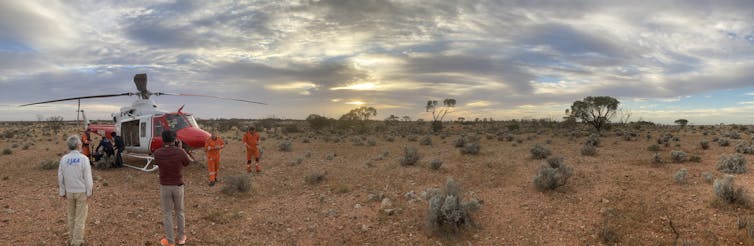
Trevor Ireland, Author provided

The fragments of rock and dust will tell us a lot about how asteroids form, where they have been, what they are made of, and how long Ryugu has been orbiting in close proximity to Earth.
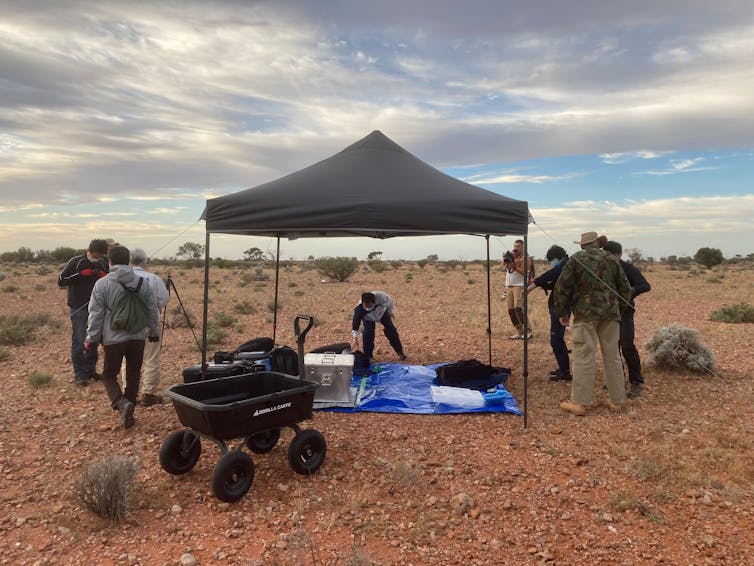
Scientists at Woomera conduct a ‘dress rehearsal’ for finding and collecting the Hayabusa2 sample capsule when it lands. Trevor Ireland, Author provided

Where asteroids come from

Asteroids are rocky bodies that mainly occur in the “asteroid belt” between the orbits of Mars and Jupiter.

Jupiter is the largest planet in our Solar system, and in some ways the bully of our planetary family. The powerful attraction of the gas giant’s gravity stopped a lot of material falling closer to the Sun to build up Mars, and may also have prevented the many rocks of the asteroid belt clumping together to form another planet.

But Jupiter may also have been responsible for redirecting Ryugu, or at least the rocks that formed it, towards Earth. Ryugu appears to be a “rubble pile” asteroid, assembled from the detritus of a planetary collision, that now looks something like a spinning top.

Ryugu may once have inhabited the asteroid belt, but is now a near-Earth asteroid, travelling around the Sun between the orbits of Earth and Mars.


AlsoRead...

Design Without Compromise: Where Gutter Protection Meets Modern Architecture

Design Without Compromise: Where Gutter Protection Meets Modern Architecture

20 March 2026
The Rise of This Lead Generation Workshop Across Australia

The Rise of This Lead Generation Workshop Across Australia

13 February 2026

The two kinds of asteroid

Asteroids come in two main flavours. S-type (for “stony”) asteroids are made of ferromagnesian minerals, rich in iron and magnesium, such as olivine and pyroxene. They can be identified by their bright spectrum of reflected infrared light.

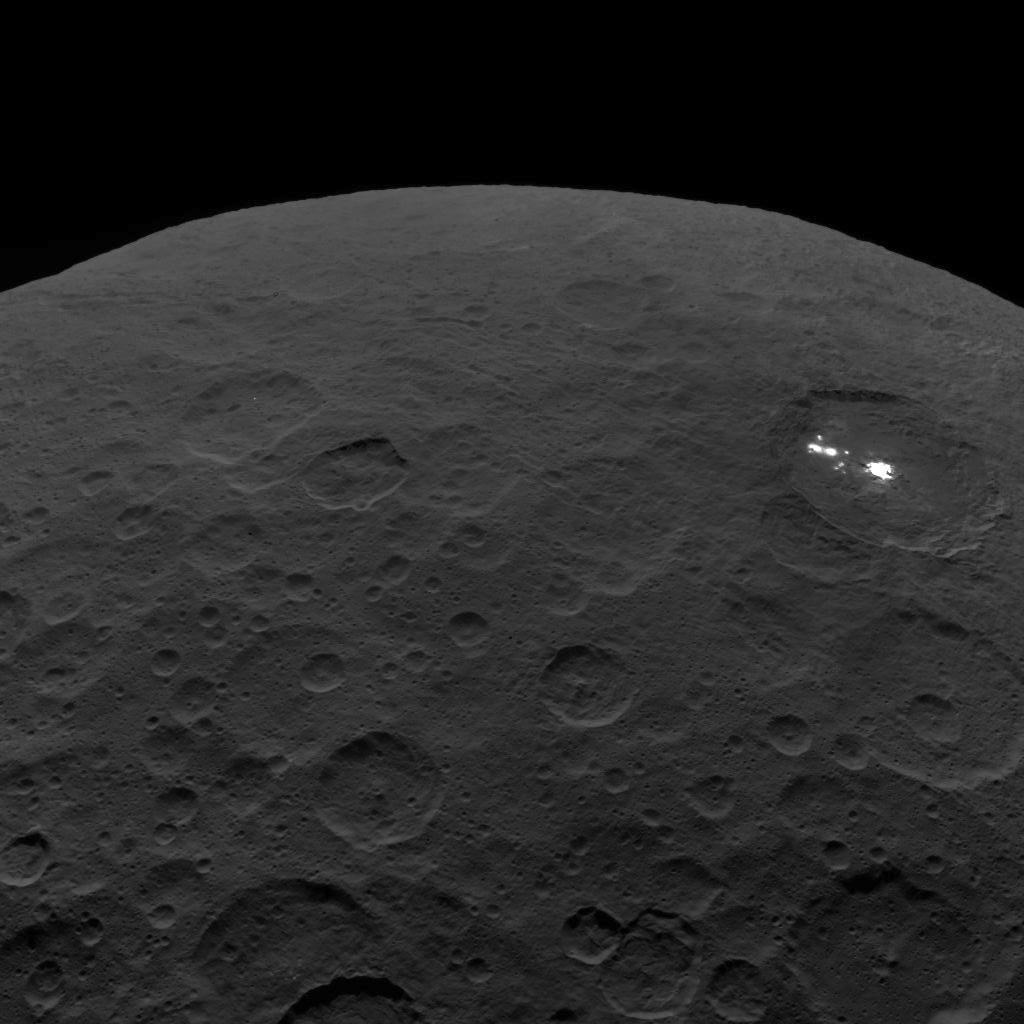
The second kind, C-type (for “carbonaceous”) asteroids, are dark objects that reflect little light with no mineral features. This is shown clearly by the twin “headlights” of the Occator crater on Ceres: the spots, likely made by an upwelling of brine, look so bright because Ceres is one of these extremely dark C-type asteroids.
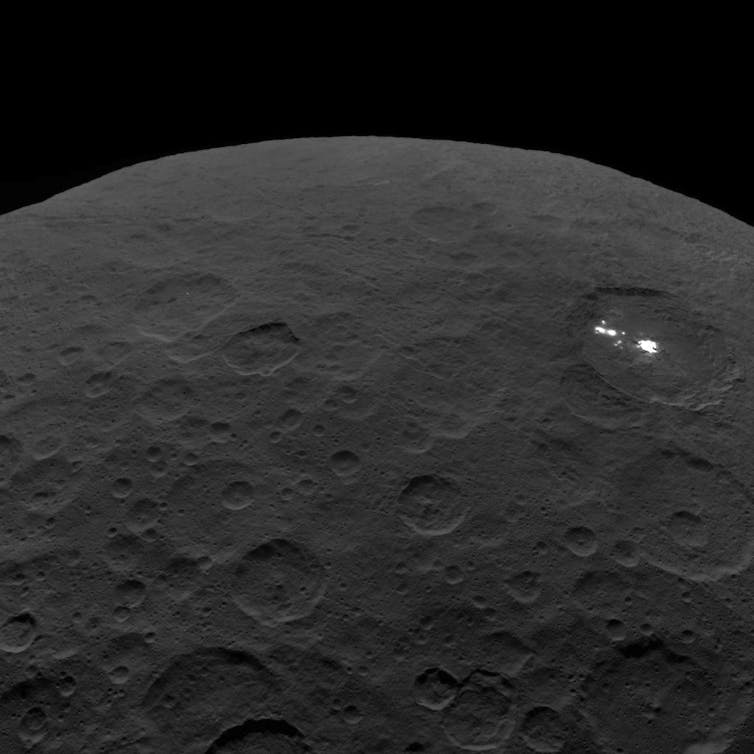
View of a dark asteroid in space showing two small bright spots.
Two bright spots in Occator crater on Ceres, the largest object in the asteroid belt. NASA / JPL-Caltech / UCLA / MPS / DLR / IDA

The first Hayabusa mission

The first Hayabusa mission collected tiny pieces of an S-type asteroid named Itokawa and returned to Woomera in 2010. It was only the fifth ever successful effort to return samples from objects beyond Earth.

That mission collected 1,000 or so particles, which we explored in exquisite detail in our laboratories. They showed Itokawa is related to a specific class of meteorite (a piece of rock that falls to Earth from space) called the LL chondrites.

These meteorites are indeed rich in ferromagnesian minerals, and many other characteristics of their chemistry closely matched the particles brought back by Hayabusa from Itokawa.

The ingredients of life?

So what exactly will Ryugu turn out to be? Based on its spectrum of reflected light, Ryugu is a C-type asteroid. The closest match we have from our meteorite collections is a relatively rare group of meteorites called carbonaceous chondrites.
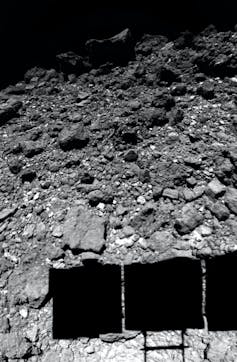
The surface of asteroid Ryugu, as observed by the Hayabusa2 spacecraft just before  landing. The spacecraft’s solar panels cast a shadow on the surface.
The surface of asteroid Ryugu, as observed by the Hayabusa2 spacecraft just before landing. The spacecraft’s solar panels cast a shadow on the surface. JAXA/U. Tokyo/Kochi U./Rikkyo U./Nagoya U./Chiba Inst. Tech./Meiji U./U. Aizu/AIST, CC BY

These meteorites are uncommon, but they are perhaps the most intriguing of all. They contain organic molecules and large amounts of water. They are potentially the carriers of the ingredients of life on Earth.

Soon after the Hayabusa2 capsule gets back, it will be returned to Tokyo and carefully opened. The images taken when the spacecraft touched down on Ryugu showed a great burst of material from the surface, so we expect a good sample.

This sample may reveal connections between the origin of life and rocky bodies such as Ryugu. The asteroid may have only formed quite recently, in terms of the 4.5 billion-year history of the Solar system, but it may hold an ingredient in the mix that came to be our habitable Earth.

Across the Solar system

Some time on Sunday, you are likely to see video of a fireball that is the tiny space capsule returning to Earth after six years orbiting the Sun. Hayabusa2 left Earth to travel around the Solar system to land on a rocky body less than a kilometre across.

Having kissed the asteroid, it has returned, targeting our backyard in Woomera. Yes, it is rocket science.

The precision and accuracy required is a testament to JAXA and the project team members. The spacecraft was on the other side of the Solar system during sampling, which meant signals to and from mission control on Earth took 17 minutes to travel each way. https://www.youtube.com/embed/_vX6SpYhXqk?wmode=transparent&start=0 The view from Hayabusa2 as it approached asteroid Ryugu, collected a sample, and departed.

What’s next?

Once we have the capsule, the sample science mission can begin. A full retinue of the best analytical techniques available in the world, including our own cosmo-chemical laboratories in Australia, will be brought to bear on the samples.

But that’s not the end of the Hayabusa2 spacecraft. The original Hayabusa had a spectacular arrival (and demise) at Woomera in 2010, because the released space capsule was accompanied by the re-entry of the mothership.
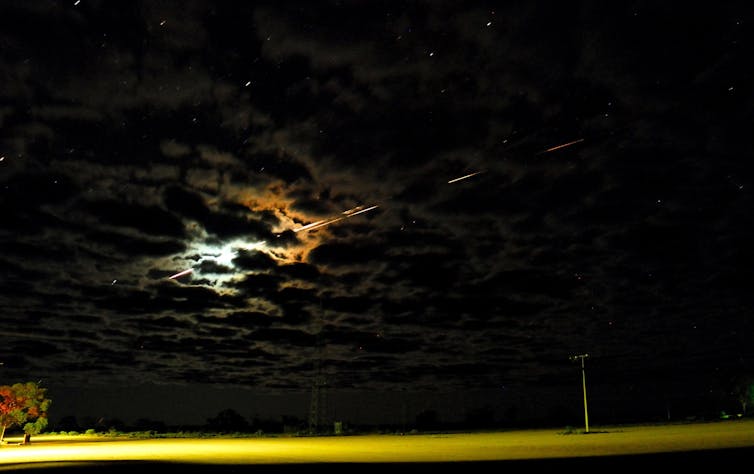
The spectacular re-entry of the first Hayabusa spacecraft in 2010. NASA / Ed Schilling

This time the plan is for Hayabusa2 to drop its sample capsule and then deflect away from Earth to carry on its mission, visiting maybe two more asteroids in its ongoing journey through space. Unfortunately, it isn’t equipped to collect any more samples, but it will give us more family photos of the small rocky bodies lurking close to Earth, shedding material we see as meteorites.

Trevor Ireland, Professor of Geochemistry and Cosmochemistry, Australian National University

This article is republished from The Conversation under a Creative Commons license. Read the original article.


Tags: SB001
DMCA.com Protection Status

SUBSCRIBE to our NEWSLETTER

[mc4wp_form id=”2384248″]

Don't Miss

Design Without Compromise: Where Gutter Protection Meets Modern Architecture

by Fazila Olla-Logday
20 March 2026
Design Without Compromise: Where Gutter Protection Meets Modern Architecture
Business & Finance

Design without compromise by integrating gutter protection seamlessly into modern architecture. Discover how innovative gutter systems enhance your home’s aesthetics...

Read moreDetails

How WageSafe Secured Australia’s Most Reputable Retail Business Among Its Premium Clients

by Fazila Olla-Logday
12 March 2026
How WageSafe Secured Australia’s Most Reputable Retail Business Among Its Premium Clients
at

Learn how WageSafe helps businesses stay compliant with payroll and wage regulations through reliable monitoring, risk management, and expert support—protecting...

Read moreDetails

Zakeke AI Agent Studio Removes the E-Commerce Content Bottleneck With Outputs in Seconds

by Fazila Olla-Logday
3 March 2026
Zakeke AI Agent Studio Removes the E-Commerce Content Bottleneck With Outputs in Seconds
at

Zakeke AI Agent Studio removes the e-commerce content bottleneck by generating product content and visuals in seconds, enabling brands to...

Read moreDetails

Empire Traveller launches to give Small and Medium Businesses Enterprise-Level Travel rates

by Pauline Torongo
20 February 2026
Empire Traveller launches to give Small and Medium Businesses Enterprise-Level Travel rates
Travel

Empire Traveller suggests the travel sector may be entering a more inclusive phase — one where advantage is shaped less...

Read moreDetails

Is Feng Shui Master Xu Really A Modern Genius?

by Fazila Olla-Logday
19 February 2026
Is Feng Shui Master Xu Really A Modern Genius?
at

Is Feng Shui Master Xu truly a modern genius, or simply a master of timeless wisdom? Blending ancient Feng Shui...

Read moreDetails

The Rise of This Lead Generation Workshop Across Australia

by Pauline Torongo
13 February 2026
The Rise of This Lead Generation Workshop Across Australia
Business & Finance

“Where U?”, is a two-day in-person lead generation workshop that teaches Australian business owners how to build their own acquisition...

Read moreDetails

Lyca Mobile Australia’s Customer-First Overhaul Pays Off with Finder Award Win

by Fazila Olla-Logday
2 February 2026
Lyca Mobile Australia's Customer-First Overhaul Pays Off with Finder Award Win
Technology

Lyca Mobile Australia’s customer-first overhaul has earned a Finder Award, recognising its improved value, service, and stronger focus on Australian...

Read moreDetails
Load More

Copyright © Blue Sky Publications Ltd. All Rights Reserved.
australiantimes.co.uk is a division of Blue Sky Publications Ltd. Reproduction without permission prohibited. DMCA.com Protection Status

  • About us
  • Write for Us
  • Advertise
  • Contact us
  • T&Cs, Privacy and GDPR
No Result
View All Result
  • News
    • Weather
    • Sport
    • Technology
    • Business & Finance
      • Currency Zone
    • Lotto Results
      • The Lott
  • Lifestyle
    • Entertainment
    • Horoscopes
    • Health & Wellness
    • Recipes
  • Travel
  • Expat Life
  • Move to Australia

Copyright © Blue Sky Publications Ltd. All Rights Reserved.
australiantimes.co.uk is a division of Blue Sky Publications Ltd. Reproduction without permission prohibited. DMCA.com Protection Status

No Result
View All Result
  • News
    • Weather
    • Sport
    • Technology
    • Business & Finance
      • Currency Zone
    • Lotto Results
      • The Lott
  • Lifestyle
    • Entertainment
    • Horoscopes
    • Health & Wellness
    • Recipes
  • Travel
  • Expat Life
  • Move to Australia

Copyright © Blue Sky Publications Ltd. All Rights Reserved.
australiantimes.co.uk is a division of Blue Sky Publications Ltd. Reproduction without permission prohibited. DMCA.com Protection Status