

• Advertise
  • About us
  • Terms and Conditions
  • Contact us
Sunday, December 7, 2025
Australian Times News
  • News
    • Weather
    • Sport
    • Technology
    • Business & Finance
      • Currency Zone
    • Lotto Results
      • The Lott
  • Lifestyle
    • Entertainment
    • Horoscopes
    • Health & Wellness
    • Recipes
  • Travel
  • Expat Life
  • Move to Australia
No Result
View All Result
  • News
    • Weather
    • Sport
    • Technology
    • Business & Finance
      • Currency Zone
    • Lotto Results
      • The Lott
  • Lifestyle
    • Entertainment
    • Horoscopes
    • Health & Wellness
    • Recipes
  • Travel
  • Expat Life
  • Move to Australia
No Result
View All Result
Australian Times News
No Result
View All Result
Home News

The Fukushima quake may be an echo of the 2011 disaster — and a warning for the future

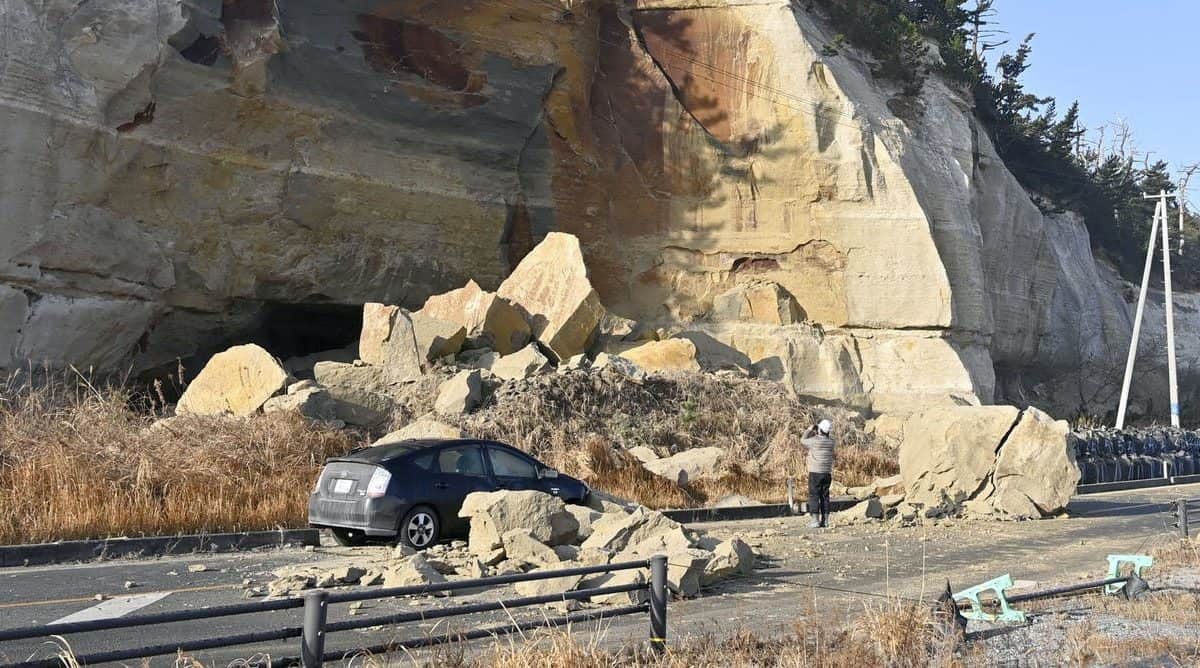
A 7.1 magnitude earthquake was recorded off the coast of Fukushima Prefecture in northeastern Japan on Saturday night, injuring around 100 people, closing roads and trains, and leaving almost a million people without electricity overnight.

The Conversation by The Conversation
15-02-2021 09:17
in News
Yohei Nishimura / AP

Yohei Nishimura / AP

Mark Quigley, University of Melbourne

A 7.1 magnitude earthquake was recorded off the coast of Fukushima Prefecture in northeastern Japan on Saturday night, injuring around 100 people, closing roads and trains, and leaving almost a million people without electricity overnight.

It came almost 10 years after the nearby Tohoku quake of March 2011, a magnitude 9.0 earthquake that caused a catastrophic tsunami and resulted in thousands of deaths and a nuclear reactor meltdown.

In the hours after Saturday’s quake, there were several aftershocks up to magnitude 5, and officials warned there could be more to come.

The Japan Meteorological Agency said the quake itself was an aftershock of the 2011 event. That might seem odd, but aftershocks of a major earthquake can persist for years and even decades.

How do you know if it’s an aftershock?

The earthquake occurred in what’s a called a “subduction zone”, where the Pacific tectonic plate slides under the plate on which northern Japan sits at a rate of 7 to 10 cm per year. It’s an area where there are a lot of earthquakes. It was a structurally simple earthquake: what’s called a “thrust” or “reverse slip” quake, in which rock above the fault moves up and over the rock below the fault.

In areas with low seismic activity, we can recognise aftershock patterns for years and decades after a major quake. The Christchurch earthquake of 2016, for example, was an aftershock of the 2010 quake. Some scientists think aftershock sequences in regions like the eastern USA and Australia may persist for centuries.


AlsoRead...

Ryan: Building real freedom through e-commerce

Ryan: Building real freedom through e-commerce

27 November 2025
Design Australia Group: Redefining Drafting as the engine of housing growth

Design Australia Group: Redefining Drafting as the engine of housing growth

26 November 2025

In these seismically quiet places, it’s relatively easier to spot aftershocks. The main hallmark is that the rate of quakes in an area is higher after a major quake than it was before. When the rate of quakes has dropped back to what it was originally, we say the aftershocks have stopped.

However, in places like Japan with high seismic activity, it can be hard to say whether one earthquake is an aftershock of another.

On one hand, the rates of aftershocks reduced to pre-2011 rates within about 3 years of the Tohoku earthquake and thus the sequence may have concluded.

On the other hand, rates of seismic activity were continuing to decrease in a fashion consistent with an ongoing aftershock sequence. And Saturday’s earthquake appears to have occurred in an area that generated fewer immediate aftershocks following the 2011 event, suggesting this earthquake could have occurred as rupture of a remaining “sticky part” of the 2011 fault that generated the Tohoku earthquake.


So was this an aftershock?

It’s certainly plausible that Saturday’s quake was an aftershock.

The 2011 quake was enormous — the largest ever recorded in Japan, and the fourth-largest worldwide since modern record-keeping began around 1900. It released around 1,000 times as much energy as Saturday’s earthquake, and created a rupture more than 500 km long with 10s of meters of slip. But the slip on the fault was not uniform and seismic activity continued in some areas that did not fail entirely in that earthquake.

Given all this, it’s almost certain there will be some relationship between the two quakes.

What’s more, there have been relatively few aftershocks of the 2011 quake close to where this one happened. This suggests it might have been a “balancing out” of stresses.

On the other hand, there have been several magnitude 7 quakes over the past century within 100 kilometres or so of this one, so it’s hardly out of the ordinary.

A definite answer on whether this was an aftershock or not will require detailed analysis of the quake and others in the region.

What we can learn from this

A quake like this one can be a valuable reminder of how important it is to learn the lessons of a disaster.

The earthquake generated very strong shaking in areas of Japan that were severely affected by the 2011 earthquake shaking and tsunami. Effects such as liquefaction are likely to have occurred again.

People sometimes think a big quake relieves stress built up in Earth’s crust and you can relax afterwards. In reality, it’s the opposite. When you have a big quake, there’s a higher probability you’ll have more to come. Subsequent earthquakes, whether they adhere to statistical definitions of aftershocks or not, can induce recurrent hazards that cause more damage to buildings and infrastructure and present risks to human life.

After a disaster, it is critical to act to reduce future exposure and vulnerability to future disasters through actions such as more considered land-use planning informed in part by better maps of seismic hazards, enhancing coastal protection through engineering of sea-walls and breakwaters and using vegetation, and making sure that warning and evacuation protocols are efficient and effective.

Japan is a world leader in many of these aspects, and the lessons learned from Tohoku are likely to have generated outcomes that minimised some of the loss and damage that could have otherwise occurred from Saturday’s earthquake.


Mark Quigley, Associate Professor of Earthquake Science, University of Melbourne

This article is republished from The Conversation under a Creative Commons license. Read the original article.


Tags: SB001
DMCA.com Protection Status

SUBSCRIBE to our NEWSLETTER

[mc4wp_form id=”2384248″]

Don't Miss

The evolution of Aesthetic Surgery through the lens of Dr Kourosh Tavakoli

by Pauline Torongo
4 December 2025
The evolution of Aesthetic Surgery through the lens of Dr. Kourosh Tavakoli
Health & Wellness

As global interest in Australian cosmetic surgery continues to grow, the combination of regulation, research and emerging digital tools is...

Read moreDetails

Ryan: Building real freedom through e-commerce

by Pauline Torongo
27 November 2025
Ryan: Building real freedom through e-commerce
Business & Finance

Ryan’s greatest achievement isn’t any single business or revenue milestone — it’s the ecosystem he’s built through the Change community.

Read moreDetails

Design Australia Group: Redefining Drafting as the engine of housing growth

by Pauline Torongo
26 November 2025
Design Australia Group: Redefining Drafting as the engine of housing growth
Business & Finance

Australia is under pressure to build homes faster, but design bottlenecks slow progress. Design Australia Group is fixing this by...

Read moreDetails

Louis Guy Detata builds Global Trading Empires through autonomous systems and disciplined leadership

by Pauline Torongo
25 November 2025
Louis Guy Detata builds Global Trading Empires through autonomous systems and disciplined leadership
Business & Finance

The path from investment banking to leading a global trading platform has taught Louis Detata that sustainable success requires more...

Read moreDetails

Burning Eucalyptus Wood: Tips, Advantages, Disadvantages & Alternatives

by Fazila Olla-Logday
20 November 2025
Image Supplied
Enviroment

Learn about burning eucalyptus wood for stoves and fireplaces. Discover benefits, drawbacks, harvesting tips, and better alternative firewood options for...

Read moreDetails

Everything Parents Need to Know About Baby Soft Play and Why It’s a Game Changer

by Fazila Olla-Logday
11 November 2025
Everything Parents Need to Know About Baby Soft Play
Health & Wellness

Baby soft play is a fun, safe, and educational way for little ones to explore and grow. Discover the benefits...

Read moreDetails

WOMAD Sets Up a New Camp in Wiltshire – Australian festival fans take note!

by Kris Griffiths
11 November 2025
Kumbia Boruka brought their reggae and dancehall flavour to the Taste the World Stage at WOMAD 2024 - Credit - Mike Massaro
Entertainment

With its 2026 edition moving to Neston Park in England, WOMAD offers Aussie music lovers a chance to reconnect with global...

Read moreDetails
Load More

Copyright © Blue Sky Publications Ltd. All Rights Reserved.
australiantimes.co.uk is a division of Blue Sky Publications Ltd. Reproduction without permission prohibited. DMCA.com Protection Status

  • About us
  • Write for Us
  • Advertise
  • Contact us
  • T&Cs, Privacy and GDPR
No Result
View All Result
  • News
    • Weather
    • Sport
    • Technology
    • Business & Finance
      • Currency Zone
    • Lotto Results
      • The Lott
  • Lifestyle
    • Entertainment
    • Horoscopes
    • Health & Wellness
    • Recipes
  • Travel
  • Expat Life
  • Move to Australia

Copyright © Blue Sky Publications Ltd. All Rights Reserved.
australiantimes.co.uk is a division of Blue Sky Publications Ltd. Reproduction without permission prohibited. DMCA.com Protection Status

No Result
View All Result
  • News
    • Weather
    • Sport
    • Technology
    • Business & Finance
      • Currency Zone
    • Lotto Results
      • The Lott
  • Lifestyle
    • Entertainment
    • Horoscopes
    • Health & Wellness
    • Recipes
  • Travel
  • Expat Life
  • Move to Australia

Copyright © Blue Sky Publications Ltd. All Rights Reserved.
australiantimes.co.uk is a division of Blue Sky Publications Ltd. Reproduction without permission prohibited. DMCA.com Protection Status





