

• Advertise
  • About us
  • Terms and Conditions
  • Contact us
Saturday, December 6, 2025
Australian Times News
  • News
    • Weather
    • Sport
    • Technology
    • Business & Finance
      • Currency Zone
    • Lotto Results
      • The Lott
  • Lifestyle
    • Entertainment
    • Horoscopes
    • Health & Wellness
    • Recipes
  • Travel
  • Expat Life
  • Move to Australia
No Result
View All Result
  • News
    • Weather
    • Sport
    • Technology
    • Business & Finance
      • Currency Zone
    • Lotto Results
      • The Lott
  • Lifestyle
    • Entertainment
    • Horoscopes
    • Health & Wellness
    • Recipes
  • Travel
  • Expat Life
  • Move to Australia
No Result
View All Result
Australian Times News
No Result
View All Result
Home News

The discovery of the lost city of ‘the Dazzling Aten’ will offer vital clues about domestic and urban life in Ancient Egypt

An almost 3,400-year-old industrial, royal metropolis, “the Dazzling Aten”, has been found on the west bank of the Nile near the modern day city of Luxor.

The Conversation by The Conversation
15-04-2021 18:07
in News
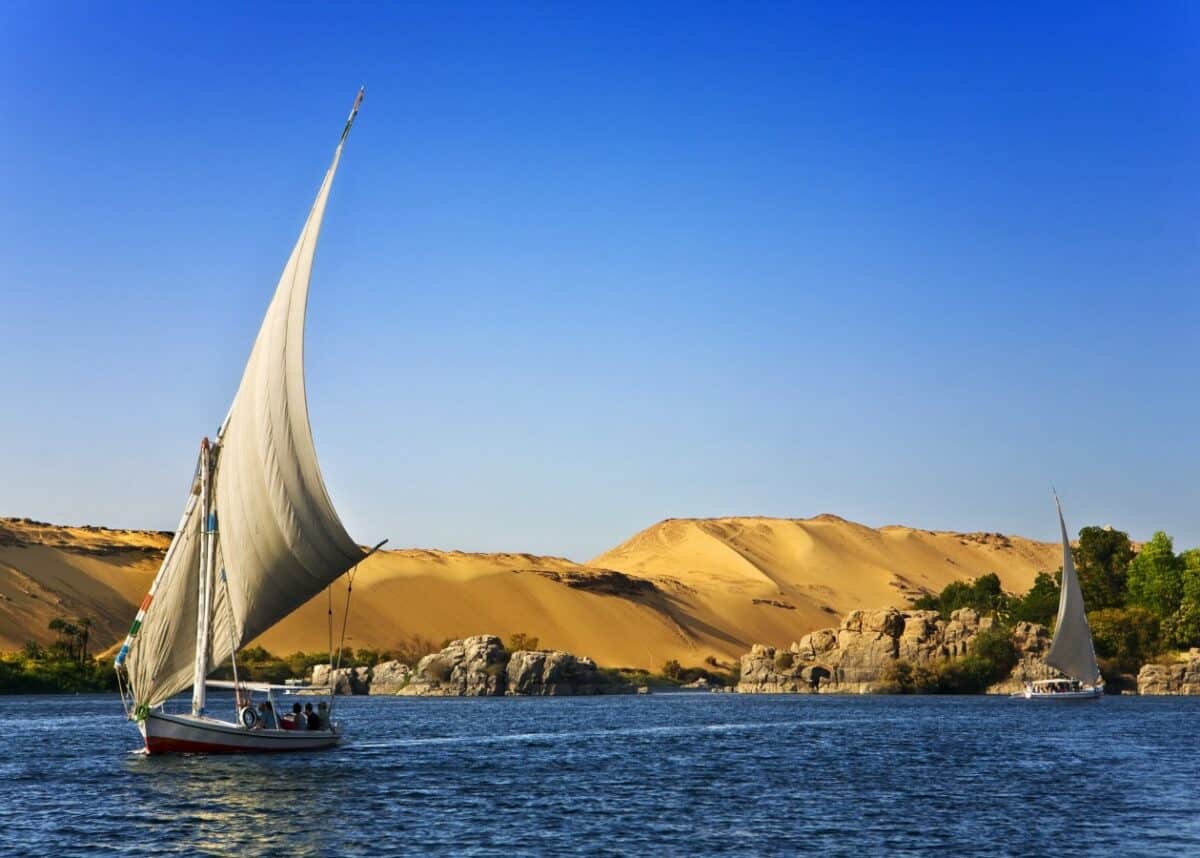
Photo by Flying Carpet on Unsplash

Photo by Flying Carpet on Unsplash

Anna M. Kotarba-Morley, Flinders University

An almost 3,400-year-old industrial, royal metropolis, “the Dazzling Aten”, has been found on the west bank of the Nile near the modern day city of Luxor.

Announced last week by the famed Egyptian archaeologist Dr Zahi Hawass, the find has been compared in importance to the discovery of Tutankhamen’s tomb almost a century earlier.

Built by Amenhotep III and then used by his grandson Tutankhamen, the ruins of the city were an accidental discovery. In September last year, Hawass and his team were searching for a mortuary temple of Tutankhamen.

Instead, hidden under the sands for almost three and a half millennia, they found the Dazzling Aten, believed to be the largest city discovered in Egypt and, importantly, dated to the height of Egyptian civilisation. So far, Hawass’ excavations have unearthed rooms filled with tools and objects of daily life such as pottery and jewellery, a large bakery, kitchens and a cemetery.

The city also includes workshops and industrial, administrative and residential areas, as well as, to date, three palaces.

Ancient Egypt has been called the “civilisation without cities”. What we know about it comes mostly from tombs and temples, whilst other great civilisations of the Bronze Age, such as Mesopotamia, are famous for their great cities.


AlsoRead...

Ryan: Building real freedom through e-commerce

Ryan: Building real freedom through e-commerce

27 November 2025
Design Australia Group: Redefining Drafting as the engine of housing growth

Design Australia Group: Redefining Drafting as the engine of housing growth

26 November 2025

The Dazzling Aten is extraordinary not only for its size and level of prosperity but also its excellent state of preservation, leading many to call it the “Pompeii of Ancient Egypt”.

The rule of Amenhotep III was one of the wealthiest periods in Egyptian history. This city will be of immeasurable importance to the scholarship of archaeologists and Egyptologists, who for centuries have struggled with understanding the specifics of urban, domestic life in the Pharaonic period.

Foundations of urban life

I teach a university subject on the foundations of urban life, and it always comes as a surprise to my students how little we know about urbanism in ancient Egypt.

The first great cities, and with them the first great civilisations, emerged along the fertile valleys of great rivers in Mesopotamia (modern day Iraq), the Indus Valley (modern day India and Pakistan) and China at the beginning of the Bronze Age, at least 5,000 years ago.

Just like cities today, they provided public infrastructure and roads, and often access to sanitation, education, health care and welfare. Their residents specialised in particular professions, paid taxes and had to obey laws.

But the Nile did not support the urban lifestyle in the same way as the rivers of other great civilisations. It had a reliable flood pattern and thus the second longest river in the world could be easily tamed, allowing for simple methods of irrigation that did not require complex engineering and large groups of workers to maintain. This meant the population didn’t necessarily need to cluster in organised cities.
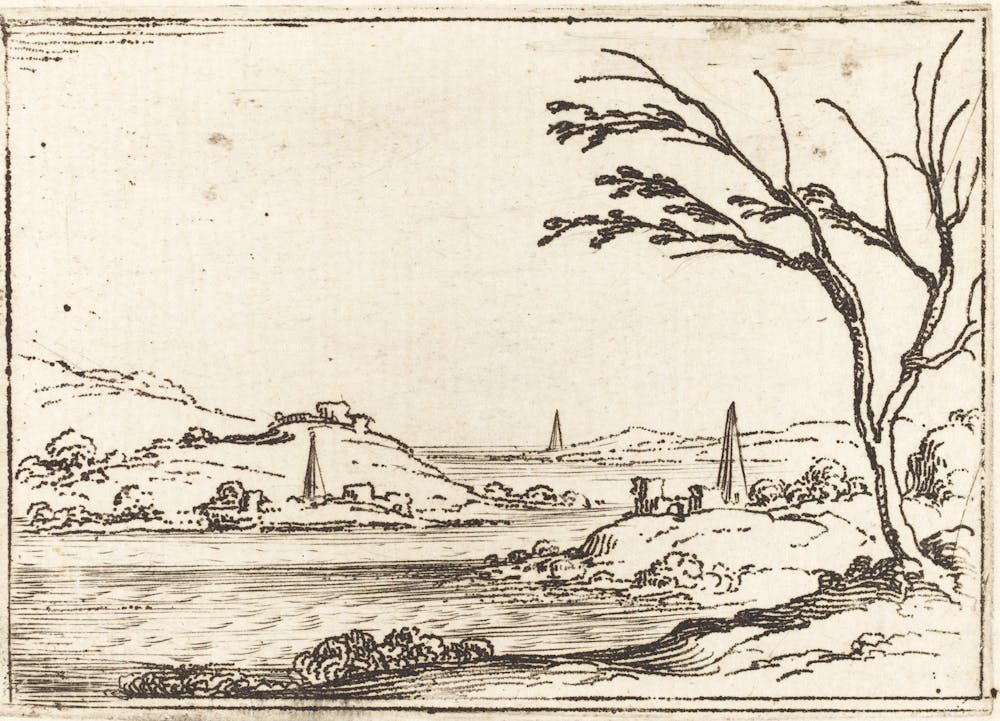
An etching of the Nile flooding by French artist Jacques Callot (1592 – 1635) National Gallery of Art

Excavations of Early Dynastic (c. 3150-2680 BCE) Egyptian cities such as Nagada and Hierakonpolis have provided us with a plethora of information regarding urban life in the early Bronze Age . But they are separated from the Dazzling Aten by some 1,600 years — as long as separates us from the Huns of Attila attacking ancient Rome.

One city closer in age to the Dazzling Aten we do know a little more about is the short-lived capital of Amenhotep’s III son, Akhenaten, known as the “Horizon of the Aten”, or Tell el-Amarna. Amarna was functional for only 14 years (1346-1332 BCE) before being abandoned forever. It was first described by a travelling Jesuit monk in 1714 and has been excavated on and off for the last 100 years.

Very few other Egyptian cities from the Early Dynastic Period (3150 BCE) to the Hellenistic period (following Alexander the Great’s conquest of Egypt in 332 BCE), have been excavated. This means that domestic urban life and urban planning have long been contentious research areas in the study of Pharaonic Egypt.

The scientific community is impatiently waiting for more information to draw comparisons between Akhenaten’s city and the newly discovered capital founded by his father.

The magnificent pharaoh

Amenhotep III, also known as Amenhotep the Magnificent, ruled between 1386 and 1349 BCE and was one of the most prosperous rulers in the Egyptian history.

During his reign as the ninth pharaoh of the 18th Dynasty, Egypt achieved the height of its international power, climbing to an unprecedented level of economic prosperity and artistic splendour. His vision of greatness was immortalised in his great capital, which is believed to have been later used by at least Tutankhamen and Ay.

In 2008, for the first time in history, the majority of world’s inhabitants lived in the cities. Yet, with globalisation, the differences between the “liveability” of modern cities are striking.

As a society we need to understand where cities come from, how have they formed and how they shaped the development of past urban communities to learn lessons for the future. We look forward to research and findings being published from the ancient city of Amenhotep III to enlighten us about the daily lives of ancient Egyptians at their height.

Anna M. Kotarba-Morley, Lecturer, Archaeology, Flinders University

This article is republished from The Conversation under a Creative Commons license. Read the original article.


Tags: SB001
DMCA.com Protection Status

SUBSCRIBE to our NEWSLETTER

[mc4wp_form id=”2384248″]

Don't Miss

The evolution of Aesthetic Surgery through the lens of Dr Kourosh Tavakoli

by Pauline Torongo
4 December 2025
The evolution of Aesthetic Surgery through the lens of Dr. Kourosh Tavakoli
Health & Wellness

As global interest in Australian cosmetic surgery continues to grow, the combination of regulation, research and emerging digital tools is...

Read moreDetails

Ryan: Building real freedom through e-commerce

by Pauline Torongo
27 November 2025
Ryan: Building real freedom through e-commerce
Business & Finance

Ryan’s greatest achievement isn’t any single business or revenue milestone — it’s the ecosystem he’s built through the Change community.

Read moreDetails

Design Australia Group: Redefining Drafting as the engine of housing growth

by Pauline Torongo
26 November 2025
Design Australia Group: Redefining Drafting as the engine of housing growth
Business & Finance

Australia is under pressure to build homes faster, but design bottlenecks slow progress. Design Australia Group is fixing this by...

Read moreDetails

Louis Guy Detata builds Global Trading Empires through autonomous systems and disciplined leadership

by Pauline Torongo
25 November 2025
Louis Guy Detata builds Global Trading Empires through autonomous systems and disciplined leadership
Business & Finance

The path from investment banking to leading a global trading platform has taught Louis Detata that sustainable success requires more...

Read moreDetails

Burning Eucalyptus Wood: Tips, Advantages, Disadvantages & Alternatives

by Fazila Olla-Logday
20 November 2025
Image Supplied
Enviroment

Learn about burning eucalyptus wood for stoves and fireplaces. Discover benefits, drawbacks, harvesting tips, and better alternative firewood options for...

Read moreDetails

Everything Parents Need to Know About Baby Soft Play and Why It’s a Game Changer

by Fazila Olla-Logday
11 November 2025
Everything Parents Need to Know About Baby Soft Play
Health & Wellness

Baby soft play is a fun, safe, and educational way for little ones to explore and grow. Discover the benefits...

Read moreDetails

WOMAD Sets Up a New Camp in Wiltshire – Australian festival fans take note!

by Kris Griffiths
11 November 2025
Kumbia Boruka brought their reggae and dancehall flavour to the Taste the World Stage at WOMAD 2024 - Credit - Mike Massaro
Entertainment

With its 2026 edition moving to Neston Park in England, WOMAD offers Aussie music lovers a chance to reconnect with global...

Read moreDetails
Load More

Copyright © Blue Sky Publications Ltd. All Rights Reserved.
australiantimes.co.uk is a division of Blue Sky Publications Ltd. Reproduction without permission prohibited. DMCA.com Protection Status

  • About us
  • Write for Us
  • Advertise
  • Contact us
  • T&Cs, Privacy and GDPR
No Result
View All Result
  • News
    • Weather
    • Sport
    • Technology
    • Business & Finance
      • Currency Zone
    • Lotto Results
      • The Lott
  • Lifestyle
    • Entertainment
    • Horoscopes
    • Health & Wellness
    • Recipes
  • Travel
  • Expat Life
  • Move to Australia

Copyright © Blue Sky Publications Ltd. All Rights Reserved.
australiantimes.co.uk is a division of Blue Sky Publications Ltd. Reproduction without permission prohibited. DMCA.com Protection Status

No Result
View All Result
  • News
    • Weather
    • Sport
    • Technology
    • Business & Finance
      • Currency Zone
    • Lotto Results
      • The Lott
  • Lifestyle
    • Entertainment
    • Horoscopes
    • Health & Wellness
    • Recipes
  • Travel
  • Expat Life
  • Move to Australia

Copyright © Blue Sky Publications Ltd. All Rights Reserved.
australiantimes.co.uk is a division of Blue Sky Publications Ltd. Reproduction without permission prohibited. DMCA.com Protection Status





