
• Advertise
  • About us
  • Terms and Conditions
  • Contact us
Sunday, December 7, 2025
Australian Times News
  • News
    • Weather
    • Sport
    • Technology
    • Business & Finance
      • Currency Zone
    • Lotto Results
      • The Lott
  • Lifestyle
    • Entertainment
    • Horoscopes
    • Health & Wellness
    • Recipes
  • Travel
  • Expat Life
  • Move to Australia
No Result
View All Result
  • News
    • Weather
    • Sport
    • Technology
    • Business & Finance
      • Currency Zone
    • Lotto Results
      • The Lott
  • Lifestyle
    • Entertainment
    • Horoscopes
    • Health & Wellness
    • Recipes
  • Travel
  • Expat Life
  • Move to Australia
No Result
View All Result
Australian Times News
No Result
View All Result
Home News

The cold supply chain can’t reach everywhere – that’s a big problem for equitable COVID-19 vaccination

The Pfizer and Moderna vaccines are a great start that should be celebrated, but they rely on a complicated supply chain of freezers and temperature-controlled shipping methods called the “cold chain.” That reliance on the cold chain raises equity and social justice concerns, since many parts of the world cannot support one. Researchers are working hard on vaccines that can avoid the logistical and economic nightmare of cold chain delivery.

The Conversation by The Conversation
05-01-2021 22:17
in News
Reliance on the cold chain

Reliance on the cold chain Photo by Mika Baumeister on Unsplash

Timothy Ford, University of Massachusetts Lowell and Charles M. Schweik, University of Massachusetts Amherst

To mitigate health inequities and promote social justice, coronavirus vaccines need to get to underserved populations and hard-to-reach communities.

Getting vaccines to rural and hard-to-reach areas is critical for public health and ethical reasons. Hector Roqueta Rivero/Moment via Getty Images

There are few places in the U.S. that are unreachable by road, but other factors – many rural hospitals can’t afford ultralow-temperature freezers or might not have reliable electricity, for example – present challenges. However, with government will and resources, these could be overcome.

That is not true for much of the rest of the world.

One of us, Tim Ford, is a global health researcher who has done a lot of international work on water and health where the cold supply chain cannot go, most recently in rural Haiti. The other, Charles Schweik, studies how the spread of innovations – both digital and physical – can solve pressing societal problems and social inequities.

The Pfizer and Moderna vaccines are a great start that should be celebrated, but they rely on a complicated supply chain of freezers and temperature-controlled shipping methods called the “cold chain.” That reliance on the cold chain raises equity and social justice concerns, since many parts of the world cannot support one. Researchers are working hard on vaccines that can avoid the logistical and economic nightmare of cold chain delivery.
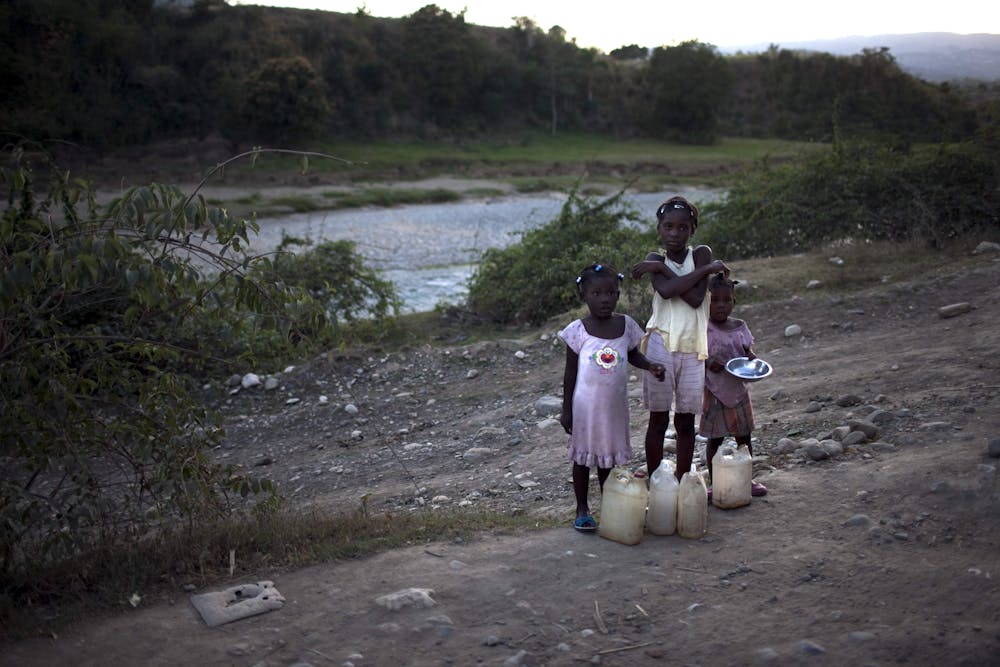
Three young girls stand on the side of a dirt rod in Haiti.
Less developed places – like some areas in Haiti – do not have the infrastructure to store or ship vaccines that need to be kept frozen. AP Photo/Rodrigo Abd

Where the cold chain doesn’t go

In poorer areas, more remote parts of the world and in places where the mean daytime temperature is high and electricity is unavailable or spotty, there are no mechanisms to keep vaccines at low temperatures. There may in fact be no roads – let alone airports – in many of these places either. And even if roads exist, they may be impassable at certain times of the year or inaccessible for political reasons or because of civil unrest.


AlsoRead...

Ryan: Building real freedom through e-commerce

Ryan: Building real freedom through e-commerce

27 November 2025
Design Australia Group: Redefining Drafting as the engine of housing growth

Design Australia Group: Redefining Drafting as the engine of housing growth

26 November 2025

Both the Moderna and Pfizer vaccines need to be kept frozen and must rely on the cold chain to get anywhere. Only large wealthy countries have the resources to implement a well-developed cold chain, and that means huge parts of the world currently can’t get a COVID-19 vaccine.

This is bad for public health and fails to be equitable and just.

A syringe and vial of the temperature stable smallpox vaccine, Dryvax.
A freeze-dried smallpox vaccine called Dryvax was the first temperature-stable vaccine. James Gathany/CDC via Wikimedia Commons

Temperature-stable vaccines

Vaccines are coming that do not require ultralow-temperature storage. Some companies, including AstraZeneca and Johnson & Johnson, are working on vaccines that need only refrigeration as opposed to storage at freezer temperatures. In late December, the AstraZeneca vaccine was authorized for use in the U.K.. Both vaccines should be available to the global market the next couple of months and could greatly expand vaccine reach.

Both companies are also working with the COVAX Facility, which describes itself as “a global risk-sharing mechanism for pooled procurement and equitable distribution of eventual COVID-19 vaccines.” The goal is to make vaccines available to all countries participating in the COVAX program, regardless of income levels. As of mid–December, 92 low- and middle-income countries have signed up.

Refrigeration is better than freezing, but for remote locations, room temperature is best, and researchers are working on thermostable COVID-19 vaccines that won’t need refrigeration. Techniques that remove the need for a vaccine cold chain have been used for many decades with success. Freeze-dried vaccines are one such example. The first thermostable vaccine was developed for smallpox in 1955 and is credited in part with the ultimate elimination of the disease.

Today, researchers continue to look for innovative ways to stabilize viral vaccines: from air-drying with low-cost sugar films to freeze-drying with different stabilizing agents. Some researchers are also working on stable liquid formulations, in particular live attenuated flu viruses, that avoid the costly process of freeze-drying, which is not always easy for low- and middle-income countries to do. All these approaches could be applicable to live virus vaccines that use an attenuated virus, just like the flu vaccine, as well as both of the coronavirus vaccines under development by AstraZeneca and Johnson & Johnson.

Hope for COVID-19 vaccines?

So far, this is mostly basic research, but progress in this area would greatly help meet global health needs.

To date, the most promising efforts toward temperature-stable COVID-19 vaccines come from groups in China and India. Chinese scientists have developed a method to wrap an mRNA vaccine in lipid nanoparticles that keep it fresh at room temperatures. Indian researchers are using an engineered protein fragment that is tolerant of high temperatures. Most recently, a U.K. team has begun collaborating on a polymer-stabilized, needle-free, solid-dose vaccine.

Given the limitations of the cold chain, there are public health, moral and ethical obligations that require investment in vaccines that can be delivered using non-cold-chain approaches. For people in many places, that is the only way they will ever get a vaccine.

Timothy Ford, Professor and Chair of Biomedical and Nutritional Sciences, University of Massachusetts Lowell and Charles M. Schweik, Professor of Environmental Conservation, University of Massachusetts Amherst

This article is republished from The Conversation under a Creative Commons license. Read the original article.


Tags: SB001
DMCA.com Protection Status

SUBSCRIBE to our NEWSLETTER

[mc4wp_form id=”2384248″]

Don't Miss

The evolution of Aesthetic Surgery through the lens of Dr Kourosh Tavakoli

by Pauline Torongo
4 December 2025
The evolution of Aesthetic Surgery through the lens of Dr. Kourosh Tavakoli
Health & Wellness

As global interest in Australian cosmetic surgery continues to grow, the combination of regulation, research and emerging digital tools is...

Read moreDetails

Ryan: Building real freedom through e-commerce

by Pauline Torongo
27 November 2025
Ryan: Building real freedom through e-commerce
Business & Finance

Ryan’s greatest achievement isn’t any single business or revenue milestone — it’s the ecosystem he’s built through the Change community.

Read moreDetails

Design Australia Group: Redefining Drafting as the engine of housing growth

by Pauline Torongo
26 November 2025
Design Australia Group: Redefining Drafting as the engine of housing growth
Business & Finance

Australia is under pressure to build homes faster, but design bottlenecks slow progress. Design Australia Group is fixing this by...

Read moreDetails

Louis Guy Detata builds Global Trading Empires through autonomous systems and disciplined leadership

by Pauline Torongo
25 November 2025
Louis Guy Detata builds Global Trading Empires through autonomous systems and disciplined leadership
Business & Finance

The path from investment banking to leading a global trading platform has taught Louis Detata that sustainable success requires more...

Read moreDetails

Burning Eucalyptus Wood: Tips, Advantages, Disadvantages & Alternatives

by Fazila Olla-Logday
20 November 2025
Image Supplied
Enviroment

Learn about burning eucalyptus wood for stoves and fireplaces. Discover benefits, drawbacks, harvesting tips, and better alternative firewood options for...

Read moreDetails

Everything Parents Need to Know About Baby Soft Play and Why It’s a Game Changer

by Fazila Olla-Logday
11 November 2025
Everything Parents Need to Know About Baby Soft Play
Health & Wellness

Baby soft play is a fun, safe, and educational way for little ones to explore and grow. Discover the benefits...

Read moreDetails

WOMAD Sets Up a New Camp in Wiltshire – Australian festival fans take note!

by Kris Griffiths
11 November 2025
Kumbia Boruka brought their reggae and dancehall flavour to the Taste the World Stage at WOMAD 2024 - Credit - Mike Massaro
Entertainment

With its 2026 edition moving to Neston Park in England, WOMAD offers Aussie music lovers a chance to reconnect with global...

Read moreDetails
Load More

Copyright © Blue Sky Publications Ltd. All Rights Reserved.
australiantimes.co.uk is a division of Blue Sky Publications Ltd. Reproduction without permission prohibited. DMCA.com Protection Status

  • About us
  • Write for Us
  • Advertise
  • Contact us
  • T&Cs, Privacy and GDPR
No Result
View All Result
  • News
    • Weather
    • Sport
    • Technology
    • Business & Finance
      • Currency Zone
    • Lotto Results
      • The Lott
  • Lifestyle
    • Entertainment
    • Horoscopes
    • Health & Wellness
    • Recipes
  • Travel
  • Expat Life
  • Move to Australia

Copyright © Blue Sky Publications Ltd. All Rights Reserved.
australiantimes.co.uk is a division of Blue Sky Publications Ltd. Reproduction without permission prohibited. DMCA.com Protection Status

No Result
View All Result
  • News
    • Weather
    • Sport
    • Technology
    • Business & Finance
      • Currency Zone
    • Lotto Results
      • The Lott
  • Lifestyle
    • Entertainment
    • Horoscopes
    • Health & Wellness
    • Recipes
  • Travel
  • Expat Life
  • Move to Australia

Copyright © Blue Sky Publications Ltd. All Rights Reserved.
australiantimes.co.uk is a division of Blue Sky Publications Ltd. Reproduction without permission prohibited. DMCA.com Protection Status