• Advertise
  • About us
  • Terms and Conditions
  • Contact us
Saturday, December 6, 2025
Australian Times News
  • News
    • Weather
    • Sport
    • Technology
    • Business & Finance
      • Currency Zone
    • Lotto Results
      • The Lott
  • Lifestyle
    • Entertainment
    • Horoscopes
    • Health & Wellness
    • Recipes
  • Travel
  • Expat Life
  • Move to Australia
No Result
View All Result
  • News
    • Weather
    • Sport
    • Technology
    • Business & Finance
      • Currency Zone
    • Lotto Results
      • The Lott
  • Lifestyle
    • Entertainment
    • Horoscopes
    • Health & Wellness
    • Recipes
  • Travel
  • Expat Life
  • Move to Australia
No Result
View All Result
Australian Times News
No Result
View All Result
Home News

The budget should have been a road to Australia’s low-emissions future. Instead, it’s a flight of fancy

In this global context, the climate policies announced in Tuesday’s federal budget are a long-odds bet on a radically different approach. In place of the approaches adopted elsewhere, the Morrison government is betting heavily on alternatives that have failed previous tests, such as carbon capture and storage.

The Conversation by The Conversation
14-05-2021 01:55
in News
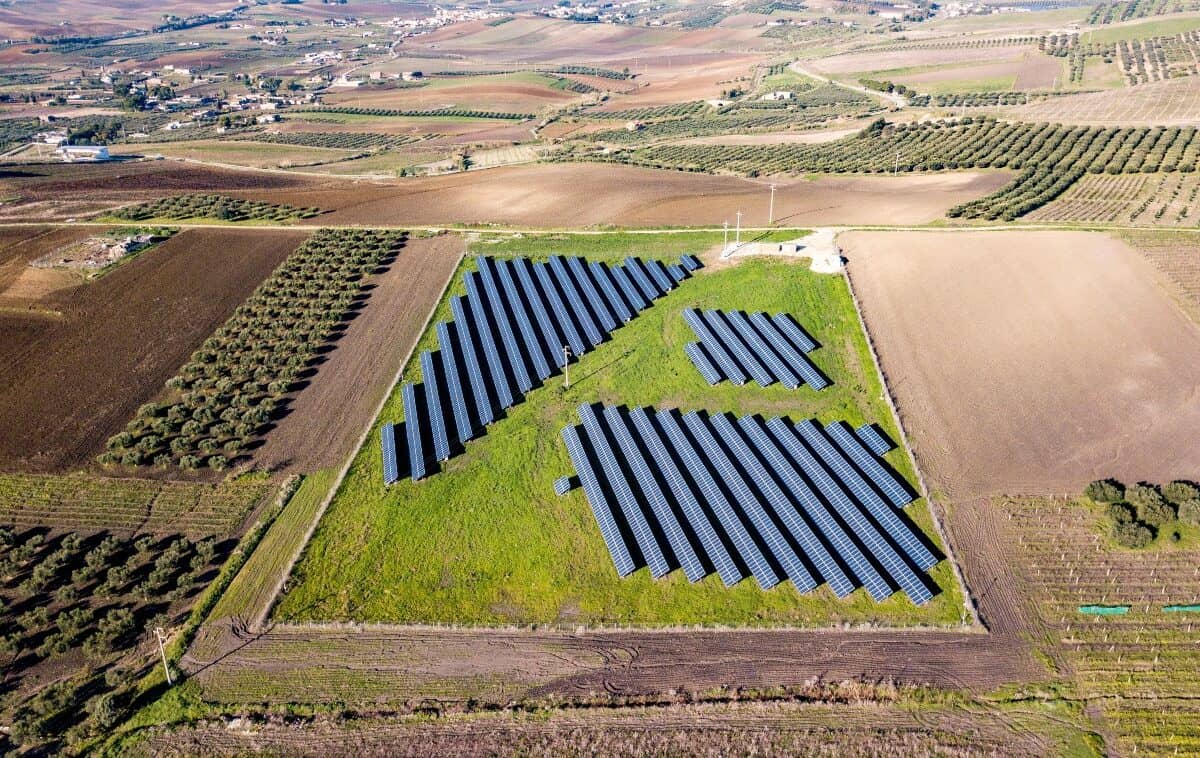
Photo by Sungrow EMEA on Unsplash

Photo by Sungrow EMEA on Unsplash

John Quiggin, The University of Queensland

Looking at other nations around the world, the path to cutting greenhouse gas emissions seems clear.

First, develop wind and solar energy and battery storage to replace coal- and gas-fired electricity. Then, replace petrol and diesel cars with electric vehicles running off carbon-free sources. Finally, replace traditionally made steel, cement and other industries with low-carbon alternatives.

In this global context, the climate policies announced in Tuesday’s federal budget are a long-odds bet on a radically different approach. In place of the approaches adopted elsewhere, the Morrison government is betting heavily on alternatives that have failed previous tests, such as carbon capture and storage. And it’s blatantly ignoring internationally proven technology, such as electric vehicles.

The government could have followed the lead of our international peers and backed Australia’s clean energy sector to create jobs and stimulate the post-pandemic economy. Instead, it’s sending the nation on a fool’s errand.
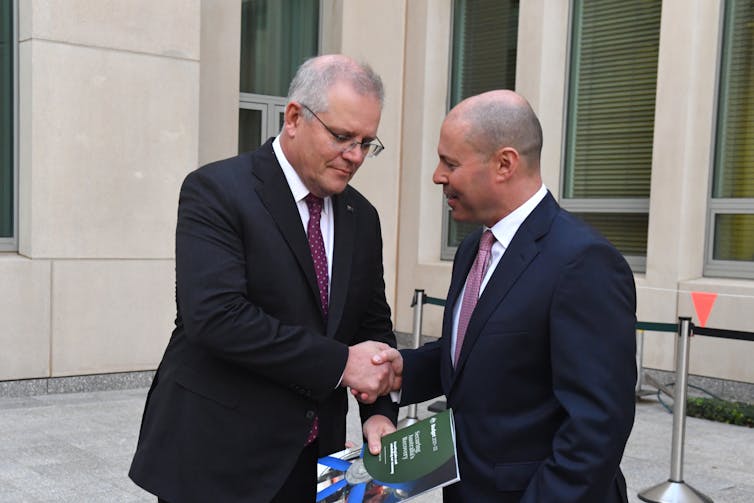
Prime Minister Scott Morrison, left, and Treasurer Josh Frydenberg shake hands
Prime Minister Scott Morrison, left, and Treasurer Josh Frydenberg should have used the budget to create jobs in the clean economy. Mick Tsikas/AAP

Carbon-capture folly

The Morrison government is taking a “technology, not taxes” approach to emissions reduction. Rather than adopt a policy such as a carbon price – broadly considered the most effective and efficient way to cut emissions – the government has instead pinned its hopes on a low-emissions technology plan.

That means increased public spending on research and development, to accelerate the commercialisation of low emissions technologies. The problems with this approach are most obvious in relation to carbon capture and storage (CCS).


AlsoRead...

Ryan: Building real freedom through e-commerce

Ryan: Building real freedom through e-commerce

27 November 2025
Design Australia Group: Redefining Drafting as the engine of housing growth

Design Australia Group: Redefining Drafting as the engine of housing growth

26 November 2025

The budget contains A$263.7 million to fund new carbon capture and storage projects. This technology promises to capture some – but to date, not all – carbon dioxide at the point of emission, and then inject it underground. It would allow continued fossil fuel use with fewer emissions, but the process is complex and expensive.

In fact, recent research found of 39 carbon-capture projects examined in the United States, more than 80% ended in failure.


The government’s CCS funding is focused on capturing CO₂ from gas projects. This is despite the disappointing experience of Australia’s only CCS project so far, Chevron’s Gorgon gas field off Western Australia.

Some 80% of emissions from the operation were meant to be captured from 2016. But the process was delayed for three years, allowing millions of tonnes of CO₂ to enter the atmosphere. As of January this year, the project was still facing technical issues.

CCS from gas will be expensive even if it can be made to work. Santos, which has proposed a CCS project at its Moomba gas plant in South Australia, suggests a cost of $A30 per tonne of CO₂ captured.

This money would need to come from the government’s Climate Solutions Fund, currently allocated about A$2 billion over four years. If Moomba’s projected emissions reduction of 20 million tonnes a year were realised, this project alone would exhaust the fund.
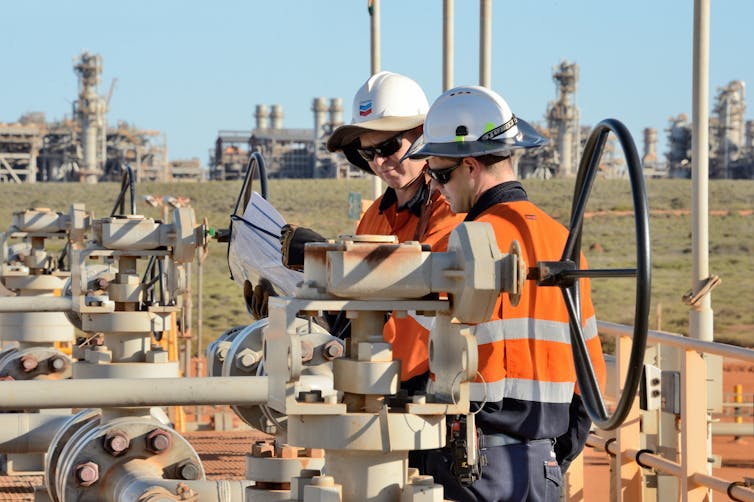
two men stand over equipment
Plans to capture carbon from Chevron’s Gorgon gas project have not gone to plan. Chevron Australia

What about electric vehicles?

There is a striking contrast between the Morrison government’s enthusiasm for carbon capture, and its neglect of electric vehicles.

It ought to be obvious that if Australia is to achieve a target of net-zero emissions by 2050 – which Treasurer Josh Frydenberg this week reiterated was his government’s preference – the road transport sector must be decarbonised by then.

The average age of Australian cars is about 10 years. This implies, given fairly steady sales, an average lifespan of 20 years. This in turn implies most petrol or diesel vehicles sold after 2030 will have to be taken off the road before the end of their useful life.

In any case, such vehicles will probably be very difficult to buy within 15 years. Manufacturers including General Motors and Volvo have announced plans to stop selling petrol and diesel vehicles by 2035 or earlier.

But the Morrison government has ruled out consumer incentives to encourage electric vehicle uptake – a policy at odds with many other nations, including the US.


Despite the “technology, not taxes” mantra, this week’s federal budget ignored electric vehicles. This includes a A$10 billion infrastructure spend which did not include charging stations as part of highway upgrades.

Unless the government takes action soon, Australian motorists will be faced with the choice between a limited range of second-rate petrol and diesel vehicles, or electric vehicles for which key infrastructure is missing.

It’s hard to work out why the government is so resistant to doing anything to help electric vehicles. Public support appears strong. There are no domestic carmakers left to protect.

The car retail industry is generally unenthusiastic about electric vehicles. Its business model is built on combining competitive sticker prices with a high-margin service and repair business, and electric vehicles don’t fit this model.

At the moment (although not for much longer), electric vehicles are more expensive than traditional cars to buy upfront. But they are cheaper to run and service.

There are fears of job losses in car maintenance as electric vehicle uptake increases. However, car dealers have adjusted to change in the past, and can do so in future.
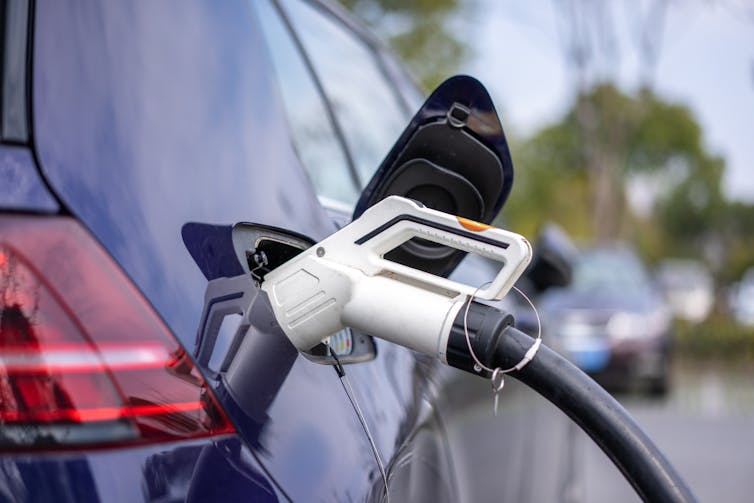
electric vehicle on charge
The budget ignored electric vehicles. Shutterstock

Wishful thinking

The Morrison government is still edging towards announcing a 2050 net-zero target in time for the United Nations Climate Change Conference in Glasgow this November. But as Prime Minister Scott Morrison himself has emphasised, there’s no point having a target without a strategy to get there.

Yet at this stage, the government’ emissions reduction strategy looks more like wishful thinking than a road map.


John Quiggin, Professor, School of Economics, The University of Queensland

This article is republished from The Conversation under a Creative Commons license. Read the original article.


Tags: SB001
DMCA.com Protection Status

SUBSCRIBE to our NEWSLETTER

[mc4wp_form id=”2384248″]

Don't Miss

The evolution of Aesthetic Surgery through the lens of Dr Kourosh Tavakoli

by Pauline Torongo
4 December 2025
The evolution of Aesthetic Surgery through the lens of Dr. Kourosh Tavakoli
Health & Wellness

As global interest in Australian cosmetic surgery continues to grow, the combination of regulation, research and emerging digital tools is...

Read moreDetails

Ryan: Building real freedom through e-commerce

by Pauline Torongo
27 November 2025
Ryan: Building real freedom through e-commerce
Business & Finance

Ryan’s greatest achievement isn’t any single business or revenue milestone — it’s the ecosystem he’s built through the Change community.

Read moreDetails

Design Australia Group: Redefining Drafting as the engine of housing growth

by Pauline Torongo
26 November 2025
Design Australia Group: Redefining Drafting as the engine of housing growth
Business & Finance

Australia is under pressure to build homes faster, but design bottlenecks slow progress. Design Australia Group is fixing this by...

Read moreDetails

Louis Guy Detata builds Global Trading Empires through autonomous systems and disciplined leadership

by Pauline Torongo
25 November 2025
Louis Guy Detata builds Global Trading Empires through autonomous systems and disciplined leadership
Business & Finance

The path from investment banking to leading a global trading platform has taught Louis Detata that sustainable success requires more...

Read moreDetails

Burning Eucalyptus Wood: Tips, Advantages, Disadvantages & Alternatives

by Fazila Olla-Logday
20 November 2025
Image Supplied
Enviroment

Learn about burning eucalyptus wood for stoves and fireplaces. Discover benefits, drawbacks, harvesting tips, and better alternative firewood options for...

Read moreDetails

Everything Parents Need to Know About Baby Soft Play and Why It’s a Game Changer

by Fazila Olla-Logday
11 November 2025
Everything Parents Need to Know About Baby Soft Play
Health & Wellness

Baby soft play is a fun, safe, and educational way for little ones to explore and grow. Discover the benefits...

Read moreDetails

WOMAD Sets Up a New Camp in Wiltshire – Australian festival fans take note!

by Kris Griffiths
11 November 2025
Kumbia Boruka brought their reggae and dancehall flavour to the Taste the World Stage at WOMAD 2024 - Credit - Mike Massaro
Entertainment

With its 2026 edition moving to Neston Park in England, WOMAD offers Aussie music lovers a chance to reconnect with global...

Read moreDetails
Load More

Copyright © Blue Sky Publications Ltd. All Rights Reserved.
australiantimes.co.uk is a division of Blue Sky Publications Ltd. Reproduction without permission prohibited. DMCA.com Protection Status

  • About us
  • Write for Us
  • Advertise
  • Contact us
  • T&Cs, Privacy and GDPR
No Result
View All Result
  • News
    • Weather
    • Sport
    • Technology
    • Business & Finance
      • Currency Zone
    • Lotto Results
      • The Lott
  • Lifestyle
    • Entertainment
    • Horoscopes
    • Health & Wellness
    • Recipes
  • Travel
  • Expat Life
  • Move to Australia

Copyright © Blue Sky Publications Ltd. All Rights Reserved.
australiantimes.co.uk is a division of Blue Sky Publications Ltd. Reproduction without permission prohibited. DMCA.com Protection Status

No Result
View All Result
  • News
    • Weather
    • Sport
    • Technology
    • Business & Finance
      • Currency Zone
    • Lotto Results
      • The Lott
  • Lifestyle
    • Entertainment
    • Horoscopes
    • Health & Wellness
    • Recipes
  • Travel
  • Expat Life
  • Move to Australia

Copyright © Blue Sky Publications Ltd. All Rights Reserved.
australiantimes.co.uk is a division of Blue Sky Publications Ltd. Reproduction without permission prohibited. DMCA.com Protection Status