

• Advertise
  • About us
  • Terms and Conditions
  • Contact us
Sunday, December 7, 2025
Australian Times News
  • News
    • Weather
    • Sport
    • Technology
    • Business & Finance
      • Currency Zone
    • Lotto Results
      • The Lott
  • Lifestyle
    • Entertainment
    • Horoscopes
    • Health & Wellness
    • Recipes
  • Travel
  • Expat Life
  • Move to Australia
No Result
View All Result
  • News
    • Weather
    • Sport
    • Technology
    • Business & Finance
      • Currency Zone
    • Lotto Results
      • The Lott
  • Lifestyle
    • Entertainment
    • Horoscopes
    • Health & Wellness
    • Recipes
  • Travel
  • Expat Life
  • Move to Australia
No Result
View All Result
Australian Times News
No Result
View All Result
Home News

Thawing permafrost is full of ice-forming particles that could get into atmosphere

Permafrost – frozen soil in the far north – is thawing, releasing greenhouse gases and long-lost microbes. But one thing that scientists have not studied extensively is whether permafrost contains certain kinds of particles that could affect clouds and weather.

The Conversation by The Conversation
30-01-2021 06:23
in News
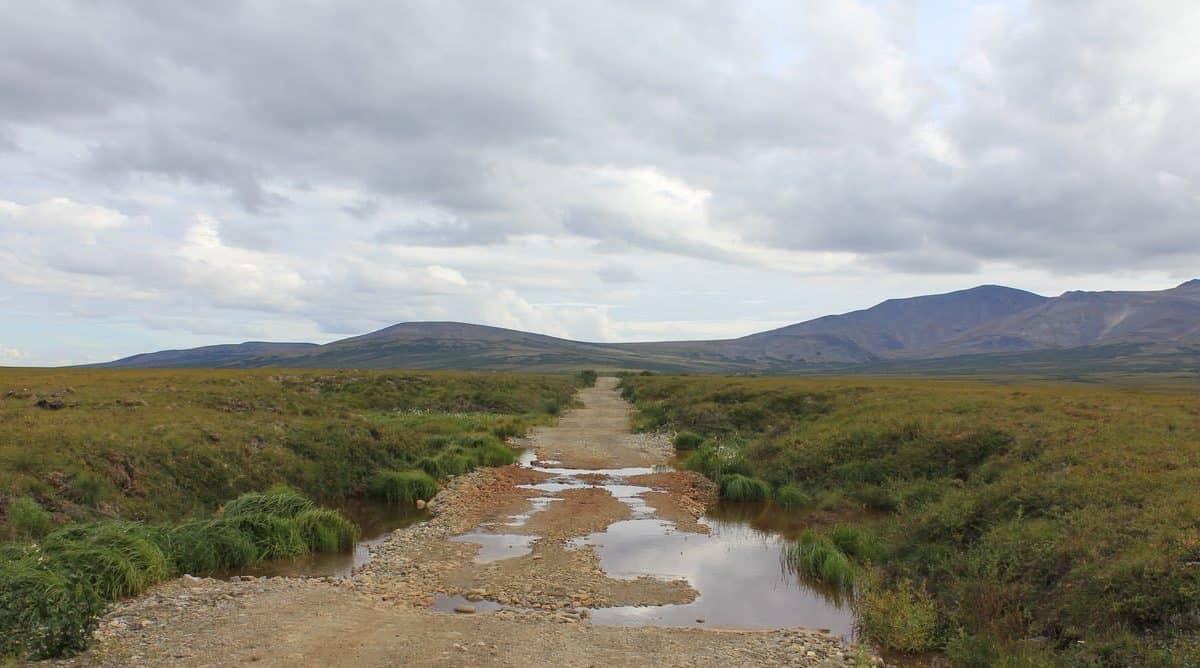
Permafrost is thawing across the Arctic, releasing microbes and organic materials that have been trapped in the frozen ground for thousands of years. NOAA via Wikimedia Commons

Permafrost is thawing across the Arctic, releasing microbes and organic materials that have been trapped in the frozen ground for thousands of years. NOAA via Wikimedia Commons

Jessie Creamean, Colorado State University and Thomas Hill, Colorado State University

The Research Brief is a short take about interesting academic work.

The big idea

Permafrost – frozen soil in the far north – is thawing, releasing greenhouse gases and long-lost microbes. But one thing that scientists have not studied extensively is whether permafrost contains certain kinds of particles that could affect clouds and weather.

As atmospheric scientists, we found in a recent study that thawing permafrost contains lots of microscopic ice-nucleating particles. These particles make it easier for water droplets to freeze; and if the ones in permafrost get airborne, they could affect Arctic clouds.
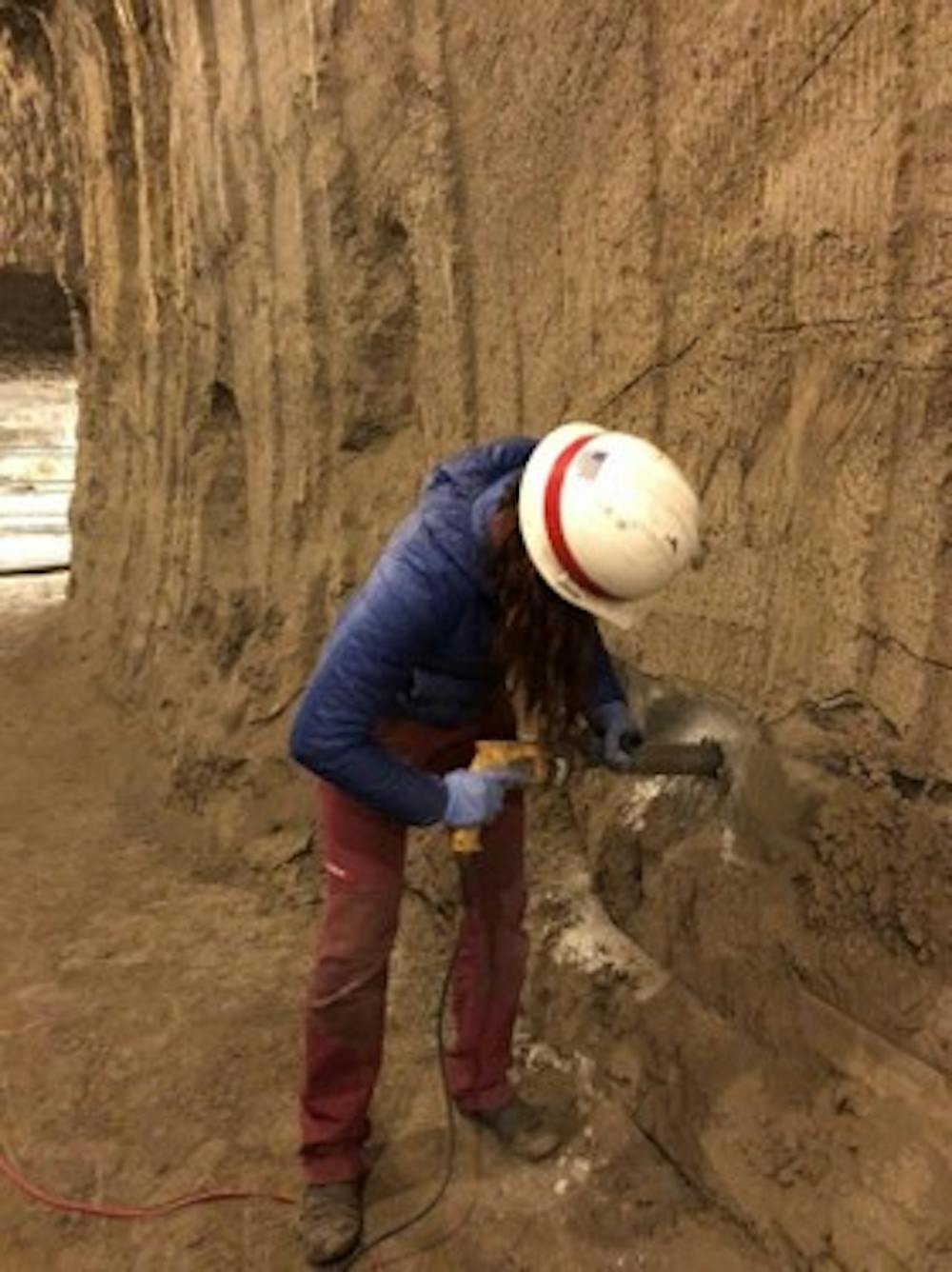
The study author using a drill to take a sample of permafrost in a large tunnel.
Ancient permafrost can be accessed in deep tunnels underground. Jessie Creamean, CC BY-ND

In the summer of 2018, one of us, Jessie Creamean, went to Fairbanks, Alaska, and collected samples of permafrost from a research tunnel deep underground. These samples ranged from 18,000 to 30,000 years old, and our team tested them to see how many ice-nucleating particles are hiding in permafrost.

It turns out permafrost contains a ton of them – up to 100 million highly active individual particles per gram of mostly dead microbes and pieces of plants. This density is on par with what is found in fertile soils, which are some of the most concentrated sources of ice-nucleating particles on Earth. Everywhere in the world, ice-nucleating particles typically play a major role in cloud behavior, and the strength of that effect is still being studied.

A beaker containing a sample of permafrost.
This 18,000-year-old permafrost sample contains millions of ice-nucleating particles per gram. Thomas Hill, CC BY-ND

Why it matters

No one yet knows whether ice-nucleating particles from permafrost are getting into the atmosphere and affecting clouds. But the theory of how ice-nucleating particles change clouds is understood.


AlsoRead...

Ryan: Building real freedom through e-commerce

Ryan: Building real freedom through e-commerce

27 November 2025
Design Australia Group: Redefining Drafting as the engine of housing growth

Design Australia Group: Redefining Drafting as the engine of housing growth

26 November 2025

Clouds are made up of billions of tiny water droplets or ice crystals, often a mix of both. A cloud is like a forest of trees: All water droplets of the cloud require a seed – a tiny aerosol particle – to form and grow on. Almost any little speck of material from the land or the ocean can be the seed of a liquid cloud droplet. Because of their unique ability to line up water molecules into an icelike grid, they help supercooled liquid in a cloud to freeze at warmer temperatures.

Ice-nucleating particles are extremely good at forming small ice crystals – a rare skill found in less than 1 in a million of all the particles floating around in the air. Ice-nucleating particles can be mineral dust from deserts, specks of soil from farm fields or – like what we found in the permafrost – bacteria and bits of biological material from oceans or plants.

The ability to easily form ice has big consequences for clouds and weather.

Most of the time, airborne water droplets need to freeze before they can fall to the ground as snow or rain. Ice-nucleating particles allow cloud ice to form at warmer air temperatures than normal, up to around 28 degrees Fahrenheit. Without these particles, a water droplet can supercool to about negative 36 F before freezing. When ice-nucleating particles are in a cloud, water droplets freeze more easily. This can cause the cloud to rain or snow and disappear earlier, and reflect less sunlight.
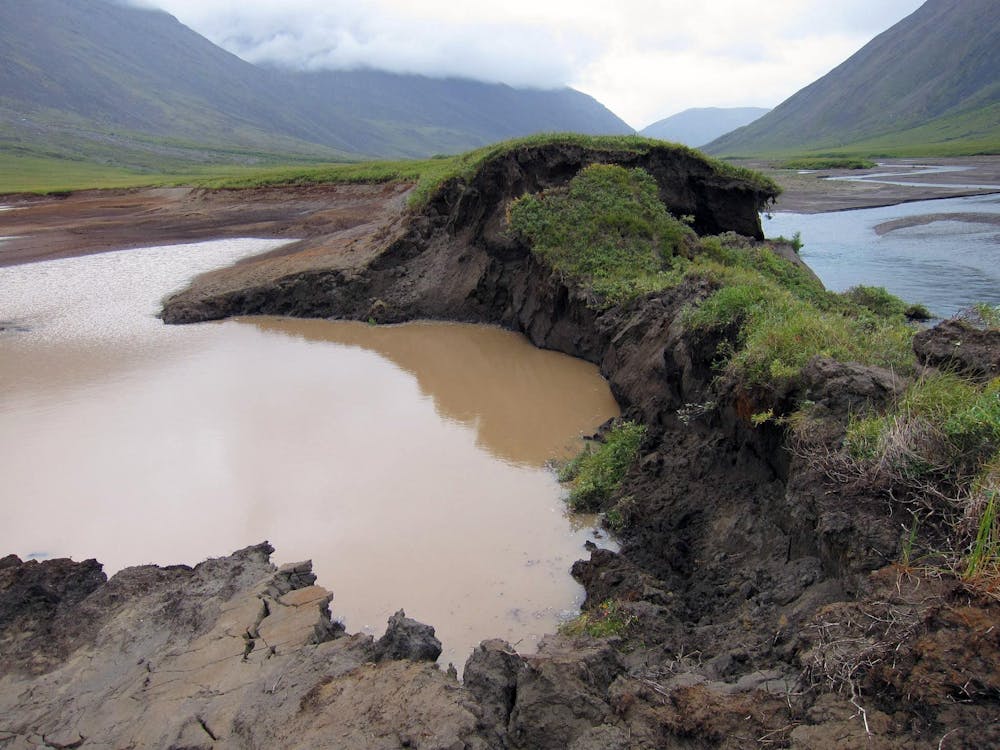
Thawing permafrost forming a lake.
As permafrost thaws, ice-nucleating particles are getting into rivers, lakes and eventually the ocean. National Park Service/C.Ciancibelli via Wikimedia Commons

What still isn’t known

Our work found there are a lot of these ice-nucleating particles in thawing permafrost, which is important because permafrost covers 24% of the exposed land surface in the Northern Hemisphere. The question now is whether these particles are getting into the atmosphere or not. No other researchers that we’re aware of have looked at permafrost’s effect on cloud formation, or the mechanisms by which ice-nucleating particles from permafrost become airborne.

We hypothesize that ice-nucleating particles from thawing permafrost could get into lakes and rivers, make their way to coastal Arctic Ocean waters and spread over large areas. Then, winds could eject these ice-nucleating particles into the air, where they could enhance the freezing of clouds and affect weather.

There are still many unknowns and a lot of work to do.

What’s next

This summer, we are teaming up with colleagues from the Cold Regions Research and Engineering Laboratory in Fairbanks and the National Center for Atmospheric Research in Boulder, Colorado, to set out for a six-week expedition to the Alaskan Arctic tundra. We will collect hundreds of samples of permafrost, lake water, river water, coastal ocean water and air samples to see whether ice-nucleating particles from permafrost are present, and in what amounts. Our goal is to use these findings in models to predict how thawing permafrost could alter the region’s clouds.

Jessie Creamean, Research Scientist, Colorado State University and Thomas Hill, Research Scientist, Colorado State University

This article is republished from The Conversation under a Creative Commons license. Read the original article.


Tags: SB001
DMCA.com Protection Status

SUBSCRIBE to our NEWSLETTER

[mc4wp_form id=”2384248″]

Don't Miss

The evolution of Aesthetic Surgery through the lens of Dr Kourosh Tavakoli

by Pauline Torongo
4 December 2025
The evolution of Aesthetic Surgery through the lens of Dr. Kourosh Tavakoli
Health & Wellness

As global interest in Australian cosmetic surgery continues to grow, the combination of regulation, research and emerging digital tools is...

Read moreDetails

Ryan: Building real freedom through e-commerce

by Pauline Torongo
27 November 2025
Ryan: Building real freedom through e-commerce
Business & Finance

Ryan’s greatest achievement isn’t any single business or revenue milestone — it’s the ecosystem he’s built through the Change community.

Read moreDetails

Design Australia Group: Redefining Drafting as the engine of housing growth

by Pauline Torongo
26 November 2025
Design Australia Group: Redefining Drafting as the engine of housing growth
Business & Finance

Australia is under pressure to build homes faster, but design bottlenecks slow progress. Design Australia Group is fixing this by...

Read moreDetails

Louis Guy Detata builds Global Trading Empires through autonomous systems and disciplined leadership

by Pauline Torongo
25 November 2025
Louis Guy Detata builds Global Trading Empires through autonomous systems and disciplined leadership
Business & Finance

The path from investment banking to leading a global trading platform has taught Louis Detata that sustainable success requires more...

Read moreDetails

Burning Eucalyptus Wood: Tips, Advantages, Disadvantages & Alternatives

by Fazila Olla-Logday
20 November 2025
Image Supplied
Enviroment

Learn about burning eucalyptus wood for stoves and fireplaces. Discover benefits, drawbacks, harvesting tips, and better alternative firewood options for...

Read moreDetails

Everything Parents Need to Know About Baby Soft Play and Why It’s a Game Changer

by Fazila Olla-Logday
11 November 2025
Everything Parents Need to Know About Baby Soft Play
Health & Wellness

Baby soft play is a fun, safe, and educational way for little ones to explore and grow. Discover the benefits...

Read moreDetails

WOMAD Sets Up a New Camp in Wiltshire – Australian festival fans take note!

by Kris Griffiths
11 November 2025
Kumbia Boruka brought their reggae and dancehall flavour to the Taste the World Stage at WOMAD 2024 - Credit - Mike Massaro
Entertainment

With its 2026 edition moving to Neston Park in England, WOMAD offers Aussie music lovers a chance to reconnect with global...

Read moreDetails
Load More

Copyright © Blue Sky Publications Ltd. All Rights Reserved.
australiantimes.co.uk is a division of Blue Sky Publications Ltd. Reproduction without permission prohibited. DMCA.com Protection Status

  • About us
  • Write for Us
  • Advertise
  • Contact us
  • T&Cs, Privacy and GDPR
No Result
View All Result
  • News
    • Weather
    • Sport
    • Technology
    • Business & Finance
      • Currency Zone
    • Lotto Results
      • The Lott
  • Lifestyle
    • Entertainment
    • Horoscopes
    • Health & Wellness
    • Recipes
  • Travel
  • Expat Life
  • Move to Australia

Copyright © Blue Sky Publications Ltd. All Rights Reserved.
australiantimes.co.uk is a division of Blue Sky Publications Ltd. Reproduction without permission prohibited. DMCA.com Protection Status

No Result
View All Result
  • News
    • Weather
    • Sport
    • Technology
    • Business & Finance
      • Currency Zone
    • Lotto Results
      • The Lott
  • Lifestyle
    • Entertainment
    • Horoscopes
    • Health & Wellness
    • Recipes
  • Travel
  • Expat Life
  • Move to Australia

Copyright © Blue Sky Publications Ltd. All Rights Reserved.
australiantimes.co.uk is a division of Blue Sky Publications Ltd. Reproduction without permission prohibited. DMCA.com Protection Status





