• Advertise
  • About us
  • Terms and Conditions
  • Contact us
Saturday, December 6, 2025
Australian Times News
  • News
    • Weather
    • Sport
    • Technology
    • Business & Finance
      • Currency Zone
    • Lotto Results
      • The Lott
  • Lifestyle
    • Entertainment
    • Horoscopes
    • Health & Wellness
    • Recipes
  • Travel
  • Expat Life
  • Move to Australia
No Result
View All Result
  • News
    • Weather
    • Sport
    • Technology
    • Business & Finance
      • Currency Zone
    • Lotto Results
      • The Lott
  • Lifestyle
    • Entertainment
    • Horoscopes
    • Health & Wellness
    • Recipes
  • Travel
  • Expat Life
  • Move to Australia
No Result
View All Result
Australian Times News
No Result
View All Result
Home News

Technology is key for refugees starting new lives in Australia. But women and children don’t have equal access

As evacuees and refugees from Afghanistan start their new lives in Australia, their ability to navigate the digital world will be crucial. Our research, published today, reveals how newly arrived refugees use digital technologies as they begin this new chapter.

The Conversation by The Conversation
09-09-2021 09:17
in News
Photo by Firmbee.com on Unsplash

Photo by Firmbee.com on Unsplash

Tadgh McMahon, Flinders University and Shanthi Robertson, Western Sydney University

As evacuees and refugees from Afghanistan start their new lives in Australia, their ability to navigate the digital world will be crucial. Our research, published today, reveals how newly arrived refugees use digital technologies as they begin this new chapter.

Importantly, new arrivals will need some level of digital know-how to participate in QR code-based contact tracing, to access COVID testing, book vaccination appointments and prove their vaccination status.

Our report shows strong rates of technology use and access among newly-arrived refugees, and particularly for communication. But gaps remain in other aspects of digital inclusion, especially for women and children.
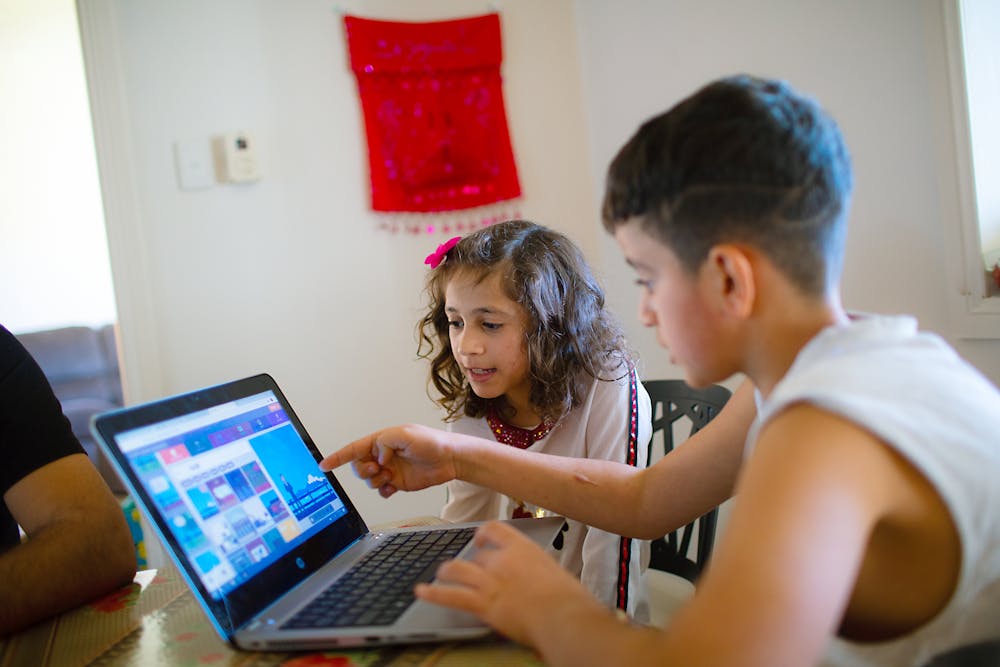
Refugee children living in Armidale, NSW.
Refugee households with children under age 15 own fewer digital devices, on average, than other Australian households. Simon Scott Photos, Author provided

Digital inclusion, settlement and refugees

Digital access and skills are becoming increasingly important for refugees settling in Australia, particularly with our increased dependence on technology as a result of the COVID-19 pandemic.

Aside from COVID-related reasons, digital devices at home are now vital for children to participate in education — and for adults wanting to learn English, or seek further education or work opportunities.

Our latest research, Foundations for Belonging 2021, is led by Settlement Services International (SSI) and researchers at Western Sydney University. It is the second of a series exploring the social and civic participation of new refugees in Australia, and their sense of belonging.


AlsoRead...

Ryan: Building real freedom through e-commerce

Ryan: Building real freedom through e-commerce

27 November 2025
Design Australia Group: Redefining Drafting as the engine of housing growth

Design Australia Group: Redefining Drafting as the engine of housing growth

26 November 2025

In our previous work, conducted in late 2019, refugees reported engaging in high levels of digital communication to maintain ties with friends, family and community locally and overseas.

At the same time refugees — especially women — cited difficulty with online navigation as one of the most common barriers to accessing essential services such as MyGov and Medicare — alongside language difficulties.

For our latest work, we held focus groups with refugee women from different language backgrounds to get a clearer picture of their digital lives.

The majority of refugees surveyed had Iraqi citizenship, and most spoke Arabic. Settlement Services International

The 418 people in our representative sample had lived in Australia for an average of 24 months, with about half (49%) having arrived in 2018.

The countries they arrived from reflected Australia’s humanitarian intake at that time, with a focus on Syria and Iraq. Afghanistan was the fourth most common country of origin.

Having a diverse group allowed us to compare responses based on factors such as gender, age and household composition.

Online access and smartphone use is high

Our study found 95% of newly arrived refugee households have access to the internet at home. And 88% also reported having sufficient data allowance, and using the internet at similar rates to the wider community.

Interestingly, there were no noticeable differences based on gender, household composition or country of birth.
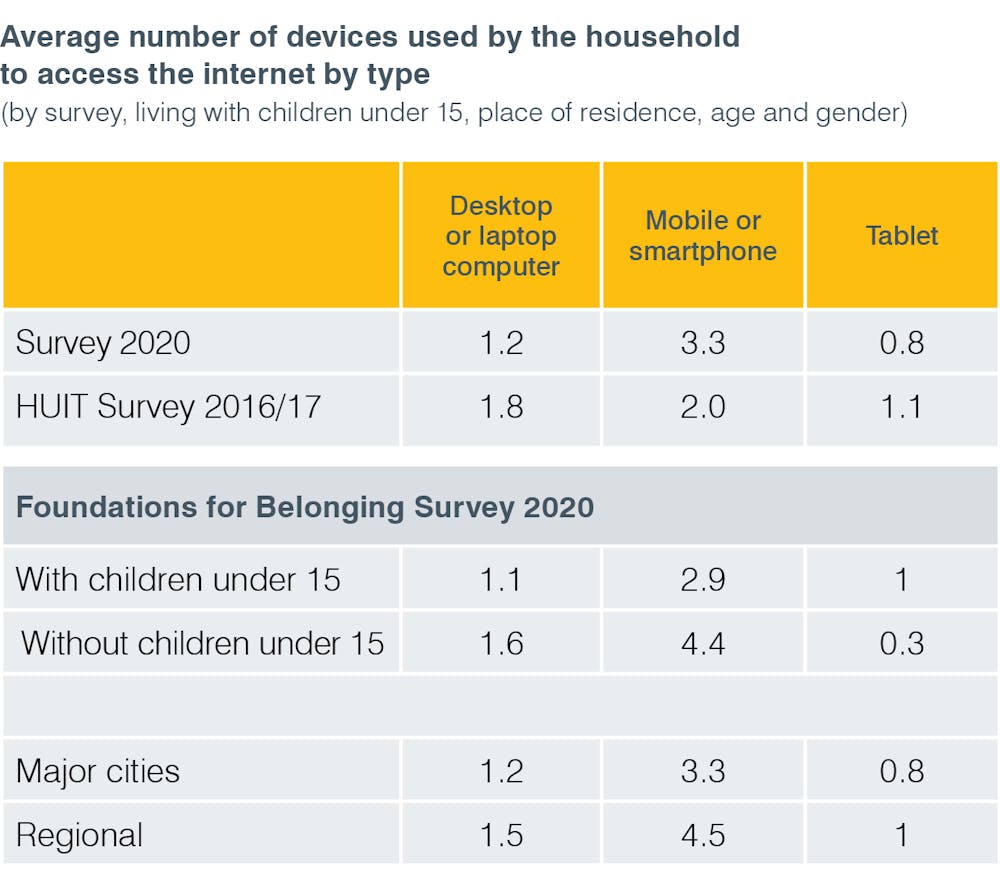
Refugee households in Australia have higher rates of mobile phone ownership than other households — with refugees living in the regions owning more than those in the cities. Settlement Services International

Refugee households also had a higher than average number of mobiles or smartphones. This is reinforced by other global research which has demonstrated the importance of mobile phones for refugees to seek and share information, and stay in touch with loved ones.

Gaps remain for women and children

However, refugee households were less likely than other households to have laptops, desktops and digital tablets. And households with children under age 15 had fewer laptops or desktops (1.1 devices on average) than households without (1.6 devices on average).

This is worrying, considering these devices are often necessary for school education. It’s also the opposite to the trend in other Australian households — wherein having children under 15 is linked to having more laptops and tablets on average.

Refugee families consistently report having to juggle a limited number of laptops, computers and tablets. This causes both children and parents to struggle with access to learning.

Our research also found a small but persistent gender gap in digital skills. Women reported less internet use than men across all online activities including banking, education, health services and social services.

They were significantly more likely to struggle with navigating digital modes of support, and online essential services (although younger women and those with children under 18 struggled less).

Yet women were more likely than men to maintain ties with friends and family in Australia and overseas through digital communication.
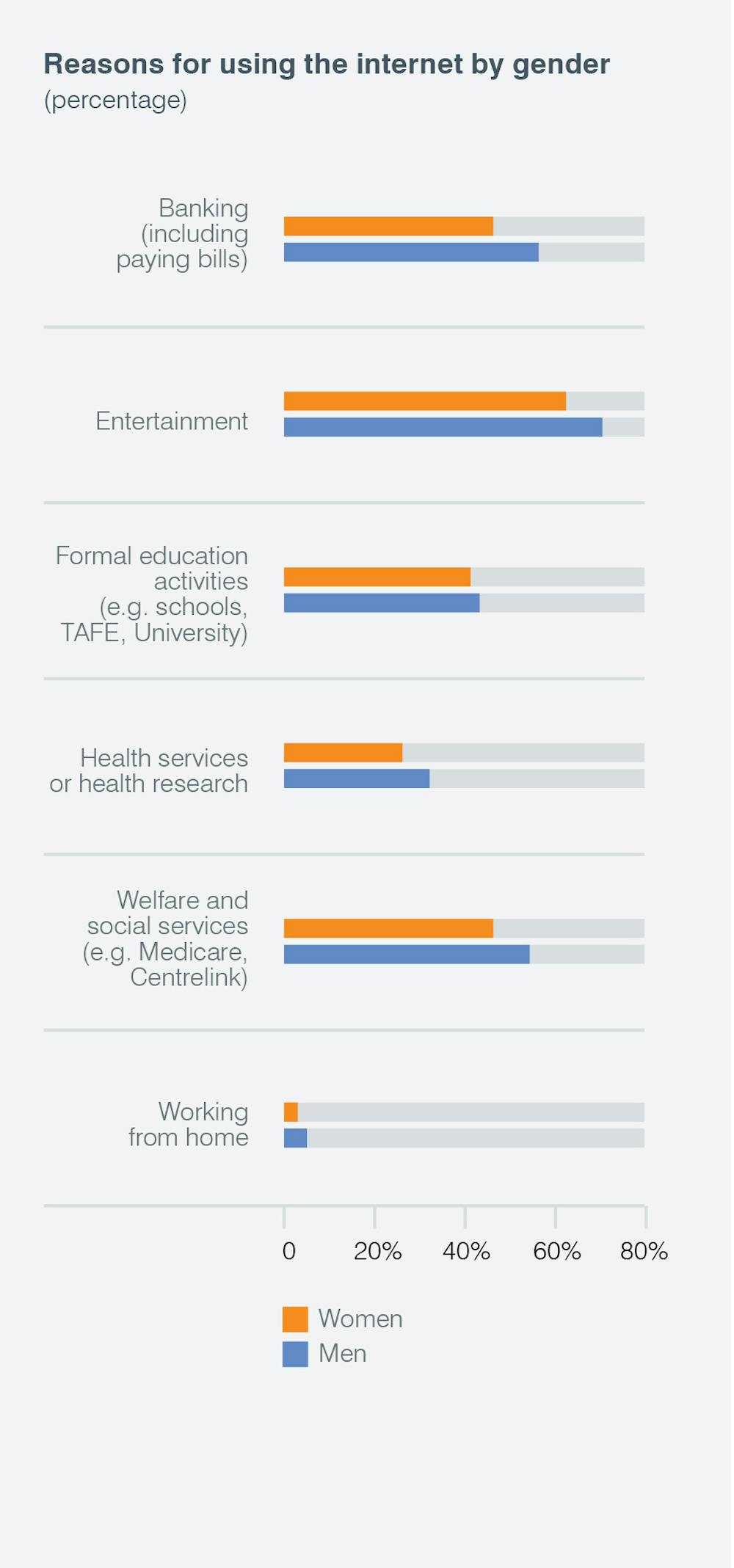
The main reason for refugees using the internet was for entertainment, followed by banking and to access social services. Settlement Services International

Digital enablers

Finding assistance in accessing and using technology was a frequent topic in our focus groups. For example, women discussed borrowing laptops, or asking a friend to help them fill out an online form.

Younger refugee women also often acted as “digital enablers” by assisting older relatives with digital tasks. And older women were motivated to build their digital skills — pointing to the potential for formal and informal learning to facilitate womens’ digital independence.

Still, the onus of narrowing the digital divide should not be on refugees. Our research underscores the need for stronger digital inclusion in settlement policy and programs, with a particular focus on access to devices for learning and education.


Tadgh McMahon, Adjunct Lecturer, College of Medicine and Public Health, Flinders University and Shanthi Robertson, Associate Professor, Institute for Culture and Society & School of Humanities and Communication Arts, Western Sydney University

This article is republished from The Conversation under a Creative Commons license. Read the original article.


Tags: SB001
DMCA.com Protection Status

SUBSCRIBE to our NEWSLETTER

[mc4wp_form id=”2384248″]

Don't Miss

The evolution of Aesthetic Surgery through the lens of Dr Kourosh Tavakoli

by Pauline Torongo
4 December 2025
The evolution of Aesthetic Surgery through the lens of Dr. Kourosh Tavakoli
Health & Wellness

As global interest in Australian cosmetic surgery continues to grow, the combination of regulation, research and emerging digital tools is...

Read moreDetails

Ryan: Building real freedom through e-commerce

by Pauline Torongo
27 November 2025
Ryan: Building real freedom through e-commerce
Business & Finance

Ryan’s greatest achievement isn’t any single business or revenue milestone — it’s the ecosystem he’s built through the Change community.

Read moreDetails

Design Australia Group: Redefining Drafting as the engine of housing growth

by Pauline Torongo
26 November 2025
Design Australia Group: Redefining Drafting as the engine of housing growth
Business & Finance

Australia is under pressure to build homes faster, but design bottlenecks slow progress. Design Australia Group is fixing this by...

Read moreDetails

Louis Guy Detata builds Global Trading Empires through autonomous systems and disciplined leadership

by Pauline Torongo
25 November 2025
Louis Guy Detata builds Global Trading Empires through autonomous systems and disciplined leadership
Business & Finance

The path from investment banking to leading a global trading platform has taught Louis Detata that sustainable success requires more...

Read moreDetails

Burning Eucalyptus Wood: Tips, Advantages, Disadvantages & Alternatives

by Fazila Olla-Logday
20 November 2025
Image Supplied
Enviroment

Learn about burning eucalyptus wood for stoves and fireplaces. Discover benefits, drawbacks, harvesting tips, and better alternative firewood options for...

Read moreDetails

Everything Parents Need to Know About Baby Soft Play and Why It’s a Game Changer

by Fazila Olla-Logday
11 November 2025
Everything Parents Need to Know About Baby Soft Play
Health & Wellness

Baby soft play is a fun, safe, and educational way for little ones to explore and grow. Discover the benefits...

Read moreDetails

WOMAD Sets Up a New Camp in Wiltshire – Australian festival fans take note!

by Kris Griffiths
11 November 2025
Kumbia Boruka brought their reggae and dancehall flavour to the Taste the World Stage at WOMAD 2024 - Credit - Mike Massaro
Entertainment

With its 2026 edition moving to Neston Park in England, WOMAD offers Aussie music lovers a chance to reconnect with global...

Read moreDetails
Load More

Copyright © Blue Sky Publications Ltd. All Rights Reserved.
australiantimes.co.uk is a division of Blue Sky Publications Ltd. Reproduction without permission prohibited. DMCA.com Protection Status

  • About us
  • Write for Us
  • Advertise
  • Contact us
  • T&Cs, Privacy and GDPR
No Result
View All Result
  • News
    • Weather
    • Sport
    • Technology
    • Business & Finance
      • Currency Zone
    • Lotto Results
      • The Lott
  • Lifestyle
    • Entertainment
    • Horoscopes
    • Health & Wellness
    • Recipes
  • Travel
  • Expat Life
  • Move to Australia

Copyright © Blue Sky Publications Ltd. All Rights Reserved.
australiantimes.co.uk is a division of Blue Sky Publications Ltd. Reproduction without permission prohibited. DMCA.com Protection Status

No Result
View All Result
  • News
    • Weather
    • Sport
    • Technology
    • Business & Finance
      • Currency Zone
    • Lotto Results
      • The Lott
  • Lifestyle
    • Entertainment
    • Horoscopes
    • Health & Wellness
    • Recipes
  • Travel
  • Expat Life
  • Move to Australia

Copyright © Blue Sky Publications Ltd. All Rights Reserved.
australiantimes.co.uk is a division of Blue Sky Publications Ltd. Reproduction without permission prohibited. DMCA.com Protection Status