John Holden, Oklahoma State University
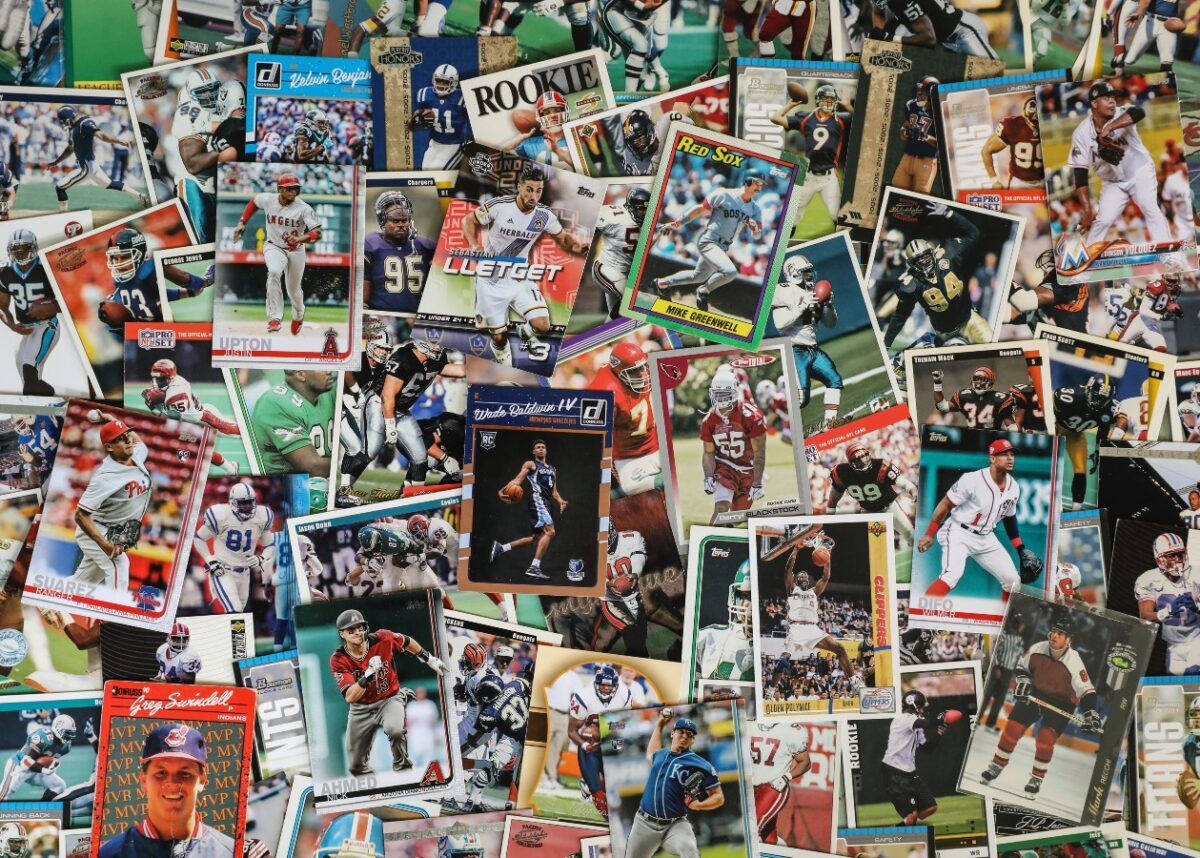
When it comes to collecting sports cards, people often focus on the cards’ financial worth. And understandably so.
After all, when a small piece of cardboard that originally cost just dollars or even cents is suddenly worth more than a million bucks after the featured player rises to fame, it’s hard to ignore the kind of massive wealth that certain sports cards can command.
For instance, a 1952 Mickey Mantle card sold for a then-record US$5.2 million in January 2021. A 2003-2004 LeBron James card also sold for $5.2 million in April 2021.
The highest-selling sports card in history is one that features Honus Wagner, which sold for $6.6 million in August 2021.
As a business professor who focuses on sports, I would never knock the trading of sports cards as a way to make an extra buck or as a hobby, or even just to pocket a piece or two of sports memorabilia – or just for the nostalgia of it all. But as an educator, I see another purpose for sports cards that goes well beyond memorabilia and their monetary worth.
And that is, I believe sports cards – just like sports in general – can be integrated into the classroom as a way to stimulate students’ interest in math, probability, statistics and other related subjects they might otherwise dread.


This can be done at the college level, which I have done. But more importantly, I believe it should be done at the K-12 level as well. Integrating sports into the classroom is what math curriculum specialist Natalie Kautz of Rowan University and her colleague Michelle Kowalsky argue in a book about using pop culture to reach K-12 students.
“The rich variety of numbers generated by all types of sports, as well as connections to popular culture extensions, naturally provides opportunities for exploration in numerical literacy,” Kautz and Kowalksy wrote in a chapter about using sports as a way to foster numerical literacy among students. “Using real sports data, students can perform operations and calculations, do statistical analyses, and create charts or graphs to enhance their learning of both basic and advanced operations.”
They go on to say that “nearly every concept taught in a K-12 mathematics curriculum” lends itself to a sport-based lesson of some sort.

Resurgent interest
Now is a particularly good time to use sports cards in the classroom. Trading cards have grown quite popular as of late due to the pandemic.
For example, in 2020, interest in sports card collecting grew as sports games were canceled due to COVID-19. Such a scenario may be slowly unfolding anew as new variants of the coronavirus have begun to cause officials to postpone or cancel sports contests once again in late 2021 going into 2022.
Cards in the classroom
Using sports as a teaching tool is not an abstract concept for me. Back in 2017 and 2018 at Florida State University, I used baseball and basketball cards to teach a class about sports analytics, which is essentially the use of data analytics in the world of sports.
Sports analytics – which is expected to become a $3.44 billion industry globally by 2028 – is playing an increasingly vital role in sports. For instance, some colleges use it to recruit athletic talent. Professional sports teams, such as the the Golden State Warriors, have used analytics as the “secret sauce to championship success.”
The class I taught attracted mostly sport management majors but was open to other students as well. And sports trading cards played a prominent role in my class.
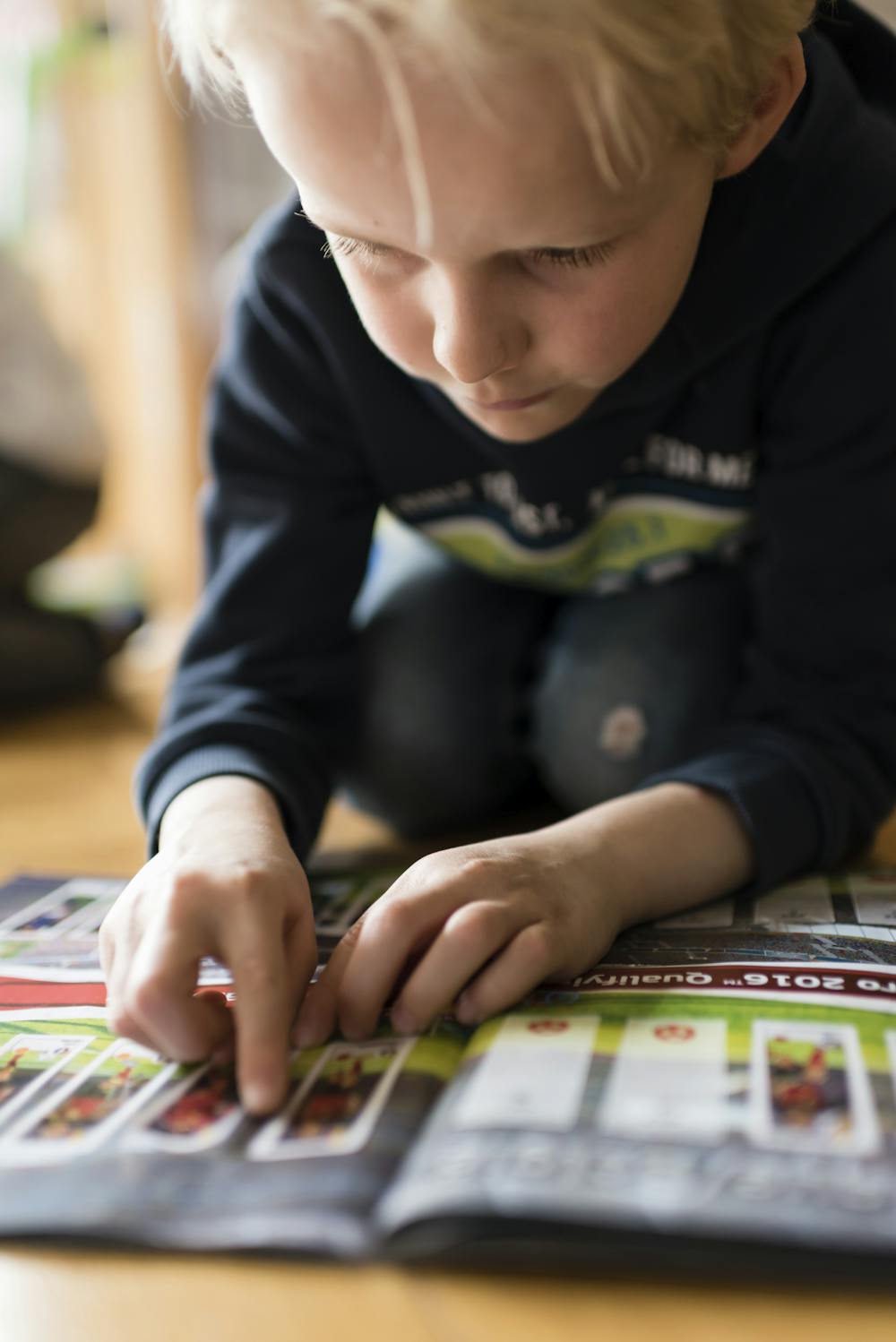
For instance, to teach the “Pythagorean Theorem of Baseball,”, which baseball analytics guru Bill James developed to estimate how many games a team will win, I would have students “draft” players by randomly picking cards from packs. Then, using statistics from the same year for the selected players, I would have students tally the runs scored for the hitters and the runs allowed for the pitchers. Once students collect those two numbers, all that remains is putting them into the formula of Runs Scored squared divided by Runs Scored squared plus Runs Allowed squared. This formula then produces a winning percentage estimate.
Within the context of sports analytics, the idea is to show students that various statistics, when looked at collectively, can be used to predict certain outcomes. But such an exercise can also be used just to get students comfortable with statistics and using them in different ways.
Students have enjoyed seeing how their teams performed using something like a standings page that they might see on ESPN.
I did a similar exercise using packs of basketball cards I bought online. I would have students select of pack of cards and then rank the players using economics professor David Berri’s “Win Score” formula. The simple formula requires students to add a player’s points, rebounds and steals from one season together, then add half of their assists and half of their blocked shots. Students then subtract a player’s field goal attempts, turnovers and half of their free throw attempts – again, from the same season – along with half of the player’s personal fouls. This enables a person to develop a snapshot of a player’s performance. But it also shows students how they can use statistics to analyze a player’s performance in different ways.
At all levels
One of the best things about using sports cards is that they can be used at any grade level. For example, in preschool, you can use the cards to help kids learn and remember numbers by having them read the numbers on players’ jerseys.
In elementary school, students can use the information on the back of baseball cards to learn division. Simple exercises like dividing a player’s number of hits by their total number of times at bat produces the player’s batting average – a key statistic in baseball.
Sports trading cards lend themselves to all sorts of fun and lively lessons. For instance, in 2020, the Topps trading card company put forth a series of lessons that teachers could do using sports trading cards. In one lesson, the company invited teachers to ask students to find the average age of five players in their card collection. Another lesson called for students to organize 10 cards based on a player’s weight from heaviest to lightest as fast as students could.
[You’re smart and curious about the world. So are The Conversation’s authors and editors. You can read us daily by subscribing to our newsletter.]
Flipping the cards
The use of sports cards in the classroom could serve as a way to help maintain interest in math – a subject in which students’ skills have taken a hit during the pandemic. Interest in a subject is key for learning the subject and succeeding at it.
For all these reasons, instead of focusing on the photographs on the face of sports cards, I believe the time has come for educators to start making better use of the statistics on the backs of the cards. While the photos on the front tend to generate the most attention, the statistics on the back of the card provide multiple ways to engage students in math using a sport they love or an athlete that they admire.
John Holden, Assistant Professor of Legal Studies, Oklahoma State University
This article is republished from The Conversation under a Creative Commons license. Read the original article.