Meru Sheel, Australian National University; Cyra Patel, Australian National University, and David Tscharke, Australian National University
The weekend’s news of COVID-19 outbreaks and various lockdowns around Australia reminds us there’s no room for complacency. We need to accelerate Australia’s COVID-19 vaccine roll-out and ensure people are fully vaccinated as soon as possible.
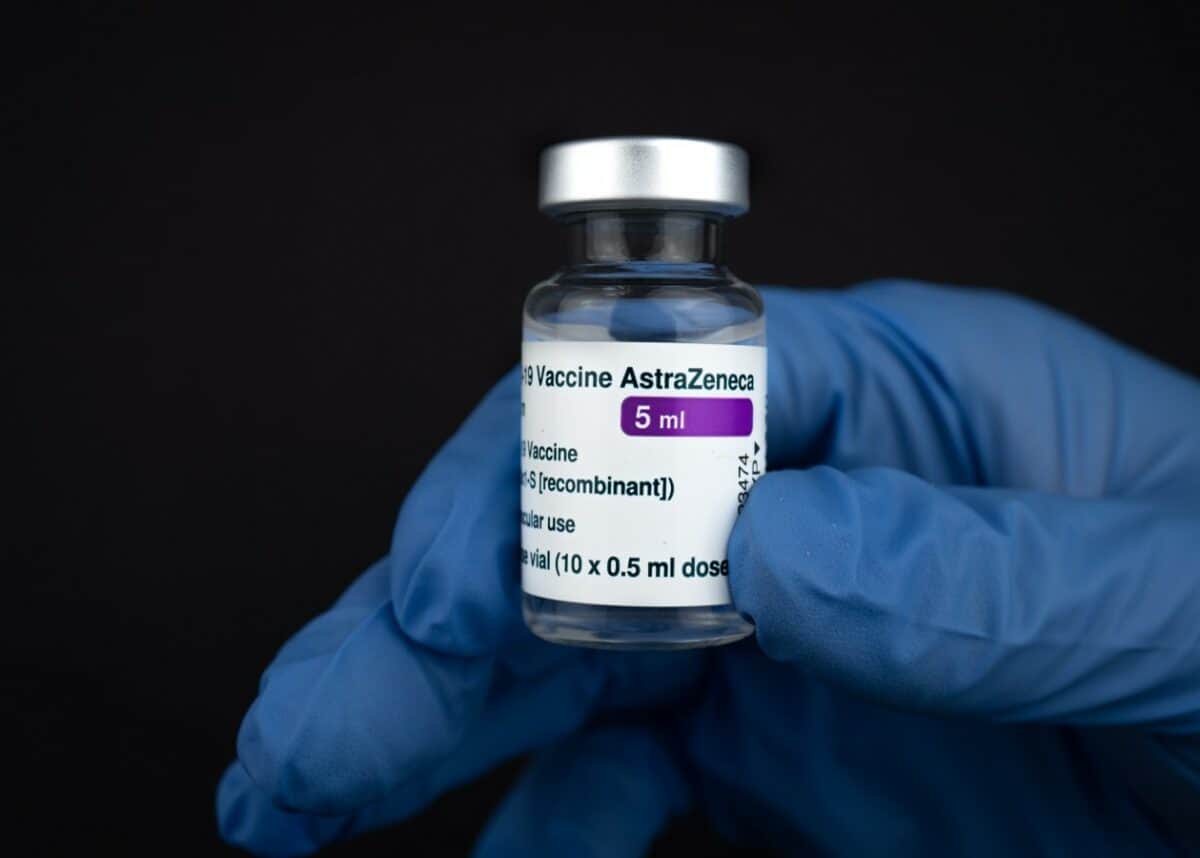
Just over six million Australians (30% of those eligible) have received their first dose of a COVID-19 vaccine. As of June 17, 3.8 million Australians had one dose of AstraZeneca.
Despite the benefits of vaccination, some people are concerned about the small but real risk of clotting after receiving their AstraZeneca vaccine. Some have even cancelled their booking for their second dose.
But until you’re fully vaccinated – with two doses of AstraZeneca or two doses of Pfizer, at the recommended time intervals – you’re not optimally protected. After your second AstraZeneca dose, your protection against the Delta variant almost doubles, from 33% to 60%.
Why are 2 doses are better than 1?
When you get the AstraZeneca vaccine, or an mRNA vaccine such as Pfizer, it directs your body to make the SARS-CoV-2 spike protein at the injection site.
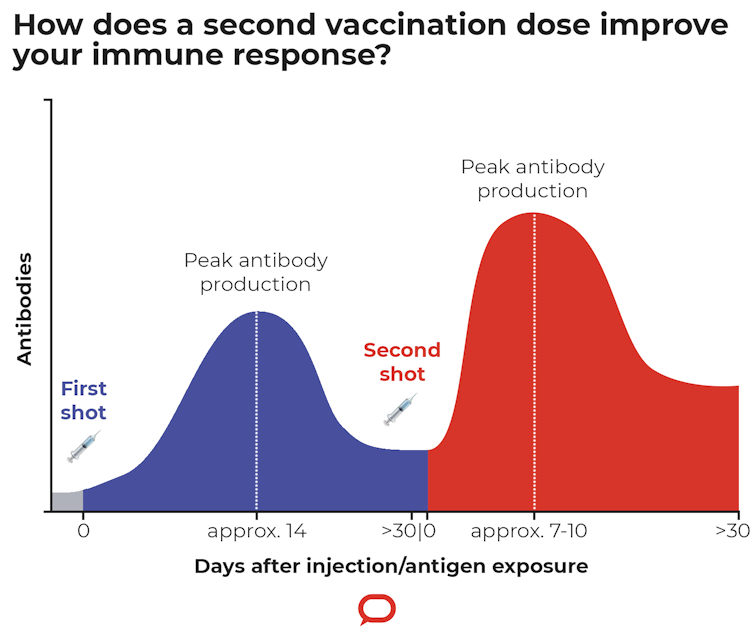
This prompts an immune response, which recognises and remembers this spike protein. But the vaccines don’t make the spike protein for very long, nor do they spread it. This restricts the size of the immune response.


Limiting each dose and delivering it twice generally leads to better and longer-lasting immune responses than a single dose.
Just like your own memory, which improves by repeated viewing or listening with a break in between, our immune memory generally improves with repeated exposure to something it needs to protect us against.
When should you get your second dose?
The recommended interval between doses of AstraZeneca is 12 weeks, while the minimum is four weeks after the first dose.
This is based on clinical trial data which showed around 73% “efficacy” after the first dose. This means in experimental studies, the first dose of the vaccine reduced the risk of getting COVID19 caused by the original strain by 73%.
When people received their second dose after 12 weeks or more, the efficacy reached 81%.
In these trials, a longer duration between the first and second doses – 12 weeks, rather than eight or less – resulted in higher levels of antibodies which can stop the virus.
These antibodies will inevitably fall over time, but starting at a higher level after the last dose means it will take longer for them to fall to levels where protection is compromised.
How well does AstraZeneca protect against variants?
When the Alpha variant is dominant, the AstraZeneca vaccine provides 55-70% protection after one dose and 65-90% after two doses. Alpha is the variant associated with the Queensland flight crew outbreak.
For the Delta variant, which is circulating in Sydney, one dose provides 33% protection against symptomatic COVID-19. So after one dose, you’re 33% less likely to get sick with the Delta strain than someone who is unvaccinated.
The level of protection increased to 60% in those who received two doses of the AstraZeneca vaccine.
This compares to 88% for Pfizer.
Both vaccines offer greater protection against severe disease. Two doses of AstraZeneca reduces your chance of needing to be hospitalised with COVID-19 by 92%, while for Pfizer it’s 96%, compared with someone who wasn’t vaccianted.
Overall, contact tracing data shows one dose of either AstraZeneca or Pfizer vaccine can prevent disease from spreading to members in the same household by around 50%.
Today the New South Wales health minister revealed that of the 30 people at a Hoxton Park house party, 24 returned a positive COVID test. While you can still get COVID-19 when you’re vaccinated (generally a milder form), in this case, the six who have so far tested negative had all been vaccinated.
What about blood clots following second dose?
Thrombosis with thrombocytopenia syndrome (TTS) is a rare clotting condition that can occur after AstraZeneca vaccination because of an abnormal immune response.
The risk of TTS is smaller following the second dose of AstraZeneca than the first dose.
Of the nearly 16 million people who received the second dose of AstraZeneca in the UK, 23 developed TTS, a rate of 1.5 per million people vaccinated. This compares with 14.2 per million for a first dose.
The risk of death from TTS is further reduced. If you received your first dose of AZ vaccine without developing TTS, you are even less likely to get it with the second dose.
That’s why health authorities recommend people who safely received their first dose of AstraZeneca vaccine have their second dose and protect themselves optimally.
Can I get the Pfizer vaccine for my second dose instead?
Some countries, including Canada and some in Europe, have approved mixing and matching different COVID-19 vaccine brands.
This is based on data on antibody responses, which showed a stronger immune response when people get a different type of COVID-19 vaccine for their second dose.
But while this is encouraging, we don’t have clear evidence that mixing vaccines will protect against COVID-19.
Mixing vaccine brands also increased common side effects including reactions such as headaches, fever, body aches and tiredness.
It’s possible that as more information becomes available from ongoing studies using AstraZeneca, Pfizer, Moderna and Novavax vaccines, the advice of mixing vaccines may eventually change.
But until more real-world data on vaccine safety and effectiveness are available, the advice in Australia is for people to receive two doses of the same vaccine.
The goal is full vaccination
The best way out of this pandemic is to ensure everyone is vaccinated as quickly as possible. Full protection kicks in about two weeks after completing vaccination.
While one dose offers some protection, it’s not as high as two doses. And we don’t know how long the protection from one dose will last.
Right now, a second dose of AstraZeneca vaccine is ready and waiting for everyone who had their first dose 12 weeks ago. So if you’re eligible, get both doses of the vaccine brand available to you, rather than settling for second-best and incomplete protection.
Meru Sheel, Epidemiologist | Senior Research Fellow, Australian National University; Cyra Patel, PhD candidate, Australian National University, and David Tscharke, Professor in Immunology and Infectious Diseases, Australian National University
This article is republished from The Conversation under a Creative Commons license. Read the original article.