

• Advertise
  • About us
  • Terms and Conditions
  • Contact us
Saturday, December 6, 2025
Australian Times News
  • News
    • Weather
    • Sport
    • Technology
    • Business & Finance
      • Currency Zone
    • Lotto Results
      • The Lott
  • Lifestyle
    • Entertainment
    • Horoscopes
    • Health & Wellness
    • Recipes
  • Travel
  • Expat Life
  • Move to Australia
No Result
View All Result
  • News
    • Weather
    • Sport
    • Technology
    • Business & Finance
      • Currency Zone
    • Lotto Results
      • The Lott
  • Lifestyle
    • Entertainment
    • Horoscopes
    • Health & Wellness
    • Recipes
  • Travel
  • Expat Life
  • Move to Australia
No Result
View All Result
Australian Times News
No Result
View All Result
Home News

Shark bites are rare. Here are 8 things to avoid to make them even rarer

Shark bite incidents are rare but traumatic. They’re usually followed by calls for mitigation strategies, some of which are dangerous or lethal to sharks – despite the fact most sharks are timid and actively avoid people.

Sonja Baartman by Sonja Baartman
19-12-2021 08:23
in News

Adam Smith, James Cook University

Shark bite incidents are rare but traumatic. They’re usually followed by calls for mitigation strategies, some of which are dangerous or lethal to sharks – despite the fact most sharks are timid and actively avoid people.

The “SharkSmart” approach, adopted by the Queensland government, aims to educate and urge people to take responsibility for reducing the risk of shark bites by changing their own behaviour. But can humans change?

To find out, we teamed up with three companies in the sailing charter industry in the Whitsundays area to better understand how people were using the environment, their knowledge of shark smart behaviours and to see if promoting SharkSmart behaviours led to change.

We found people can and do change behaviour as a result of education – but for some, unfortunately, a “she’ll be right” attitude still prevails.
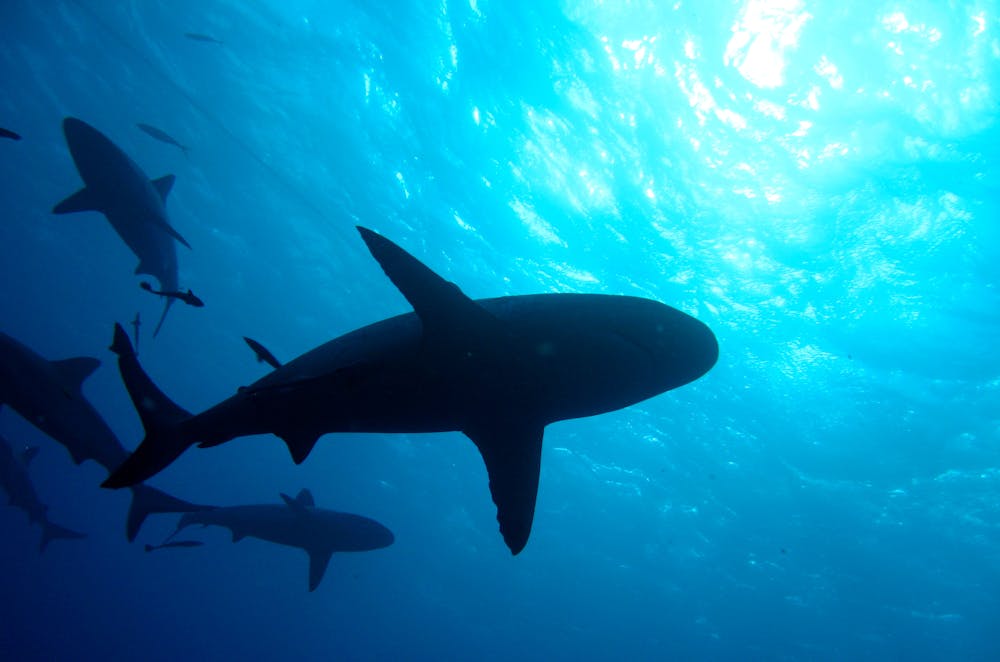
Sharks swim in clear waters.
People must take responsibility for reducing the risk of shark bites by changing their own behaviour. Shutterstock

Doing your part to be SharkSmart

Previous surveys had shown many water-users were already aware of many ways to reduce shark risk but there was room for improvement.

Many SharkSmart behaviours are well known, such as not swimming at dusk or dawn when sharks may be more prevalent.


AlsoRead...

Ryan: Building real freedom through e-commerce

Ryan: Building real freedom through e-commerce

27 November 2025
Design Australia Group: Redefining Drafting as the engine of housing growth

Design Australia Group: Redefining Drafting as the engine of housing growth

26 November 2025

But we wanted to find out what else people were doing in the water and see if some key SharkSmart interventions made a difference. The interventions included:

  • showing people a short video before they went out on the water
  • putting stickers on boats to remind people how to reduce shark risk
  • making SharkSmart brochures available to guests on boats
  • dedicated waste disposal bags were given to two of the charter boat operators, with the third acting as a control group.
https://youtube.com/watch?v=d17id9NOR6s%3Fwmode%3Dtransparent%26start%3D0

We did surveys before and after these SharkSmart tools were introduced to see what changed.

We particularly wanted to know whether people were less likely to do eight things linked to higher shark risk in the Whitsundays area:

1. splashing in the water

2. swimming alone

3. swimming near fishers

4. swimming at spots where shark bites have occurred in the past (in this case, in Cid Harbour)

5. throwing fish scraps in the water

6. throwing burley (a type of bait, sometimes known as chum) in the water

7. fishing near swimmers

8. throwing food in the water.

Research suggests that by not doing these eight things, we can make shark bites even rarer than they already are.

As well as the before-and-after surveys, we captured a sample of rubbish coming back on shore. This was so we could get an idea of whether fish and meat were being stored or thrown overboard.

We also wanted to see where and when risk might be higher. For example, snorkelling in a busy anchorage or where people are fishing may increase unnecessary dangers. The warmer months of September to December were mapped as potential higher risk for shark bites.

Our findings

We surveyed 228 tourists (92 pre- and 136 post-intervention) and found:

  • a 8.9% reduction in splashing or making noise when swimming or snorkelling
  • a 4.1% reduction in throwing fish scraps overboard and
  • a 3.8% reduction in people fishing near people swimming.
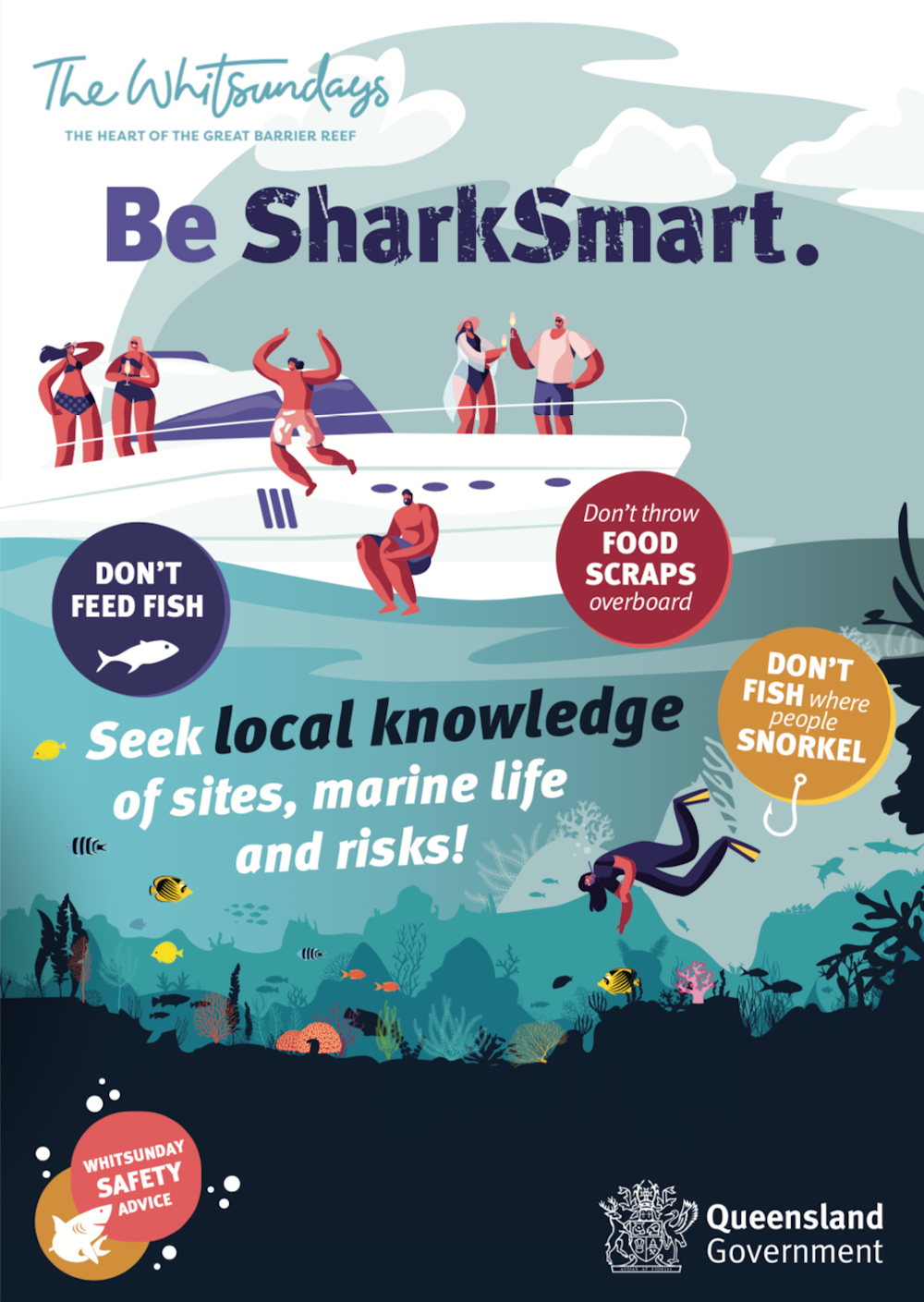
A poster shows SharkSmart behaviours.
A poster shows SharkSmart behaviours. Queensland Government, Author provided

We found most people were aware of these six behaviours:

  • following local signage
  • having a buddy when swimming, diving or snorkelling
  • avoiding swimming at dawn or dusk
  • swimming in clear water
  • keeping fish waste and food scraps out of the water where people swim
  • avoiding swimming with schools of bait fish or diving birds.

The lowest awareness was for the last one, but after our intervention we saw a 4.7% increase in knowledge of this behaviour.

Although 100% of people were aware of the need to keep fish waste and food scraps out of the water, our pre-surveys between August and October last year found about one-third of tourists still disposed of fish scraps into the water. After the intervention, the share of people doing this dropped to 4-8%.

Shifting the ‘she’ll be right’ attitude

The good news is there is very high awareness of SharkSmart behaviours and most times, people didn’t throw burley in the water, fish near swimmers or swim in Cid Harbour.

Unfortunately, some people continued to splash, swim alone and throw fish waste and food scraps in the water. Changing these norms among swimmers and boaties will take time.

An attitude of “she’ll be right” still exists among some water users and this group may be the toughest to influence; it’s hard to shift attitudes about dangers among people with such a relaxed attitude to risk.

In the Whitsundays and wider Australia, we are lucky to have some of the most incredible beaches, islands and reefs in the world. Most of us are willing to take a small calculated risk to swim in the ocean. Shark bite incidents are extremely rare in Australia but by making small changes, we can drive down the danger even further.


Katie Frisch and Gemma Molinaro from Reef Ecologic contributed to this article.

Adam Smith, Adjunct Associate Professor, James Cook University

This article is republished from The Conversation under a Creative Commons license. Read the original article.


Tags: SB001
DMCA.com Protection Status

SUBSCRIBE to our NEWSLETTER

[mc4wp_form id=”2384248″]

Don't Miss

The evolution of Aesthetic Surgery through the lens of Dr Kourosh Tavakoli

by Pauline Torongo
4 December 2025
The evolution of Aesthetic Surgery through the lens of Dr. Kourosh Tavakoli
Health & Wellness

As global interest in Australian cosmetic surgery continues to grow, the combination of regulation, research and emerging digital tools is...

Read moreDetails

Ryan: Building real freedom through e-commerce

by Pauline Torongo
27 November 2025
Ryan: Building real freedom through e-commerce
Business & Finance

Ryan’s greatest achievement isn’t any single business or revenue milestone — it’s the ecosystem he’s built through the Change community.

Read moreDetails

Design Australia Group: Redefining Drafting as the engine of housing growth

by Pauline Torongo
26 November 2025
Design Australia Group: Redefining Drafting as the engine of housing growth
Business & Finance

Australia is under pressure to build homes faster, but design bottlenecks slow progress. Design Australia Group is fixing this by...

Read moreDetails

Louis Guy Detata builds Global Trading Empires through autonomous systems and disciplined leadership

by Pauline Torongo
25 November 2025
Louis Guy Detata builds Global Trading Empires through autonomous systems and disciplined leadership
Business & Finance

The path from investment banking to leading a global trading platform has taught Louis Detata that sustainable success requires more...

Read moreDetails

Burning Eucalyptus Wood: Tips, Advantages, Disadvantages & Alternatives

by Fazila Olla-Logday
20 November 2025
Image Supplied
Enviroment

Learn about burning eucalyptus wood for stoves and fireplaces. Discover benefits, drawbacks, harvesting tips, and better alternative firewood options for...

Read moreDetails

Everything Parents Need to Know About Baby Soft Play and Why It’s a Game Changer

by Fazila Olla-Logday
11 November 2025
Everything Parents Need to Know About Baby Soft Play
Health & Wellness

Baby soft play is a fun, safe, and educational way for little ones to explore and grow. Discover the benefits...

Read moreDetails

WOMAD Sets Up a New Camp in Wiltshire – Australian festival fans take note!

by Kris Griffiths
11 November 2025
Kumbia Boruka brought their reggae and dancehall flavour to the Taste the World Stage at WOMAD 2024 - Credit - Mike Massaro
Entertainment

With its 2026 edition moving to Neston Park in England, WOMAD offers Aussie music lovers a chance to reconnect with global...

Read moreDetails
Load More

Copyright © Blue Sky Publications Ltd. All Rights Reserved.
australiantimes.co.uk is a division of Blue Sky Publications Ltd. Reproduction without permission prohibited. DMCA.com Protection Status

  • About us
  • Write for Us
  • Advertise
  • Contact us
  • T&Cs, Privacy and GDPR
No Result
View All Result
  • News
    • Weather
    • Sport
    • Technology
    • Business & Finance
      • Currency Zone
    • Lotto Results
      • The Lott
  • Lifestyle
    • Entertainment
    • Horoscopes
    • Health & Wellness
    • Recipes
  • Travel
  • Expat Life
  • Move to Australia

Copyright © Blue Sky Publications Ltd. All Rights Reserved.
australiantimes.co.uk is a division of Blue Sky Publications Ltd. Reproduction without permission prohibited. DMCA.com Protection Status

No Result
View All Result
  • News
    • Weather
    • Sport
    • Technology
    • Business & Finance
      • Currency Zone
    • Lotto Results
      • The Lott
  • Lifestyle
    • Entertainment
    • Horoscopes
    • Health & Wellness
    • Recipes
  • Travel
  • Expat Life
  • Move to Australia

Copyright © Blue Sky Publications Ltd. All Rights Reserved.
australiantimes.co.uk is a division of Blue Sky Publications Ltd. Reproduction without permission prohibited. DMCA.com Protection Status





