


Cobus Gerber, University of South Australia and Rietie Venter, University of South Australia
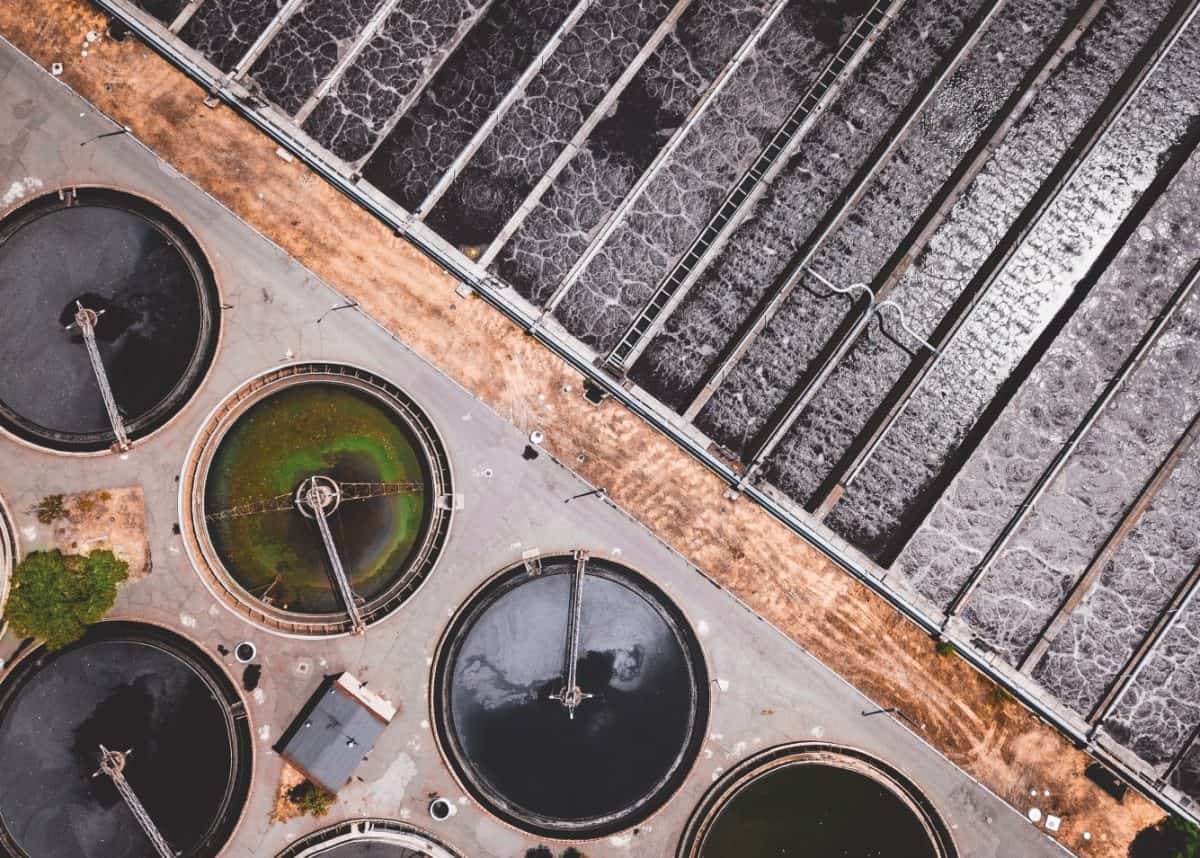
We’re often hearing alerts for different areas after traces of coronavirus are found in the wastewater, or sewage.
Most recently, fragments were detected at Benalla, in Victoria’s north, and at Portland, not far from the South Australian border. The Victorian government subsequently closed the border to South Australia, and urged anyone in these areas to get tested if they developed symptoms.
The idea of testing sewage to track the presence of a virus is not new. Scientists in Israel used it to monitor a polio outbreak in 2013.
While it is a useful tool for COVID-19 disease surveillance, it’s not entirely foolproof.
From drug use to COVID-19
We commonly use wastewater monitoring to estimate levels of illicit drug use in Australia. This is the sort of work our teams do, although this year we shifted our focus to look at methods of testing wastewater for COVID-19.
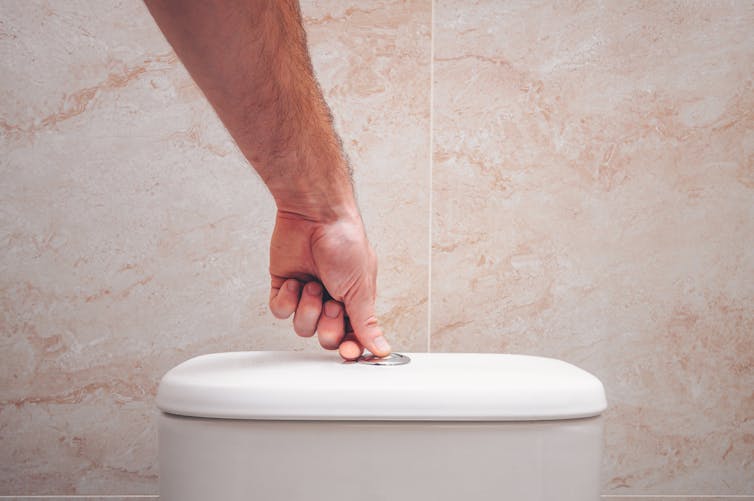
A virus monitoring program uses the same principle as wastewater monitoring for drugs. Microbes such as SARS-CoV-2, the virus that causes COVID-19, are passed mainly through a person’s gut, then come out in their stool, and enter the sewerage system after a toilet flush.


This process, called viral shedding, depends on the severity of the infection (generally, people who have a more severe infection shed more of the virus, though this isn’t always the case) and can occur for several weeks after symptoms have disappeared.
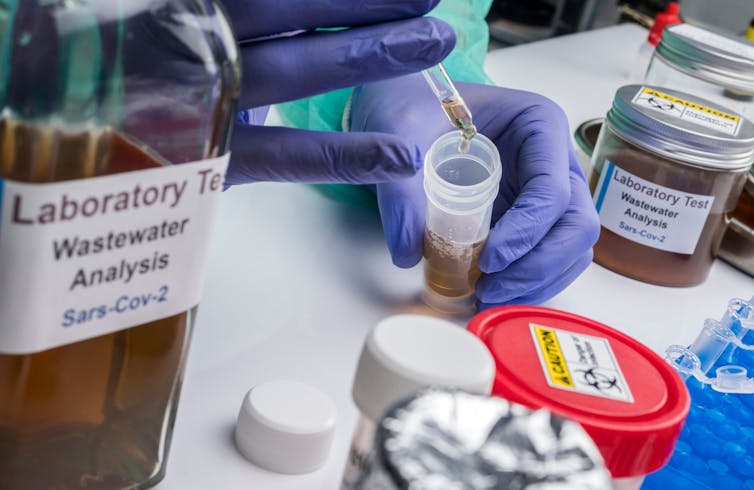
Although the virus doesn’t stay viable in the sewage for very long — you’re not likely to catch it if you come into contact with sewage containing virus — remnants of its genetic material may remain intact. When a daily sample is collected at a treatment plant, we can recover the RNA fragments.
Some research groups have suggested this approach may be able to detect a single infected person in a catchment of 100,000.
The technique is important
A variety of techniques can be used to recover the genetic material before we measure how much virus is present. The more virus there is in a sample, the easier it is to detect.
Currently, there are no agreed standard approaches — different teams testing wastewater for COVID in different places do it differently.
This is partly because we’re still working out the best method — each has its own strengths. Our research, currently under review, shows a method may be very sensitive in some cases but not in others.
Wastewater from a suburban area may contain mainly household effluent, whereas a sample from a more industrial area could contain various chemicals that may interfere with detecting the viral RNA. Wastewater is not homogeneous and its contents can even vary depending on the time of day.
We’re working on developing more robust methods that are less prone to being influenced by the wastewater source. In the meantime, we need to be a bit cautious when interpreting results from wastewater testing.
What happens when a sample is positive?
Once traces of SARS-CoV-2 show up in wastewater, it’s a likely indication that infected people live in, or have visited, the sewer catchment. However, it’s important that more than one indicator confirming virus RNA is included in the tests to minimise the risk of false positives.
Even then, a result may simply be a case of people who are recovering from illness, shedding virus after they’ve completed their quarantine, when they will no longer be infectious.
It’s important to carry out ongoing surveillance to determine if the signal peters out, or if the level of virus detected at the location increases. The latter would suggest an underlying spread of infections, and the need to step up targeted testing. This is arguably the strength of wastewater surveillance.
Conversely, when the results are negative, it may imply there are no infected people in the catchment. However, this could also mean the testing method is insufficiently sensitive to pick up infections. It’s possible infected people are located far from the sampling point, and no identifiable virus remnants remain in the sample by the time it’s collected.
There’s also the issue that many people in regional areas have their own septic tanks.
So like testing people for COVID, wastewater testing carries a risk of both false positives and false negatives.
There are strengths and weaknesses
Sewage surveillance can’t give us specific information, such as the location of the infected people or the number of infections. But as long as we understand its strengths and weaknesses, it’s a valuable complementary approach to guide targeted testing.
It can provide authorities with evidence that may inform whether they can relax restrictions in some communities, instead of applying blanket lockdowns. If we had COVID wastewater monitoring across South Australia (currently it’s only operating in Adelaide), it might have been able to indicate there were no cases in regional areas, and perhaps they could have avoided this week’s harsh lockdown.
With so much uncertainty about when and where the next outbreak might occur, monitoring wastewater could provide an early warning signal.
People in Benalla in Portland should be aware and get tested if they have any symptoms, according to public health advice. But at this stage, there’s no need for alarm.
Cobus Gerber, Associate Professor, University of South Australia and Rietie Venter, Associate professor, Clinical and Health Sciences, University of South Australia
This article is republished from The Conversation under a Creative Commons license. Read the original article.







