

• Advertise
  • About us
  • Terms and Conditions
  • Contact us
Sunday, December 7, 2025
Australian Times News
  • News
    • Weather
    • Sport
    • Technology
    • Business & Finance
      • Currency Zone
    • Lotto Results
      • The Lott
  • Lifestyle
    • Entertainment
    • Horoscopes
    • Health & Wellness
    • Recipes
  • Travel
  • Expat Life
  • Move to Australia
No Result
View All Result
  • News
    • Weather
    • Sport
    • Technology
    • Business & Finance
      • Currency Zone
    • Lotto Results
      • The Lott
  • Lifestyle
    • Entertainment
    • Horoscopes
    • Health & Wellness
    • Recipes
  • Travel
  • Expat Life
  • Move to Australia
No Result
View All Result
Australian Times News
No Result
View All Result
Home News

Seagrass meadows shrank by 92% in UK waters – restoring them could absorb carbon emissions and boost fish

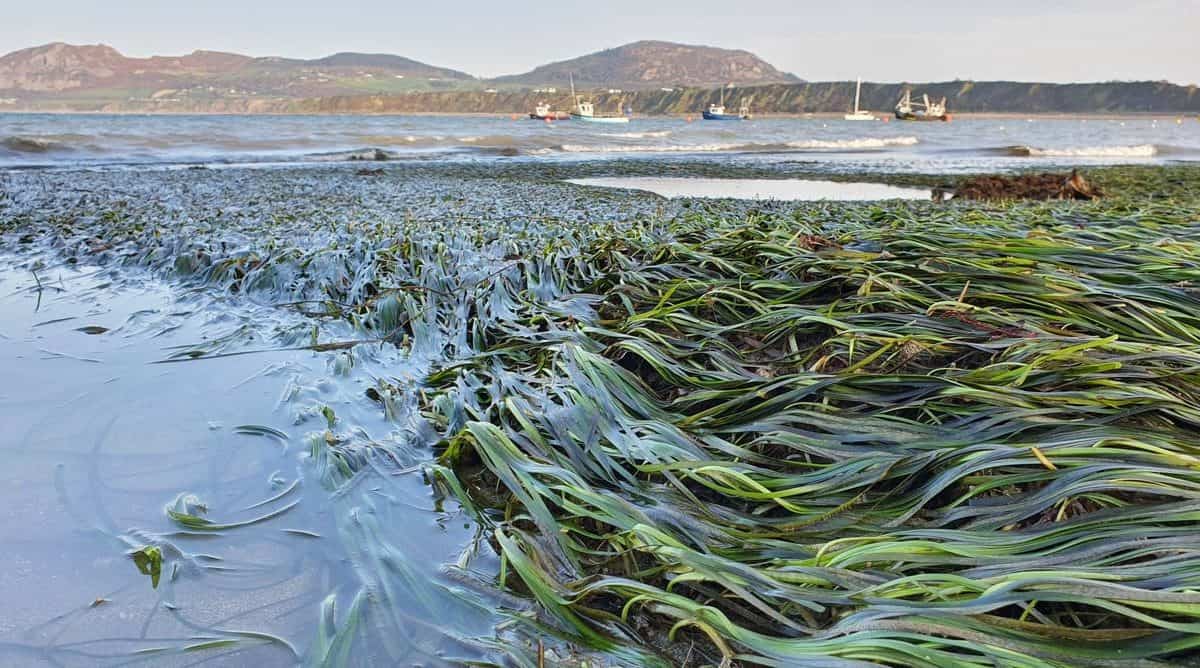
Seagrass is a flowering plant that forms rippling underwater meadows in shallow coastal seas. Our study is the first to analyse all published data on this habitat in the UK, gathered from newspapers, diaries and other sources throughout history.

The Conversation by The Conversation
05-03-2021 22:35
in News
A healthy seagrass meadow outside of Porthdinllaen harbour, North Wales. Richard Unsworth, Author provided

A healthy seagrass meadow outside of Porthdinllaen harbour, North Wales. Richard Unsworth, Author provided

Richard K.F. Unsworth, Swansea University; Alix Green, UCL; Michael A. Chadwick, King’s College London, and Peter JS Jones, UCL

The native oyster beds are gone. The vast saltmarshes that soaked up carbon and buffered the coast from stormy seas have been reclaimed for farms and towns. The species-rich maerl and horse mussel beds have vanished and now, in new research, we’ve uncovered the decline of another jewel in the UK’s marine environment: seagrass meadows.

Seagrass is a flowering plant that forms rippling underwater meadows in shallow coastal seas. Our study is the first to analyse all published data on this habitat in the UK, gathered from newspapers, diaries and other sources throughout history. We found that at least 44% of the UK’s seagrass has been lost since 1936 – most of it since the 1980s. But when we modelled which coastal areas were likely to have been suitable for seagrass, we found that as much as 92% of it might have disappeared.

Thankfully, there are still 8,493 hectares (20,987 acres) of mapped seagrass in UK waters. That’s about the same size as Newcastle upon Tyne. But seagrass may have once covered 82,000 hectares of seabed – an area as large as 115,000 football fields. While we may never know exactly how much of the UK’s seabed was once covered by this habitat – old data sets are often light on detail and contain inaccuracies – we know these underwater meadows were vast. We can only imagine how their loss has transformed the country’s coastal seas.

Widespread loss

Seagrass meadows are one of the world’s most efficient sinks of carbon and support 20% of the world’s biggest fisheries. We estimated that the UK’s meadows once stored 11.5 million tonnes of carbon, equivalent to the annual emissions of 7.7 million cars. With the destruction of the seagrass, much of that carbon has been added to the atmosphere and needs to be returned. These huge meadows could also have sheltered 400 million fish, and annually filtered pollution equivalent to the amount of urine produced by the entire population of Liverpool each year.

The first estimates of seagrass around the UK emerged in the 1930s. Descriptions and anecdotes suggest it was a common sight at the coast. Seagrass abounded in sheltered and protected spots, and there were plentiful populations in the lochs of Ireland and the west of Scotland.

Seagrass was considered so abundant in the 1860s that entrepreneurs writing in the Times of London described it as a potential cash crop that could rival imported cotton. While accurate data on the past size and extent of seagrass meadows is rare, the information we do have paints a picture of widespread loss. And these declines continue. The seagrass that has persisted is in a poor state – beset by pollution, coastal development, and disturbance from boating.


AlsoRead...

Ryan: Building real freedom through e-commerce

Ryan: Building real freedom through e-commerce

27 November 2025
Design Australia Group: Redefining Drafting as the engine of housing growth

Design Australia Group: Redefining Drafting as the engine of housing growth

26 November 2025

Seagrass losses were widespread from urban coastlines to remote estuaries. While huge areas of the Humber, the Essex and Suffolk estuaries lost seagrass, so did more rural locations on the east coast of Anglesey in Wales, the Cromarty Firth in Scotland, and the inlets and estuaries of Cornwall. Areas once covered by seagrass are now lifeless seabeds in many cases.

These losses have numerous and complex causes, but most involve poor water quality resulting from sewage discharges and nutrients running off farmland. Coastal developments – and mines in the past – have also polluted and disturbed seagrass.
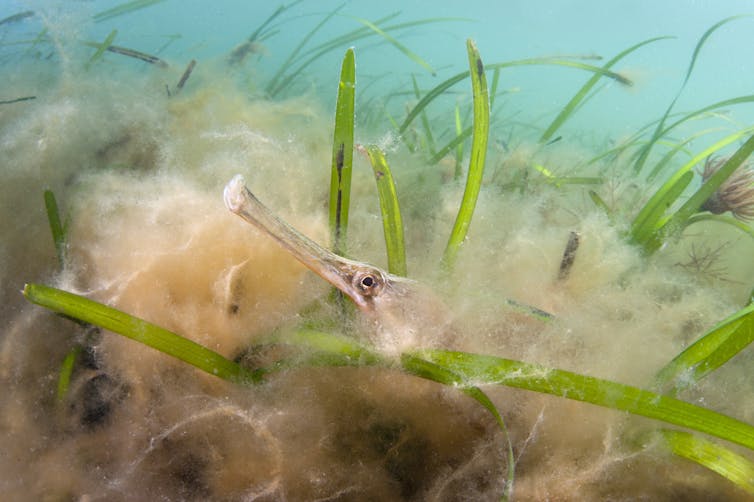
A long, thin fish stirs in a thick clump of seagrass.
Seagrass meadows support UK species such as the greater pipefish (Syngnathus acus). Naturepl.com/Alex Mustard/WWF, Author provided

A chance for renewal

Our findings should not inspire blame, though. They should highlight the massive opportunities in restoring these habitats. Reviving the UK’s seagrass meadows could help fight the climate emergency, rebuild wildlife populations and put beleaguered fisheries back on a path to productivity.

The tide is turning for some marine habitats in the UK. Work led by the WWF is replanting seagrass in West Wales, oysters are being laid in the Durnoch Firth and coastlines are being reshaped to encourage saltmarshes in Somerset. But these projects must aspire to a bigger vision of coastal biodiversity, mirroring achievements in the US. In Virginia, thousands of hectares of seagrass have been planted. This is the scale of ambition the UK needs.

The evidence of its decline is stark, but seagrass was once common throughout UK waters and could be again. The opportunity for the restoration of this vital habitat is immense.

Richard K.F. Unsworth, Senior Lecturer in Marine Biology, Swansea University; Alix Green, PhD Candidate in Conservation Biology, UCL; Michael A. Chadwick, Senior Lecturer in Aquatic Biology, King’s College London, and Peter JS Jones, Reader in Environmental Governance, UCL

This article is republished from The Conversation under a Creative Commons license. Read the original article.


Tags: SB001
DMCA.com Protection Status

SUBSCRIBE to our NEWSLETTER

[mc4wp_form id=”2384248″]

Don't Miss

The evolution of Aesthetic Surgery through the lens of Dr Kourosh Tavakoli

by Pauline Torongo
4 December 2025
The evolution of Aesthetic Surgery through the lens of Dr. Kourosh Tavakoli
Health & Wellness

As global interest in Australian cosmetic surgery continues to grow, the combination of regulation, research and emerging digital tools is...

Read moreDetails

Ryan: Building real freedom through e-commerce

by Pauline Torongo
27 November 2025
Ryan: Building real freedom through e-commerce
Business & Finance

Ryan’s greatest achievement isn’t any single business or revenue milestone — it’s the ecosystem he’s built through the Change community.

Read moreDetails

Design Australia Group: Redefining Drafting as the engine of housing growth

by Pauline Torongo
26 November 2025
Design Australia Group: Redefining Drafting as the engine of housing growth
Business & Finance

Australia is under pressure to build homes faster, but design bottlenecks slow progress. Design Australia Group is fixing this by...

Read moreDetails

Louis Guy Detata builds Global Trading Empires through autonomous systems and disciplined leadership

by Pauline Torongo
25 November 2025
Louis Guy Detata builds Global Trading Empires through autonomous systems and disciplined leadership
Business & Finance

The path from investment banking to leading a global trading platform has taught Louis Detata that sustainable success requires more...

Read moreDetails

Burning Eucalyptus Wood: Tips, Advantages, Disadvantages & Alternatives

by Fazila Olla-Logday
20 November 2025
Image Supplied
Enviroment

Learn about burning eucalyptus wood for stoves and fireplaces. Discover benefits, drawbacks, harvesting tips, and better alternative firewood options for...

Read moreDetails

Everything Parents Need to Know About Baby Soft Play and Why It’s a Game Changer

by Fazila Olla-Logday
11 November 2025
Everything Parents Need to Know About Baby Soft Play
Health & Wellness

Baby soft play is a fun, safe, and educational way for little ones to explore and grow. Discover the benefits...

Read moreDetails

WOMAD Sets Up a New Camp in Wiltshire – Australian festival fans take note!

by Kris Griffiths
11 November 2025
Kumbia Boruka brought their reggae and dancehall flavour to the Taste the World Stage at WOMAD 2024 - Credit - Mike Massaro
Entertainment

With its 2026 edition moving to Neston Park in England, WOMAD offers Aussie music lovers a chance to reconnect with global...

Read moreDetails
Load More

Copyright © Blue Sky Publications Ltd. All Rights Reserved.
australiantimes.co.uk is a division of Blue Sky Publications Ltd. Reproduction without permission prohibited. DMCA.com Protection Status

  • About us
  • Write for Us
  • Advertise
  • Contact us
  • T&Cs, Privacy and GDPR
No Result
View All Result
  • News
    • Weather
    • Sport
    • Technology
    • Business & Finance
      • Currency Zone
    • Lotto Results
      • The Lott
  • Lifestyle
    • Entertainment
    • Horoscopes
    • Health & Wellness
    • Recipes
  • Travel
  • Expat Life
  • Move to Australia

Copyright © Blue Sky Publications Ltd. All Rights Reserved.
australiantimes.co.uk is a division of Blue Sky Publications Ltd. Reproduction without permission prohibited. DMCA.com Protection Status

No Result
View All Result
  • News
    • Weather
    • Sport
    • Technology
    • Business & Finance
      • Currency Zone
    • Lotto Results
      • The Lott
  • Lifestyle
    • Entertainment
    • Horoscopes
    • Health & Wellness
    • Recipes
  • Travel
  • Expat Life
  • Move to Australia

Copyright © Blue Sky Publications Ltd. All Rights Reserved.
australiantimes.co.uk is a division of Blue Sky Publications Ltd. Reproduction without permission prohibited. DMCA.com Protection Status





