Sarah Schiffling, Liverpool John Moores University and Liz Breen, University of Bradford
When the Russian president, Vladimir Putin, announced on August 11 2020 that the country’s health regulator had become the first in the world to approve a COVID-19 vaccine for widespread use, the news was greeted with scepticism. No trials had been completed on the vaccine’s safety and efficacy.
While the initial reception of Sputnik V was critical, in February 2021, preliminary results of the phase 3 trials were reported with a 91.6% efficacy rate – the percentage reduction of disease in a vaccinated group of people compared to an unvaccinated group under trial conditions.
The scientific results were clear. A commentary published in the Lancet concluded: “Another vaccine can now join the fight to reduce the incidence of COVID-19.”
While Sputnik V’s impact is unlikely to rival that of Sputnik 1, the first ever satellite that triggered the space race, it is still a significant product at a time when vaccines are urgently needed.
Besides meaning “satellite” in Russian, Sputnik also means “travelling companion”. More and more countries are now deciding to travel out of the pandemic with Sputnik V as one of their vaccine choices.
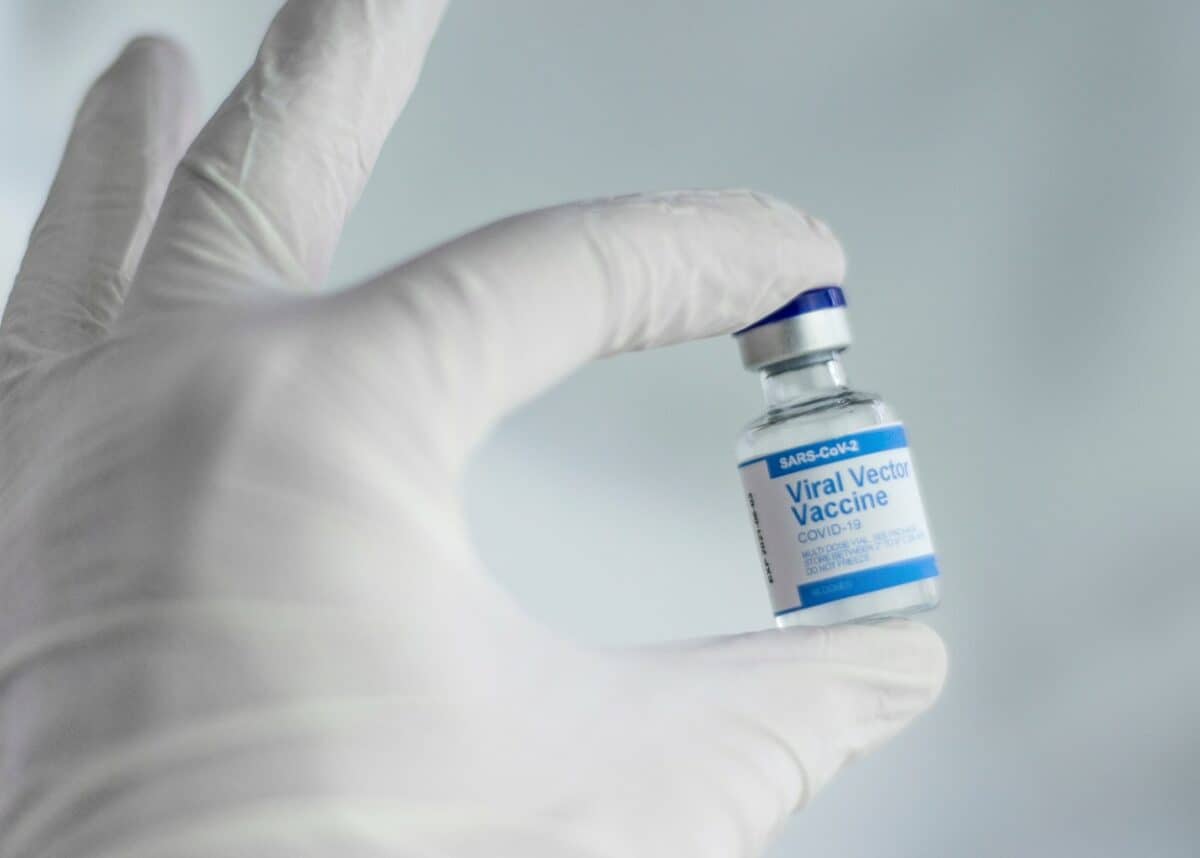
Sputnik V uses a viral-vector platform – which uses a harmless virus to introduce genetic material from the virus that causes COVID to your immune system – like the Oxford/AstraZeneca and Johnson & Johnson vaccines do. It was developed by the Gamaleya National Research Institute of Epidemiology and Microbiology, which has also been involved in developing vaccines for Ebola and Mers.


Sputnik V has two key advantages that make its distribution easier: it is among the cheapest COVID-19 vaccines and it can be transported easily. At US$10 (£7) a dose – the same as Johnson & Johnson – Sputnik V is only beaten on cost by the Oxford/AstraZeneca vaccine, which comes in at US$4 a dose. This means Sputnik V is more easily accessible for many countries struggling with the cost of vaccinating their population.
Like the Oxford/AstraZeneca vaccine, Sputnik V does not require specialised storage. Its liquid version can be stored at household freezer temperatures. A version that can be stored at fridge temperatures is under development and a powder version also exists.
The lower cost and reduced complexity of Sputnik V’s logistics, initially seen as ways to easily bring the vaccine to remote regions of Russia, is appealing to many outside the country as well.
Diversifying supply
Many vaccine supply chains are currently experiencing problems. Recently, Moderna halved a scheduled delivery to Canada citing production capacity issues . India, facing a spike in cases, is now using its vaccine production output mainly for the domestic market, stopping exports in March 2021. In the United States, 15 million doses of Johnson & Johnson had to be discarded after a factory error.
The Oxford/AstraZeneca vaccine faces restrictions to certain age groups in many countries due to possible links with very rare blood clots. It is restricted to the over-30s in the UK and the over-50s in Australia. Norway has suspended the AstraZeneca rollout and delayed a final decision on its withdrawal, while the vaccine has been stopped entirely in Denmark.
At the same time, the Johnson & Johnson vaccine is undergoing further testing also due to concerns about rare blood clots. All of this puts additional pressure on the Pfizer/BioNtech supply chain.
These issues have demonstrated the importance of working with a range of vaccine suppliers. Working with multiple suppliers is a standard supply chain practice. It lessens reliance on a single source and also enables customers to place orders based on higher demand than what can be met by only one supplier.
The European Commission has been negotiating intensely to build a diversified portfolio of vaccines for EU citizens at fair prices. Contracts have been concluded with six promising vaccine developers, securing a portfolio of more than 2.6 billion doses. There is widespread indecision about the adoption of Sputnik V within Europe, but Russia has an increasing presence in the vaccine market.
Complex decisions
Sputnik V is still under review by the European Medicines Agency. Globally, 57 countries have authorised its use, raising questions over when it will be available within the EU. At the moment, there are not enough doses of other vaccines available in the EU to satisfy demand, so the desire for new options is strong.
The EU often struggles to find a unified voice on Russia, with attitudes towards the country and historic relationships with it being very diverse across Europe. On the matter of Sputnik V, there are increasing calls for a cautious pragmatism. But this is a highly political matter. Slovakia’s prime minister, Igor Matović, formally resigned amid a political scandal triggered by a secret deal to buy doses of Sputnik V.
EU member states are allowed to strike separate deals with vaccine makers which have not signed agreements with the EU. Austria, Hungary and Slovakia have ordered Sputnik V but only Hungary has deployed it to date.
The Czech Republic, Germany and Austria are trying to secure supplies of the vaccine, but have insisted it will only be used after the European Medicines Agency gives the go-ahead. As with other vaccines, any deliveries are unlikely to be immediate.
Global impact
The COVID-19 pandemic is a global challenge that requires global solutions. All countries that have developed and are producing vaccines are wielding considerable soft power. Debates over vaccine nationalism and vaccine diplomacy often overshadow the need for international cooperation.
As with other vaccines, production capacity for Sputnik V is being scaled up around the world, most recently in South Korea. Countries are producing it for their domestic markets as well as relying on imports from Russia. As production has so far been a major bottle neck for other vaccines, this adds much-needed capacity.
Health complications have been reported for several vaccines, affecting policies and public confidence. This will affect demand for vaccines that have no reported health complications so far, such as Pfizer/BioNtech, China’s Sinovac, or Sputnik V. Considerations of efficacy against variants, cost and availability will all be crucial, and a wider range of deployed vaccines can be very beneficial.
Considering all the available options is a sensible approach given the hiccups in vaccine risks, supply and approval delays that we’ve seen to date. Strategically considering a wide range of vaccine candidates is to be commended. Due diligence has to be done in all such considerations. Ultimately, transparency of this process will build public trust.
Sarah Schiffling, Senior Lecturer in Supply Chain Management, Liverpool John Moores University and Liz Breen, Director of the Digital Health Enterprise Zone (DHEZ), University of Bradford, Reader in Health Service Operations, University of Bradford
This article is republished from The Conversation under a Creative Commons license. Read the original article.