

• Advertise
  • About us
  • Terms and Conditions
  • Contact us
Sunday, December 7, 2025
Australian Times News
  • News
    • Weather
    • Sport
    • Technology
    • Business & Finance
      • Currency Zone
    • Lotto Results
      • The Lott
  • Lifestyle
    • Entertainment
    • Horoscopes
    • Health & Wellness
    • Recipes
  • Travel
  • Expat Life
  • Move to Australia
No Result
View All Result
  • News
    • Weather
    • Sport
    • Technology
    • Business & Finance
      • Currency Zone
    • Lotto Results
      • The Lott
  • Lifestyle
    • Entertainment
    • Horoscopes
    • Health & Wellness
    • Recipes
  • Travel
  • Expat Life
  • Move to Australia
No Result
View All Result
Australian Times News
No Result
View All Result
Home News

Pollinators: neonicotinoid pesticides stop bees and flies from getting a good night’s sleep

Neonicotinoids, the most commonly used pesticides in the world, were banned in the EU in 2018. More than 99,000 people petitioned the UK government to support the ban amid a wealth of scientific evidence linking this group of chemicals to poor health in bees, from the reduced production of bumblebee queens to slashed sperm counts among male honeybees.

The Conversation by The Conversation
24-01-2021 18:07
in News
Environmental impact

Environmental impact Photo by Boba Jaglicic on Unsplash

Kiah Tasman, University of Bristol

Neonicotinoids, the most commonly used pesticides in the world, were banned in the EU in 2018. More than 99,000 people petitioned the UK government to support the ban amid a wealth of scientific evidence linking this group of chemicals to poor health in bees, from the reduced production of bumblebee queens to slashed sperm counts among male honeybees.

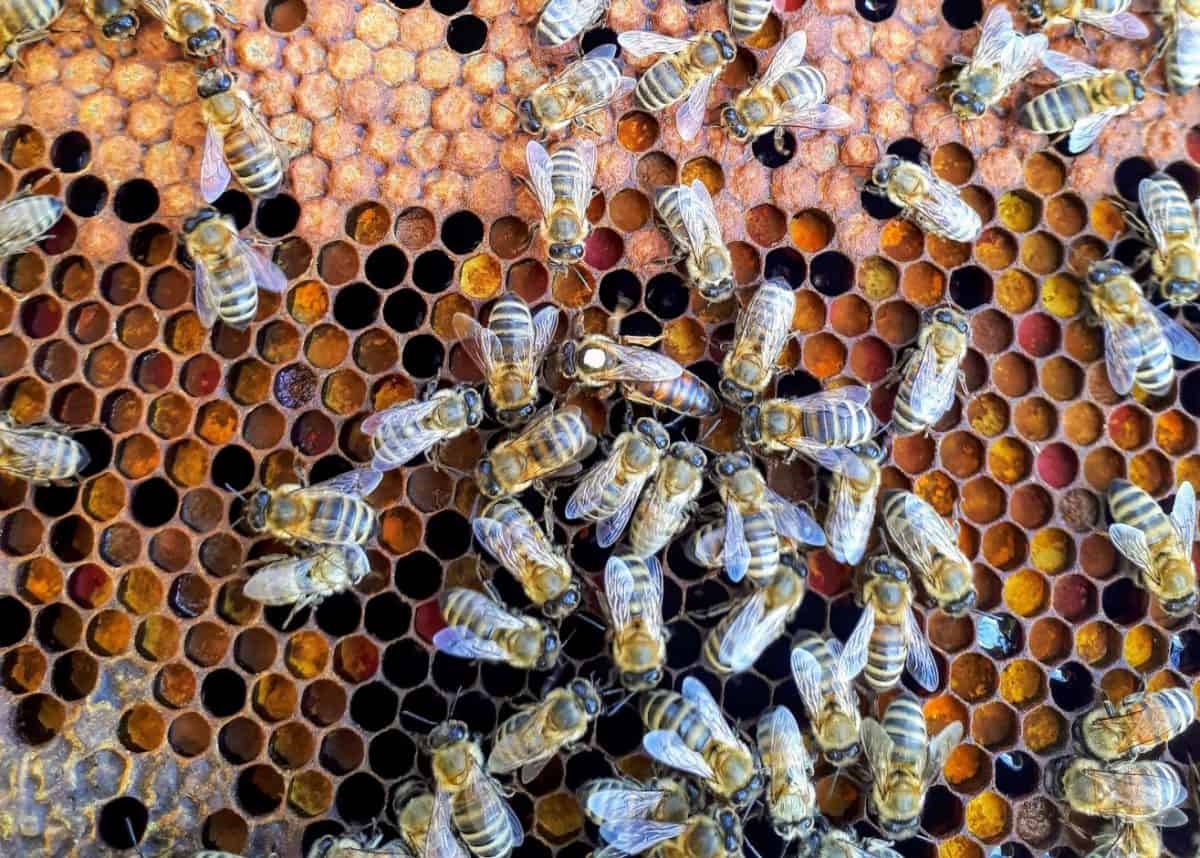
Sleeping on the job? Maciej Olszewski/Shutterstock

The UK government had pledged to keep the EU’s restrictions post-Brexit, but recently granted a special exemption to allow farmers to use the neonicotinoid thiamethoxam on sugarbeet throughout 2021, and possibly until 2023.

If this signals the government’s intention to roll back regulations on agricultural chemicals now that the UK has left the EU, the consequences for pollinating insects could be dire. Research into the effects of these pesticides on pollinators is still ongoing, but new harmful effects are discovered all the time.

A tractor sprays chemicals onto a vegetable field at dusk.
Neonicotinoids are sprayed onto farm fields to control pests such as aphids and grubs. Fotokostic/Shutterstock

In a new study, my colleagues and I have uncovered the most recent example. We looked into the effect of these pesticides on the body clock and sleep of flies and bumblebees. Just like us, insects need sleep. And, like us, they have an internal sense of time – more commonly known as a body clock – which helps them synchronise their activity and sleep patterns with the rest of the world. Your body clock might allow you to wake up just a few minutes before your alarm goes off. For insects, it ensures they’re able to forage in the day when flowers are open and sleep at night when it’s usually too dark to fly.

Using lab-based colonies of buff-tailed bumblebees, the most common British bumblebee species, we showed that a neonicotinoid pesticide called imidacloprid turns night into day for bees. Foraging bumblebees were fed concentrations of imidacloprid that were similar to what they might encounter in the wild (around ten parts per billion). After exposure, the dosed bees were more likely to try to forage at nighttime and sleep in the daytime, and they were more sluggish overall, going on far fewer foraging trips than normal.

At the same time as we were experimenting on bumblebees, we were also studying the response of fruit flies to neonicotinoids. Scientists often use fruit flies as a model to help understand other animals, as we have a deep understanding of their genes and the ability to edit them. In our study, we labelled the brain cells which set the pace of the fruit fly body clock with fluorescent dye, to see if the pesticides could be directly affecting them.


AlsoRead...

Ryan: Building real freedom through e-commerce

Ryan: Building real freedom through e-commerce

27 November 2025
Design Australia Group: Redefining Drafting as the engine of housing growth

Design Australia Group: Redefining Drafting as the engine of housing growth

26 November 2025
A fruit fly on a piece of food.
Fruit flies are useful for studying how chemicals affect the brain. Ant Cooper/Shutterstock

In a normal fly, these cells collect information from the eyes and other light-sensing organs. The cells then change shape between daytime and nighttime and release signals to other parts of the body to ensure that sleep and other activities happen at the right time of day. But neonicotinoids appeared to interfere with both of these processes, freezing the body clock cells in daytime mode. Given how similar these cells are between fruit flies and bees, this process may be behind the effects on sleep and foraging that we saw in bumblebees.

The environmental impact

If bees can’t synchronise their foraging with the dawn, when nectar and pollen are most abundant, this will limit the amount of food they can gather, stunting the colony’s ability to grow and produce more bees.

The body clock is also an important part of communication in bees. Honeybees have a dance language which lets them tell each other where the best flowers are. They use the position of the sun in the sky as a tool for navigation, which means that honeybees need to be able to keep track of the time of day within the darkness of the hive. If their body clock is disrupted, it could affect their ability to communicate vital information to each other and reduce their ability to forage and pollinate.


The changes to sleep that we saw in the buff-tailed bumblebees are also worrying. Sleep during the night helps bees form memories, and so if neonicotinoids are disrupting their sleep, it could cause problems with remembering important information, such as the route back to the hive. The correct timing of sleep is also really important for childcare in the colony. When bumblebees are looking after their young, they have to tend to them and feed them round the clock, taking little naps between feeds. If neonicotinoids change their sleep patterns in a way that they can’t control, adult bumblebees may struggle to properly care for the next generation. All of these effects could potentially prevent colonies from growing and reproducing properly, threatening their long-term survival.

Bumblebees, like honeybees and other bees, are important pollinators for 84% of crops and 80% of wild flowering plants in Europe. Neonicotinoids pose a real threat to not only the health of these pollinating insects, but the agriculture and ecosystems they support. As a scientist who studies the effects of these chemicals, I hope that the “emergency use” that was recently granted by the UK government isn’t a sign of worse things to come.

Kiah Tasman, Teaching Associate in Physiology, Pharmacology and Neuroscience, University of Bristol

This article is republished from The Conversation under a Creative Commons license. Read the original article.


Tags: SB001
DMCA.com Protection Status

SUBSCRIBE to our NEWSLETTER

[mc4wp_form id=”2384248″]

Don't Miss

The evolution of Aesthetic Surgery through the lens of Dr Kourosh Tavakoli

by Pauline Torongo
4 December 2025
The evolution of Aesthetic Surgery through the lens of Dr. Kourosh Tavakoli
Health & Wellness

As global interest in Australian cosmetic surgery continues to grow, the combination of regulation, research and emerging digital tools is...

Read moreDetails

Ryan: Building real freedom through e-commerce

by Pauline Torongo
27 November 2025
Ryan: Building real freedom through e-commerce
Business & Finance

Ryan’s greatest achievement isn’t any single business or revenue milestone — it’s the ecosystem he’s built through the Change community.

Read moreDetails

Design Australia Group: Redefining Drafting as the engine of housing growth

by Pauline Torongo
26 November 2025
Design Australia Group: Redefining Drafting as the engine of housing growth
Business & Finance

Australia is under pressure to build homes faster, but design bottlenecks slow progress. Design Australia Group is fixing this by...

Read moreDetails

Louis Guy Detata builds Global Trading Empires through autonomous systems and disciplined leadership

by Pauline Torongo
25 November 2025
Louis Guy Detata builds Global Trading Empires through autonomous systems and disciplined leadership
Business & Finance

The path from investment banking to leading a global trading platform has taught Louis Detata that sustainable success requires more...

Read moreDetails

Burning Eucalyptus Wood: Tips, Advantages, Disadvantages & Alternatives

by Fazila Olla-Logday
20 November 2025
Image Supplied
Enviroment

Learn about burning eucalyptus wood for stoves and fireplaces. Discover benefits, drawbacks, harvesting tips, and better alternative firewood options for...

Read moreDetails

Everything Parents Need to Know About Baby Soft Play and Why It’s a Game Changer

by Fazila Olla-Logday
11 November 2025
Everything Parents Need to Know About Baby Soft Play
Health & Wellness

Baby soft play is a fun, safe, and educational way for little ones to explore and grow. Discover the benefits...

Read moreDetails

WOMAD Sets Up a New Camp in Wiltshire – Australian festival fans take note!

by Kris Griffiths
11 November 2025
Kumbia Boruka brought their reggae and dancehall flavour to the Taste the World Stage at WOMAD 2024 - Credit - Mike Massaro
Entertainment

With its 2026 edition moving to Neston Park in England, WOMAD offers Aussie music lovers a chance to reconnect with global...

Read moreDetails
Load More

Copyright © Blue Sky Publications Ltd. All Rights Reserved.
australiantimes.co.uk is a division of Blue Sky Publications Ltd. Reproduction without permission prohibited. DMCA.com Protection Status

  • About us
  • Write for Us
  • Advertise
  • Contact us
  • T&Cs, Privacy and GDPR
No Result
View All Result
  • News
    • Weather
    • Sport
    • Technology
    • Business & Finance
      • Currency Zone
    • Lotto Results
      • The Lott
  • Lifestyle
    • Entertainment
    • Horoscopes
    • Health & Wellness
    • Recipes
  • Travel
  • Expat Life
  • Move to Australia

Copyright © Blue Sky Publications Ltd. All Rights Reserved.
australiantimes.co.uk is a division of Blue Sky Publications Ltd. Reproduction without permission prohibited. DMCA.com Protection Status

No Result
View All Result
  • News
    • Weather
    • Sport
    • Technology
    • Business & Finance
      • Currency Zone
    • Lotto Results
      • The Lott
  • Lifestyle
    • Entertainment
    • Horoscopes
    • Health & Wellness
    • Recipes
  • Travel
  • Expat Life
  • Move to Australia

Copyright © Blue Sky Publications Ltd. All Rights Reserved.
australiantimes.co.uk is a division of Blue Sky Publications Ltd. Reproduction without permission prohibited. DMCA.com Protection Status





