

• Advertise
  • About us
  • Terms and Conditions
  • Contact us
Friday, December 5, 2025
Australian Times News
  • News
    • Weather
    • Sport
    • Technology
    • Business & Finance
      • Currency Zone
    • Lotto Results
      • The Lott
  • Lifestyle
    • Entertainment
    • Horoscopes
    • Health & Wellness
    • Recipes
  • Travel
  • Expat Life
  • Move to Australia
No Result
View All Result
  • News
    • Weather
    • Sport
    • Technology
    • Business & Finance
      • Currency Zone
    • Lotto Results
      • The Lott
  • Lifestyle
    • Entertainment
    • Horoscopes
    • Health & Wellness
    • Recipes
  • Travel
  • Expat Life
  • Move to Australia
No Result
View All Result
Australian Times News
No Result
View All Result
Home News

Polar bears eating reindeer: normal behaviour or result of climate change?

Recently, scientists in Hornsund, Svalbard – a Norwegian archipelago in the Arctic ocean – witnessed a polar bear pursuing a reindeer into the sea before killing it, dragging it ashore and eating it. The video that they captured was widely shared on news and social media platforms. Then, two days later, they saw the same bear beside a second fresh reindeer kill.

The Conversation by The Conversation
31-12-2021 18:07
in News
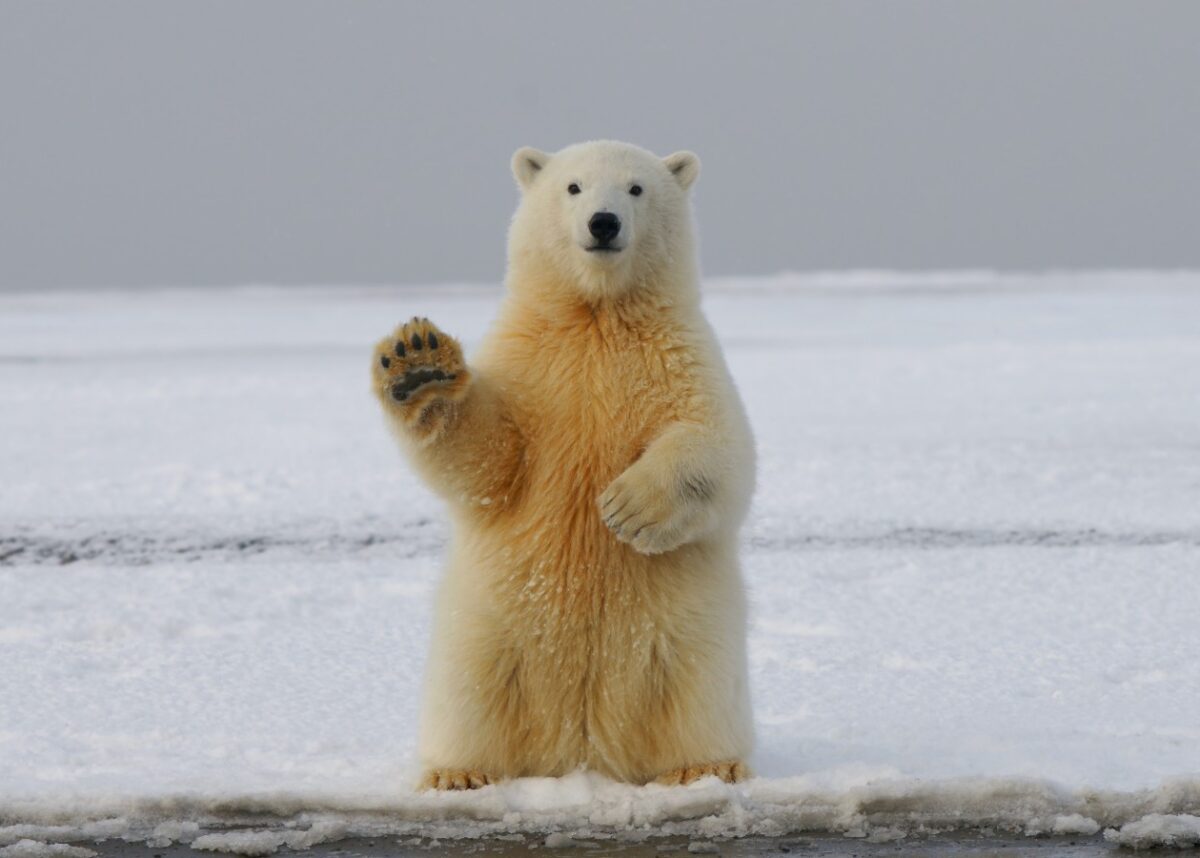
Photo by Hans-Jurgen Mager on Unsplash

Photo by Hans-Jurgen Mager on Unsplash

Henry Anderson-Elliott, University of Cambridge

Recently, scientists in Hornsund, Svalbard – a Norwegian archipelago in the Arctic ocean – witnessed a polar bear pursuing a reindeer into the sea before killing it, dragging it ashore and eating it. The video that they captured was widely shared on news and social media platforms. Then, two days later, they saw the same bear beside a second fresh reindeer kill.

Their observations are the first detailed account of a complete and successful polar bear hunt of a Svalbard reindeer. But they follow 13 previous reports of polar bears preying and scavenging on reindeer on the same archipelago between 1983 and 1999.

These are far from the first accounts of polar bears varying their diets. Normally, in the months when the sea is frozen, they enjoy a diet of offshore seals. But their use of supplementary food sources in the leaner summer months has been known for decades, with bears gorging on seabird eggs as well as feeding at the Churchill dump (a rubbish and recycling facility) in Hudson Bay. Yet, similar reports of terrestrial feeding have become more frequent in recent years.

From stalking and chasing Canadian caribou, fishing for Arctic char and catching geese and rodents to grazing on vegetation and patrolling human refuse sites, polar bears can eat, have eaten and have tried to eat many things.

But the viability of these onshore food sources is doubtful as a long-term strategy. In their study of foraging on the eider duck nests of Mitvik island, Canada, researchers found polar bears to be inefficient predators of seabird eggs, such that the energy an individual bear gains from eggs may be less than previously thought. That’s because they may use more energy to find the eggs than they get from eating them. Equally, other studies have found that the consumption of terrestrial food by polar bears has been insufficient to compensate for reduced hunting opportunities out on the ice.

The climate change threat

Polar bears have evolved to be highly efficient predators of marine mammals. They support themselves on a fat-heavy diet and rely on ice-based prey, primarily ringed and bearded seals. As a result, they are profoundly threatened by a warming climate.


AlsoRead...

Ryan: Building real freedom through e-commerce

Ryan: Building real freedom through e-commerce

27 November 2025
Design Australia Group: Redefining Drafting as the engine of housing growth

Design Australia Group: Redefining Drafting as the engine of housing growth

26 November 2025

With rising global temperatures, Arctic sea ice is melting earlier in summer and refreezing later in winter. And as the ice-free periods become longer, polar bears are spending more time on land without access to their primary food.
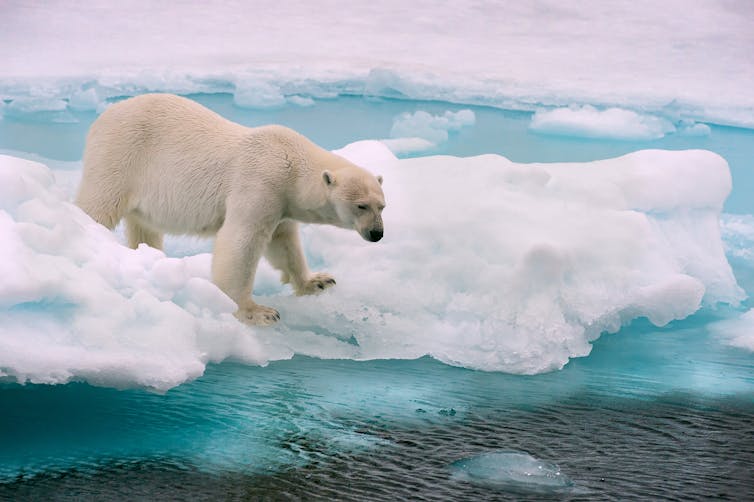
Due to climate change, ice is melting earlier in summer and refreezing later in winter. FloridaStock/shutterstock

Their situation is being made worse by other factors, too. A recent study found the energy demands of polar bears to be higher than previously assumed. With less time on the sea ice, and less seal fat to consume, polar bears will find it more difficult to meet their energy needs – leading to higher death rates. At the same time, higher Arctic wind speeds may make hunting seals harder still.

Therefore, increasing reports of summer scavenging, foraging and terrestrial hunting are unsurprising in the context of climate change, high energy stress and the resulting effect on their bodies.

Burdened by publicity

The proliferation of digital platforms plays a part in this story, too. As Andrew Derocher, a professor of biology at the University of Alberta and longtime polar bear expert, explained: “Everyone has a camera” and “‘news’ spreads fast”. He rightly pointed out that if the same phenomenon was happening in the 1950s and 1960s, no one would likely have seen it.

Over the past few years, photos and videos of polar bears have garnered enormous online attention. From 56 bears besieging a Russian town, to tragic sequences of emaciated individuals, polar bears are being used as the face of our climate catastrophe.

While the broad relationship here is undeniable – a sea ice species cannot live in an above freezing future – polar bears now inhabit a world where their every action is viewed as evidence in a wider climate change context. Amplified in our digital age, we see bears as the embodiment of our worsening global condition.

While their plight is rightly brought to our attention, online content can be misdirecting. A focus on individual bears to illustrate climate issues risks shifting the burden of proof away from overwhelming scientific evidence and onto the lives of single animals.

Therefore, observations like those in Hornsund reinforce the need for further peer-reviewed research on the future of this iconic species. This single event should not be seen as definitive proof of shifting diets in a warmer world, but as a reminder of the spectacular creatures we stand to lose. A species whose fate, even in the distant reaches of their Arctic landscape, is inexorably bound to our own.

Henry Anderson-Elliott, PhD, University of Cambridge

This article is republished from The Conversation under a Creative Commons license. Read the original article.


Tags: SB001
DMCA.com Protection Status

SUBSCRIBE to our NEWSLETTER

[mc4wp_form id=”2384248″]

Don't Miss

The evolution of Aesthetic Surgery through the lens of Dr Kourosh Tavakoli

by Pauline Torongo
4 December 2025
The evolution of Aesthetic Surgery through the lens of Dr. Kourosh Tavakoli
Health & Wellness

As global interest in Australian cosmetic surgery continues to grow, the combination of regulation, research and emerging digital tools is...

Read moreDetails

Ryan: Building real freedom through e-commerce

by Pauline Torongo
27 November 2025
Ryan: Building real freedom through e-commerce
Business & Finance

Ryan’s greatest achievement isn’t any single business or revenue milestone — it’s the ecosystem he’s built through the Change community.

Read moreDetails

Design Australia Group: Redefining Drafting as the engine of housing growth

by Pauline Torongo
26 November 2025
Design Australia Group: Redefining Drafting as the engine of housing growth
Business & Finance

Australia is under pressure to build homes faster, but design bottlenecks slow progress. Design Australia Group is fixing this by...

Read moreDetails

Louis Guy Detata builds Global Trading Empires through autonomous systems and disciplined leadership

by Pauline Torongo
25 November 2025
Louis Guy Detata builds Global Trading Empires through autonomous systems and disciplined leadership
Business & Finance

The path from investment banking to leading a global trading platform has taught Louis Detata that sustainable success requires more...

Read moreDetails

Burning Eucalyptus Wood: Tips, Advantages, Disadvantages & Alternatives

by Fazila Olla-Logday
20 November 2025
Image Supplied
Enviroment

Learn about burning eucalyptus wood for stoves and fireplaces. Discover benefits, drawbacks, harvesting tips, and better alternative firewood options for...

Read moreDetails

Everything Parents Need to Know About Baby Soft Play and Why It’s a Game Changer

by Fazila Olla-Logday
11 November 2025
Everything Parents Need to Know About Baby Soft Play
Health & Wellness

Baby soft play is a fun, safe, and educational way for little ones to explore and grow. Discover the benefits...

Read moreDetails

WOMAD Sets Up a New Camp in Wiltshire – Australian festival fans take note!

by Kris Griffiths
11 November 2025
Kumbia Boruka brought their reggae and dancehall flavour to the Taste the World Stage at WOMAD 2024 - Credit - Mike Massaro
Entertainment

With its 2026 edition moving to Neston Park in England, WOMAD offers Aussie music lovers a chance to reconnect with global...

Read moreDetails
Load More

Copyright © Blue Sky Publications Ltd. All Rights Reserved.
australiantimes.co.uk is a division of Blue Sky Publications Ltd. Reproduction without permission prohibited. DMCA.com Protection Status

  • About us
  • Write for Us
  • Advertise
  • Contact us
  • T&Cs, Privacy and GDPR
No Result
View All Result
  • News
    • Weather
    • Sport
    • Technology
    • Business & Finance
      • Currency Zone
    • Lotto Results
      • The Lott
  • Lifestyle
    • Entertainment
    • Horoscopes
    • Health & Wellness
    • Recipes
  • Travel
  • Expat Life
  • Move to Australia

Copyright © Blue Sky Publications Ltd. All Rights Reserved.
australiantimes.co.uk is a division of Blue Sky Publications Ltd. Reproduction without permission prohibited. DMCA.com Protection Status

No Result
View All Result
  • News
    • Weather
    • Sport
    • Technology
    • Business & Finance
      • Currency Zone
    • Lotto Results
      • The Lott
  • Lifestyle
    • Entertainment
    • Horoscopes
    • Health & Wellness
    • Recipes
  • Travel
  • Expat Life
  • Move to Australia

Copyright © Blue Sky Publications Ltd. All Rights Reserved.
australiantimes.co.uk is a division of Blue Sky Publications Ltd. Reproduction without permission prohibited. DMCA.com Protection Status





