• Advertise
  • About us
  • Terms and Conditions
  • Contact us
Saturday, December 6, 2025
Australian Times News
  • News
    • Weather
    • Sport
    • Technology
    • Business & Finance
      • Currency Zone
    • Lotto Results
      • The Lott
  • Lifestyle
    • Entertainment
    • Horoscopes
    • Health & Wellness
    • Recipes
  • Travel
  • Expat Life
  • Move to Australia
No Result
View All Result
  • News
    • Weather
    • Sport
    • Technology
    • Business & Finance
      • Currency Zone
    • Lotto Results
      • The Lott
  • Lifestyle
    • Entertainment
    • Horoscopes
    • Health & Wellness
    • Recipes
  • Travel
  • Expat Life
  • Move to Australia
No Result
View All Result
Australian Times News
No Result
View All Result
Home News

Pesticides: interactions between agrochemicals increase their harm to bees

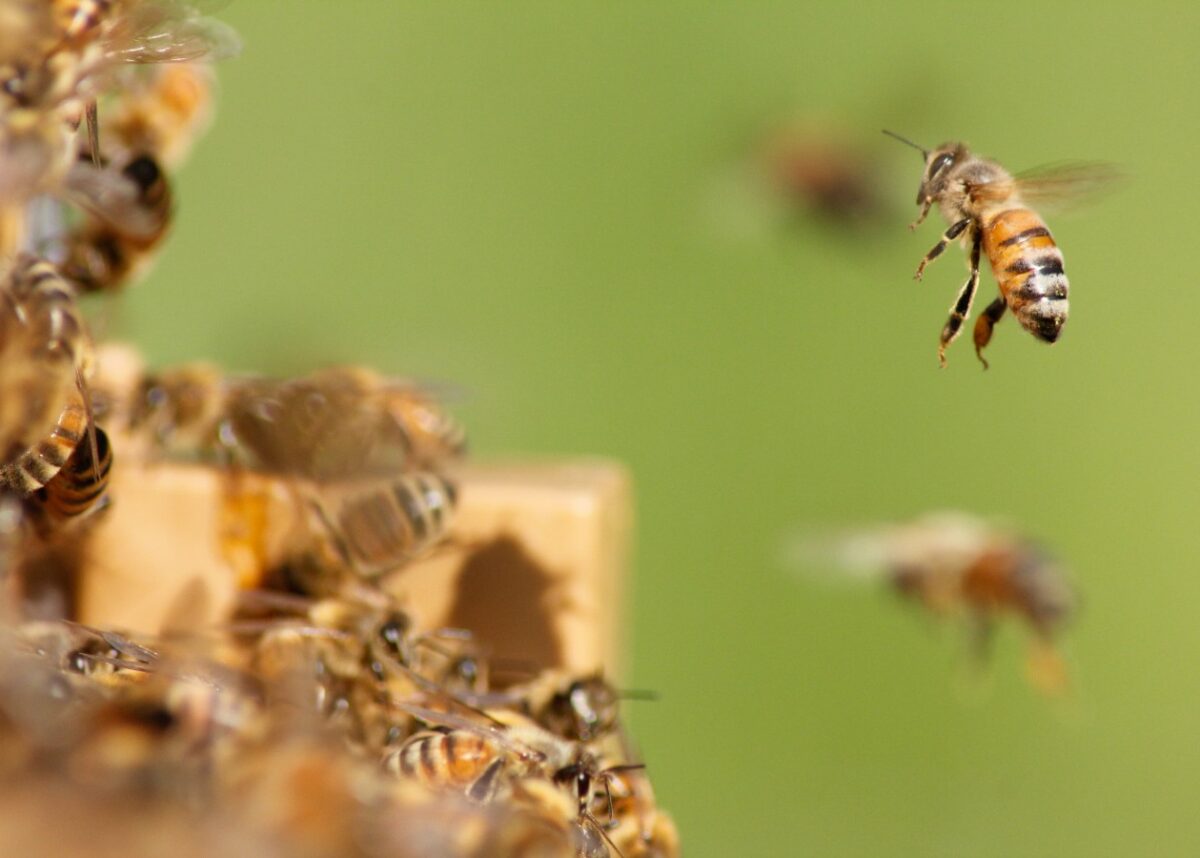
Bees are important pollinators of both crops and wildflowers. It’s estimated that 35% of crops are dependent on pollination, but the environments bees find themselves in today are increasingly hostile.

The Conversation by The Conversation
05-08-2021 18:05
in News
Photo by Damien TUPINIER on Unsplash

Photo by Damien TUPINIER on Unsplash

Harry Siviter, Royal Holloway University of London

A doctor will always ask if you are on any other medication before they write you a prescription. This is because pharmaceuticals can interact with each other and potentially disrupt the treatment, or even harm the patient. But when agrochemicals, such as pesticides, are licensed for use on farms, little attention is paid to how they interact with one another, and so their environmental impact is underestimated.

Bees are important pollinators of both crops and wildflowers. It’s estimated that 35% of crops are dependent on pollination, but the environments bees find themselves in today are increasingly hostile. In the UK, it’s estimated that 97% of semi-natural grasslands, habitat filled with the nectar-rich wildflowers bees visit for food, have been lost. Meanwhile, the commercial trade in honeybees for their pollination services has increased the prevalence of harmful parasites and, as if this was not already enough, bees are also routinely exposed to numerous different agrochemicals.

We analysed data gathered in scientific studies from the last two decades and found that when bees are exposed to a combination of pesticides, parasites and poor nutrition, the negative impact of each is exacerbated. We say that the cumulative effect of all these things is synergistic, meaning that the number of bees that are killed is more than we would predict if the negative effects were merely added together.
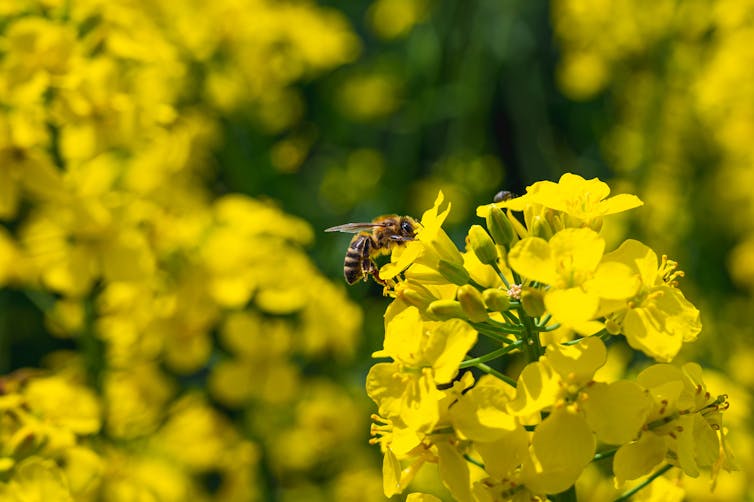
A honeybee on a yellow plant.
Pre-licensing tests for pesticides tend to focus on honeybees, neglecting wild pollinators. D.Kvasnetskyy/Shutterstock

When bees were exposed to multiple agrochemicals, the effects were worse. When we consider the prevalence of these substances in the environment, the picture begins to look very worrying.

Pesticide regulation and pollinators

Crops are rarely ever treated with just one chemical. Insecticides control insect pests, such as aphids. Herbicides, such as glyphosate, kill unwanted weeds, and fungicides are used to control moulds such as mildew. Crops will often be treated with different agrochemical combinations repeatedly throughout the year.

Many agrochemicals, such as neonicotinoids, are systemic, meaning they accumulate in the environment over several months, and in some cases years. It is perhaps not surprising then that honeybee colonies across the US have on average six different agrochemicals present in their wax, with one hive contaminated with 39. It’s not just honeybees which are at risk, though: wild bees such as bumblebees are also routinely exposed.


AlsoRead...

Ryan: Building real freedom through e-commerce

Ryan: Building real freedom through e-commerce

27 November 2025
Design Australia Group: Redefining Drafting as the engine of housing growth

Design Australia Group: Redefining Drafting as the engine of housing growth

26 November 2025

For pollinating insects, exposure to multiple agrochemicals is the norm, not the exception. But when new agrochemicals are licensed for use by regulatory bodies, such as the US Environmental Protection Agency (EPA) or the European Food Safety Authority (EFSA), how they interact is seldom considered.

In some ways this is understandable. Thousands of different agrochemicals have been licensed for use globally and assessing how each one interacts with each other would be difficult. But commercial pesticide formulas, sold en-masse to farmers, regularly contain many different chemicals. Assessing how each of them interacts before they are licensed for use should be mandatory.
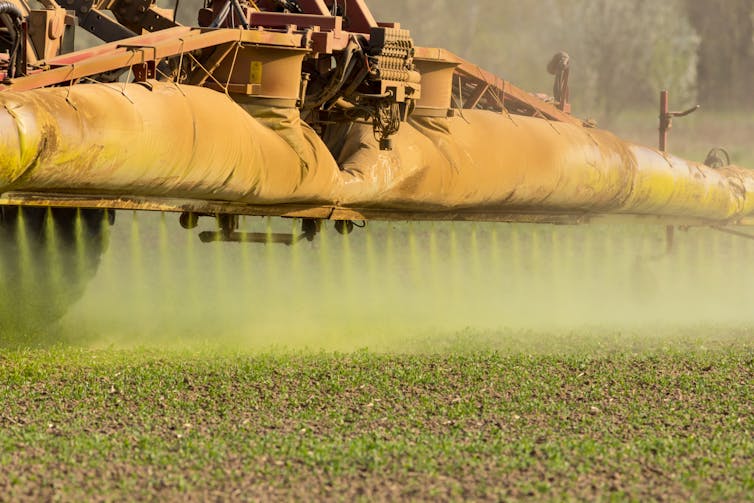
A close-up view of a trailer spraying crop seedlings with a chemical treatment.
Tougher tests on agrochemical formulas are needed. Milan noga/Shutterstock

And once an agrochemical is licensed for use, regulators should continually monitor its potential harm in case pre-licensing assessments failed to detect something important. These post-licensing observations could be akin to those carried out with pharmaceuticals in humans, which would offer better protection for both wildlife and food security.

The EFSA recently announced a programme that will use mathematical models to monitor the effects of multiple potential threats, including agrochemicals, on honeybee colonies. This is encouraging, but fails to consider other wild bee species.

Understanding how the environmental impacts of human activity interact is a messy business, but it’s clearly important. A post-licensing monitoring programme for agrochemicals is laudable, but pre-licensing experiments that consider how these substance interact once in the environment must become a requirement for the environmental risk assessments of all new products. And the agrochemical companies, who profit so much from selling these products, should pick up the bill.

Harry Siviter, PhD Candidate in Ecology, Royal Holloway University of London

This article is republished from The Conversation under a Creative Commons license. Read the original article.


Tags: SB001
DMCA.com Protection Status

SUBSCRIBE to our NEWSLETTER

[mc4wp_form id=”2384248″]

Don't Miss

The evolution of Aesthetic Surgery through the lens of Dr Kourosh Tavakoli

by Pauline Torongo
4 December 2025
The evolution of Aesthetic Surgery through the lens of Dr. Kourosh Tavakoli
Health & Wellness

As global interest in Australian cosmetic surgery continues to grow, the combination of regulation, research and emerging digital tools is...

Read moreDetails

Ryan: Building real freedom through e-commerce

by Pauline Torongo
27 November 2025
Ryan: Building real freedom through e-commerce
Business & Finance

Ryan’s greatest achievement isn’t any single business or revenue milestone — it’s the ecosystem he’s built through the Change community.

Read moreDetails

Design Australia Group: Redefining Drafting as the engine of housing growth

by Pauline Torongo
26 November 2025
Design Australia Group: Redefining Drafting as the engine of housing growth
Business & Finance

Australia is under pressure to build homes faster, but design bottlenecks slow progress. Design Australia Group is fixing this by...

Read moreDetails

Louis Guy Detata builds Global Trading Empires through autonomous systems and disciplined leadership

by Pauline Torongo
25 November 2025
Louis Guy Detata builds Global Trading Empires through autonomous systems and disciplined leadership
Business & Finance

The path from investment banking to leading a global trading platform has taught Louis Detata that sustainable success requires more...

Read moreDetails

Burning Eucalyptus Wood: Tips, Advantages, Disadvantages & Alternatives

by Fazila Olla-Logday
20 November 2025
Image Supplied
Enviroment

Learn about burning eucalyptus wood for stoves and fireplaces. Discover benefits, drawbacks, harvesting tips, and better alternative firewood options for...

Read moreDetails

Everything Parents Need to Know About Baby Soft Play and Why It’s a Game Changer

by Fazila Olla-Logday
11 November 2025
Everything Parents Need to Know About Baby Soft Play
Health & Wellness

Baby soft play is a fun, safe, and educational way for little ones to explore and grow. Discover the benefits...

Read moreDetails

WOMAD Sets Up a New Camp in Wiltshire – Australian festival fans take note!

by Kris Griffiths
11 November 2025
Kumbia Boruka brought their reggae and dancehall flavour to the Taste the World Stage at WOMAD 2024 - Credit - Mike Massaro
Entertainment

With its 2026 edition moving to Neston Park in England, WOMAD offers Aussie music lovers a chance to reconnect with global...

Read moreDetails
Load More

Copyright © Blue Sky Publications Ltd. All Rights Reserved.
australiantimes.co.uk is a division of Blue Sky Publications Ltd. Reproduction without permission prohibited. DMCA.com Protection Status

  • About us
  • Write for Us
  • Advertise
  • Contact us
  • T&Cs, Privacy and GDPR
No Result
View All Result
  • News
    • Weather
    • Sport
    • Technology
    • Business & Finance
      • Currency Zone
    • Lotto Results
      • The Lott
  • Lifestyle
    • Entertainment
    • Horoscopes
    • Health & Wellness
    • Recipes
  • Travel
  • Expat Life
  • Move to Australia

Copyright © Blue Sky Publications Ltd. All Rights Reserved.
australiantimes.co.uk is a division of Blue Sky Publications Ltd. Reproduction without permission prohibited. DMCA.com Protection Status

No Result
View All Result
  • News
    • Weather
    • Sport
    • Technology
    • Business & Finance
      • Currency Zone
    • Lotto Results
      • The Lott
  • Lifestyle
    • Entertainment
    • Horoscopes
    • Health & Wellness
    • Recipes
  • Travel
  • Expat Life
  • Move to Australia

Copyright © Blue Sky Publications Ltd. All Rights Reserved.
australiantimes.co.uk is a division of Blue Sky Publications Ltd. Reproduction without permission prohibited. DMCA.com Protection Status