



Bas van Bavel, Utrecht University and Auke Rijpma, Utrecht University
Once a country’s economy reaches a certain level of wealth, gross domestic product – which puts a single dollar value on a country’s total economic output – is no longer a good measure of its overall success.
That’s a main finding of our economic research, published in March with the Organization for Economic Cooperation and Development. When we examined the development of nations worldwide since 1820, we found that among rich Western countries like the United States, the Netherlands and France, improvements in income, education, safety and health tracked or even outpaced rising gross domestic product for over a century.
But in the 1950s, even as economic growth accelerated after World War II, well-being in these countries lagged. From the 1970s onward, growth in median incomes slowed down, as did education. Crime rose. In recent years, health outcomes have even declined.
The gap between well-being and GDP became particularly evident after the 2008 global financial crisis. Even as rich countries’ economies recovered, unemployment, poverty and housing insecurity stayed higher for years.
This pattern can also be observed in middle-income countries. In recent decades, countries like Russia, Argentina, Turkey and China have begun to show slower increases in well-being, while growth in GDP per capita – total GDP divided by population – remains high.
These insights validate widespread feelings of people in many Western countries – and the U.S. in particular – that the fruits of economic growth have passed them by. They also raise concerns about how, and indeed whether, policymakers will know when their country has actually recovered from the pandemic.


Rethinking GDP
GDP measures the total economic output of a country, from goods and services to trade, in monetary terms.
Since the inception of GDP in the 1930s, the growth of GDP per capita – that is, GDP divided by a country’s population – was widely considered the best indicator of material progress, or progress in general. The OECD and World Bank have both advised countries to make boosting their GDP per capita a priority.
Starting about a decade ago, however, scholars started to question this assumption, noting that GDP does not include the value of unpaid work, often performed by women, such as household work or child and elder care.
Economic growth often has negative consequences, too, that can offset its positive effects. Intensive use of natural resources, for example, harms the environment and the living conditions of people in those areas. Longer working hours reduce quality of life.
Moreover, economic inequality – which is growing in many Western countries – cannot be seen in an average like GDP per capita, but it does affect average well-being.
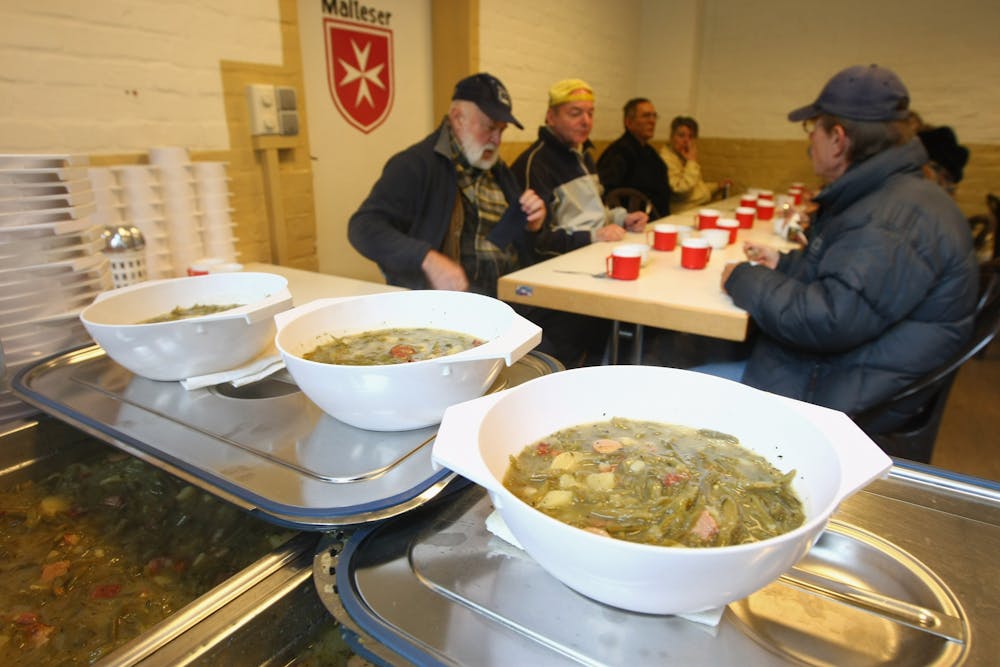
In 2011 the OECD introduced the “Better Life Initiative.” It ranks all 37 OECD member states based on 11 dimensions that contribute to citizens’ well-being: job security, education, health, civic engagement, purchasing power, housing, safety, work-life balance, social connections, environmental quality and subjective well-being.
The Better Life Initiative is important in broadening our view of success. But it lacks GDP-per-capita’s appealing simplicity of being a single, comprehensive number.
A new single-number index
In 2016, the interdisciplinary team of researchers I lead at Utrecht University created the Better Well-Being Index. This integrated measure of well-being enables researchers and policymakers to critically assess whether economic growth translates into well-being – and rate well-being with a single, easy-to-understand number.
Our index uses the same 11 dimensions as the OECD’s Better Life Initiative, and it rates each country’s score on these dimensions on a scale of 0 to 1, using international benchmarks. Next, the figures are weighted to reflect how important each country’s population has reported each dimension to be.
All these inputs are then combined to result in a single measure of well-being.
When we tested our new system on the Netherlands, comparing its well-being rating with GDP per capita, we found that they diverged markedly in the aftermath of the 2008 financial crisis.
Per capita GDP recovered within a few years, and in 2016 surpassed its pre-crisis peak. However, well-being as measured by our Better Well-being Index remained depressed for much longer, largely due to high unemployment.
Many everyday Dutch people knew this all too well. What our data showed, empirically, is that the Dutch had just reached their pre-2008 level of well-being when the COVID-19 crisis hit.
Measuring the pandemic recovery
Our results are already stimulating societal and political debates in the Netherlands. Dutch policymakers, including regional governments, are starting to use well-being indexes to measure the effects of their policies and investment programs.
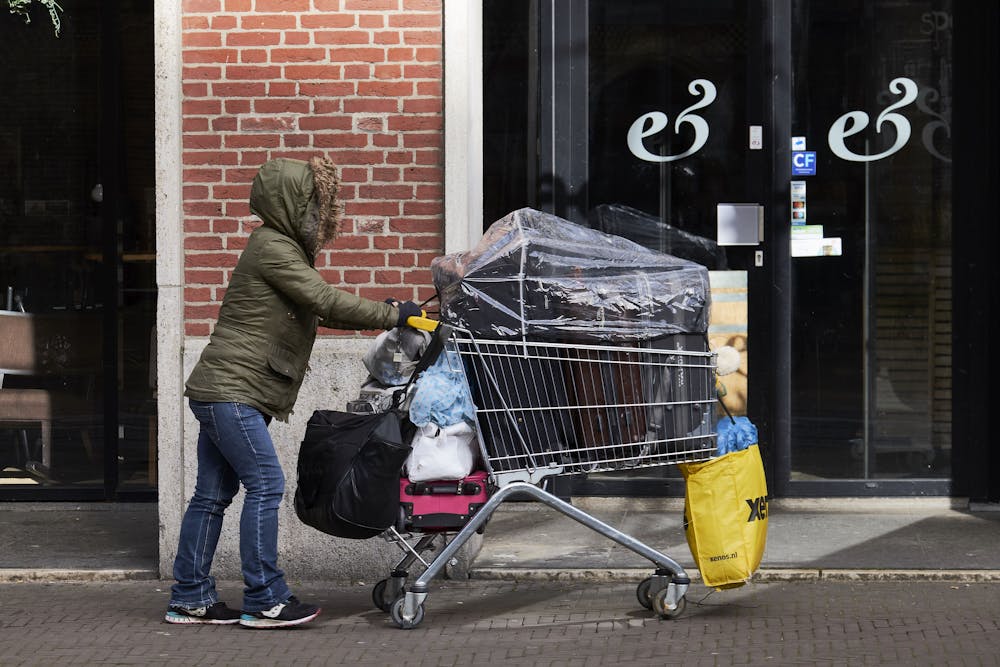
The Better Well-Being Index has not yet been applied to the United States – though it could easily be adapted to the American context – so we can’t yet measure empirically how well-being compares with economic growth in the U.S.
But studies suggest the divergence may be even larger than in the Netherlands. In recent decades, the U.S. has increased its lead over European countries in GDP terms but lags behind them in life expectancy, safety and income distribution.
We believe well-being is especially important for countries to monitor in the COVID-19 recovery period, whether using our index, the OCED’s or another comprehensive tool. As our historical analysis shows, people may still be suffering in many ways well after a country’s economic growth returns – and crises typically exacerbate inequalities.
Countries seeking to explicitly counteract the negative effects of the pandemic need a good compass to guide their recovery plan. And that won’t be GDP.
Bas van Bavel, Distinguished Professor of Transitions of Economy and Society, Utrecht University and Auke Rijpma, Lecturer in Economic and Social History, Utrecht University
This article is republished from The Conversation under a Creative Commons license. Read the original article.







