• Advertise
  • About us
  • Terms and Conditions
  • Contact us
Saturday, December 6, 2025
Australian Times News
  • News
    • Weather
    • Sport
    • Technology
    • Business & Finance
      • Currency Zone
    • Lotto Results
      • The Lott
  • Lifestyle
    • Entertainment
    • Horoscopes
    • Health & Wellness
    • Recipes
  • Travel
  • Expat Life
  • Move to Australia
No Result
View All Result
  • News
    • Weather
    • Sport
    • Technology
    • Business & Finance
      • Currency Zone
    • Lotto Results
      • The Lott
  • Lifestyle
    • Entertainment
    • Horoscopes
    • Health & Wellness
    • Recipes
  • Travel
  • Expat Life
  • Move to Australia
No Result
View All Result
Australian Times News
No Result
View All Result
Home News

Olympic athletes speak up: current COVID plans aren’t enough to keep them safe

The opening ceremony of the Tokyo Olympics is about nine weeks away. And yet many of the world’s athletes are not satisfied with the COVID-19 precautions organisers have planned.

The Conversation by The Conversation
24-05-2021 01:45
in News
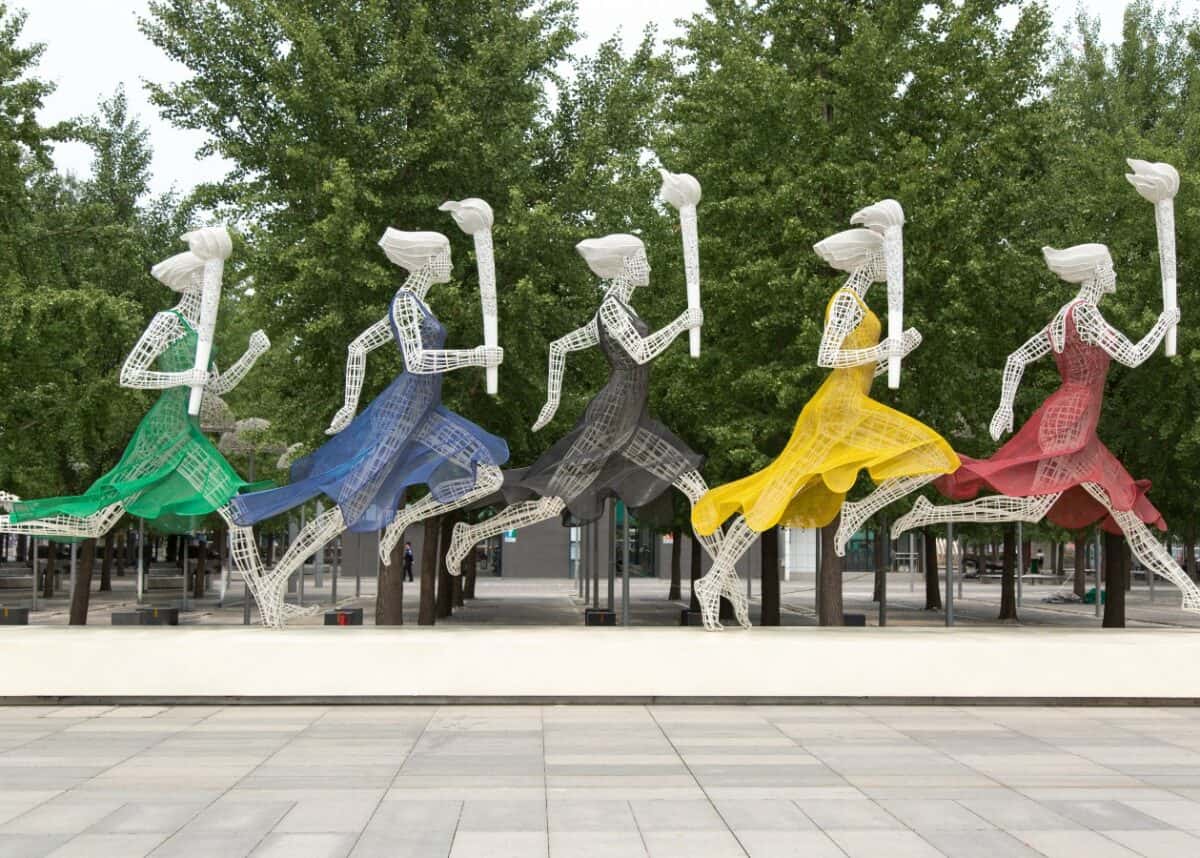
Photo by Sam Balye on Unsplash

Photo by Sam Balye on Unsplash

Michael Toole, Burnet Institute

The opening ceremony of the Tokyo Olympics is about nine weeks away. And yet many of the world’s athletes are not satisfied with the COVID-19 precautions organisers have planned.

The World Players Association has identified a number of measures the International Olympic Committee (IOC) has proposed it says fail to meet best practice standards.

For example, athletes are concerned they would have to share small, poorly ventilated rooms, and demanded a review and modification of ventilation systems.

The athletes were responding to the IOC’s second “playbook”, a guide for athletes and officials on how to have a “safe and successful Games”.

Athletes also criticised plans to use daily saliva antigen tests for athletes rather than PCR tests of nose and throat swabs to test for SARS-CoV-2, the virus that causes COVID-19.

Several evaluations of these antigen tests have revealed they sometimes give a “false negative” result, meaning some infected people are not diagnosed.


AlsoRead...

Ryan: Building real freedom through e-commerce

Ryan: Building real freedom through e-commerce

27 November 2025
Design Australia Group: Redefining Drafting as the engine of housing growth

Design Australia Group: Redefining Drafting as the engine of housing growth

26 November 2025

Other problems the athletes identified included: the lack of sport-specific measures, such as for team sports; athletes having to sign risk waivers and the provision of inadequate insurance; the requirement athletes bring their own masks; insufficient detail about how infected athletes would be treated; no mention of mental health-care provisions; and lack of precise physical distancing measures in dining areas, gyms and locker rooms.

The IOC’s playbook stresses athletes need two approved tests on two separate days within 96 hours of departure, one of which needs to be within 72 hours of departure. All athletes are tested on arrival and daily while in Tokyo using saliva antigen tests.

It then emphasises physical distancing, mask wearing and hygiene. Athletes must not use public transport. All athletes will have a nominated COVID-19 liaison officer, who will receive pre-Games training.

Athletes and officials do not have to be vaccinated. The IOC president has said he expects 80% of athletes will be fully vaccinated, although the source of that figure is unclear.

This still leaves potentially thousands of unprotected participants, more than enough to fuel transmission. Some countries such as Tanzania, whose long-distance runners have won medals in the past, have not vaccinated a single person.


Will the Olympics be safe?

In early February, I wrote an opinion piece that said holding the Olympics “defies public health logic”. I have not changed my mind.

Challenges include a surge of COVID-19 cases in Japan, the likelihood many athletes, officials and media will be unvaccinated, and the Japanese public is against it.

Japan is experiencing its fourth wave of infections — the most severe since the pandemic began. The current seven-day moving average of 5,655 daily cases is 145 times higher than when the Games were postponed in March 2020. The host city is reporting almost 1,000 cases a day.

Japan’s coronavirus testing rate is one of the lowest in the OECD so the official figures may be underestimates. Only about 107 per 1,000 people in Japan have been tested compared with 689 per 1,000 in Australia.

Some hospitals, such as in Osaka, are overwhelmed with severe cases and critical care beds are full.

‘Lockdown lite’ and slow vaccine rollout

There are two main reasons why this wave of COVID-19 infections may not be controlled by July. The first is the “lockdown lite” approach taken by the government and the second is the slow rollout of vaccines.

Although much of Japan, including Tokyo and Osaka, is under a state of emergency, there are constitutional constraints to the government imposing a national lockdown. The country relies on voluntary restraint rather than mandating restrictions. Restaurants and bars are asked to close at a certain hour but this cannot be enforced by law.

Only 4% of people in Japan have received one vaccine dose and just under 2% are fully vaccinated. While the pace is picking up, it is unlikely more than 10% of the Japanese population will be fully vaccinated by the Games.

Although there will be little mingling between athletes and the public, there may be a high risk of the virus spreading among Japanese spectators in stadiums and public transport. That’s if spectators will be allowed to attend.

Finally, one of the strongest arguments against going ahead is that the Japanese public is against it. The latest opinion poll shows only 24% support the Olympics and Paralympics going ahead this year.

In one of the strongest statements so far, the 6,000-member Tokyo Medical Practitioners Association called for the Olympics to be cancelled in a letter sent to the prime minister, Tokyo governor, and the head of the Olympics organising committee.

About the best we can expect is a series of events in silent, empty stadiums, disrupted team-sport events and isolated athletes locked in their dormitories.

The worst would be a super-spreading event in the athletes’ village and spikes of cases in many countries when athletes return home.


Michael Toole, Professor of International Health, Burnet Institute

This article is republished from The Conversation under a Creative Commons license. Read the original article.


Tags: SB001
DMCA.com Protection Status

SUBSCRIBE to our NEWSLETTER

[mc4wp_form id=”2384248″]

Don't Miss

The evolution of Aesthetic Surgery through the lens of Dr Kourosh Tavakoli

by Pauline Torongo
4 December 2025
The evolution of Aesthetic Surgery through the lens of Dr. Kourosh Tavakoli
Health & Wellness

As global interest in Australian cosmetic surgery continues to grow, the combination of regulation, research and emerging digital tools is...

Read moreDetails

Ryan: Building real freedom through e-commerce

by Pauline Torongo
27 November 2025
Ryan: Building real freedom through e-commerce
Business & Finance

Ryan’s greatest achievement isn’t any single business or revenue milestone — it’s the ecosystem he’s built through the Change community.

Read moreDetails

Design Australia Group: Redefining Drafting as the engine of housing growth

by Pauline Torongo
26 November 2025
Design Australia Group: Redefining Drafting as the engine of housing growth
Business & Finance

Australia is under pressure to build homes faster, but design bottlenecks slow progress. Design Australia Group is fixing this by...

Read moreDetails

Louis Guy Detata builds Global Trading Empires through autonomous systems and disciplined leadership

by Pauline Torongo
25 November 2025
Louis Guy Detata builds Global Trading Empires through autonomous systems and disciplined leadership
Business & Finance

The path from investment banking to leading a global trading platform has taught Louis Detata that sustainable success requires more...

Read moreDetails

Burning Eucalyptus Wood: Tips, Advantages, Disadvantages & Alternatives

by Fazila Olla-Logday
20 November 2025
Image Supplied
Enviroment

Learn about burning eucalyptus wood for stoves and fireplaces. Discover benefits, drawbacks, harvesting tips, and better alternative firewood options for...

Read moreDetails

Everything Parents Need to Know About Baby Soft Play and Why It’s a Game Changer

by Fazila Olla-Logday
11 November 2025
Everything Parents Need to Know About Baby Soft Play
Health & Wellness

Baby soft play is a fun, safe, and educational way for little ones to explore and grow. Discover the benefits...

Read moreDetails

WOMAD Sets Up a New Camp in Wiltshire – Australian festival fans take note!

by Kris Griffiths
11 November 2025
Kumbia Boruka brought their reggae and dancehall flavour to the Taste the World Stage at WOMAD 2024 - Credit - Mike Massaro
Entertainment

With its 2026 edition moving to Neston Park in England, WOMAD offers Aussie music lovers a chance to reconnect with global...

Read moreDetails
Load More

Copyright © Blue Sky Publications Ltd. All Rights Reserved.
australiantimes.co.uk is a division of Blue Sky Publications Ltd. Reproduction without permission prohibited. DMCA.com Protection Status

  • About us
  • Write for Us
  • Advertise
  • Contact us
  • T&Cs, Privacy and GDPR
No Result
View All Result
  • News
    • Weather
    • Sport
    • Technology
    • Business & Finance
      • Currency Zone
    • Lotto Results
      • The Lott
  • Lifestyle
    • Entertainment
    • Horoscopes
    • Health & Wellness
    • Recipes
  • Travel
  • Expat Life
  • Move to Australia

Copyright © Blue Sky Publications Ltd. All Rights Reserved.
australiantimes.co.uk is a division of Blue Sky Publications Ltd. Reproduction without permission prohibited. DMCA.com Protection Status

No Result
View All Result
  • News
    • Weather
    • Sport
    • Technology
    • Business & Finance
      • Currency Zone
    • Lotto Results
      • The Lott
  • Lifestyle
    • Entertainment
    • Horoscopes
    • Health & Wellness
    • Recipes
  • Travel
  • Expat Life
  • Move to Australia

Copyright © Blue Sky Publications Ltd. All Rights Reserved.
australiantimes.co.uk is a division of Blue Sky Publications Ltd. Reproduction without permission prohibited. DMCA.com Protection Status