

• Advertise
  • About us
  • Terms and Conditions
  • Contact us
Friday, December 19, 2025
Australian Times News
  • News
    • Weather
    • Sport
    • Technology
    • Business & Finance
      • Currency Zone
    • Lotto Results
      • The Lott
  • Lifestyle
    • Entertainment
    • Horoscopes
    • Health & Wellness
    • Recipes
  • Travel
  • Expat Life
  • Move to Australia
No Result
View All Result
  • News
    • Weather
    • Sport
    • Technology
    • Business & Finance
      • Currency Zone
    • Lotto Results
      • The Lott
  • Lifestyle
    • Entertainment
    • Horoscopes
    • Health & Wellness
    • Recipes
  • Travel
  • Expat Life
  • Move to Australia
No Result
View All Result
Australian Times News
No Result
View All Result
Home News

Not so fast: why India’s plan to reintroduce cheetahs may run into problems

A nature reserve in India could soon be the only location in the world to host wild populations of four major big cat species – tiger, lion, leopard and cheetah. Kuno-Palpur, in central state of Madhya Pradesh, may not be one of India’s best-known sanctuaries but it is certainly becoming one of its most controversial.

The Conversation by The Conversation
21-12-2020 06:03
in News
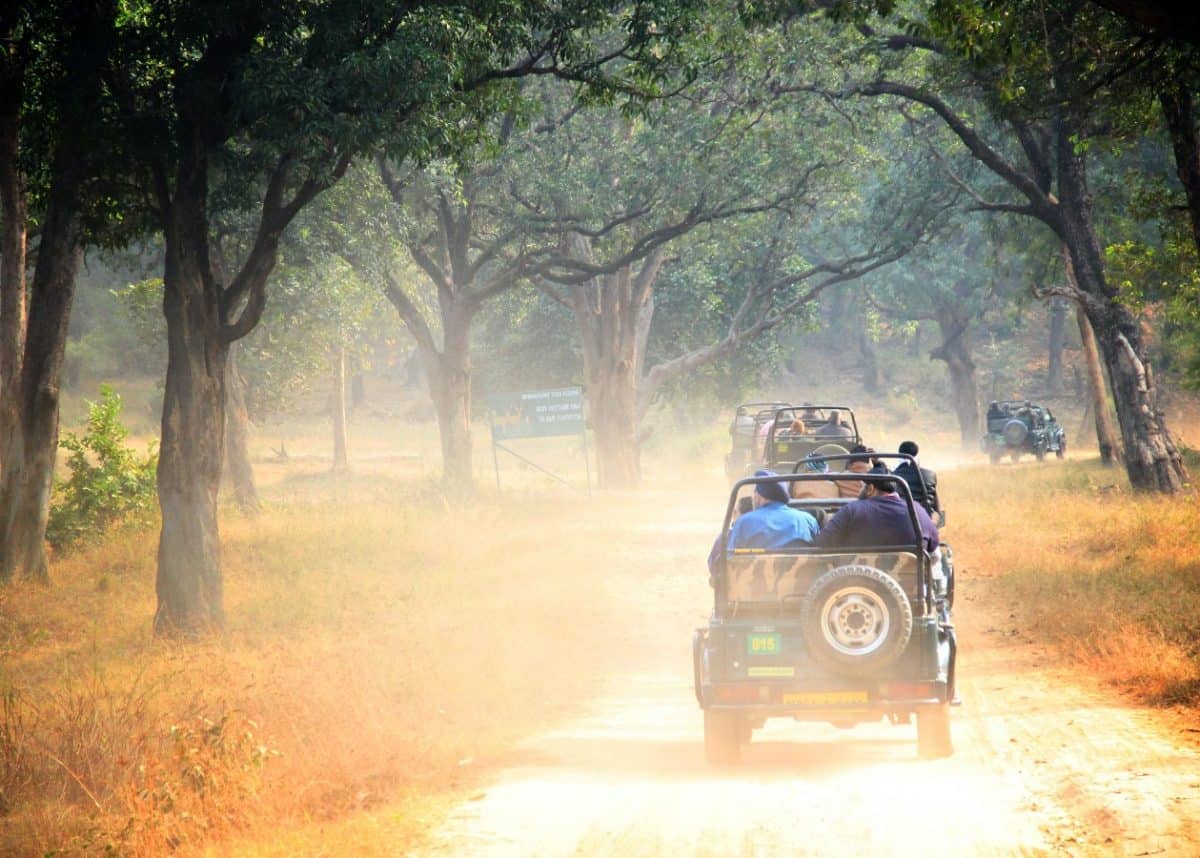
India’s plan to reintroduce cheetahs

India’s plan to reintroduce cheetahs Photo by Amit Jain on Unsplash

Simon Evans, Anglia Ruskin University

A nature reserve in India could soon be the only location in the world to host wild populations of four major big cat species – tiger, lion, leopard and cheetah. Kuno-Palpur, in central state of Madhya Pradesh, may not be one of India’s best-known sanctuaries but it is certainly becoming one of its most controversial. In early 2020, the country’s supreme court agreed that wildlife authorities there could reintroduce the cheetah to India, 70 years after its local extinction.
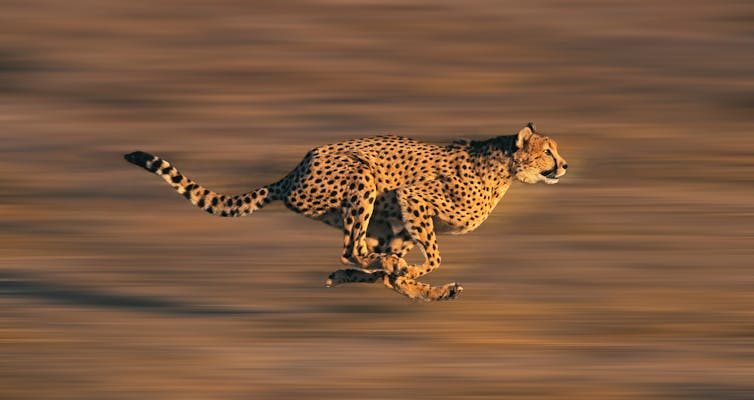
slowmotiongli / shutterstock

Cheetahs once roamed across much of India and the Middle East, but today the entire Asian cheetah population is confined to just a few dozen animals in remote regions of Iran. The reluctance of the Iranian authorities to part with any of these rare creatures has led India farther afield in its attempts to secure a founder population. Currently, the favoured option is African cheetahs available from Namibia, which has the world’s largest population.
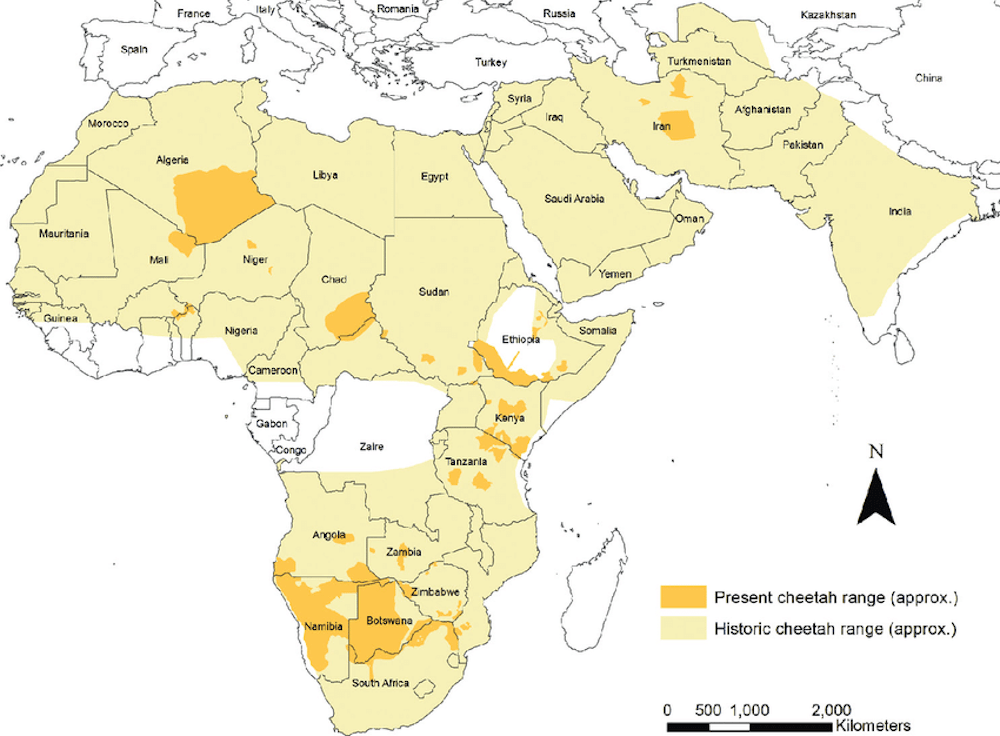
Map of Africa and Asia showing cheetahs former and current range.
The world’s 10,000 or so cheetahs live in a tiny portion of their former range. Laurie L Marker / Cheetah Conservation Fund, CC BY-SA

Kuno-Palpur was identified as the preferred location for India’s relocation programme as it has large grasslands, ideally suited to the cheetah’s need to build up speed without worrying about trees or other obstacles. These grasslands were formed, in large part, through the removal of villages and rewilding of agricultural land to make way for the relocation of the Asiatic lion.

The Asiatic lion is itself an endangered species. Like the Asian cheetah it was once common right across India and the Middle East, but it now only survives as a single population of almost 700 in Gir Forest, a national park in the state of Gujarat, western India. Fears that a single disruption event – such as a disease outbreak or poaching epidemic – may be sufficient to consign the entire species to extinction, prompted the search for a second home for these big cats. This search ended in the identification of Kuno-Palpur, almost 30 years ago.
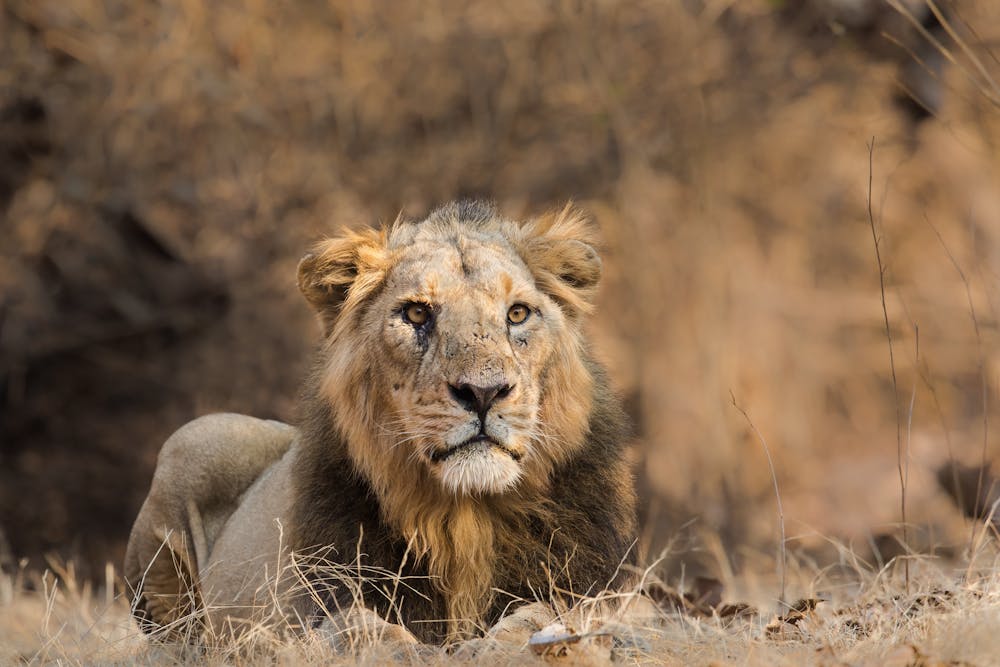
A lion sits and faces camera.
Asiatic lions are smaller than their African cousins, have smaller and darker manes, and all live in one forest. Andrew M. Allport / shutterstock

In 2016 India’s supreme court, citing unacceptable delays, ordered the lion relocation process to be completed within six months. At the same time, the court dismissed a parallel application for the reintroduction of cheetahs, reasoning that it would be paradoxical to elevate the claims of an exotic subspecies (African cheetahs) over those of an endemic (Asiatic lions).

Today there are still no lions in Kuno-Palpur, although it does retain a stable leopard population. This non-compliance has been widely attributed to parochial politics, wrapped up in what has been described as Gujarati pride. Despite the fact that all wildlife is deemed a national resource under the Indian constitution, Gujarat appears determined to hold on to its state monopoly on the creatures.


AlsoRead...

How Turnkey Building Group Is Restoring Trust In An Industry Known For Customer Disappointment

How Turnkey Building Group Is Restoring Trust In An Industry Known For Customer Disappointment

17 December 2025
Ryan: Building real freedom through e-commerce

Ryan: Building real freedom through e-commerce

27 November 2025

Then, in early 2020, the court made an unexpected U-turn and gave the green light for cheetah reintroduction to begin. Some experts questioned the science behind the decision. For example they point out that the cheetah is a wide-ranging species, known to travel across areas up to 1,000 sq km in a single year. Indian parks tend to be much smaller than those in Africa, offering less chance for such free movement. And, while the habitat is currently suited to cheetahs – and lions – some fear that it may ultimately evolve into dry, scrubby forest more suited to tigers.
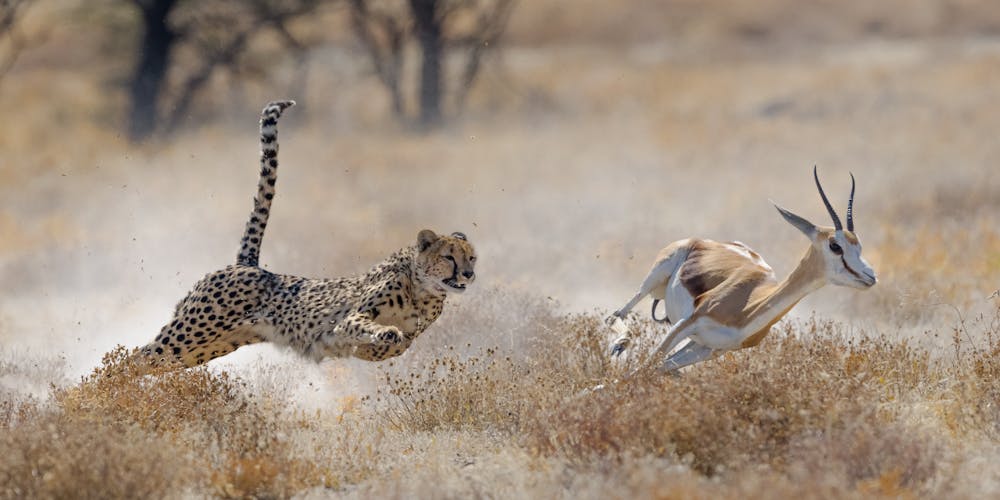
A cheetah chases after a small antelope.
Springbok hunting in Namibia. Elana Erasmus / shutterstock

There is also credible evidence that tigers are already dispersing to Kuno-Palpur as animals from a reserve in neighbouring Rajasthan seek to escape territorial over-crowding. This suggests there is a functioning wildlife corridor between the two reserves, a stated priority for Indian conservation.

This is not a simple issue to resolve. As the supreme court is increasingly called upon to adjudicate between the various factions, so these conundrums are likely to intensify in the future. There is no science available currently to suggest that cheetahs, lions, tigers and leopards can coexist comfortably in the same habitat. It has never occurred anywhere else before, so there is no real-life experience to draw upon.

In my research for a forthcoming book on tigers I found India’s wildlife is becoming increasingly commercialised and much of what we accept as rational conservation can just as easily be viewed through an economic lens – one that reflects the benefits of tourism. On the surface, the cheetah scheme feels more like a vanity project than a conservation imperative; no doubt a boon for wildlife tourism but maybe also a presenting a threat of intra-species and human-wildlife conflict.

Simon Evans, Principal Lecturer in Ecotourism, Anglia Ruskin University

This article is republished from The Conversation under a Creative Commons license. Read the original article.


Tags: SB001
DMCA.com Protection Status

SUBSCRIBE to our NEWSLETTER

[mc4wp_form id=”2384248″]

Don't Miss

How Turnkey Building Group Is Restoring Trust In An Industry Known For Customer Disappointment

by Fazila Olla-Logday
17 December 2025
How Turnkey Building Group Is Restoring Trust In An Industry Known For Customer Disappointment
Business & Finance

Turnkey Building Group is changing the narrative in an industry often associated with missed deadlines and broken promises. By prioritizing...

Read moreDetails

Risk Awareness for International Travellers – What Australians Should Know Before Entering Multi-State Regions

by Fazila Olla-Logday
10 December 2025
Schengen
Travel

This guide helps Australian travellers understand cross-border requirements, assess political and environmental risks, manage health and safety considerations, and prepare...

Read moreDetails

The evolution of Aesthetic Surgery through the lens of Dr Kourosh Tavakoli

by Pauline Torongo
4 December 2025
The evolution of Aesthetic Surgery through the lens of Dr. Kourosh Tavakoli
Health & Wellness

As global interest in Australian cosmetic surgery continues to grow, the combination of regulation, research and emerging digital tools is...

Read moreDetails

Ryan: Building real freedom through e-commerce

by Pauline Torongo
27 November 2025
Ryan: Building real freedom through e-commerce
Business & Finance

Ryan’s greatest achievement isn’t any single business or revenue milestone — it’s the ecosystem he’s built through the Change community.

Read moreDetails

Design Australia Group: Redefining Drafting as the engine of housing growth

by Pauline Torongo
26 November 2025
Design Australia Group: Redefining Drafting as the engine of housing growth
Business & Finance

Australia is under pressure to build homes faster, but design bottlenecks slow progress. Design Australia Group is fixing this by...

Read moreDetails

Louis Guy Detata builds Global Trading Empires through autonomous systems and disciplined leadership

by Pauline Torongo
25 November 2025
Louis Guy Detata builds Global Trading Empires through autonomous systems and disciplined leadership
Business & Finance

The path from investment banking to leading a global trading platform has taught Louis Detata that sustainable success requires more...

Read moreDetails

Burning Eucalyptus Wood: Tips, Advantages, Disadvantages & Alternatives

by Fazila Olla-Logday
20 November 2025
Image Supplied
Enviroment

Learn about burning eucalyptus wood for stoves and fireplaces. Discover benefits, drawbacks, harvesting tips, and better alternative firewood options for...

Read moreDetails
Load More

Copyright © Blue Sky Publications Ltd. All Rights Reserved.
australiantimes.co.uk is a division of Blue Sky Publications Ltd. Reproduction without permission prohibited. DMCA.com Protection Status

  • About us
  • Write for Us
  • Advertise
  • Contact us
  • T&Cs, Privacy and GDPR
No Result
View All Result
  • News
    • Weather
    • Sport
    • Technology
    • Business & Finance
      • Currency Zone
    • Lotto Results
      • The Lott
  • Lifestyle
    • Entertainment
    • Horoscopes
    • Health & Wellness
    • Recipes
  • Travel
  • Expat Life
  • Move to Australia

Copyright © Blue Sky Publications Ltd. All Rights Reserved.
australiantimes.co.uk is a division of Blue Sky Publications Ltd. Reproduction without permission prohibited. DMCA.com Protection Status

No Result
View All Result
  • News
    • Weather
    • Sport
    • Technology
    • Business & Finance
      • Currency Zone
    • Lotto Results
      • The Lott
  • Lifestyle
    • Entertainment
    • Horoscopes
    • Health & Wellness
    • Recipes
  • Travel
  • Expat Life
  • Move to Australia

Copyright © Blue Sky Publications Ltd. All Rights Reserved.
australiantimes.co.uk is a division of Blue Sky Publications Ltd. Reproduction without permission prohibited. DMCA.com Protection Status





