


• Advertise
  • About us
  • Terms and Conditions
  • Contact us
Saturday, December 6, 2025
Australian Times News
  • News
    • Weather
    • Sport
    • Technology
    • Business & Finance
      • Currency Zone
    • Lotto Results
      • The Lott
  • Lifestyle
    • Entertainment
    • Horoscopes
    • Health & Wellness
    • Recipes
  • Travel
  • Expat Life
  • Move to Australia
No Result
View All Result
  • News
    • Weather
    • Sport
    • Technology
    • Business & Finance
      • Currency Zone
    • Lotto Results
      • The Lott
  • Lifestyle
    • Entertainment
    • Horoscopes
    • Health & Wellness
    • Recipes
  • Travel
  • Expat Life
  • Move to Australia
No Result
View All Result
Australian Times News
No Result
View All Result
Home News

Northern Ireland’s circuit breaker lockdown: why now and will it work?

First Minister Arlene Foster announced that the government would be introducing a set of “circuit breaker” restrictions to try to curb the spread of the virus, beginning on Friday October 16. Northern Ireland is the first UK country to try this tactic.

The Conversation by The Conversation
18-10-2020 06:21
in News
Northern Ireland’s circuit breaker lockdown

Northern Ireland’s circuit breaker lockdown Photo by Robert Anasch on Unsplash

Grace C Roberts, Queen’s University Belfast

With COVID-19 cases rising rapidly and 83% of beds in intensive care currently occupied, things have not been going well in Northern Ireland.
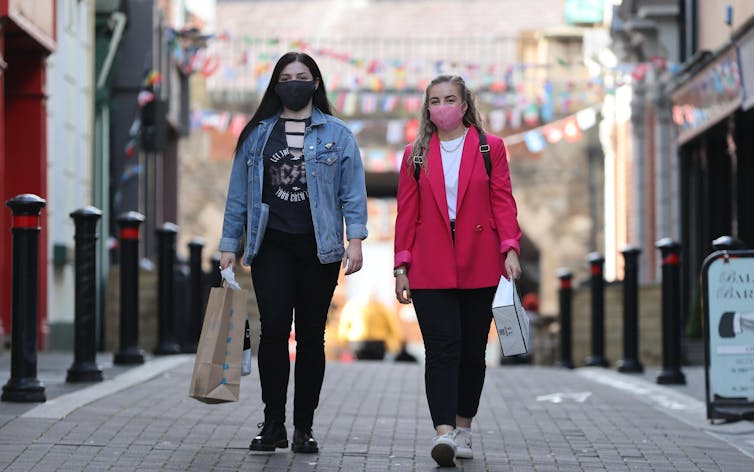
PA.

Therefore, after a long meeting on Tuesday October 13, First Minister Arlene Foster announced that the government would be introducing a set of “circuit breaker” restrictions to try to curb the spread of the virus, beginning on Friday October 16. Northern Ireland is the first UK country to try this tactic.

With a circuit breaker, authorities tighten restrictions on what people can do for a set amount of time to reduce transmission of the virus, to try to avoid needing to go into full lockdown. Northern Ireland’s four-week plan includes closing all bars and restaurants (except for takeaways), stopping indoor amateur sports, and shutting close-contact services such as hairdressing.

Different households are banned from mixing in private homes (though two households can still meet outdoors), and people are being advised to work from home where possible. University learning is strongly advised to be online, and the half-term school holiday is being extended to two weeks.

Other parts of the UK are also considering launching their own circuit breakers.

How did we get here?

Northern Ireland currently has over 13,000 cases per 1 million people, which is above the UK-wide rate of around 10,000 per millions.


AlsoRead...

Ryan: Building real freedom through e-commerce

Ryan: Building real freedom through e-commerce

27 November 2025
Design Australia Group: Redefining Drafting as the engine of housing growth

Design Australia Group: Redefining Drafting as the engine of housing growth

26 November 2025

But earlier in the pandemic, Northern Ireland was not as severely affected as the rest of the UK. Its infection rate was much lower than England’s. On July 1, 4,880 of the UK’s 283,770 cases had been in Northern Ireland – accounting for 1.7% of infections despite having 2.9% of the UK population.

This was possibly down to geography. Northern Ireland has a much higher rural population than the majority of the UK, with approximately 36% of the population residing in rural areas. This may have led to lower viral transmission, as pathogens spread quicker in densely populated areas.

There’s also much more travel from Northern Ireland across the land border with the Republic of Ireland than to rest of the UK. Because the Republic of Ireland implemented a lockdown earlier than the UK and had additional restrictions on movement and travel, this may have limited the number of new infections brought into Northern Ireland.

In recent weeks, however, Northern Ireland has seen a large surge of coronavirus cases. Almost 70% of the total recorded cases in the country have occurred since the start of September, compared with about 50% for the UK as a whole. It’s unclear precisely why Northern Ireland has gone from faring better than the rest of the UK to now faring worse, but the start of the university year could be a big factor.

A quirk of Northern Ireland’s small size is that students can easily visit home on a regular basis, and a large proportion of students visit their family every weekend. Many also have weekend jobs, meaning they are regularly coming into contact with multiple groups of people. The opening of universities therefore has made the country a lot more connected – which may partly explain why cases have increased dramatically since courses began in September.

Will these restrictions work?

Much like the UK-wide lockdown in March, it’s hoped the circuit breaker will reduce the virus’s spread and prevent the health service from becoming overwhelmed.

Most of the restrictions are aimed at limiting non-essential indoor mixing, such as socialising in private homes, indoor sports and hospitality. We know the risk of transmission is much higher indoors, so targeting indoor environments is a sensible approach. But because infected individuals can spread the virus before developing symptoms, it’s very difficult to accurately determine where transmission occurs.

Research shows the vast majority of spread is due to close contact with infected individuals. Primarily this happens in homes, but there’s also evidence of transmission in public indoor settings such as offices or churches, particularly where exposure occurs over a longer time. Therefore, if there’s still plenty of mixing in schools, universities and workplaces in Northern Ireland, then this may limit the effectiveness of the plan.
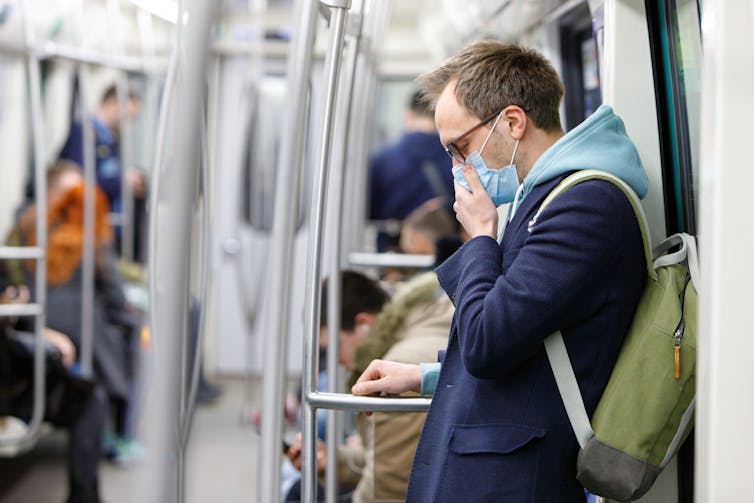
A man in a face mask coughing on public transport.
If a circuit breaker is too short, it’s possible someone could pick up the virus before it begins and still be infectious when it ends. DimaBerlin/Shutterstock

Another factor to consider is the virus’s incubation period – the time between catching the virus and developing symptoms. On average the incubation period of SARS-COV-2 is five days, but it can extend to up two weeks. We know that individuals can spread the virus during this period before their symptoms start, and that some may never develop symptoms but still be infectious.

With this in mind, the longer the restrictions are in place, the more effective they’ll be at reducing viral spread. It’s important for the circuit breaker to remain in place longer than the upper end of the potential incubation period if it’s to have a good chance of significantly reducing the rate of transmission. It’s good therefore that Northern Ireland has opted for a four-week set of restrictions.

The success of circuit breakers in countries such as Singapore and New Zealand suggests these tactics could work for Northern Ireland. However, these countries’ case numbers were drastically lower than what we’re witnessing in Northern Ireland and the UK as a whole at present. To find out how effective circuit breakers can be here, we’ll have to wait and see.

Grace C Roberts, Research Fellow in Virology, Queen’s University Belfast

This article is republished from The Conversation under a Creative Commons license. Read the original article.


Tags: SB001
DMCA.com Protection Status

SUBSCRIBE to our NEWSLETTER

[mc4wp_form id=”2384248″]

Don't Miss

The evolution of Aesthetic Surgery through the lens of Dr Kourosh Tavakoli

by Pauline Torongo
4 December 2025
The evolution of Aesthetic Surgery through the lens of Dr. Kourosh Tavakoli
Health & Wellness

As global interest in Australian cosmetic surgery continues to grow, the combination of regulation, research and emerging digital tools is...

Read moreDetails

Ryan: Building real freedom through e-commerce

by Pauline Torongo
27 November 2025
Ryan: Building real freedom through e-commerce
Business & Finance

Ryan’s greatest achievement isn’t any single business or revenue milestone — it’s the ecosystem he’s built through the Change community.

Read moreDetails

Design Australia Group: Redefining Drafting as the engine of housing growth

by Pauline Torongo
26 November 2025
Design Australia Group: Redefining Drafting as the engine of housing growth
Business & Finance

Australia is under pressure to build homes faster, but design bottlenecks slow progress. Design Australia Group is fixing this by...

Read moreDetails

Louis Guy Detata builds Global Trading Empires through autonomous systems and disciplined leadership

by Pauline Torongo
25 November 2025
Louis Guy Detata builds Global Trading Empires through autonomous systems and disciplined leadership
Business & Finance

The path from investment banking to leading a global trading platform has taught Louis Detata that sustainable success requires more...

Read moreDetails

Burning Eucalyptus Wood: Tips, Advantages, Disadvantages & Alternatives

by Fazila Olla-Logday
20 November 2025
Image Supplied
Enviroment

Learn about burning eucalyptus wood for stoves and fireplaces. Discover benefits, drawbacks, harvesting tips, and better alternative firewood options for...

Read moreDetails

Everything Parents Need to Know About Baby Soft Play and Why It’s a Game Changer

by Fazila Olla-Logday
11 November 2025
Everything Parents Need to Know About Baby Soft Play
Health & Wellness

Baby soft play is a fun, safe, and educational way for little ones to explore and grow. Discover the benefits...

Read moreDetails

WOMAD Sets Up a New Camp in Wiltshire – Australian festival fans take note!

by Kris Griffiths
11 November 2025
Kumbia Boruka brought their reggae and dancehall flavour to the Taste the World Stage at WOMAD 2024 - Credit - Mike Massaro
Entertainment

With its 2026 edition moving to Neston Park in England, WOMAD offers Aussie music lovers a chance to reconnect with global...

Read moreDetails
Load More

Copyright © Blue Sky Publications Ltd. All Rights Reserved.
australiantimes.co.uk is a division of Blue Sky Publications Ltd. Reproduction without permission prohibited. DMCA.com Protection Status

  • About us
  • Write for Us
  • Advertise
  • Contact us
  • T&Cs, Privacy and GDPR
No Result
View All Result
  • News
    • Weather
    • Sport
    • Technology
    • Business & Finance
      • Currency Zone
    • Lotto Results
      • The Lott
  • Lifestyle
    • Entertainment
    • Horoscopes
    • Health & Wellness
    • Recipes
  • Travel
  • Expat Life
  • Move to Australia

Copyright © Blue Sky Publications Ltd. All Rights Reserved.
australiantimes.co.uk is a division of Blue Sky Publications Ltd. Reproduction without permission prohibited. DMCA.com Protection Status

No Result
View All Result
  • News
    • Weather
    • Sport
    • Technology
    • Business & Finance
      • Currency Zone
    • Lotto Results
      • The Lott
  • Lifestyle
    • Entertainment
    • Horoscopes
    • Health & Wellness
    • Recipes
  • Travel
  • Expat Life
  • Move to Australia

Copyright © Blue Sky Publications Ltd. All Rights Reserved.
australiantimes.co.uk is a division of Blue Sky Publications Ltd. Reproduction without permission prohibited. DMCA.com Protection Status





