• Advertise
  • About us
  • Terms and Conditions
  • Contact us
Sunday, December 21, 2025
Australian Times News
  • News
    • Weather
    • Sport
    • Technology
    • Business & Finance
      • Currency Zone
    • Lotto Results
      • The Lott
  • Lifestyle
    • Entertainment
    • Horoscopes
    • Health & Wellness
    • Recipes
  • Travel
  • Expat Life
  • Move to Australia
No Result
View All Result
  • News
    • Weather
    • Sport
    • Technology
    • Business & Finance
      • Currency Zone
    • Lotto Results
      • The Lott
  • Lifestyle
    • Entertainment
    • Horoscopes
    • Health & Wellness
    • Recipes
  • Travel
  • Expat Life
  • Move to Australia
No Result
View All Result
Australian Times News
No Result
View All Result
Home News

Marine protection falls short of the 2020 target to safeguard 10% of the world’s oceans. Lessons from Antarctica and a UN treaty could help

According to a 2019 global assessment report on biodiversity and ecosystem services, 66% of the world’s oceans are experiencing detrimental and increasing cumulative impacts from human activities.

The Conversation by The Conversation
14-12-2020 18:09
in News
Lessons from Antarctica and a UN treaty

Lessons from Antarctica and a UN treaty Photo by Derek Oyen on Unsplash

Natasha Blaize Gardiner, University of Canterbury and Cassandra Brooks, University of Colorado Boulder

Two-thirds of the world’s oceans fall outside national jurisdictions – they belong to no one and everyone.

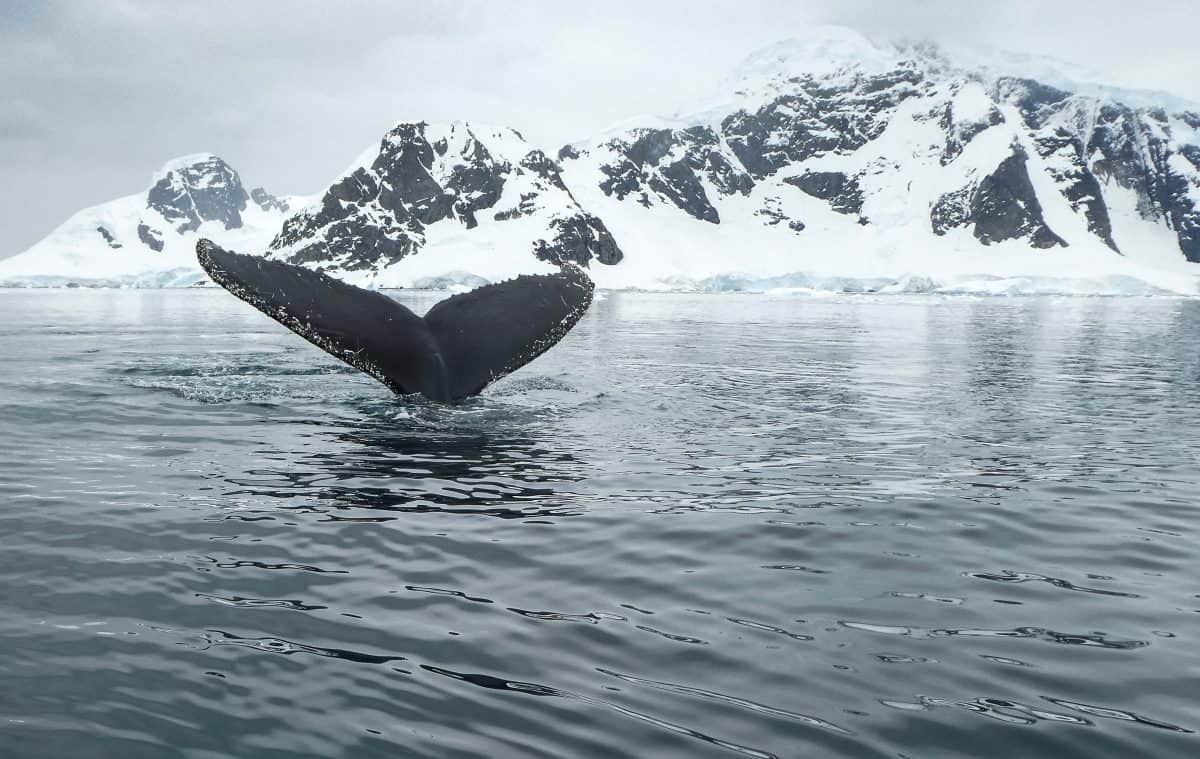
These international waters, known as the high seas, harbour a plethora of natural resources and millions of unique marine species.

John B. Weller, Author provided

But they are being damaged irretrievably. Research shows unsustainable fisheries are one of the greatest threats to marine biodiversity in the high seas.

According to a 2019 global assessment report on biodiversity and ecosystem services, 66% of the world’s oceans are experiencing detrimental and increasing cumulative impacts from human activities.

In the high seas, human activities are regulated by a patchwork of international legal agreements under the 1982 UN Convention on the Law of the Sea (UNCLOS). But this piecemeal approach is failing to safeguard the ecosystems we depend on.

Empty pledges

A decade ago, world leaders updated an earlier pledge to establish a network of marine protected areas (MPAs) with a mandate to protect 10% of the world’s oceans by 2020.


AlsoRead...

How Turnkey Building Group Is Restoring Trust In An Industry Known For Customer Disappointment

How Turnkey Building Group Is Restoring Trust In An Industry Known For Customer Disappointment

17 December 2025
Ryan: Building real freedom through e-commerce

Ryan: Building real freedom through e-commerce

27 November 2025

But MPAs cover only 7.66% of the ocean across the globe. Most protected sites are in national waters where it’s easy to implement and manage protection under the provision of a single country.

In the more remote areas of the high seas, only 1.18% of marine ecosystems have been gifted sanctuary.

The Southern Ocean accounts for a large portion of this meagre percentage, hosting two MPAs. The South Orkney Islands southern shelf MPA covers 94,000 square kilometres, while the Ross Sea region MPA stretches across more than 2 million square kilometres, making it the largest in the world.
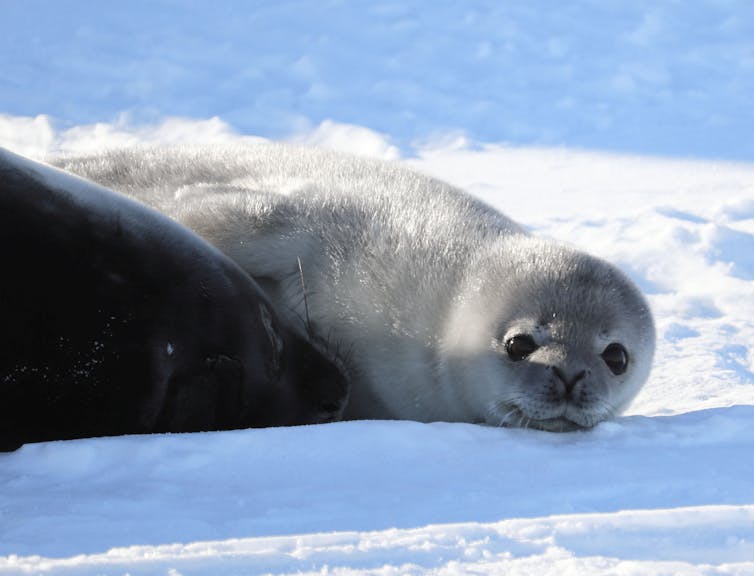
Weddell seal pup and mother
Currently, the world’s largest marine protected area is in the Ross Sea region off Antarctica. Natasha Gardiner, CC BY-ND

The Commission for the Conservation of Antarctic Marine Living Resources (CCAMLR) is responsible for this achievement. Unlike other international fisheries management bodies, the commission’s legal convention allows for the closing of marine areas for conservation purposes.

A comparable mandate for MPAs in other areas of the high seas has been nowhere in sight — until now.

A new ocean treaty

In 2017, the UN started negotiations towards a new comprehensive international treaty for the high seas. The treaty aims to improve the conservation and sustainable use of marine organisms in areas beyond national jurisdiction. It would also implement a global legal mechanism to establish MPAs in international waters.

This innovative international agreement provides an opportunity to work across institutional boundaries towards comprehensive high seas governance and protection. It is crucial to use lessons drawn from existing high seas marine protection initiatives, such as those in the Southern Ocean, to inform the treaty’s development.

The final round of treaty negotiations is pending, delayed by the COVID-19 pandemic, and significant detail within the treaty’s draft text remains undeveloped and open for further debate.

Lessons from Southern Ocean management

CCAMLR comprises 26 member states (including the European Union) and meets annually to make conservation-based decisions by unanimous consensus. In 2002, the commission committed to establishing a representative network of MPAs in Antarctica in alignment with globally agreed targets for the world’s oceans.

The two established MPAs in the high seas are far from an ecologically representative network of protection. In October 2020, the commission continued negotiations for three additional MPAs, which would meet the 10% target for the Southern Ocean, if agreed.

But not a single proposal was agreed. For one of the proposals, the East Antarctic MPA, this marks the eighth year of failed negotiations.

Fisheries interests from a select few nations, combined with complex geopolitics, are thwarting progress towards marine protection in the Antarctic.
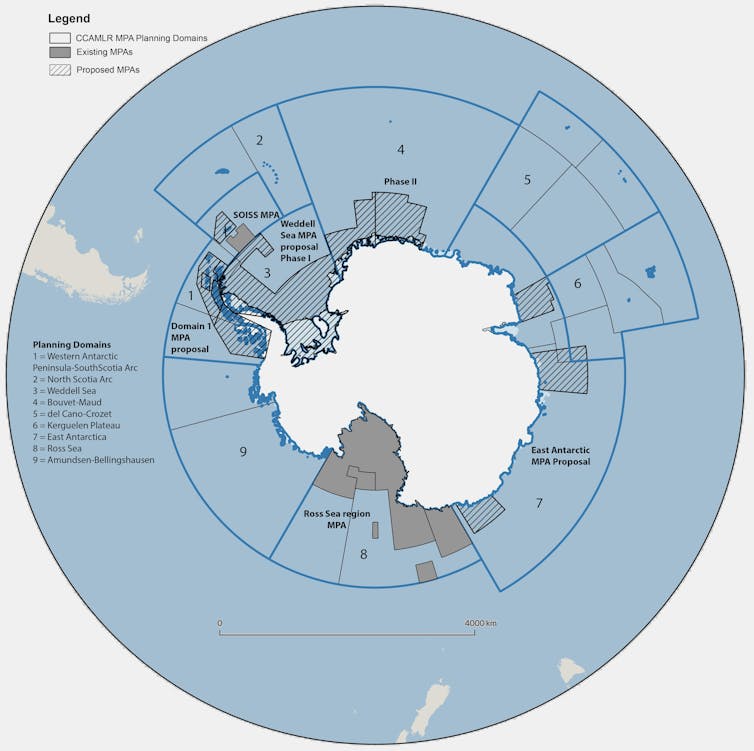
Map of marine protected areas around Antarctica.
CCAMLR’s two established MPAs (in grey) are the South Orkney Islands southern shelf MPA and the Ross Sea region MPA. Three proposed MPAs (hashed) include the East Antarctic, Domain 1 and Weddell Sea proposals. C. Brooks, CC BY-ND

CCAMLR’s progress towards its commitment for a representative MPA network may have ground to a halt, but the commission has gained invaluable knowledge about the challenges in establishing MPAs in international waters. CCAMLR has demonstrated that with an effective convention and legal framework, MPAs in the high seas are possible.

The commission understands the extent to which robust scientific information must inform MPA proposals and how to navigate inevitable trade-offs between conservation and economic interests. Such knowledge is important for the UN treaty process.

As the high seas treaty moves closer to adoption, it stands to outpace the commission regarding progress towards improved marine conservation. Already, researchers have identified high-priority areas for protection in the high seas, including in Antarctica.

Many species cross the Southern Ocean boundary into other regions. This makes it even more important for CCAMLR to integrate its management across regional fisheries organisations – and the new treaty could facilitate this engagement.

But the window of time is closing with only one round of negotiation left for the UN treaty. Research tells us Antarctic decision-makers need to use the opportunity to ensure the treaty supports marine protection commitments.

Stronger Antarctic leadership is urgently needed to safeguard the Southern Ocean — and beyond.

Natasha Blaize Gardiner, PhD Candidate, University of Canterbury and Cassandra Brooks, Assistant Professor Environmental Studies, University of Colorado Boulder

This article is republished from The Conversation under a Creative Commons license. Read the original article.

Tags: SB001
DMCA.com Protection Status

SUBSCRIBE to our NEWSLETTER

[mc4wp_form id=”2384248″]

Don't Miss

How Turnkey Building Group Is Restoring Trust In An Industry Known For Customer Disappointment

by Fazila Olla-Logday
17 December 2025
How Turnkey Building Group Is Restoring Trust In An Industry Known For Customer Disappointment
Business & Finance

Turnkey Building Group is changing the narrative in an industry often associated with missed deadlines and broken promises. By prioritizing...

Read moreDetails

Risk Awareness for International Travellers – What Australians Should Know Before Entering Multi-State Regions

by Fazila Olla-Logday
10 December 2025
Schengen
Travel

This guide helps Australian travellers understand cross-border requirements, assess political and environmental risks, manage health and safety considerations, and prepare...

Read moreDetails

The evolution of Aesthetic Surgery through the lens of Dr Kourosh Tavakoli

by Pauline Torongo
4 December 2025
The evolution of Aesthetic Surgery through the lens of Dr. Kourosh Tavakoli
Health & Wellness

As global interest in Australian cosmetic surgery continues to grow, the combination of regulation, research and emerging digital tools is...

Read moreDetails

Ryan: Building real freedom through e-commerce

by Pauline Torongo
27 November 2025
Ryan: Building real freedom through e-commerce
Business & Finance

Ryan’s greatest achievement isn’t any single business or revenue milestone — it’s the ecosystem he’s built through the Change community.

Read moreDetails

Design Australia Group: Redefining Drafting as the engine of housing growth

by Pauline Torongo
26 November 2025
Design Australia Group: Redefining Drafting as the engine of housing growth
Business & Finance

Australia is under pressure to build homes faster, but design bottlenecks slow progress. Design Australia Group is fixing this by...

Read moreDetails

Louis Guy Detata builds Global Trading Empires through autonomous systems and disciplined leadership

by Pauline Torongo
25 November 2025
Louis Guy Detata builds Global Trading Empires through autonomous systems and disciplined leadership
Business & Finance

The path from investment banking to leading a global trading platform has taught Louis Detata that sustainable success requires more...

Read moreDetails

Burning Eucalyptus Wood: Tips, Advantages, Disadvantages & Alternatives

by Fazila Olla-Logday
20 November 2025
Image Supplied
Enviroment

Learn about burning eucalyptus wood for stoves and fireplaces. Discover benefits, drawbacks, harvesting tips, and better alternative firewood options for...

Read moreDetails
Load More

Copyright © Blue Sky Publications Ltd. All Rights Reserved.
australiantimes.co.uk is a division of Blue Sky Publications Ltd. Reproduction without permission prohibited. DMCA.com Protection Status

  • About us
  • Write for Us
  • Advertise
  • Contact us
  • T&Cs, Privacy and GDPR
No Result
View All Result
  • News
    • Weather
    • Sport
    • Technology
    • Business & Finance
      • Currency Zone
    • Lotto Results
      • The Lott
  • Lifestyle
    • Entertainment
    • Horoscopes
    • Health & Wellness
    • Recipes
  • Travel
  • Expat Life
  • Move to Australia

Copyright © Blue Sky Publications Ltd. All Rights Reserved.
australiantimes.co.uk is a division of Blue Sky Publications Ltd. Reproduction without permission prohibited. DMCA.com Protection Status

No Result
View All Result
  • News
    • Weather
    • Sport
    • Technology
    • Business & Finance
      • Currency Zone
    • Lotto Results
      • The Lott
  • Lifestyle
    • Entertainment
    • Horoscopes
    • Health & Wellness
    • Recipes
  • Travel
  • Expat Life
  • Move to Australia

Copyright © Blue Sky Publications Ltd. All Rights Reserved.
australiantimes.co.uk is a division of Blue Sky Publications Ltd. Reproduction without permission prohibited. DMCA.com Protection Status