


• Advertise
  • About us
  • Terms and Conditions
  • Contact us
Saturday, December 6, 2025
Australian Times News
  • News
    • Weather
    • Sport
    • Technology
    • Business & Finance
      • Currency Zone
    • Lotto Results
      • The Lott
  • Lifestyle
    • Entertainment
    • Horoscopes
    • Health & Wellness
    • Recipes
  • Travel
  • Expat Life
  • Move to Australia
No Result
View All Result
  • News
    • Weather
    • Sport
    • Technology
    • Business & Finance
      • Currency Zone
    • Lotto Results
      • The Lott
  • Lifestyle
    • Entertainment
    • Horoscopes
    • Health & Wellness
    • Recipes
  • Travel
  • Expat Life
  • Move to Australia
No Result
View All Result
Australian Times News
No Result
View All Result
Home News

Low- and middle-income countries lack access to big data analysis – here’s how to fill the gap

The ability to collect and learn from large amounts of data has been a major driver of innovation over recent decades. Everything from health care – think patient analytics, wearable devices and the COVID-19 response – to transportation – Uber and Lyft – to entertainment – Netflix – is now driven by data and statistics.

The Conversation by The Conversation
21-07-2021 09:17
in News
Photo by Lukas Blazek on Unsplash

Photo by Lukas Blazek on Unsplash

David Gunderman, University of Colorado Boulder and Eric Vance, University of Colorado Boulder

The ability to collect and learn from large amounts of data has been a major driver of innovation over recent decades. Everything from health care – think patient analytics, wearable devices and the COVID-19 response – to transportation – Uber and Lyft – to entertainment – Netflix – is now driven by data and statistics.

Yet the ability to collect good data, the capacity to derive insights from it and the skills to turn those insights into change aren’t spread evenly across the globe.

Taking a page from the way Doctors Without Borders sends medical personnel and expertise to developing countries, some organizations have begun to do the same with statistics. But overall, the need to improve local statistical capacity in developing nations remains largely unmet.

We are two mathematicians at the University of Colorado Boulder and are part of a project called the Laboratory for Interdisciplinary Statistical Analysis that is working to develop statistical infrastructure across the world. The goal of the program is to help build data science infrastructure in developing nations. In 10 countries and counting, we have started “stat labs” – academic centers that train young statisticians to collaborate on important local statistics projects.
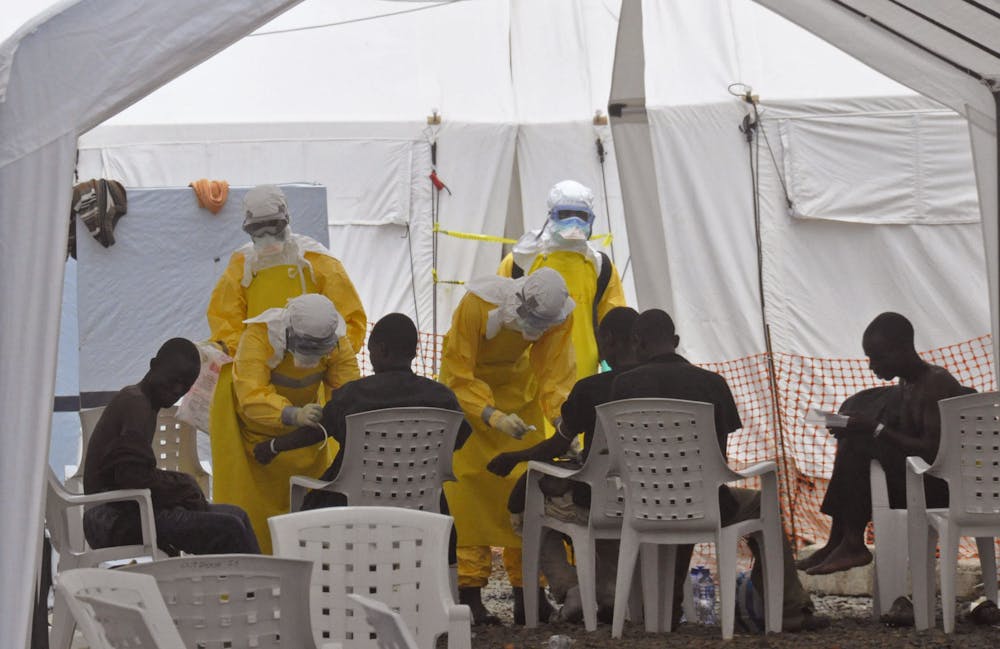
Health care workers in yellow protective equipment treating a group of people in a white tent.
During Liberia’s Ebola outbreak in 2014, an early lack of data collection and analysis made it hard for the government to send health care workers where they were most needed. AP Photo/Abbas Dulleh

Where statistics matter

The benefit of a program like Doctors Without Borders is obvious – the group provides medical care. The benefit of improved statistical capacity is harder to see but can be just as important.

For example, during the great cholera outbreak in London in 1854, John Snow used statistical data collection and analysis to identify and close off the contaminated water pump. Later that year, Florence Nightingale, the founder of modern nursing, used statistics to show that simple hygiene measures could drastically reduce infection and death in hospitals.


AlsoRead...

Ryan: Building real freedom through e-commerce

Ryan: Building real freedom through e-commerce

27 November 2025
Design Australia Group: Redefining Drafting as the engine of housing growth

Design Australia Group: Redefining Drafting as the engine of housing growth

26 November 2025

Every year, the World Bank scores countries on a scale of 1-100. One represents a complete lack of basic statistical data and analysis capacity, and 100 represents the statistical capacity of a developed nation like the U.S. According to the 2020 report, the average statistical capacity of countries in sub-Saharan Africa, South Asia and Latin America are 57.1, 69.8 and 70.1, respectively.

This disparate statistical capacity has played an important role in the pandemic. Strong data collection and analysis of COVID-19 cases allowed some countries – like Nigeria and the U.S. – to better respond to the initial outbreaks and take an informed approach when reopening sections of the economy.

Unfortunately, during the pandemic, fully 80% of national statistics offices in lower- to middle-income countries indicated they needed additional support to perform important data collection and analysis.

Just as good data can lead to good decisions, lack of data can often lead to less effective decisions. For example, during the 2014 to 2016 Ebola epidemic in Liberia, the government did not initially have access to accurate, real-time mortality data or effective analysis tools. This lack prevented public health authorities from quickly and effectively responding to outbreaks. Once the government introduced a phone-based data collection system, officials were better able to allocate doctors and nurses to where they were needed.
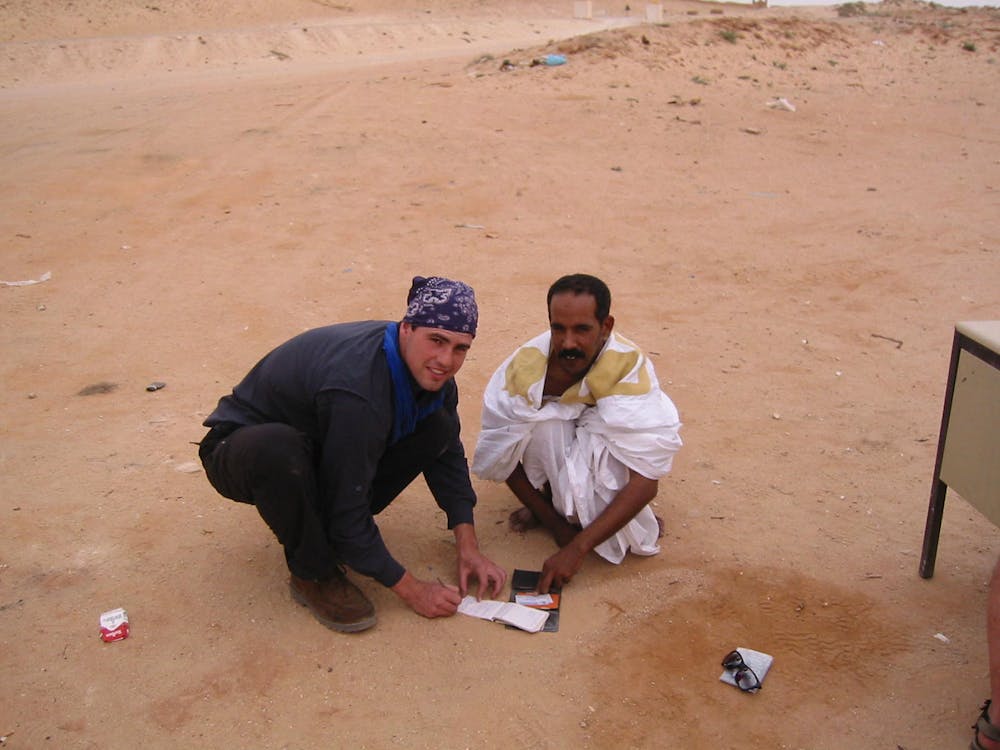
Two people kneeling in the sand over a piece of paper.
Ecologists, like the one Eric Vance met in western Africa, use statistics to learn about the animals and ecosystems they study. Eric Vance, CC BY-ND

Statistics in ecology, health and politics

The idea for the Laboratory for Interdisciplinary Statistical Analysis started in northwestern Africa, on the border of Western Sahara and Mauritania. One of us, Eric Vance, was in the middle of a five-year stint traveling around the world before his Ph.D. At a border checkpoint in the middle of an old minefield, he coincidentally met a biologist who was studying the Saharan desert fox.

When the biologist found out Vance was studying statistics, his eyes lit up, and he said, “Oh, a statistician! I have questions for you.” But before Vance could offer any help, he had to get on a bus and cross the mine-filled border. When Vance got back to the U.S., he realized the widespread need for statistics capacity and education in developing countries. To address this gap, he launched the global LISA 2020 Network in 2012.

The goal of the program is to give local college students the skills and tools to do the statistics they need to drive development. We help local professors establish a statistics laboratory at universities where they work. These statistics labs are collaborative centers where local professors teach students to provide statistics consulting to other academics, businesses and policy makers. While the students are learning statistics they’re also using their technical skills to drive real, local change.
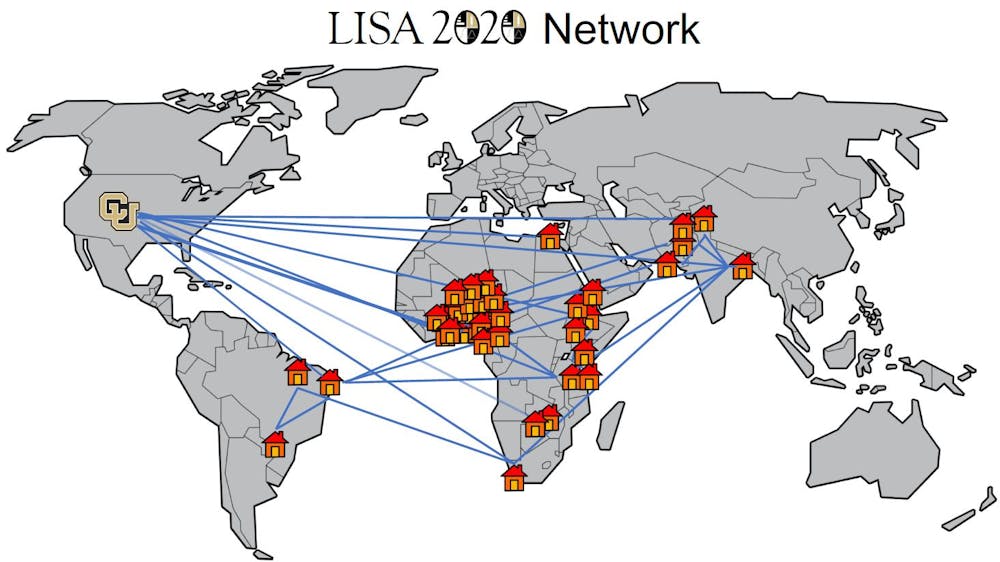
A map showing laboratory locations in South America, Africa, the Middle East and India.
The LISA 2020 network has grown to include more than 30 statistical laboratories. Eric Vance/LISA, CC BY-ND

One of our partner labs is working with Nigeria’s Independent National Electoral Commission. Together, they are assessing the accuracy, completeness, consistency and reliability of data within Nigeria’s Continuous Voter Registration policy to explore ways to improve the electoral process for voters.

In Ethiopia, another local lab is helping the Ethiopian government improve the registry of births and deaths. Using surveys, effective database management and statistical training programs the goal is to improve health outcomes.

Since launching in 2012, our network of stat labs has grown substantially, with particularly strong roots in Africa, South Asia and Brazil. As of July 2021, it consists of 31 stat labs located in 10 low- and middle-income countries.

As statistics continues to play an ever more important role in society, equal access to data resources in developing countries is becoming more essential.

David Gunderman, Research Fellow, University of Colorado Boulder and Eric Vance, Associate Professor and Director of LISA, University of Colorado Boulder

This article is republished from The Conversation under a Creative Commons license. Read the original article.


Tags: SB001
DMCA.com Protection Status

SUBSCRIBE to our NEWSLETTER

[mc4wp_form id=”2384248″]

Don't Miss

The evolution of Aesthetic Surgery through the lens of Dr Kourosh Tavakoli

by Pauline Torongo
4 December 2025
The evolution of Aesthetic Surgery through the lens of Dr. Kourosh Tavakoli
Health & Wellness

As global interest in Australian cosmetic surgery continues to grow, the combination of regulation, research and emerging digital tools is...

Read moreDetails

Ryan: Building real freedom through e-commerce

by Pauline Torongo
27 November 2025
Ryan: Building real freedom through e-commerce
Business & Finance

Ryan’s greatest achievement isn’t any single business or revenue milestone — it’s the ecosystem he’s built through the Change community.

Read moreDetails

Design Australia Group: Redefining Drafting as the engine of housing growth

by Pauline Torongo
26 November 2025
Design Australia Group: Redefining Drafting as the engine of housing growth
Business & Finance

Australia is under pressure to build homes faster, but design bottlenecks slow progress. Design Australia Group is fixing this by...

Read moreDetails

Louis Guy Detata builds Global Trading Empires through autonomous systems and disciplined leadership

by Pauline Torongo
25 November 2025
Louis Guy Detata builds Global Trading Empires through autonomous systems and disciplined leadership
Business & Finance

The path from investment banking to leading a global trading platform has taught Louis Detata that sustainable success requires more...

Read moreDetails

Burning Eucalyptus Wood: Tips, Advantages, Disadvantages & Alternatives

by Fazila Olla-Logday
20 November 2025
Image Supplied
Enviroment

Learn about burning eucalyptus wood for stoves and fireplaces. Discover benefits, drawbacks, harvesting tips, and better alternative firewood options for...

Read moreDetails

Everything Parents Need to Know About Baby Soft Play and Why It’s a Game Changer

by Fazila Olla-Logday
11 November 2025
Everything Parents Need to Know About Baby Soft Play
Health & Wellness

Baby soft play is a fun, safe, and educational way for little ones to explore and grow. Discover the benefits...

Read moreDetails

WOMAD Sets Up a New Camp in Wiltshire – Australian festival fans take note!

by Kris Griffiths
11 November 2025
Kumbia Boruka brought their reggae and dancehall flavour to the Taste the World Stage at WOMAD 2024 - Credit - Mike Massaro
Entertainment

With its 2026 edition moving to Neston Park in England, WOMAD offers Aussie music lovers a chance to reconnect with global...

Read moreDetails
Load More

Copyright © Blue Sky Publications Ltd. All Rights Reserved.
australiantimes.co.uk is a division of Blue Sky Publications Ltd. Reproduction without permission prohibited. DMCA.com Protection Status

  • About us
  • Write for Us
  • Advertise
  • Contact us
  • T&Cs, Privacy and GDPR
No Result
View All Result
  • News
    • Weather
    • Sport
    • Technology
    • Business & Finance
      • Currency Zone
    • Lotto Results
      • The Lott
  • Lifestyle
    • Entertainment
    • Horoscopes
    • Health & Wellness
    • Recipes
  • Travel
  • Expat Life
  • Move to Australia

Copyright © Blue Sky Publications Ltd. All Rights Reserved.
australiantimes.co.uk is a division of Blue Sky Publications Ltd. Reproduction without permission prohibited. DMCA.com Protection Status

No Result
View All Result
  • News
    • Weather
    • Sport
    • Technology
    • Business & Finance
      • Currency Zone
    • Lotto Results
      • The Lott
  • Lifestyle
    • Entertainment
    • Horoscopes
    • Health & Wellness
    • Recipes
  • Travel
  • Expat Life
  • Move to Australia

Copyright © Blue Sky Publications Ltd. All Rights Reserved.
australiantimes.co.uk is a division of Blue Sky Publications Ltd. Reproduction without permission prohibited. DMCA.com Protection Status





