• Advertise
  • About us
  • Terms and Conditions
  • Contact us
Sunday, December 14, 2025
Australian Times News
  • News
    • Weather
    • Sport
    • Technology
    • Business & Finance
      • Currency Zone
    • Lotto Results
      • The Lott
  • Lifestyle
    • Entertainment
    • Horoscopes
    • Health & Wellness
    • Recipes
  • Travel
  • Expat Life
  • Move to Australia
No Result
View All Result
  • News
    • Weather
    • Sport
    • Technology
    • Business & Finance
      • Currency Zone
    • Lotto Results
      • The Lott
  • Lifestyle
    • Entertainment
    • Horoscopes
    • Health & Wellness
    • Recipes
  • Travel
  • Expat Life
  • Move to Australia
No Result
View All Result
Australian Times News
No Result
View All Result
Home News

John Le Carré: authentic spy fiction that wrote the wrongs of post-war British intelligence

Le Carré’s novels dramatically changed the way the British public, fed on a diet of James Bond and Len Deighton, perceived the world of intelligence. They also provided welcome fodder for newspapers. A story about former MI6 chief John Scarlett’s post-intelligence career published in the i paper in November 2015 was given the headline: “The spy who came into a fortune”.

The Conversation by The Conversation
16-12-2020 18:07
in News
The wrongs of post-war British intelligence

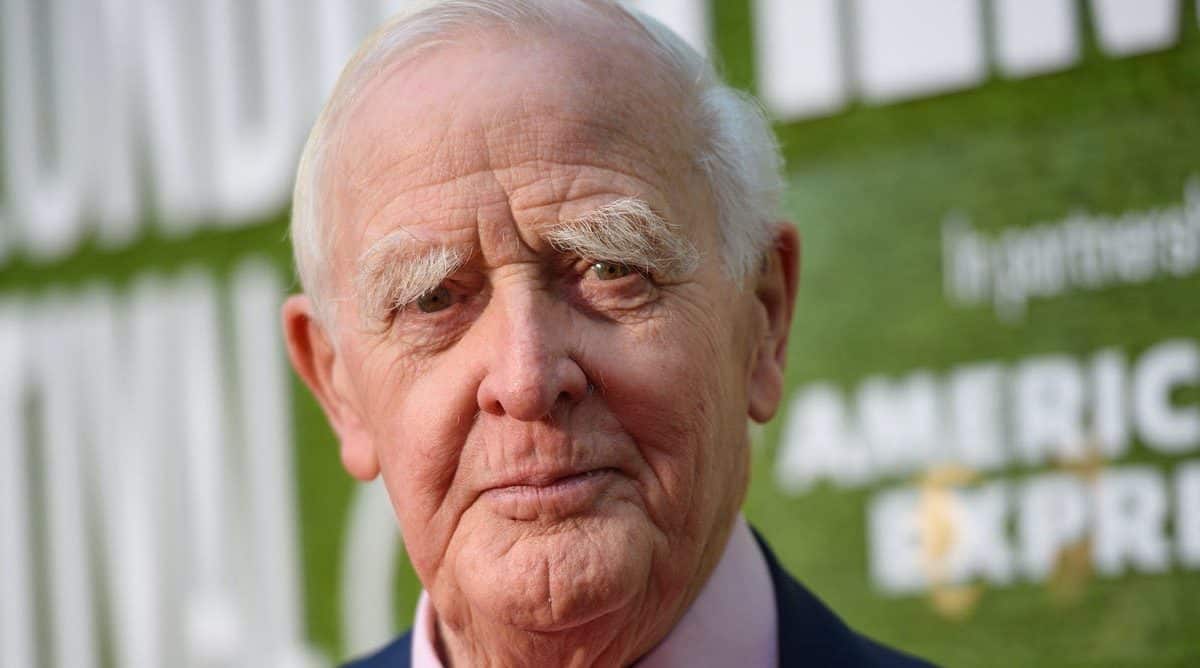
The wrongs of post-war British intelligence Image by Matt Crossick/PA Wire/PA Images

Christopher J. Murphy, University of Salford

Britain’s top spy, MI6 chief Richard Moore, has paid tribute to John le Carré, tweeting that the novelist had “left his mark on #MI6 through his evocative and brilliant novels”. Moore’s tweet, which conveyed the condolences of “all at the #RiverHouse” – the name le Carré gave the Secret Intelligence Service (SIS) headquarters on the banks of the Thames, even blew le Carré’s cover, referring to the writer by his real name, David Cornwell.

Moore’s words of comfort were a far cry form the attitude of his predecessor at MI6, Sir Richard Dearlove, who last year complained about the “corrosive” nature of le Carré’s novels, that he said were “exclusively about betrayal”, a criticism also levelled at his work by former SIS officer Baroness Daphne Park.

Le Carré’s 25 novels have always come with the added cachet of being written by someone who once worked for the intelligence services. Yet as the writer himself explained in 2013, The Spy Who Came In From The Cold, the 1963 novel that made him a household name, was only considered acceptable for publication by MI6 – for whom he was working at the time – because they had “concluded, rightly if reluctantly, that the book was sheer fiction from start to finish, uninformed by personal experience, and that accordingly it constituted no breach of security”.

The association with the reality of intelligence was one which le Carré himself was keen to downplay. He expressed his desire to shake off the association in an interview with Melvyn Bragg in 1976:

If you write a story about street girls in London you aren’t immediately accused of running a brothel, but if you write a spy story, the more credible, the more authentic, the more plausible it is, the less credit you get for an act of imagination.

Imaginative it may have been, but le Carré’s work is certainly not devoid of realism – the shadow of Cambridge Spy Kim Philby can be seen in both the “mole” in Tinker Tailor Soldier Spy and in the career of Magnus Pym, the protagonist of A Perfect Spy, which was partly based on le Carré’s own unhappy childhood. But credibility and authenticity do not necessarily equate to reality – anyone looking for true stories with the names changed would be disappointed.

Despite being products of his imagination, the credibility and authenticity that permeated le Carré’s work served to educate the general public about intelligence work at a time when very little was said officially about the agencies themselves. MI5 was not placed on a statutory basis – that is to say, it did not formally exist – until 1989, followed by MI6 five years later.


AlsoRead...

Ryan: Building real freedom through e-commerce

Ryan: Building real freedom through e-commerce

27 November 2025
Design Australia Group: Redefining Drafting as the engine of housing growth

Design Australia Group: Redefining Drafting as the engine of housing growth

26 November 2025

But ten years before that, when the BBC adaptation of his novel Tinker Tailor Soldier Spy was first broadcast, an audience of over 8 million which tuned in each week (according to his biographer, Adam Sisman) learned all about the danger of “moles” – long-term sleeper agents who burrow their way into the intelligence machinery of the “other side”.
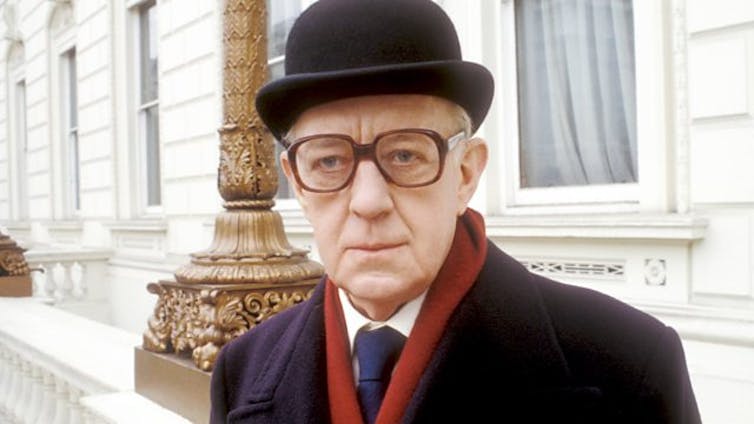
Alec Guinness in costume for his role as spymaster George Smiley in the BBC production of Tinker Tailor Soldier Spy.
Alec Guinness as George Smiley, John Le Carré’s fictional spymaster. BBC Images

It was a timely education – in a pure coincidence of TV scheduling, within weeks of the broadcast, the public learned of the existence of a real-life, high-level mole. Sir Anthony Blunt, a former surveyor of the Queen’s pictures and wartime MI5 officer, was revealed to have been one of the Cambridge Five spy ring who were recruited before the second world war and who spied for decades for the Soviet Union from the heart of the British establishment.

Honeytraps and scalphunters

Le Carré’s novels dramatically changed the way the British public, fed on a diet of James Bond and Len Deighton, perceived the world of intelligence. They also provided welcome fodder for newspapers. A story about former MI6 chief John Scarlett’s post-intelligence career published in the i paper in November 2015 was given the headline: “The spy who came into a fortune”. Tinker Tailor Soldier Spy is also regularly evoked in the press: “Now it’s tinker, tailor, soldier, Booker judge”, wrote Richard Brookes in the Sunday Times when it was announced that former director general of MI5, Dame Stella Rimington, had been appointed to the judging panel for the literary award.

But as well as influencing public perceptions, le Carré’s intelligence jargon – “honeytraps”, “lamplighters”, “scalphunters”, “mothers”, “babysitters” and the like – had a corresponding influence on the spies themselves. As Sisman notes in his biography of le Carré, some of his terms were “subsequently adopted by intelligence professionals”.

There’s long been a strong connection between literary fiction and the world of espionage. Le Carré’s distinguished predecessors, including the likes of Graham Greene, W. Somerset Maugham, Arthur Ransome and Ian Fleming had blazed that trail before. But it was le Carré, primarily, who took Britain’s spies out of sharp suits, fancy cars and the moral certainty of “my country right or wrong”. Instead he gave us books populated by people, like himself, who are: “Born to lying, bred to it, trained to it by an industry that lies for a living.” No wonder some of the real spies didn’t always love his work.

Christopher J. Murphy, Senior Lecturer in Intelligence Studies, University of Salford

This article is republished from The Conversation under a Creative Commons license. Read the original article.


Tags: SB001
DMCA.com Protection Status

SUBSCRIBE to our NEWSLETTER

[mc4wp_form id=”2384248″]

Don't Miss

Risk Awareness for International Travellers – What Australians Should Know Before Entering Multi-State Regions

by Fazila Olla-Logday
10 December 2025
Schengen
Travel

This guide helps Australian travellers understand cross-border requirements, assess political and environmental risks, manage health and safety considerations, and prepare...

Read moreDetails

The evolution of Aesthetic Surgery through the lens of Dr Kourosh Tavakoli

by Pauline Torongo
4 December 2025
The evolution of Aesthetic Surgery through the lens of Dr. Kourosh Tavakoli
Health & Wellness

As global interest in Australian cosmetic surgery continues to grow, the combination of regulation, research and emerging digital tools is...

Read moreDetails

Ryan: Building real freedom through e-commerce

by Pauline Torongo
27 November 2025
Ryan: Building real freedom through e-commerce
Business & Finance

Ryan’s greatest achievement isn’t any single business or revenue milestone — it’s the ecosystem he’s built through the Change community.

Read moreDetails

Design Australia Group: Redefining Drafting as the engine of housing growth

by Pauline Torongo
26 November 2025
Design Australia Group: Redefining Drafting as the engine of housing growth
Business & Finance

Australia is under pressure to build homes faster, but design bottlenecks slow progress. Design Australia Group is fixing this by...

Read moreDetails

Louis Guy Detata builds Global Trading Empires through autonomous systems and disciplined leadership

by Pauline Torongo
25 November 2025
Louis Guy Detata builds Global Trading Empires through autonomous systems and disciplined leadership
Business & Finance

The path from investment banking to leading a global trading platform has taught Louis Detata that sustainable success requires more...

Read moreDetails

Burning Eucalyptus Wood: Tips, Advantages, Disadvantages & Alternatives

by Fazila Olla-Logday
20 November 2025
Image Supplied
Enviroment

Learn about burning eucalyptus wood for stoves and fireplaces. Discover benefits, drawbacks, harvesting tips, and better alternative firewood options for...

Read moreDetails

Everything Parents Need to Know About Baby Soft Play and Why It’s a Game Changer

by Fazila Olla-Logday
11 November 2025
Everything Parents Need to Know About Baby Soft Play
Health & Wellness

Baby soft play is a fun, safe, and educational way for little ones to explore and grow. Discover the benefits...

Read moreDetails
Load More

Copyright © Blue Sky Publications Ltd. All Rights Reserved.
australiantimes.co.uk is a division of Blue Sky Publications Ltd. Reproduction without permission prohibited. DMCA.com Protection Status

  • About us
  • Write for Us
  • Advertise
  • Contact us
  • T&Cs, Privacy and GDPR
No Result
View All Result
  • News
    • Weather
    • Sport
    • Technology
    • Business & Finance
      • Currency Zone
    • Lotto Results
      • The Lott
  • Lifestyle
    • Entertainment
    • Horoscopes
    • Health & Wellness
    • Recipes
  • Travel
  • Expat Life
  • Move to Australia

Copyright © Blue Sky Publications Ltd. All Rights Reserved.
australiantimes.co.uk is a division of Blue Sky Publications Ltd. Reproduction without permission prohibited. DMCA.com Protection Status

No Result
View All Result
  • News
    • Weather
    • Sport
    • Technology
    • Business & Finance
      • Currency Zone
    • Lotto Results
      • The Lott
  • Lifestyle
    • Entertainment
    • Horoscopes
    • Health & Wellness
    • Recipes
  • Travel
  • Expat Life
  • Move to Australia

Copyright © Blue Sky Publications Ltd. All Rights Reserved.
australiantimes.co.uk is a division of Blue Sky Publications Ltd. Reproduction without permission prohibited. DMCA.com Protection Status