Scott Edwards, University of Bristol and Timothy Edmunds, University of Bristol
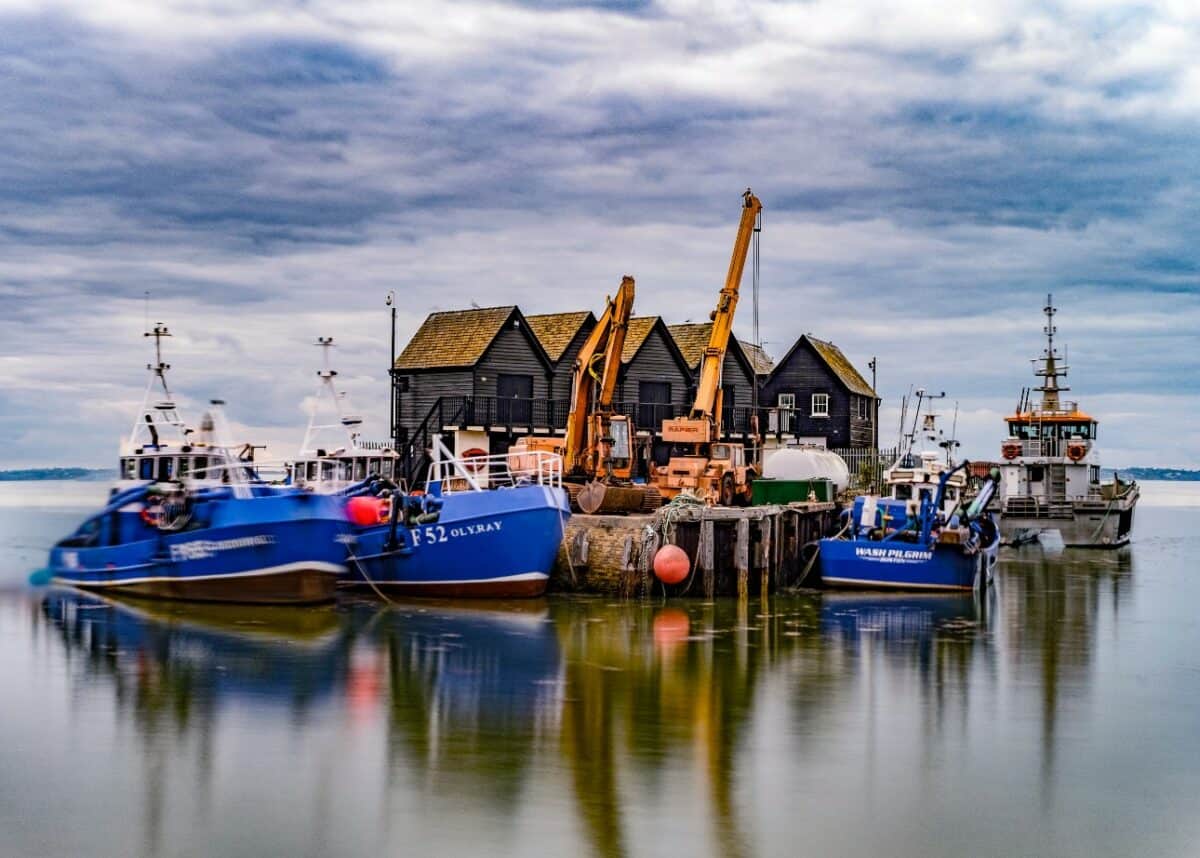
On the morning of Thursday 6 May, French fishers threatened to blockade Jersey’s main port of St Helier, following a threat by French maritime minister Annick Girardin to cut off the island’s electricity supply. Both countries sent maritime patrol vessels to the area, including, in the UK’s case, two Royal Navy River-class ships: HMS Severn and HMS Tyne. After a tense stand-off, the UK government has announced the navy ships would return to port, but nonetheless this dispute needs to be resolved in the longer term.
Why is this happening in Jersey? A self-governing dependency of the British Crown, Jersey is surrounded on three sides by France, and at its closest point is only 14 miles from the French shore. Both British and French fishers have historically worked the island’s waters, and tensions between the two are nothing new. Naval vessels from both countries were deployed in disputes over oyster dredging as far back as the early 19th century, and periodic disputes have flared up since then.
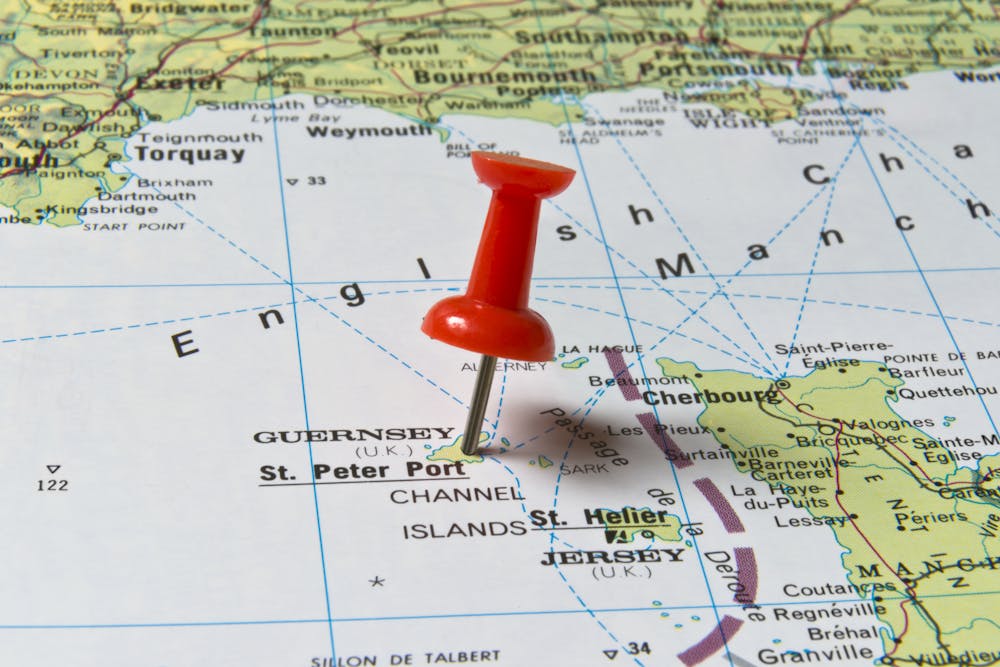
Even so, and despite occasional low-level disagreements over fishing in the area, treaties and shared management structures have largely been successful in managing these tensions. Most recently, in 2000, the Granville Bay Joint Management Committee was established, which granted equitable access to licenses for both French and British vessels operating in the region’s waters.
So why are tensions emerging again now? Part of the answer is to do with Brexit. Prior to the UK’s departure from the European Union, British fishing grounds were managed jointly under the EU common fisheries policy. The policy set quotas for the whole of the EU fishing fleet, deciding who could catch what across the breadth of EU waters, including those of the UK.
Fisheries issues were important for both Britain and the EU during the Brexit process, and proved a perennial sticking point in negotiations over the withdrawal agreement. The result was a compromise that satisfied neither side. The EU retained access to British waters, but with the expectation of a partial drawdown of EU boats’ fishing rights over a five-year period, after which quota distribution will be decided in annual talks. New measures were also introduced for verifying which vessels should have access and under what conditions.
It is these new measures which have proven so problematic in the current dispute. As a Crown Dependency, Jersey is not part of the UK and was not incorporated into the common fisheries policy. However, it has been required to implement these new verification measures. This has led to renewed tensions with French fishers, who argue they were not properly informed of the new requirements and have therefore not been able to acquire licenses to access waters which in some cases they may have fished for generations.


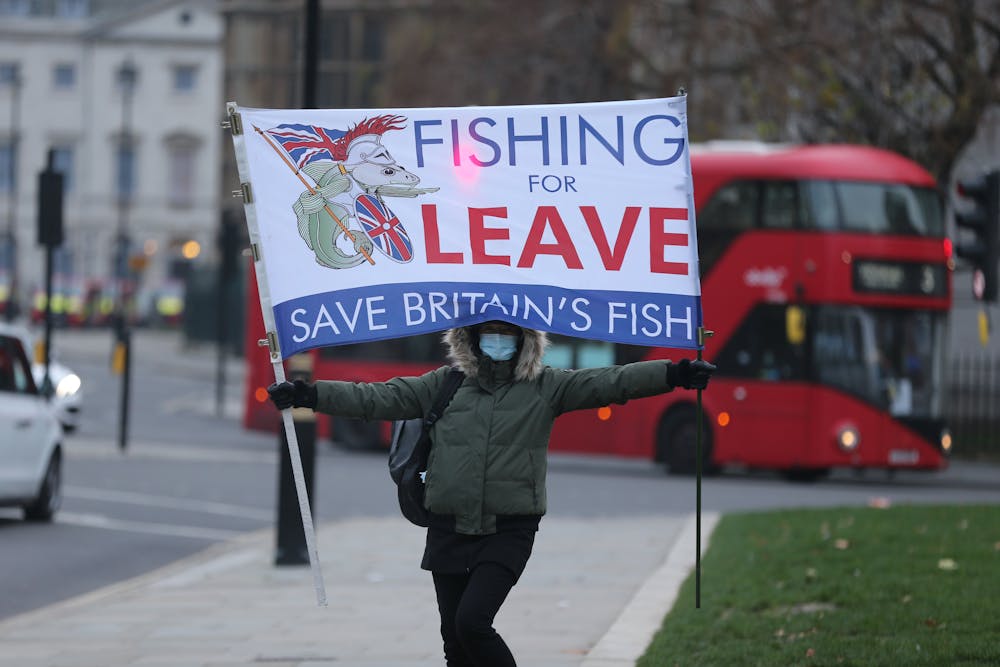
Resolution of the dispute is complicated by its political symbolism. Locally, fisheries are a sensitive issue in Jersey due to the relatively small size of its fleet compared to that of its Normandy counterpart. More widely, the rhetorical importance of fisheries in the Brexit campaign, and the longstanding strength of fishing interests in French politics, significantly politicises what, on its own terms, is a rather technical dispute about licensing requirements.
Resolution needs to begin with de-escalation. The UK’s deployment of Royal Navy vessels to the area is not on the face of it unusual. Unlike many other countries, it does not have a civilian coastguard routinely tasked with law enforcement duties, and historically the navy has always played an important fisheries protection role. Indeed, Admiral Lord Nelson captained HMS Albermarie, a fisheries protection ship, in 1781, and now the modern equivalents routinely make inspections of fishing vessels.
However, even a notionally military intervention in such a high-profile public order dispute with a close ally is politically consequential, and suggests the need to develop stronger civilian enforcement capacities in British waters too. Some relevant agencies, including police forces and the Marine Management Organisation have maritime law enforcement roles, but their capacities are relatively limited, unevenly distributed between regions, and in need of further development.
Joint Anglo-French communication structures should also need to be strengthened for fisheries management disputes and any resulting public disorder incidents. The UK and France have exceptionally strong working relationships in other areas of maritime security, including a joint operations centre to tackle small boat migration, and information sharing structures between their maritime agencies. In the wake of Brexit, these are largely absent in fisheries enforcement, and the establishment of such mechanisms could go a long way to diffusing similar tensions in future.
At heart, what is happening in Jersey is a consequence of the novel regulatory and enforcement challenges presented by the Brexit process, as well as the ongoing challenge of managing historically shared resources. Without EU regulations, these issues present new challenges for both the UK and France in their relations with each other, and it will take time to develop effective replacements for the complex intergovernmental arrangements that previously regulated British waters.
Fisheries are critical to many people’s livelihoods, in both Britain and France, and indeed in Jersey, and their symbolic importance means than such disputes can quickly become politically incendiary. Going forward, UK and French policymakers need to consider how similar situations can best be avoided in future, as all parties adapt to the challenges of post-Brexit governance at sea. De-escalation should be the watchword for the current dispute; cooperation for the disputes yet to come.
Scott Edwards, Research Associate, Transnational Organised Crime at Sea, University of Bristol and Timothy Edmunds, Professor of International Security at University of Bristol and Director of the Centre for Global Insecurity, University of Bristol
This article is republished from The Conversation under a Creative Commons license. Read the original article.