

• Advertise
  • About us
  • Terms and Conditions
  • Contact us
Monday, March 23, 2026
Australian Times News
  • News
    • Weather
    • Sport
    • Technology
    • Business & Finance
      • Currency Zone
    • Lotto Results
      • The Lott
  • Lifestyle
    • Entertainment
    • Horoscopes
    • Health & Wellness
    • Recipes
  • Travel
  • Expat Life
  • Move to Australia
No Result
View All Result
  • News
    • Weather
    • Sport
    • Technology
    • Business & Finance
      • Currency Zone
    • Lotto Results
      • The Lott
  • Lifestyle
    • Entertainment
    • Horoscopes
    • Health & Wellness
    • Recipes
  • Travel
  • Expat Life
  • Move to Australia
No Result
View All Result
Australian Times News
No Result
View All Result
Home News

Is the airborne route a major source of coronavirus transmission?

239 scientists in 32 countries have written an open letter to the World Health Organisation (WHO) arguing there is mounting evidence the airborne route plays a role.

The Conversation by The Conversation
07-07-2020 22:13
in News
Is the airborne route a major source of coronavirus

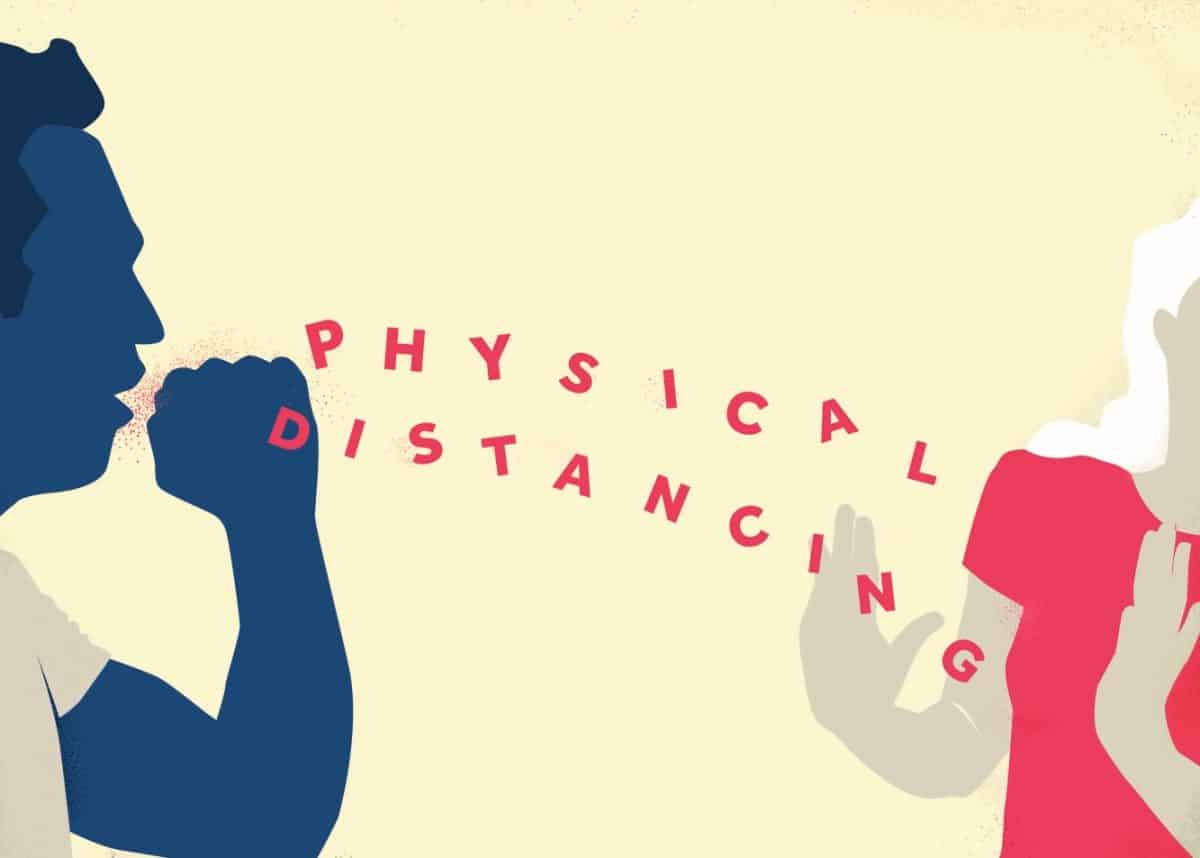
Is the airborne route a major source of coronavirus Image created by Kyle Mueller

Hassan Vally, La Trobe University

As the world continues to grapple with the coronavirus pandemic, one question that keeps coming up is whether COVID-19 can be transmitted through the air.

Shutterstock

In fact, 239 scientists in 32 countries have written an open letter to the World Health Organisation (WHO) arguing there is mounting evidence the airborne route plays a role in the transmission of COVID-19.

Like a lot of issues to do with the pandemic, what seems to be a relatively straightforward question is deceptively complex. We actually don’t know the answer for sure.

Why do we need to understand the modes of transmission?

Understanding how COVID-19 is transmitted from one person to the next enables us to design effective public health interventions to minimise the risk of transmission.

For instance, we’re advised to keep 1.5 metres away from others because there’s consensus one of the main ways the virus spreads is via large droplets.

These “large” droplets are usually greater than 5 micrometres in size and are propelled from an infected person’s nose or mouth in their mucus and saliva when they sneeze, cough or talk.


AlsoRead...

Design Without Compromise: Where Gutter Protection Meets Modern Architecture

Design Without Compromise: Where Gutter Protection Meets Modern Architecture

20 March 2026
The Rise of This Lead Generation Workshop Across Australia

The Rise of This Lead Generation Workshop Across Australia

13 February 2026

Thanks to gravity, these large droplets don’t generally travel far before landing. If you position yourself more than 1.5 metres from someone who is infected, the expectation is you’ll be clear of the droplets’ path.

Similarly, understanding these large droplets can land on surfaces and that the virus can survive on these surfaces means we know we need to wash our hands to avoid transferring the virus to our mouth, nose or eyes.

Until now, the WHO has maintained these large droplets are the major source of COVID-19 transmission. But the authors of the open letter suggest they are underplaying the role of airborne transmission.

Airborne transmission and COVID-19

In its simplest interpretation, airborne transmission refers to the ability of a virus to be spread by droplets small enough to be suspended in the air. These droplets are less than 5 micrometres in size and generally called aerosols.

Whereas large droplets can only travel short distances, these smaller droplets, in theory, can be spread further, or can linger in a room even after an infected person has left.

COVID-19 spreads when an infectious person emits tiny virus-containing droplets. Shutterstock

Evidence supporting the notion that transmission of COVID-19 can occur via the airborne route takes several forms.

First, laboratory studies have demonstrated that SARS-CoV-2, the coronavirus that causes COVID-19, can be aerosolised, and can survive for up to four hours in this form.

Second, genetic material from SARS-CoV-2 has been detected in aerosols sampled at hospitals, including two hospitals in Wuhan, the Chinese city from which the pandemic emerged. But it’s important to note the presence of this genetic material doesn’t necessarily mean the virus is infectious in this form.

Perhaps the strongest evidence, however, comes through the various case reports of superspreading events. These are situations in which many people appear to have been infected with coronavirus in the absence of close contact.

One notable early example was from a choir practice in the United States where almost 50 people were infected even though they maintained physical distance. Two died.

Another example is an outbreak in Guangzhou, China, where ten people from three families contracted COVID-19 after dining in a restaurant. Non-infected people were not in close contact with any infected person, but those who became infected were in the direct line of one air conditioning unit.

The study of this outbreak is not yet peer-reviewed but is part of the evidence the authors of the open letter draw on.

What are the implications of airborne transmission?

Airborne transmission of this novel coronavirus is potentially a worry, because if it occurs often, it means the virus may be commonly transmitted in the absence of close contact.

It also raises the possibility the virus may travel on air currents, and even be transmitted through air conditioning.

This means social distancing may not always be effective, and in particular, crowded indoor areas with poor ventilation pose a major threat.

Good ventilation could lower the risk of airborne transmission in indoor spaces. Shutterstock

So where does this leave us?

The key question is not whether airborne transmission is theoretically possible; it certainly is. But rather, how significant is its role in the transmission of COVID-19?

If, for example, most transmission of SARS-CoV-2 happens via large droplets and the airborne route plays a role only occasionally, this has very different implications to a scenario where the airborne route is a significant mode of transmission.

Reassuringly, the interventions that have been implemented to limit spread of the virus, such as social distancing, have been largely successful so far in most of Australia. This suggests even if the virus can be spread by the airborne route, it’s not likely to be a major route of transmission.

Given what we know, the dilemma is whether to employ the precautionary principle and assume the airborne route plays an important role in disease transmission — and adjust infection control measures accordingly. This may take the form of encouraging wider use of masks and looking at increasing ventilation in enclosed spaces.

The other approach is to wait for more definitive evidence before changing the public health advice.

We will await with interest the WHO’s response to the open letter.

Hassan Vally, Associate Professor, La Trobe University

This article is republished from The Conversation under a Creative Commons license. Read the original article.


Tags: SB001
DMCA.com Protection Status

SUBSCRIBE to our NEWSLETTER

[mc4wp_form id=”2384248″]

Don't Miss

Design Without Compromise: Where Gutter Protection Meets Modern Architecture

by Fazila Olla-Logday
20 March 2026
Design Without Compromise: Where Gutter Protection Meets Modern Architecture
Business & Finance

Design without compromise by integrating gutter protection seamlessly into modern architecture. Discover how innovative gutter systems enhance your home’s aesthetics...

Read moreDetails

How WageSafe Secured Australia’s Most Reputable Retail Business Among Its Premium Clients

by Fazila Olla-Logday
12 March 2026
How WageSafe Secured Australia’s Most Reputable Retail Business Among Its Premium Clients
at

Learn how WageSafe helps businesses stay compliant with payroll and wage regulations through reliable monitoring, risk management, and expert support—protecting...

Read moreDetails

Zakeke AI Agent Studio Removes the E-Commerce Content Bottleneck With Outputs in Seconds

by Fazila Olla-Logday
3 March 2026
Zakeke AI Agent Studio Removes the E-Commerce Content Bottleneck With Outputs in Seconds
at

Zakeke AI Agent Studio removes the e-commerce content bottleneck by generating product content and visuals in seconds, enabling brands to...

Read moreDetails

Empire Traveller launches to give Small and Medium Businesses Enterprise-Level Travel rates

by Pauline Torongo
20 February 2026
Empire Traveller launches to give Small and Medium Businesses Enterprise-Level Travel rates
Travel

Empire Traveller suggests the travel sector may be entering a more inclusive phase — one where advantage is shaped less...

Read moreDetails

Is Feng Shui Master Xu Really A Modern Genius?

by Fazila Olla-Logday
19 February 2026
Is Feng Shui Master Xu Really A Modern Genius?
at

Is Feng Shui Master Xu truly a modern genius, or simply a master of timeless wisdom? Blending ancient Feng Shui...

Read moreDetails

The Rise of This Lead Generation Workshop Across Australia

by Pauline Torongo
13 February 2026
The Rise of This Lead Generation Workshop Across Australia
Business & Finance

“Where U?”, is a two-day in-person lead generation workshop that teaches Australian business owners how to build their own acquisition...

Read moreDetails

Lyca Mobile Australia’s Customer-First Overhaul Pays Off with Finder Award Win

by Fazila Olla-Logday
2 February 2026
Lyca Mobile Australia's Customer-First Overhaul Pays Off with Finder Award Win
Technology

Lyca Mobile Australia’s customer-first overhaul has earned a Finder Award, recognising its improved value, service, and stronger focus on Australian...

Read moreDetails
Load More

Copyright © Blue Sky Publications Ltd. All Rights Reserved.
australiantimes.co.uk is a division of Blue Sky Publications Ltd. Reproduction without permission prohibited. DMCA.com Protection Status

  • About us
  • Write for Us
  • Advertise
  • Contact us
  • T&Cs, Privacy and GDPR
No Result
View All Result
  • News
    • Weather
    • Sport
    • Technology
    • Business & Finance
      • Currency Zone
    • Lotto Results
      • The Lott
  • Lifestyle
    • Entertainment
    • Horoscopes
    • Health & Wellness
    • Recipes
  • Travel
  • Expat Life
  • Move to Australia

Copyright © Blue Sky Publications Ltd. All Rights Reserved.
australiantimes.co.uk is a division of Blue Sky Publications Ltd. Reproduction without permission prohibited. DMCA.com Protection Status

No Result
View All Result
  • News
    • Weather
    • Sport
    • Technology
    • Business & Finance
      • Currency Zone
    • Lotto Results
      • The Lott
  • Lifestyle
    • Entertainment
    • Horoscopes
    • Health & Wellness
    • Recipes
  • Travel
  • Expat Life
  • Move to Australia

Copyright © Blue Sky Publications Ltd. All Rights Reserved.
australiantimes.co.uk is a division of Blue Sky Publications Ltd. Reproduction without permission prohibited. DMCA.com Protection Status





