• Advertise
  • About us
  • Terms and Conditions
  • Contact us
Saturday, December 6, 2025
Australian Times News
  • News
    • Weather
    • Sport
    • Technology
    • Business & Finance
      • Currency Zone
    • Lotto Results
      • The Lott
  • Lifestyle
    • Entertainment
    • Horoscopes
    • Health & Wellness
    • Recipes
  • Travel
  • Expat Life
  • Move to Australia
No Result
View All Result
  • News
    • Weather
    • Sport
    • Technology
    • Business & Finance
      • Currency Zone
    • Lotto Results
      • The Lott
  • Lifestyle
    • Entertainment
    • Horoscopes
    • Health & Wellness
    • Recipes
  • Travel
  • Expat Life
  • Move to Australia
No Result
View All Result
Australian Times News
No Result
View All Result
Home News

IEA report: world’s leading energy adviser was founded to protect oil supplies – now it wants to ban new fossil fuels

Established in the wake of the 1973 oil crisis, the International Energy Agency (IEA) was created to maintain the stability of the international oil supply. As an independent adviser to many governments on energy policy, the IEA has the authority to make member states release reserve oil stocks to stabilise prices.

The Conversation by The Conversation
23-05-2021 06:09
in News
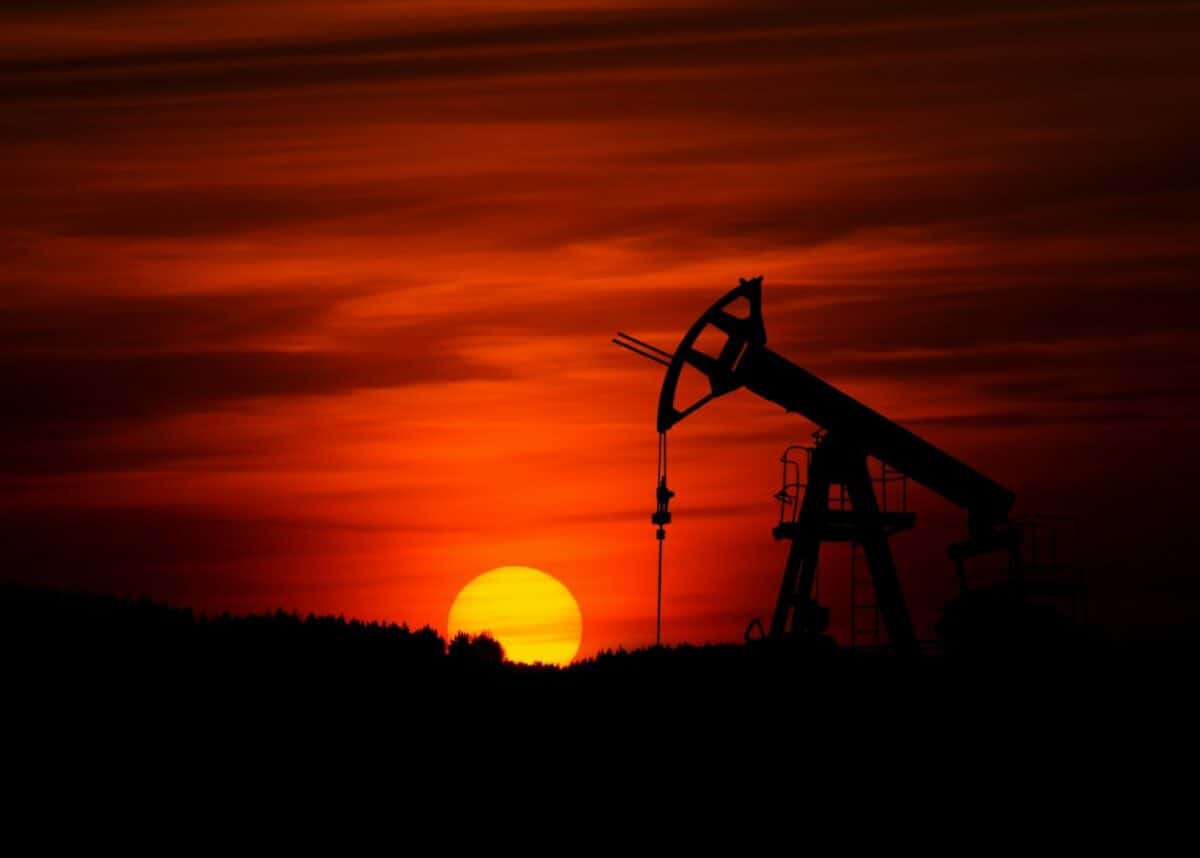
Photo by Zbynek Burival on Unsplash

Photo by Zbynek Burival on Unsplash

Volker Roeben, University of Dundee

Established in the wake of the 1973 oil crisis, the International Energy Agency (IEA) was created to maintain the stability of the international oil supply. As an independent adviser to many governments on energy policy, the IEA has the authority to make member states release reserve oil stocks to stabilise prices. The agency has used that power on three occasions, most recently in response to the disruption to oil production in the US gulf caused by Hurricane Katrina.

In a recent report, the IEA modelled how governments, energy companies and banks could meet the Paris agreement’s goal of halting global warming at 1.5°C. By sketching a road map of policy recommendations, the agency also revealed how energy generation globally could reach net zero emissions by 2050.

The IEA is no one’s idea of a radical voice on climate change. In fact, its ideas on reforming energy policy to meet this challenge have often erred on the side of caution and favoured incremental change. So it came as a surprise when the recent report called for an immediate ban on new oil, coal and gas development.

With relatively conservative institutions like the IEA now calling time on new fossil fuel exploration, it’s safe to assume something big is underway in energy policy worldwide.

Net zero emissions

In the report’s most ambitious scenario for the transformation of energy, which details an overhaul of supply and demand and an unprecedented level of international cooperation, coal would be phased out completely by 2050. Demand for oil would reduce to 72 million barrels a day by 2030 – well below the nadir reached during the lockdowns of 2020.

Since the report claimed that “no new oil and gas fields are required”, oil majors like ExxonMobil can no longer refer to the IEA to project demand. It also spells the end for a “golden age of gas” which the IEA had enthused about only a decade ago. Oil prices would be expected to fall steeply, from US$35 (£25) a barrel in 2035 to US$24 in 2050. Per capita income in already vulnerable producer economies such as Nigeria could plunge by as much as 75%.


AlsoRead...

Ryan: Building real freedom through e-commerce

Ryan: Building real freedom through e-commerce

27 November 2025
Design Australia Group: Redefining Drafting as the engine of housing growth

Design Australia Group: Redefining Drafting as the engine of housing growth

26 November 2025

To compensate, the report says that huge international investment will be needed to add 1,020 gigawatts of solar and wind power a year by 2030 – four times the 261 gigawatts installed in 2020. The battery capacity installed in electric vehicles would need to rise to 6,600 gigawatt hours in 2030, up from around 160 gigawatt hours today. Newly added nuclear energy capacity would hit 17 gigawatts a year up to 2030, and afterwards, 24 gigawatts a year – far more than even the World Nuclear Association – an international advocate for the industry – expects.

All this depends on rapid innovation to create technologies “not yet available on the market to be demonstrated very quickly at scale”, according to the IEA report. More than half of the emissions reductions the report foresees will depend on behavioural changes among the general public, including support for new cycle lanes and high-speed rail.

A global energy transition

The report indicates that the world is on the cusp of unprecedented change in national and international energy policy. This would represent much more than each state doing its duty under the Paris agreement to submit increasingly more ambitious emissions reductions pledges.

The IEA was conceived for the hydrocarbon age when energy was primarily subject to sovereignty. This has made the energy sector, more than many others, resistant to any centralising tendency. But if the agency’s founding mission was to coordinate government responses to oil supply instability, its conclusion that new oil and gas fields are surplus to requirement suggests the economists advising world leaders on the transition to sustainable energy may have found a new appetite for cooperation.
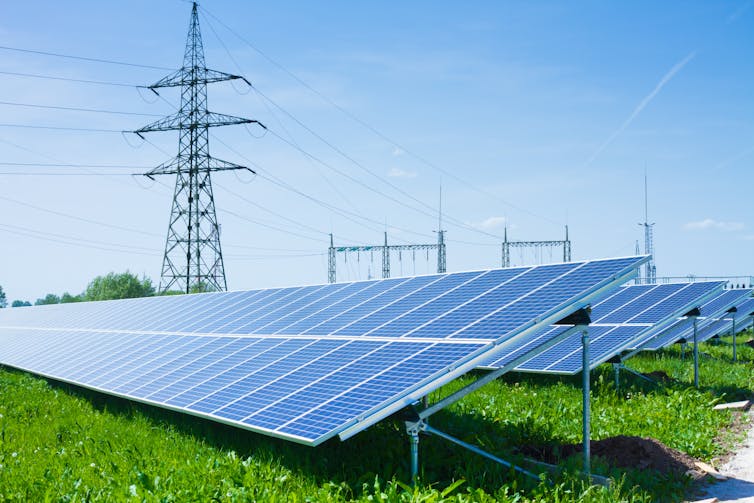
A row of ground-mounted solar panels with a pylon in the background.
The days of centralised energy reserves may be over. C12/Shutterstock

While fossil fuels exist in highly centralised reserves, renewable generation, like wind and solar, is everywhere. Exploiting these sources globally will depend on countries developing and sharing green technology, operating electricity grids across borders and coordinating transnational energy markets. With this model, the IEA is redefining itself as a clean energy hub, capable of governing the process.

Some countries have already pushed back against the IEA’s analysis and its call for cooperation. But each has its own obligations under international law to meet the 2015 Paris agreement’s demands. The report merely spells out a feasible pathway for all states to comply with them.

Volker Roeben, Professor of Energy Law and Global Regulation, University of Dundee

This article is republished from The Conversation under a Creative Commons license. Read the original article.


Tags: SB001
DMCA.com Protection Status

SUBSCRIBE to our NEWSLETTER

[mc4wp_form id=”2384248″]

Don't Miss

The evolution of Aesthetic Surgery through the lens of Dr Kourosh Tavakoli

by Pauline Torongo
4 December 2025
The evolution of Aesthetic Surgery through the lens of Dr. Kourosh Tavakoli
Health & Wellness

As global interest in Australian cosmetic surgery continues to grow, the combination of regulation, research and emerging digital tools is...

Read moreDetails

Ryan: Building real freedom through e-commerce

by Pauline Torongo
27 November 2025
Ryan: Building real freedom through e-commerce
Business & Finance

Ryan’s greatest achievement isn’t any single business or revenue milestone — it’s the ecosystem he’s built through the Change community.

Read moreDetails

Design Australia Group: Redefining Drafting as the engine of housing growth

by Pauline Torongo
26 November 2025
Design Australia Group: Redefining Drafting as the engine of housing growth
Business & Finance

Australia is under pressure to build homes faster, but design bottlenecks slow progress. Design Australia Group is fixing this by...

Read moreDetails

Louis Guy Detata builds Global Trading Empires through autonomous systems and disciplined leadership

by Pauline Torongo
25 November 2025
Louis Guy Detata builds Global Trading Empires through autonomous systems and disciplined leadership
Business & Finance

The path from investment banking to leading a global trading platform has taught Louis Detata that sustainable success requires more...

Read moreDetails

Burning Eucalyptus Wood: Tips, Advantages, Disadvantages & Alternatives

by Fazila Olla-Logday
20 November 2025
Image Supplied
Enviroment

Learn about burning eucalyptus wood for stoves and fireplaces. Discover benefits, drawbacks, harvesting tips, and better alternative firewood options for...

Read moreDetails

Everything Parents Need to Know About Baby Soft Play and Why It’s a Game Changer

by Fazila Olla-Logday
11 November 2025
Everything Parents Need to Know About Baby Soft Play
Health & Wellness

Baby soft play is a fun, safe, and educational way for little ones to explore and grow. Discover the benefits...

Read moreDetails

WOMAD Sets Up a New Camp in Wiltshire – Australian festival fans take note!

by Kris Griffiths
11 November 2025
Kumbia Boruka brought their reggae and dancehall flavour to the Taste the World Stage at WOMAD 2024 - Credit - Mike Massaro
Entertainment

With its 2026 edition moving to Neston Park in England, WOMAD offers Aussie music lovers a chance to reconnect with global...

Read moreDetails
Load More

Copyright © Blue Sky Publications Ltd. All Rights Reserved.
australiantimes.co.uk is a division of Blue Sky Publications Ltd. Reproduction without permission prohibited. DMCA.com Protection Status

  • About us
  • Write for Us
  • Advertise
  • Contact us
  • T&Cs, Privacy and GDPR
No Result
View All Result
  • News
    • Weather
    • Sport
    • Technology
    • Business & Finance
      • Currency Zone
    • Lotto Results
      • The Lott
  • Lifestyle
    • Entertainment
    • Horoscopes
    • Health & Wellness
    • Recipes
  • Travel
  • Expat Life
  • Move to Australia

Copyright © Blue Sky Publications Ltd. All Rights Reserved.
australiantimes.co.uk is a division of Blue Sky Publications Ltd. Reproduction without permission prohibited. DMCA.com Protection Status

No Result
View All Result
  • News
    • Weather
    • Sport
    • Technology
    • Business & Finance
      • Currency Zone
    • Lotto Results
      • The Lott
  • Lifestyle
    • Entertainment
    • Horoscopes
    • Health & Wellness
    • Recipes
  • Travel
  • Expat Life
  • Move to Australia

Copyright © Blue Sky Publications Ltd. All Rights Reserved.
australiantimes.co.uk is a division of Blue Sky Publications Ltd. Reproduction without permission prohibited. DMCA.com Protection Status