

• Advertise
  • About us
  • Terms and Conditions
  • Contact us
Saturday, December 6, 2025
Australian Times News
  • News
    • Weather
    • Sport
    • Technology
    • Business & Finance
      • Currency Zone
    • Lotto Results
      • The Lott
  • Lifestyle
    • Entertainment
    • Horoscopes
    • Health & Wellness
    • Recipes
  • Travel
  • Expat Life
  • Move to Australia
No Result
View All Result
  • News
    • Weather
    • Sport
    • Technology
    • Business & Finance
      • Currency Zone
    • Lotto Results
      • The Lott
  • Lifestyle
    • Entertainment
    • Horoscopes
    • Health & Wellness
    • Recipes
  • Travel
  • Expat Life
  • Move to Australia
No Result
View All Result
Australian Times News
No Result
View All Result
Home News

Hybrid working is fuelling demand for more tech and bigger homes – both are bad news for the planet

Just 5% of employed people in the UK worked from home in 2019. The onset of the pandemic and the overnight shuttering of offices during the first lockdown meant 47% of employees were doing the same in April 2020.

The Conversation by The Conversation
09-10-2021 01:33
in News
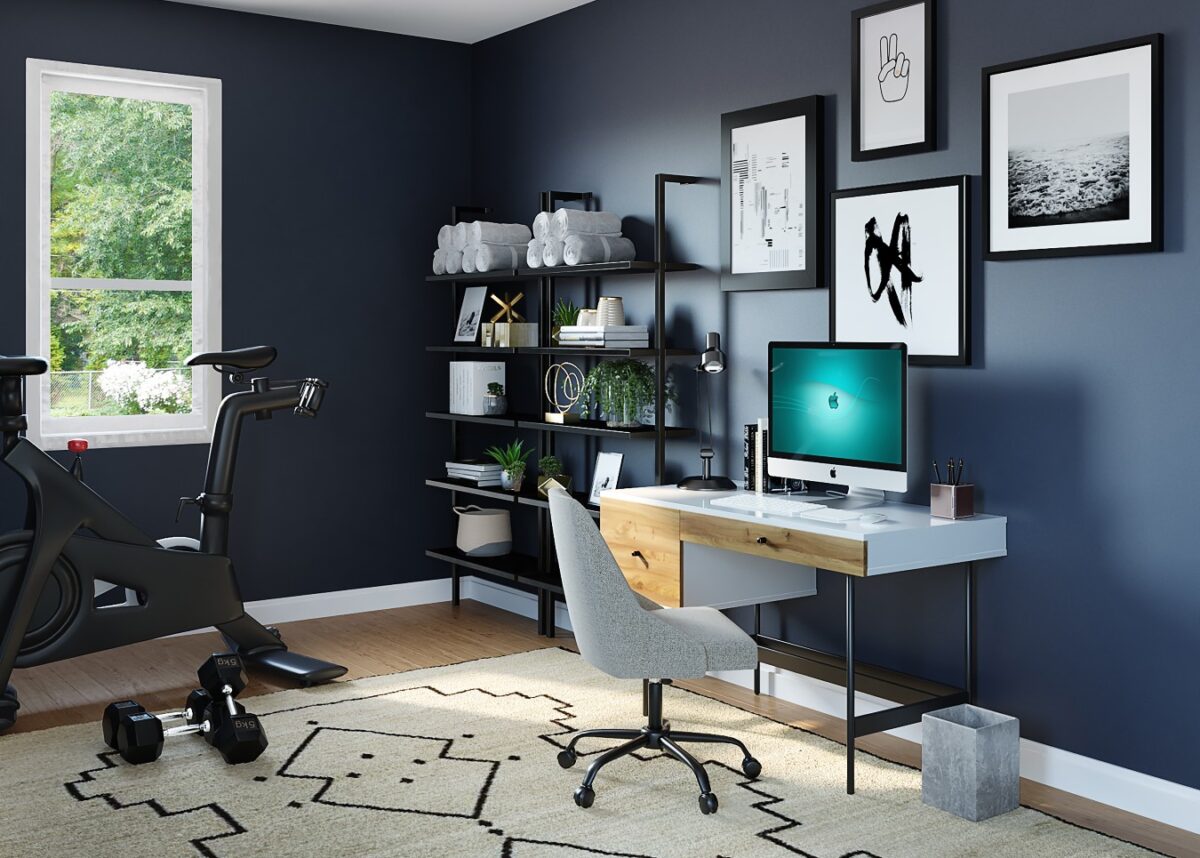
Photo by Spacejoy on Unsplash

Photo by Spacejoy on Unsplash

Katherine Ellsworth-Krebs, Lancaster University; Carolynne Lord, Lancaster University, and Torik Holmes, University of Manchester

Just 5% of employed people in the UK worked from home in 2019. The onset of the pandemic and the overnight shuttering of offices during the first lockdown meant 47% of employees were doing the same in April 2020.

Although returning to work in offices full time is now possible, the latest figures from May show 26% are still working from home while a further 11% are hybrid working: splitting their work time between the office and home.

With fewer people commuting and less food wasted as previously catered work events were held online instead, many hoped that a shift to remote working would benefit workers and the environment.

But that may not be the case. Not everyone can afford a home office, nor the additional heating or internet bills. And the loss of scale involved in heating and cooling individual homes during the day compared to offices may mean remote working is less energy efficient.

Our research into the adaptations office workers made to work from home during 2020’s first lockdown revealed two troubling trends: the duplication of office equipment and demand for more space and larger homes.

The duplication of stuff

Interviews with 17 UK households, selected for their diverse professional backgrounds, ages and sizes, uncovered how and why some people went from working at kitchen tables and on sofas, expecting lockdown to last a few weeks, to creating more permanent and higher quality set-ups.


AlsoRead...

Ryan: Building real freedom through e-commerce

Ryan: Building real freedom through e-commerce

27 November 2025
Design Australia Group: Redefining Drafting as the engine of housing growth

Design Australia Group: Redefining Drafting as the engine of housing growth

26 November 2025

To accommodate this and recreate offices at home, workers bought tech and furnishings which were often transported across the globe. Worldwide sales of laptops and desktops increased by 11.2% between April and June 2020, with 72.3 million units shipping. Monitor sales also spiked and webcams were temporarily sold out across the UK. Online searches for office desks and chairs increased by 438% and 300% respectively on the previous year.
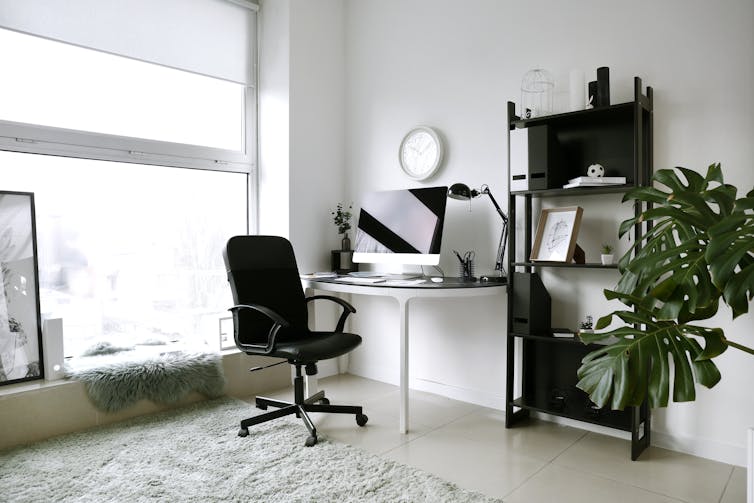
A modern home office with desk, monitor, chair and shelves.
A good home office isn’t cheap. Shadow Inspiration/Shutterstock

Office equipment and furniture purchases peaked during the first lockdown, but demand is likely to remain high. Five times more people now want to work from home compared to 2019.

And making offices at home with new chairs, computers, monitors, desks and stands has also driven desire for bigger houses.

The demand for bigger homes

Our research revealed how working from home meant more people wanting homes with bigger kitchens, spare rooms, offices, garages and gardens. Whether it was the embarrassment of your partner’s colleagues spotting you in your yoga shorts or the horror of dashing offscreen to chase after your naked son, lockdown led to a collective reassessment of what one needs from a home. A sense of quiet and privacy tends to be lost when multiple people share a room. And although many offices are in essence co-working spaces, it has proved difficult to work in the same room as another doing different work – especially when making audio or video calls.

Since the first lockdown house sales have shot up, with June seeing the most sales since records began.

Much of these sales have involved people moving out of cities and into suburbs and the countryside, where homes tend to offer more space. This, sadly, is bad news for sustainability. More domestic space per person can increase energy consumption and suburban households typically have higher carbon footprints. Even people who might have moved to the countryside to work from home more often may ultimately emit more carbon per commute due to less frequent, but longer distance travel.

A residential street in England.
Suburban homes tend to use more energy and are more likely to have more than one car. 1000 Words/Shutterstock

Read more: Average home is more spacious now than ever – here’s why that’s a problem for the environment


Possible responses

The duplication of equipment and the simultaneous need for heating and lighting in offices and homes that arises from workers splitting time across both is a particularly unsustainable arrangement.

While some workplaces allowed employees to take their office set-ups home during the first lockdown, the difficulty in acquiring a webcam and long wait times for office equipment showed how most failed to adequately redistribute resources or support workers. Businesses that are currently downsizing their offices could offer discounts on spare items like Hootsuite did. Or, they could reject the hybrid model and encourage home or office working only.

The movement out of cities and smaller accommodation was arguably bolstered by the UK government’s stamp duty holiday, too. The decision to temporarily raise the threshold at which this property tax kicked in is credited with sparking a frenzy of buying. Housing policies are also climate policies, and the UK government, as a self-proclaimed climate leader and host of the 2021 UN climate talks, should be more sensitive to the implications of all policies for climate change.

The hybrid model of working is still emerging, and so it can be made more sustainable. That means appropriate policies to support people moving out of cities and navigating flexible working arrangements.

Katherine Ellsworth-Krebs, Senior Research Associate in Sustainability, Lancaster University; Carolynne Lord, Senior Researcher, Sociology; Research Associate, School of Computing and Communications, Lancaster University, and Torik Holmes, Research Associate, Sustainable Consumption Institute and Sustainable Innovation Hub., University of Manchester

This article is republished from The Conversation under a Creative Commons license. Read the original article.


Tags: SB001
DMCA.com Protection Status

SUBSCRIBE to our NEWSLETTER

[mc4wp_form id=”2384248″]

Don't Miss

The evolution of Aesthetic Surgery through the lens of Dr Kourosh Tavakoli

by Pauline Torongo
4 December 2025
The evolution of Aesthetic Surgery through the lens of Dr. Kourosh Tavakoli
Health & Wellness

As global interest in Australian cosmetic surgery continues to grow, the combination of regulation, research and emerging digital tools is...

Read moreDetails

Ryan: Building real freedom through e-commerce

by Pauline Torongo
27 November 2025
Ryan: Building real freedom through e-commerce
Business & Finance

Ryan’s greatest achievement isn’t any single business or revenue milestone — it’s the ecosystem he’s built through the Change community.

Read moreDetails

Design Australia Group: Redefining Drafting as the engine of housing growth

by Pauline Torongo
26 November 2025
Design Australia Group: Redefining Drafting as the engine of housing growth
Business & Finance

Australia is under pressure to build homes faster, but design bottlenecks slow progress. Design Australia Group is fixing this by...

Read moreDetails

Louis Guy Detata builds Global Trading Empires through autonomous systems and disciplined leadership

by Pauline Torongo
25 November 2025
Louis Guy Detata builds Global Trading Empires through autonomous systems and disciplined leadership
Business & Finance

The path from investment banking to leading a global trading platform has taught Louis Detata that sustainable success requires more...

Read moreDetails

Burning Eucalyptus Wood: Tips, Advantages, Disadvantages & Alternatives

by Fazila Olla-Logday
20 November 2025
Image Supplied
Enviroment

Learn about burning eucalyptus wood for stoves and fireplaces. Discover benefits, drawbacks, harvesting tips, and better alternative firewood options for...

Read moreDetails

Everything Parents Need to Know About Baby Soft Play and Why It’s a Game Changer

by Fazila Olla-Logday
11 November 2025
Everything Parents Need to Know About Baby Soft Play
Health & Wellness

Baby soft play is a fun, safe, and educational way for little ones to explore and grow. Discover the benefits...

Read moreDetails

WOMAD Sets Up a New Camp in Wiltshire – Australian festival fans take note!

by Kris Griffiths
11 November 2025
Kumbia Boruka brought their reggae and dancehall flavour to the Taste the World Stage at WOMAD 2024 - Credit - Mike Massaro
Entertainment

With its 2026 edition moving to Neston Park in England, WOMAD offers Aussie music lovers a chance to reconnect with global...

Read moreDetails
Load More

Copyright © Blue Sky Publications Ltd. All Rights Reserved.
australiantimes.co.uk is a division of Blue Sky Publications Ltd. Reproduction without permission prohibited. DMCA.com Protection Status

  • About us
  • Write for Us
  • Advertise
  • Contact us
  • T&Cs, Privacy and GDPR
No Result
View All Result
  • News
    • Weather
    • Sport
    • Technology
    • Business & Finance
      • Currency Zone
    • Lotto Results
      • The Lott
  • Lifestyle
    • Entertainment
    • Horoscopes
    • Health & Wellness
    • Recipes
  • Travel
  • Expat Life
  • Move to Australia

Copyright © Blue Sky Publications Ltd. All Rights Reserved.
australiantimes.co.uk is a division of Blue Sky Publications Ltd. Reproduction without permission prohibited. DMCA.com Protection Status

No Result
View All Result
  • News
    • Weather
    • Sport
    • Technology
    • Business & Finance
      • Currency Zone
    • Lotto Results
      • The Lott
  • Lifestyle
    • Entertainment
    • Horoscopes
    • Health & Wellness
    • Recipes
  • Travel
  • Expat Life
  • Move to Australia

Copyright © Blue Sky Publications Ltd. All Rights Reserved.
australiantimes.co.uk is a division of Blue Sky Publications Ltd. Reproduction without permission prohibited. DMCA.com Protection Status





