

• Advertise
  • About us
  • Terms and Conditions
  • Contact us
Saturday, December 6, 2025
Australian Times News
  • News
    • Weather
    • Sport
    • Technology
    • Business & Finance
      • Currency Zone
    • Lotto Results
      • The Lott
  • Lifestyle
    • Entertainment
    • Horoscopes
    • Health & Wellness
    • Recipes
  • Travel
  • Expat Life
  • Move to Australia
No Result
View All Result
  • News
    • Weather
    • Sport
    • Technology
    • Business & Finance
      • Currency Zone
    • Lotto Results
      • The Lott
  • Lifestyle
    • Entertainment
    • Horoscopes
    • Health & Wellness
    • Recipes
  • Travel
  • Expat Life
  • Move to Australia
No Result
View All Result
Australian Times News
No Result
View All Result
Home News

How soon could carbon capture technology solve industry CO₂ shortages?

The recent spike in natural gas prices has closed many plants that make fertiliser in the UK – sending a shockwave through lots of other industries.

The Conversation by The Conversation
27-09-2021 06:07
in News
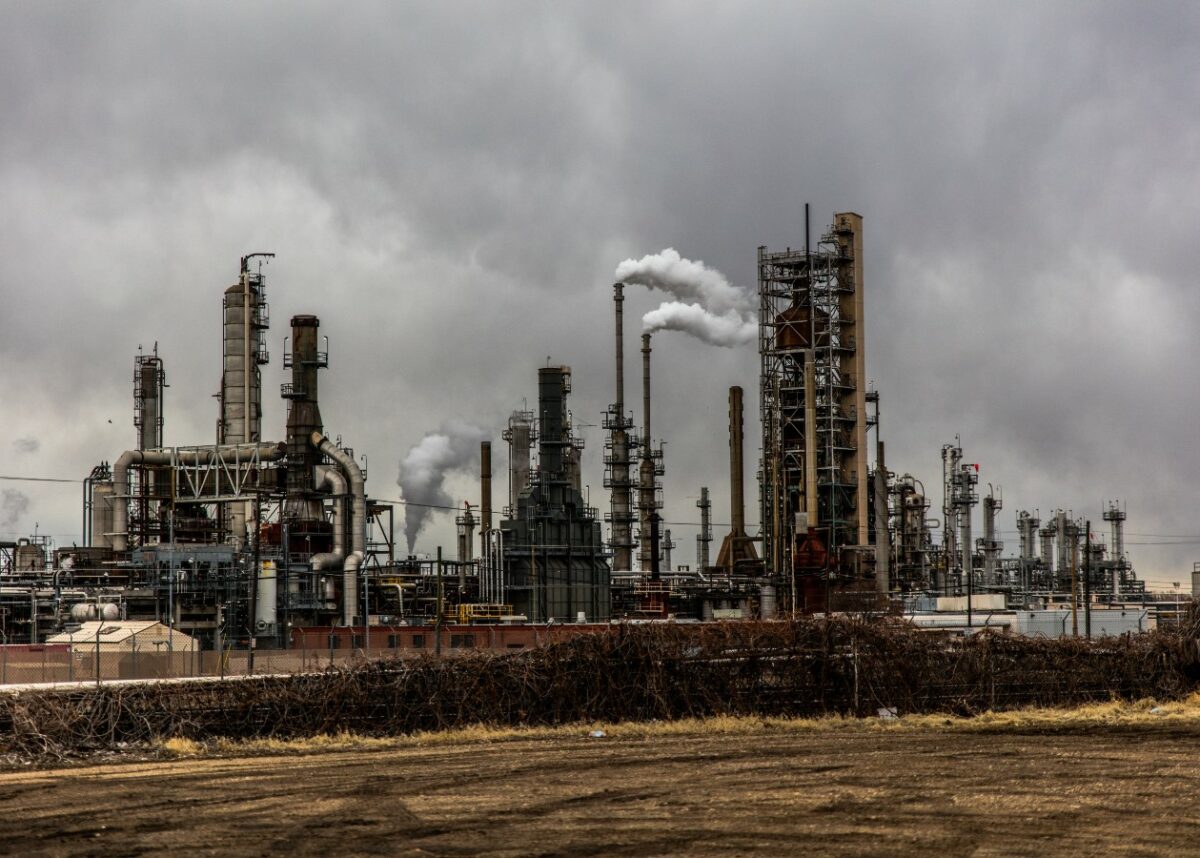
Photo by Patrick Hendry on Unsplash

Photo by Patrick Hendry on Unsplash

Peter Styring, University of Sheffield

The recent spike in natural gas prices has closed many plants that make fertiliser in the UK – sending a shockwave through lots of other industries.

This is because ammonia fertilisers are made from nitrogen and hydrogen, and the latter comes from breaking down natural gas – a process which gives off carbon dioxide as a byproduct. It is this CO₂ that is then taken up and used in different industries, from carbonating soft drinks to euthanising livestock. In its solid form, known as cardice, CO₂ can even be used to transport and store temperature-sensitive pharmaceuticals – including the Pfizer COVID-19 vaccine.

The scarcity of CO₂ has caused havoc in UK supply chains, threatening shortages of meat, alcohol and fizzy drinks. While the government has paid to reopen a fertiliser plant, firms buying CO₂ will have to pay five times more than usual.

It may seem surprising to read that CO₂ – the greenhouse gas heating our world – also keeps certain essential industries functioning. How can there be a shortage of something we’re desperately trying to emit less of? Couldn’t we just pull it down from the atmosphere and pump it into factories where it could be put to use?

Carbon capture technology

The problem is that the CO₂ used in industry comes from sources that are a well-established part of a complex supply chain. This CO₂ generated in the process of making fertiliser is relatively cheap and easy to separate. If that system fails, there is no ready alternative. Meanwhile, CO₂ concentrations in the atmosphere are about 420 ppm – 0.0042% of all the gases. Separating CO₂ from the air is difficult, and far more expensive.

Something called “point-source carbon capture technology” is currently the best alternative option, and involves scrubbing CO₂ from exhaust gases in the chimneys of factories and power plants. Here, CO₂ is emitted in the highest volumes and concentrations are thousands of times higher that those found in the atmosphere.


AlsoRead...

Ryan: Building real freedom through e-commerce

Ryan: Building real freedom through e-commerce

27 November 2025
Design Australia Group: Redefining Drafting as the engine of housing growth

Design Australia Group: Redefining Drafting as the engine of housing growth

26 November 2025

Technologies which can capture carbon from power station chimneys or even directly from the air are being developed, but they aren’t available at the scale needed. Two UK-based competitions to drive innovation in carbon capture and storage technology have been launched and closed by successive governments since 2005, the last one ending in 2015 without much success.

Some initiatives have got off the ground though, including The Acorn Project in St Fergus, Scotland, which separates CO₂ from natural gas – which is used to make hydrogen – and injects it under the North Sea. The Drax C-Capture project, meanwhile, extracts CO₂ from emissions at a biomass energy plant in North Yorkshire, England. This project, it’s claimed, aims to be carbon-neutral in time by transporting the CO₂ via pipeline to an offshore storage site.

Ten years of research and engineering are usually needed before any new carbon capture technology can be deployed at the necessary scale. Industries which use CO₂ must plan for new carbon capture technology being available many years in the future, rather than expect immediate solutions.

And carbon capture units currently operating at selected locations globally, such as at the Boundary Dam coal-fired power station in Canada, are unlikely to offer the solution to CO₂ supply industries need. That’s because they use liquids to absorb and purify the greenhouse gas at high temperatures, which produces over 99% pure CO₂, but requires a lot of energy and so is expensive. Liquid adsorbents decompose at high temperatures too, leaving toxic byproducts.
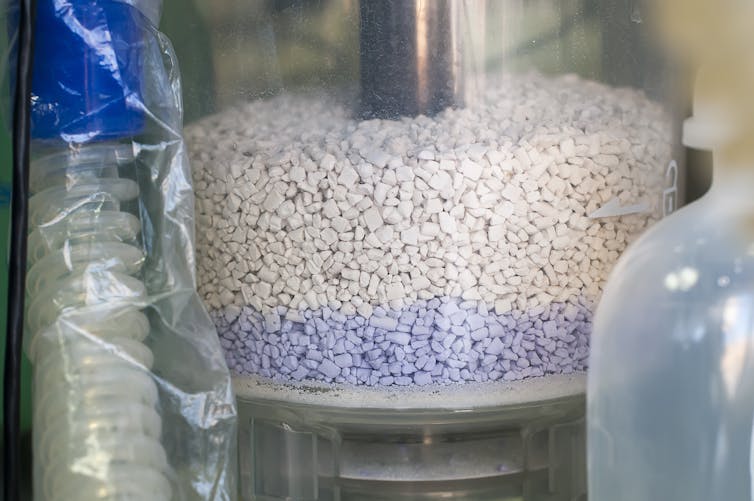
A glass canister containing white and blue gravel.
Solid adsorbents combined with high pressures could be the next generation of carbon capture. Yuriy Bartenev/Shutterstock

Solid adsorbents, like those made from silica or cellulose powders, are much more stable. Some new systems use solid absorbents and high pressures rather than high temperatures to adsorb the CO₂. These are likely to be the cheapest to run and the least environmentally damaging, making them a good choice for industries to source sustainable CO₂. There are plans to install a pressure-based capture facility at Tata Steel plant in South Wales that will capture waste CO₂ and convert it into transport fuels.

Preventing future shortages

In the next 30 years, industries will also need to consider direct air capture – technology capable of pulling the greenhouse gas out of the air – as a source of CO₂, but this will come at a cost to the consumer. Products that are made in processes requiring CO₂, such as carbonated drinks and fresh and packaged food, will have to pass on these cost increases.

Captured CO₂ should be stored in industrial reserves – steel tanks on the same site as the power plant the CO₂ came from or the factory where it might be used, and not underground. Industrial reserves need to be readily accessible as a backup supply.

Given that all these technologies are some way off being rolled out widely, society runs the risk of regular shortages without monitoring committees, similar to the COVID-19 task force, that can provide workable scenarios as soon as a problem occurs, rather than days or weeks into potential supply crises.

Peter Styring, Professor of Chemical Engineering and Chemistry, University of Sheffield

This article is republished from The Conversation under a Creative Commons license. Read the original article.


Tags: SB001
DMCA.com Protection Status

SUBSCRIBE to our NEWSLETTER

[mc4wp_form id=”2384248″]

Don't Miss

The evolution of Aesthetic Surgery through the lens of Dr Kourosh Tavakoli

by Pauline Torongo
4 December 2025
The evolution of Aesthetic Surgery through the lens of Dr. Kourosh Tavakoli
Health & Wellness

As global interest in Australian cosmetic surgery continues to grow, the combination of regulation, research and emerging digital tools is...

Read moreDetails

Ryan: Building real freedom through e-commerce

by Pauline Torongo
27 November 2025
Ryan: Building real freedom through e-commerce
Business & Finance

Ryan’s greatest achievement isn’t any single business or revenue milestone — it’s the ecosystem he’s built through the Change community.

Read moreDetails

Design Australia Group: Redefining Drafting as the engine of housing growth

by Pauline Torongo
26 November 2025
Design Australia Group: Redefining Drafting as the engine of housing growth
Business & Finance

Australia is under pressure to build homes faster, but design bottlenecks slow progress. Design Australia Group is fixing this by...

Read moreDetails

Louis Guy Detata builds Global Trading Empires through autonomous systems and disciplined leadership

by Pauline Torongo
25 November 2025
Louis Guy Detata builds Global Trading Empires through autonomous systems and disciplined leadership
Business & Finance

The path from investment banking to leading a global trading platform has taught Louis Detata that sustainable success requires more...

Read moreDetails

Burning Eucalyptus Wood: Tips, Advantages, Disadvantages & Alternatives

by Fazila Olla-Logday
20 November 2025
Image Supplied
Enviroment

Learn about burning eucalyptus wood for stoves and fireplaces. Discover benefits, drawbacks, harvesting tips, and better alternative firewood options for...

Read moreDetails

Everything Parents Need to Know About Baby Soft Play and Why It’s a Game Changer

by Fazila Olla-Logday
11 November 2025
Everything Parents Need to Know About Baby Soft Play
Health & Wellness

Baby soft play is a fun, safe, and educational way for little ones to explore and grow. Discover the benefits...

Read moreDetails

WOMAD Sets Up a New Camp in Wiltshire – Australian festival fans take note!

by Kris Griffiths
11 November 2025
Kumbia Boruka brought their reggae and dancehall flavour to the Taste the World Stage at WOMAD 2024 - Credit - Mike Massaro
Entertainment

With its 2026 edition moving to Neston Park in England, WOMAD offers Aussie music lovers a chance to reconnect with global...

Read moreDetails
Load More

Copyright © Blue Sky Publications Ltd. All Rights Reserved.
australiantimes.co.uk is a division of Blue Sky Publications Ltd. Reproduction without permission prohibited. DMCA.com Protection Status

  • About us
  • Write for Us
  • Advertise
  • Contact us
  • T&Cs, Privacy and GDPR
No Result
View All Result
  • News
    • Weather
    • Sport
    • Technology
    • Business & Finance
      • Currency Zone
    • Lotto Results
      • The Lott
  • Lifestyle
    • Entertainment
    • Horoscopes
    • Health & Wellness
    • Recipes
  • Travel
  • Expat Life
  • Move to Australia

Copyright © Blue Sky Publications Ltd. All Rights Reserved.
australiantimes.co.uk is a division of Blue Sky Publications Ltd. Reproduction without permission prohibited. DMCA.com Protection Status

No Result
View All Result
  • News
    • Weather
    • Sport
    • Technology
    • Business & Finance
      • Currency Zone
    • Lotto Results
      • The Lott
  • Lifestyle
    • Entertainment
    • Horoscopes
    • Health & Wellness
    • Recipes
  • Travel
  • Expat Life
  • Move to Australia

Copyright © Blue Sky Publications Ltd. All Rights Reserved.
australiantimes.co.uk is a division of Blue Sky Publications Ltd. Reproduction without permission prohibited. DMCA.com Protection Status





