
• Advertise
  • About us
  • Terms and Conditions
  • Contact us
Saturday, December 6, 2025
Australian Times News
  • News
    • Weather
    • Sport
    • Technology
    • Business & Finance
      • Currency Zone
    • Lotto Results
      • The Lott
  • Lifestyle
    • Entertainment
    • Horoscopes
    • Health & Wellness
    • Recipes
  • Travel
  • Expat Life
  • Move to Australia
No Result
View All Result
  • News
    • Weather
    • Sport
    • Technology
    • Business & Finance
      • Currency Zone
    • Lotto Results
      • The Lott
  • Lifestyle
    • Entertainment
    • Horoscopes
    • Health & Wellness
    • Recipes
  • Travel
  • Expat Life
  • Move to Australia
No Result
View All Result
Australian Times News
No Result
View All Result
Home News

Here’s what happens when two very different respiratory viruses infect the same cell – new study

Right now, there’s just one virus on everyone’s minds: SARS-CoV-2, the virus that causes COVID-19. But humanity is plagued by many respiratory viruses, such as influenza A (IAV) and respiratory syncytial viruses (RSV), which cause hundreds of thousands of deaths every year. Most of these viruses – apart from influenza and SARS-CoV-2 – have no vaccines or effective treatments.

The Conversation by The Conversation
13-09-2021 06:05
in News
Photo by engin akyurt on Unsplash

Photo by engin akyurt on Unsplash

Connor Bamford, Queen’s University Belfast

Right now, there’s just one virus on everyone’s minds: SARS-CoV-2, the virus that causes COVID-19. But humanity is plagued by many respiratory viruses, such as influenza A (IAV) and respiratory syncytial viruses (RSV), which cause hundreds of thousands of deaths every year. Most of these viruses – apart from influenza and SARS-CoV-2 – have no vaccines or effective treatments.

A recent study from the University of Glasgow has discovered what happens when you get infected with some of these viruses at the same time, and it has implications for how they make us sick and how we protect ourselves from them.

For many reasons, respiratory viruses are often found during winter in the temperate regions of the world, or the rainy season of equatorial regions. During these periods, you’ll probably be infected with more than one virus at any one time in a situation called a “co-infection”.

Research shows that up to 30% of infections may harbour more than one virus. What this means is that, at some point two different viruses are infecting the cells that line your nose or lungs.

We know that co-infection can be important if we look at a process called “antigenic shift” in influenza viruses, which is basically caused by virus “sex”. This sometimes occurs when two different influenza strains meet up inside the same cell and exchange genes, allowing a new variant to emerge.

Co-infection can create a predicament for viruses when you consider that they need to compete for the same resource: you. Some viruses appear to block other viruses, while some viruses seem to like each other. What is driving these positive and negative interactions during co-infections is unknown, but animal studies suggest that it could be critical in determining how sick you get.


AlsoRead...

Ryan: Building real freedom through e-commerce

Ryan: Building real freedom through e-commerce

27 November 2025
Design Australia Group: Redefining Drafting as the engine of housing growth

Design Australia Group: Redefining Drafting as the engine of housing growth

26 November 2025

The University of Glasgow study investigated what happens when you infect cells in a dish with two human respiratory viruses. For their experiments, they chose IAV and RSV, which are both common and cause lots of disease and death each year. The researchers looked at what happens to each virus using high-resolution imaging techniques, such as cryo-electron microscopy, that their labs have perfected over the years.

They found that some of the human lung cells in the dish contained both viruses. And, by looking closely at those co-infected cells, they found that the viruses that were emerging from the cell had structural characteristics of both IAV and RSV. The new “chimeric” virus particles had proteins of both viruses on their surface and some even contained genes from the other. This is the first evidence of this occurring from co-infection of distinct respiratory viruses.
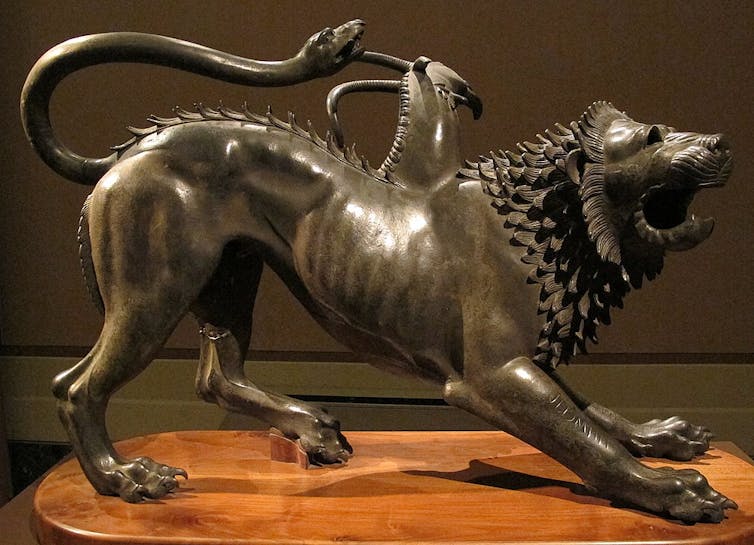
Statue of the mythical chimera.
Chimera – after which hybrid viruses are named – were mythical creates with parts from different animals. I, Sailko/Wikimedia Commons, CC BY-SA

Follow-up experiments in the same paper showed that these new chimeric viruses were fully functional and could even infect cells that were rendered resistant to influenza, presumably gaining access using the RSV proteins could even get into a broader range of human cells than either virus alone could. Potentially, this could be happening during natural co-infections during the winter.

Why we need to study chimeric viruses

Studying disease-causing pathogens is extremely important and helpful for creating vaccines and treatments, yet safety is still paramount. It’s important to point out that the researchers in this study did not perform any genetic engineering between two viruses and only modelled what is already happening in the real world, but using safer laboratory strains of viruses under lab conditions.

We know about the significant role co-infection can play in a virus’s life, such as during influenza antigenic shift or the curious case of hepatitis D virus borrowing bits of the other viruses, such as hepatitis B, to spread. Nevertheless, the work by the University of Glasgow researchers has significant implications for our understanding of how other very different respiratory viruses might interact, antagonise and even promote each other’s infections in the ecosystem of our nose and lungs. Together, this work shows the complex and often messy interactions between viruses during the winter.

Undoubtedly, future work will explore how this co-infection affects transmission, disease and immunity – things that aren’t easy to determine in a dish.

Connor Bamford, Research Fellow, Virology, Queen’s University Belfast

This article is republished from The Conversation under a Creative Commons license. Read the original article.


Tags: SB001
DMCA.com Protection Status

SUBSCRIBE to our NEWSLETTER

[mc4wp_form id=”2384248″]

Don't Miss

The evolution of Aesthetic Surgery through the lens of Dr Kourosh Tavakoli

by Pauline Torongo
4 December 2025
The evolution of Aesthetic Surgery through the lens of Dr. Kourosh Tavakoli
Health & Wellness

As global interest in Australian cosmetic surgery continues to grow, the combination of regulation, research and emerging digital tools is...

Read moreDetails

Ryan: Building real freedom through e-commerce

by Pauline Torongo
27 November 2025
Ryan: Building real freedom through e-commerce
Business & Finance

Ryan’s greatest achievement isn’t any single business or revenue milestone — it’s the ecosystem he’s built through the Change community.

Read moreDetails

Design Australia Group: Redefining Drafting as the engine of housing growth

by Pauline Torongo
26 November 2025
Design Australia Group: Redefining Drafting as the engine of housing growth
Business & Finance

Australia is under pressure to build homes faster, but design bottlenecks slow progress. Design Australia Group is fixing this by...

Read moreDetails

Louis Guy Detata builds Global Trading Empires through autonomous systems and disciplined leadership

by Pauline Torongo
25 November 2025
Louis Guy Detata builds Global Trading Empires through autonomous systems and disciplined leadership
Business & Finance

The path from investment banking to leading a global trading platform has taught Louis Detata that sustainable success requires more...

Read moreDetails

Burning Eucalyptus Wood: Tips, Advantages, Disadvantages & Alternatives

by Fazila Olla-Logday
20 November 2025
Image Supplied
Enviroment

Learn about burning eucalyptus wood for stoves and fireplaces. Discover benefits, drawbacks, harvesting tips, and better alternative firewood options for...

Read moreDetails

Everything Parents Need to Know About Baby Soft Play and Why It’s a Game Changer

by Fazila Olla-Logday
11 November 2025
Everything Parents Need to Know About Baby Soft Play
Health & Wellness

Baby soft play is a fun, safe, and educational way for little ones to explore and grow. Discover the benefits...

Read moreDetails

WOMAD Sets Up a New Camp in Wiltshire – Australian festival fans take note!

by Kris Griffiths
11 November 2025
Kumbia Boruka brought their reggae and dancehall flavour to the Taste the World Stage at WOMAD 2024 - Credit - Mike Massaro
Entertainment

With its 2026 edition moving to Neston Park in England, WOMAD offers Aussie music lovers a chance to reconnect with global...

Read moreDetails
Load More

Copyright © Blue Sky Publications Ltd. All Rights Reserved.
australiantimes.co.uk is a division of Blue Sky Publications Ltd. Reproduction without permission prohibited. DMCA.com Protection Status

  • About us
  • Write for Us
  • Advertise
  • Contact us
  • T&Cs, Privacy and GDPR
No Result
View All Result
  • News
    • Weather
    • Sport
    • Technology
    • Business & Finance
      • Currency Zone
    • Lotto Results
      • The Lott
  • Lifestyle
    • Entertainment
    • Horoscopes
    • Health & Wellness
    • Recipes
  • Travel
  • Expat Life
  • Move to Australia

Copyright © Blue Sky Publications Ltd. All Rights Reserved.
australiantimes.co.uk is a division of Blue Sky Publications Ltd. Reproduction without permission prohibited. DMCA.com Protection Status

No Result
View All Result
  • News
    • Weather
    • Sport
    • Technology
    • Business & Finance
      • Currency Zone
    • Lotto Results
      • The Lott
  • Lifestyle
    • Entertainment
    • Horoscopes
    • Health & Wellness
    • Recipes
  • Travel
  • Expat Life
  • Move to Australia

Copyright © Blue Sky Publications Ltd. All Rights Reserved.
australiantimes.co.uk is a division of Blue Sky Publications Ltd. Reproduction without permission prohibited. DMCA.com Protection Status