

• Advertise
  • About us
  • Terms and Conditions
  • Contact us
Sunday, December 7, 2025
Australian Times News
  • News
    • Weather
    • Sport
    • Technology
    • Business & Finance
      • Currency Zone
    • Lotto Results
      • The Lott
  • Lifestyle
    • Entertainment
    • Horoscopes
    • Health & Wellness
    • Recipes
  • Travel
  • Expat Life
  • Move to Australia
No Result
View All Result
  • News
    • Weather
    • Sport
    • Technology
    • Business & Finance
      • Currency Zone
    • Lotto Results
      • The Lott
  • Lifestyle
    • Entertainment
    • Horoscopes
    • Health & Wellness
    • Recipes
  • Travel
  • Expat Life
  • Move to Australia
No Result
View All Result
Australian Times News
No Result
View All Result
Home News

Gene-edited crops are now a reality – but will the public be on board?

Whereas GM crops typically contain the DNA of two different species, gene editing is more precise and allows scientists to tweak the DNA of a single species by itself. Today, many plant scientists see a clear difference between first-generation genetic modifications and the “new plant breeding techniques” of gene editing.

The Conversation by The Conversation
23-01-2021 18:05
in News
Gene-edited crops

Gene-edited crops Photo by Jen Theodore on Unsplash

Jonathan Menary, Lancaster University and Sebastian Fuller, St George’s, University of London

Once the UK left the EU, it would be free to invest in gene editing of crops and livestock to “feed the world”. That’s what the prime minister, Boris Johnson, told the House of Commons in 2019. And following the UK’s formal departure from the EU in January 2021, the government quickly launched a public consultation on the issue.
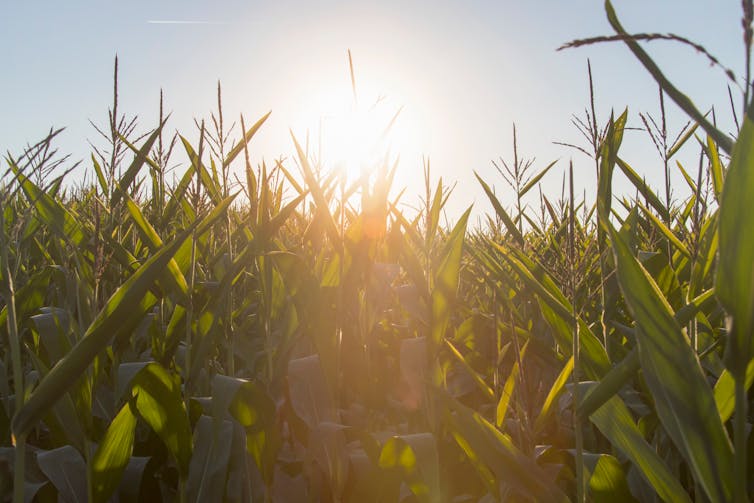
Juice Flair / shutterstock

Yet media reporting might cause plant scientists to have unpleasant flashbacks to the 1990s, when genetically modified (or GM) crops were first being commercialised in Europe. Some of the language used to report on the consultation is eerily similar: the Daily Mail asks its readers whether “Frankenstein food” is about to hit UK plates. Two decades ago, GM crops were also labelled “Frankenfood”.

Whereas GM crops typically contain the DNA of two different species, gene editing is more precise and allows scientists to tweak the DNA of a single species by itself. Today, many plant scientists see a clear difference between first-generation genetic modifications and the “new plant breeding techniques” of gene editing. These include tools like CRISPR, which can be used like “genetic scissors” to make changes to a plant that mimic natural variation.

In the US and Canada, for example, a non-browning mushroom has found a quick path to market thanks to breeders’ ability to “knock-out” the gene that controls the browning enzyme, improving shelf-life and potentially minimising food waste.

Although this was done in a laboratory, natural processes at the genetic level – and in response to environmental conditions – turn genes “on and off” in a similar fashion. These tools have health applications, too. CRISPR is being used to treat cancer and has the potential for many more medical applications.

Because gene-edited plants can be indistinguishable from their conventional cousins – unlike GM crops – countries around the world are grappling with how they should be regulated. In the European Union, a landmark 2018 ruling by the Court of Justice said that new gene-edited crops should be governed by existing legislation that was developed in response to first-generation GM crops and said that if you breed something that could not occur in nature, it counts as genetically-modified.


AlsoRead...

Ryan: Building real freedom through e-commerce

Ryan: Building real freedom through e-commerce

27 November 2025
Design Australia Group: Redefining Drafting as the engine of housing growth

Design Australia Group: Redefining Drafting as the engine of housing growth

26 November 2025

However, this does not mean – as was widely reported – that gene-edited crops are automatically GM crops, which by definition could not occur in nature. The EU, like the UK, is now revisiting this issue through a consultation.

Involving the public

As recipients of European plant science funding, we have seen that scientists and the public often talk past one another on the issue of biotechnology. Scientists, for their part, tend to view it in terms of risk (or lack thereof) and invoke humanity’s long history of modifying plants for our own purposes. But we need to move beyond this framework and instead take account of the questions and concerns that the general public has about who benefits from this technology, who owns it and what impacts it will have.

First-generation genetic modification tended to focus on farm productivity. Protecting crops from pests was the top priority. Gene-edited crops could contribute to a wider variety of sustainability and health goals in future though, such as by improving nutrition or using resources more efficiently. In fact, a whole raft of technologies could be about to revolutionise the way we make food.

However, as we learned with GM crops, technologies are most effective when the wider public and key stakeholders, such as farmers, are actively included in their development.

There is greater and greater recognition among researchers and policymakers of the need to ensure that new technology meets the needs, expectations and values of the public. We have seen that the involvement of patients can make new health technologies more relevant and effective. Already, there is more talk of “democratising” new genomic tools like CRISPR.

So although plant scientists will hope to avoid repeating the same debates about biotechnology that they had two decades ago, there is still opportunity to gain public trust in these technologies through active and open dialogue. We must ask ourselves whether the gene editing consultation goes far enough to gain that trust, particularly for those that see this as Frankenstein-like technology.

Jonathan Menary, Senior Research Associate, Lancaster Environment Centre, Lancaster University and Sebastian Fuller, Postdoctoral Research Fellow, St George’s, University of London

This article is republished from The Conversation under a Creative Commons license. Read the original article.


Tags: SB001
DMCA.com Protection Status

SUBSCRIBE to our NEWSLETTER

[mc4wp_form id=”2384248″]

Don't Miss

The evolution of Aesthetic Surgery through the lens of Dr Kourosh Tavakoli

by Pauline Torongo
4 December 2025
The evolution of Aesthetic Surgery through the lens of Dr. Kourosh Tavakoli
Health & Wellness

As global interest in Australian cosmetic surgery continues to grow, the combination of regulation, research and emerging digital tools is...

Read moreDetails

Ryan: Building real freedom through e-commerce

by Pauline Torongo
27 November 2025
Ryan: Building real freedom through e-commerce
Business & Finance

Ryan’s greatest achievement isn’t any single business or revenue milestone — it’s the ecosystem he’s built through the Change community.

Read moreDetails

Design Australia Group: Redefining Drafting as the engine of housing growth

by Pauline Torongo
26 November 2025
Design Australia Group: Redefining Drafting as the engine of housing growth
Business & Finance

Australia is under pressure to build homes faster, but design bottlenecks slow progress. Design Australia Group is fixing this by...

Read moreDetails

Louis Guy Detata builds Global Trading Empires through autonomous systems and disciplined leadership

by Pauline Torongo
25 November 2025
Louis Guy Detata builds Global Trading Empires through autonomous systems and disciplined leadership
Business & Finance

The path from investment banking to leading a global trading platform has taught Louis Detata that sustainable success requires more...

Read moreDetails

Burning Eucalyptus Wood: Tips, Advantages, Disadvantages & Alternatives

by Fazila Olla-Logday
20 November 2025
Image Supplied
Enviroment

Learn about burning eucalyptus wood for stoves and fireplaces. Discover benefits, drawbacks, harvesting tips, and better alternative firewood options for...

Read moreDetails

Everything Parents Need to Know About Baby Soft Play and Why It’s a Game Changer

by Fazila Olla-Logday
11 November 2025
Everything Parents Need to Know About Baby Soft Play
Health & Wellness

Baby soft play is a fun, safe, and educational way for little ones to explore and grow. Discover the benefits...

Read moreDetails

WOMAD Sets Up a New Camp in Wiltshire – Australian festival fans take note!

by Kris Griffiths
11 November 2025
Kumbia Boruka brought their reggae and dancehall flavour to the Taste the World Stage at WOMAD 2024 - Credit - Mike Massaro
Entertainment

With its 2026 edition moving to Neston Park in England, WOMAD offers Aussie music lovers a chance to reconnect with global...

Read moreDetails
Load More

Copyright © Blue Sky Publications Ltd. All Rights Reserved.
australiantimes.co.uk is a division of Blue Sky Publications Ltd. Reproduction without permission prohibited. DMCA.com Protection Status

  • About us
  • Write for Us
  • Advertise
  • Contact us
  • T&Cs, Privacy and GDPR
No Result
View All Result
  • News
    • Weather
    • Sport
    • Technology
    • Business & Finance
      • Currency Zone
    • Lotto Results
      • The Lott
  • Lifestyle
    • Entertainment
    • Horoscopes
    • Health & Wellness
    • Recipes
  • Travel
  • Expat Life
  • Move to Australia

Copyright © Blue Sky Publications Ltd. All Rights Reserved.
australiantimes.co.uk is a division of Blue Sky Publications Ltd. Reproduction without permission prohibited. DMCA.com Protection Status

No Result
View All Result
  • News
    • Weather
    • Sport
    • Technology
    • Business & Finance
      • Currency Zone
    • Lotto Results
      • The Lott
  • Lifestyle
    • Entertainment
    • Horoscopes
    • Health & Wellness
    • Recipes
  • Travel
  • Expat Life
  • Move to Australia

Copyright © Blue Sky Publications Ltd. All Rights Reserved.
australiantimes.co.uk is a division of Blue Sky Publications Ltd. Reproduction without permission prohibited. DMCA.com Protection Status





