

• Advertise
  • About us
  • Terms and Conditions
  • Contact us
Saturday, December 6, 2025
Australian Times News
  • News
    • Weather
    • Sport
    • Technology
    • Business & Finance
      • Currency Zone
    • Lotto Results
      • The Lott
  • Lifestyle
    • Entertainment
    • Horoscopes
    • Health & Wellness
    • Recipes
  • Travel
  • Expat Life
  • Move to Australia
No Result
View All Result
  • News
    • Weather
    • Sport
    • Technology
    • Business & Finance
      • Currency Zone
    • Lotto Results
      • The Lott
  • Lifestyle
    • Entertainment
    • Horoscopes
    • Health & Wellness
    • Recipes
  • Travel
  • Expat Life
  • Move to Australia
No Result
View All Result
Australian Times News
No Result
View All Result
Home News

From tulips and scrips to bitcoin and meme stocks – how the act of speculating became a financial mania

From ancient times until the late 1700s, the term “speculation” was used mainly by philosophers, scientists and authors to describe conjectures about the future. When speaking of traders who manipulated the prices of an asset to make an outsize profit, financial writers instead used terms like “engrossing” or “cornering” the market.
The Conversation by The Conversation
01-05-2021 09:17
in News
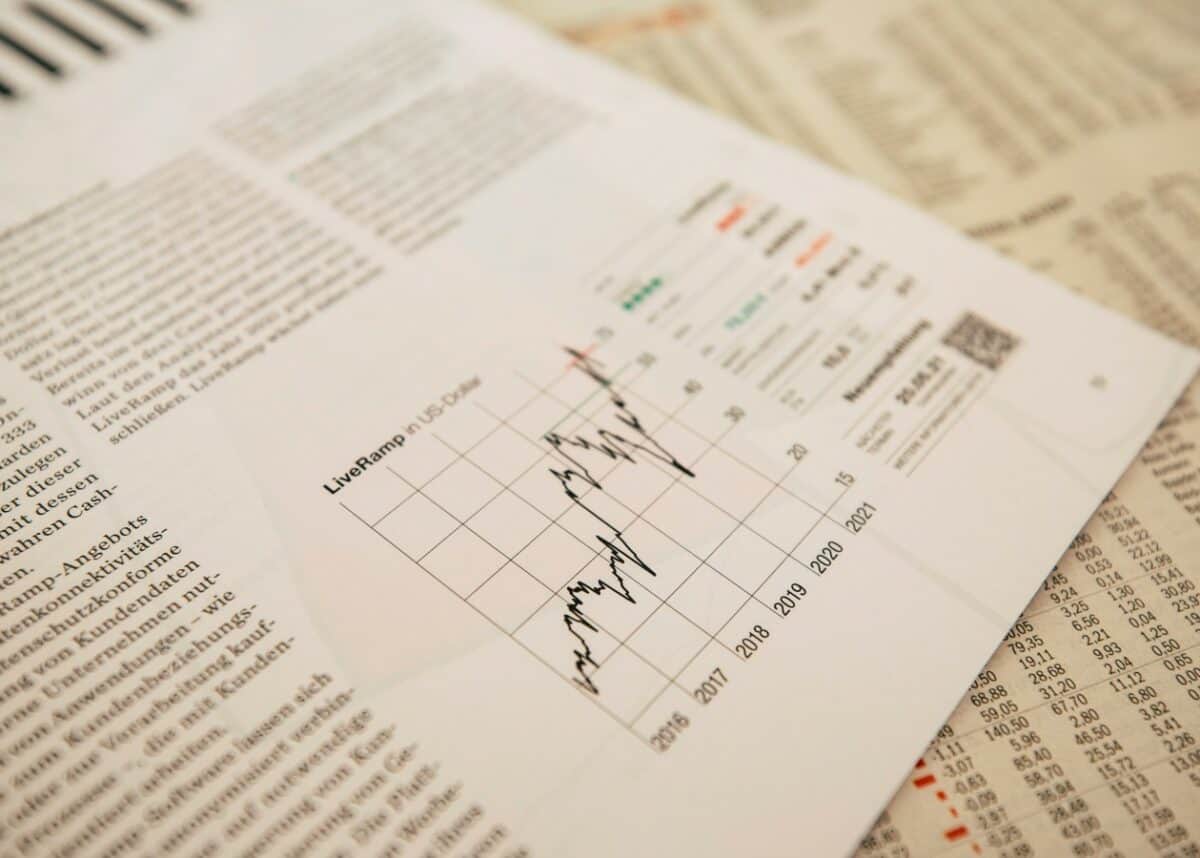
Photo by Markus Spiske on Unsplash

Photo by Markus Spiske on Unsplash

Gayle Rogers, University of Pittsburgh

In the late 1990s, America experienced a dot-com mania. In the 2000s, the housing market went wild.

Today, there are manias in everything from bitcoin and nonfungible tokens to SPACs and meme stocks – obscure corners of the market that are getting increased attention. Whether these are the next bubbles to burst remains to be seen.

The sudden rise of all these relatively new asset classes – or the astronomical heights they’ve reached – may seem irrational or even enchanted. Describing them as speculative manias implies that individuals are lost in forces beyond their control and needn’t take responsibility for the actions of the crowd.

But, as I learned while researching my book “Speculation: A Cultural History from Aristotle to AI,” which will be published in June 2021, financial speculation hasn’t always been understood as a widespread craze – or even outside of individual choice.

Adam Smith and the rise of financial speculation

From ancient times until the late 1700s, the term “speculation” was used mainly by philosophers, scientists and authors to describe conjectures about the future. When speaking of traders who manipulated the prices of an asset to make an outsize profit, financial writers instead used terms like “engrossing” or “cornering” the market.

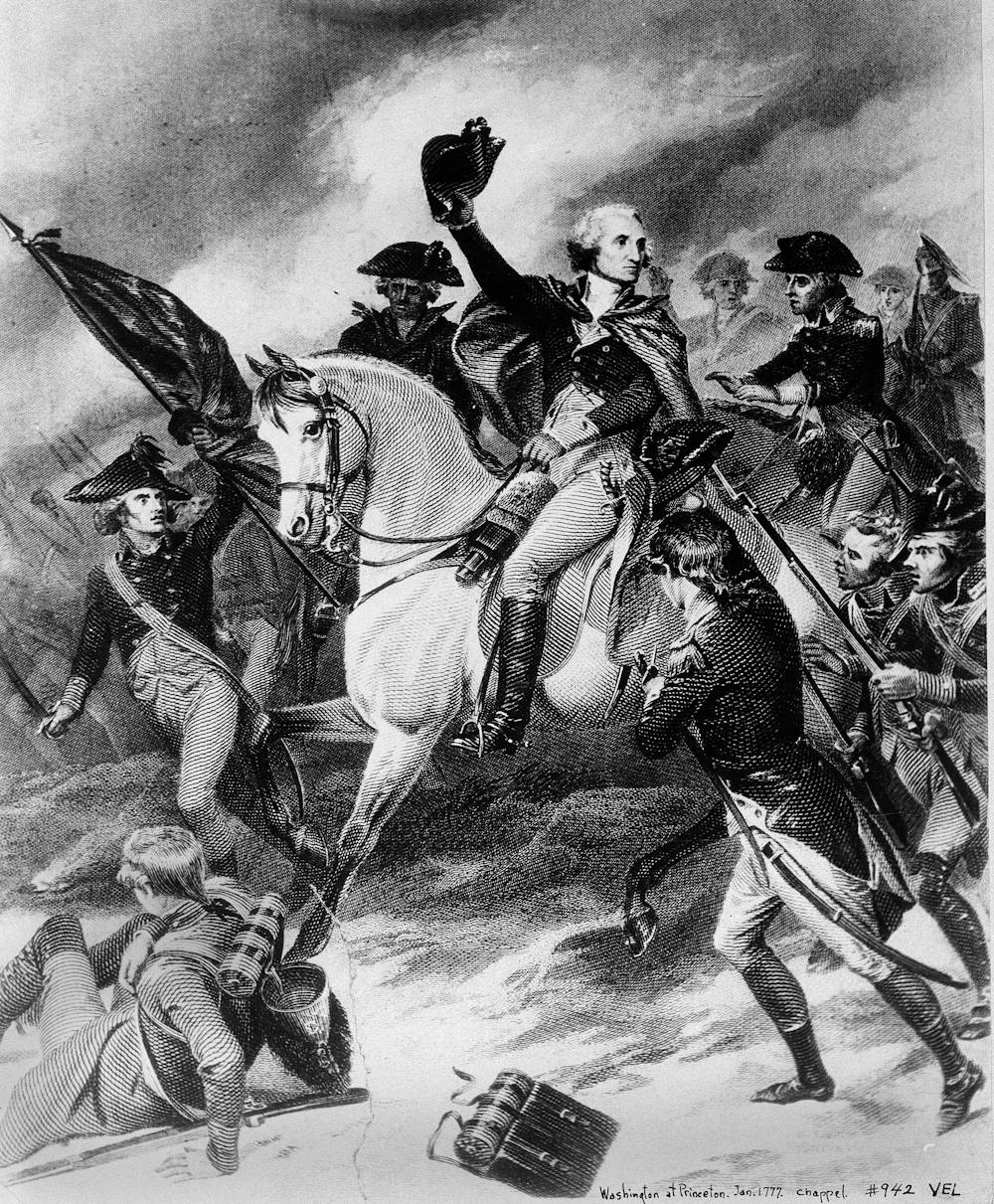
An illustration of Gen. George Washington on a horse holding his hat as he leads his men in a battle in 1777
George Washington thought financial speculators would ruin the country. AP Photo

After a series of international credit scandals in the 1770s, though, “speculation” became the favored descriptor for high-risk financial gambling. Political economist Adam Smith used the term extensively in “Wealth of Nations,” published in 1776, after seeing it used to describe lotteries and smuggling. He saw in it a perfect term for how traders were trying to capitalize exponentially on the inherent risks and unknowns of the future.


AlsoRead...

Ryan: Building real freedom through e-commerce

Ryan: Building real freedom through e-commerce

27 November 2025
Design Australia Group: Redefining Drafting as the engine of housing growth

Design Australia Group: Redefining Drafting as the engine of housing growth

26 November 2025

George Washington even warned in 1779 that speculators “are putting the rights & liberties of this Country into the most eminent danger.”

Yet Smith, Washington and others still saw speculators of all types as individuals making calculated decisions, not as part of some maniacal collective or epidemic contagion.

Alexander Hamilton’s ‘scripomania’ takes hold

That began to change thanks largely to the early American physician and thinker Benjamin Rush.

As surgeon general of the Continental Army and a prolific publisher of studies of mental illness, Rush penned a widely circulated article in 1787, “On the Different Species of Mania.” In it, he characterized speculative gambling alongside 25 other types of “manias” that he wrote had become pronounced in American life, including “land mania,” “horse mania,” “machine mania” and “monarchical mania.”

For Rush, speculation was a disease of the mind that spread from one to many and threatened the health of a young democracy that relied on rational decision-making by voters and politicians. The “spirit of speculation,” he foresaw, was not a good-hearted “spirit” of nation building, but rather could “destroy patriotism and friendship in many people.”

Rush’s terminology and his way of thinking caught on quickly. In the summer of 1791, “Scripomania” took hold as Alexander Hamilton sold the rights to buy shares – known as scrips for “subscriptions” – in the newfound Bank of the United States to shore up the nation’s finances following the Revolutionary War. Demand for the scrips soared; the Philadelphia General Advertiser declared that “an inveterate madness for speculation seems to possess this country!”
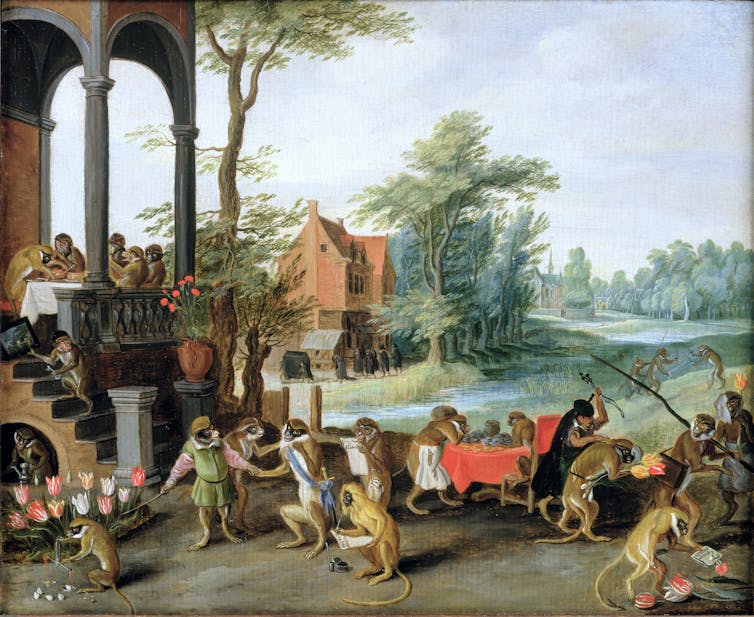
In an illustration, cats are representing humans and buying tulips on display
A satire of the Dutch tulip ‘mania,’ which didn’t get that label until many years later. Art Images/Hulton Fine Art Collection via Getty Images

Calculated risk – minus the calculation

After that, the tie between “speculation” and “mania” spread and became inextricable – and it hasn’t been severed since. The Scottish journalist Charles Mackay sealed this connection in 1841 with his influential “Extraordinary Popular Delusions and the Madness of Crowds.” Since then, virtually every bubble, every rush in commodities and every market panic that has ensued has been called a “mania.”

The term has even been used retrospectively to refer to the behaviors that led to speculative bubbles in the distant past. The famous Dutch tulip bubble of 1637, for instance, was seen in its day as foolish and dangerous, but only after Mackay’s book was it labeled a “mania.”

The trouble with talking about wild financial events in this way is that society begins to confuse and distort the responsibility and nature of bubbles that inevitably crash, leaving ruin in their wake.

To speculate, at its core, is to make a bet about the future based on individual calculations of the risks of tomorrow. There’s nothing inherently contagious or mad about it. In fact, computers are often speculating now in place of human minds.

What we call a “mania” is just shorthand for saying that a lot of people – and machines – made the same bet, as happened in January when day traders – many of them inexperienced – drove up the price of GameStop. Maybe they were all acting rationally and in concert. Maybe they were duped by insiders or weren’t fully calculating those risks.

Whatever the explanation, using the term “mania” tells us only a small and potentially misleading part of the story.

[Over 104,000 readers rely on The Conversation’s newsletter to understand the world. Sign up today.]

Gayle Rogers, Professor and chair of English, University of Pittsburgh

This article is republished from The Conversation under a Creative Commons license. Read the original article.


Tags: SB001
DMCA.com Protection Status

SUBSCRIBE to our NEWSLETTER

[mc4wp_form id=”2384248″]

Don't Miss

The evolution of Aesthetic Surgery through the lens of Dr Kourosh Tavakoli

by Pauline Torongo
4 December 2025
The evolution of Aesthetic Surgery through the lens of Dr. Kourosh Tavakoli
Health & Wellness

As global interest in Australian cosmetic surgery continues to grow, the combination of regulation, research and emerging digital tools is...

Read moreDetails

Ryan: Building real freedom through e-commerce

by Pauline Torongo
27 November 2025
Ryan: Building real freedom through e-commerce
Business & Finance

Ryan’s greatest achievement isn’t any single business or revenue milestone — it’s the ecosystem he’s built through the Change community.

Read moreDetails

Design Australia Group: Redefining Drafting as the engine of housing growth

by Pauline Torongo
26 November 2025
Design Australia Group: Redefining Drafting as the engine of housing growth
Business & Finance

Australia is under pressure to build homes faster, but design bottlenecks slow progress. Design Australia Group is fixing this by...

Read moreDetails

Louis Guy Detata builds Global Trading Empires through autonomous systems and disciplined leadership

by Pauline Torongo
25 November 2025
Louis Guy Detata builds Global Trading Empires through autonomous systems and disciplined leadership
Business & Finance

The path from investment banking to leading a global trading platform has taught Louis Detata that sustainable success requires more...

Read moreDetails

Burning Eucalyptus Wood: Tips, Advantages, Disadvantages & Alternatives

by Fazila Olla-Logday
20 November 2025
Image Supplied
Enviroment

Learn about burning eucalyptus wood for stoves and fireplaces. Discover benefits, drawbacks, harvesting tips, and better alternative firewood options for...

Read moreDetails

Everything Parents Need to Know About Baby Soft Play and Why It’s a Game Changer

by Fazila Olla-Logday
11 November 2025
Everything Parents Need to Know About Baby Soft Play
Health & Wellness

Baby soft play is a fun, safe, and educational way for little ones to explore and grow. Discover the benefits...

Read moreDetails

WOMAD Sets Up a New Camp in Wiltshire – Australian festival fans take note!

by Kris Griffiths
11 November 2025
Kumbia Boruka brought their reggae and dancehall flavour to the Taste the World Stage at WOMAD 2024 - Credit - Mike Massaro
Entertainment

With its 2026 edition moving to Neston Park in England, WOMAD offers Aussie music lovers a chance to reconnect with global...

Read moreDetails
Load More

Copyright © Blue Sky Publications Ltd. All Rights Reserved.
australiantimes.co.uk is a division of Blue Sky Publications Ltd. Reproduction without permission prohibited. DMCA.com Protection Status

  • About us
  • Write for Us
  • Advertise
  • Contact us
  • T&Cs, Privacy and GDPR
No Result
View All Result
  • News
    • Weather
    • Sport
    • Technology
    • Business & Finance
      • Currency Zone
    • Lotto Results
      • The Lott
  • Lifestyle
    • Entertainment
    • Horoscopes
    • Health & Wellness
    • Recipes
  • Travel
  • Expat Life
  • Move to Australia

Copyright © Blue Sky Publications Ltd. All Rights Reserved.
australiantimes.co.uk is a division of Blue Sky Publications Ltd. Reproduction without permission prohibited. DMCA.com Protection Status

No Result
View All Result
  • News
    • Weather
    • Sport
    • Technology
    • Business & Finance
      • Currency Zone
    • Lotto Results
      • The Lott
  • Lifestyle
    • Entertainment
    • Horoscopes
    • Health & Wellness
    • Recipes
  • Travel
  • Expat Life
  • Move to Australia

Copyright © Blue Sky Publications Ltd. All Rights Reserved.
australiantimes.co.uk is a division of Blue Sky Publications Ltd. Reproduction without permission prohibited. DMCA.com Protection Status





