

• Advertise
  • About us
  • Terms and Conditions
  • Contact us
Sunday, December 7, 2025
Australian Times News
  • News
    • Weather
    • Sport
    • Technology
    • Business & Finance
      • Currency Zone
    • Lotto Results
      • The Lott
  • Lifestyle
    • Entertainment
    • Horoscopes
    • Health & Wellness
    • Recipes
  • Travel
  • Expat Life
  • Move to Australia
No Result
View All Result
  • News
    • Weather
    • Sport
    • Technology
    • Business & Finance
      • Currency Zone
    • Lotto Results
      • The Lott
  • Lifestyle
    • Entertainment
    • Horoscopes
    • Health & Wellness
    • Recipes
  • Travel
  • Expat Life
  • Move to Australia
No Result
View All Result
Australian Times News
No Result
View All Result
Home News

Five ways to reduce your household waste – and stop it being shipped to poorer countries

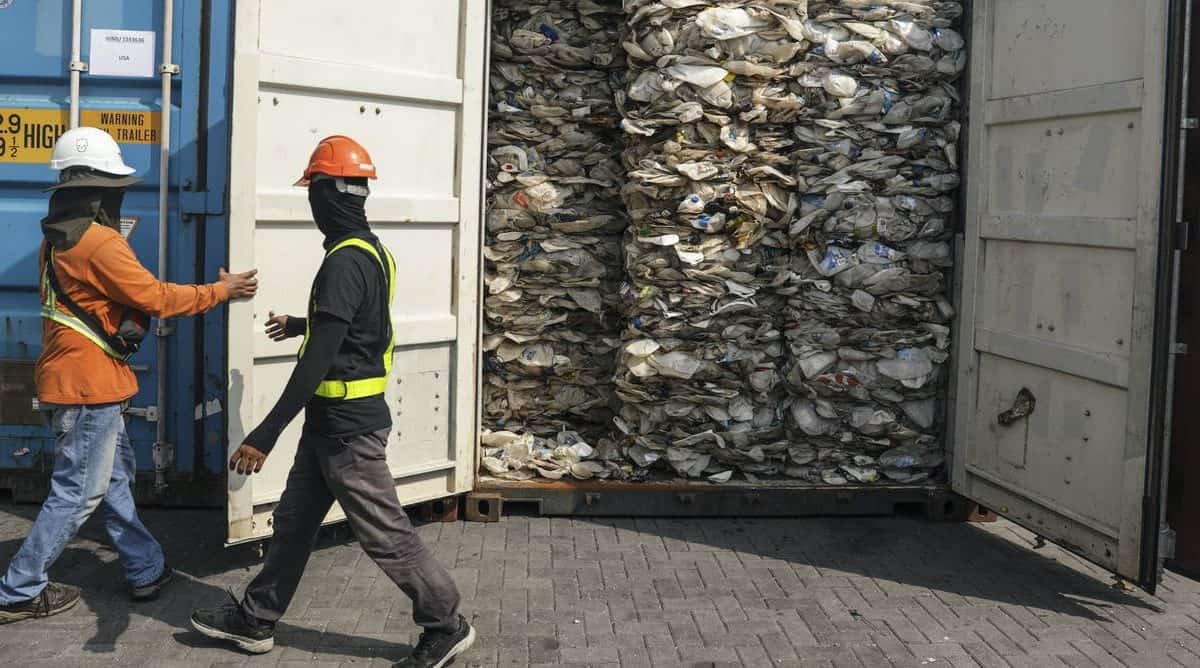
The UK is the largest plastic waste producer in Europe and one of the biggest producers of plastic waste in the world, second only to the US. The UK produces 99kg of plastic waste per person per year. And it exports about two-thirds of this waste to poorer countries such as Malaysia, Pakistan and Vietnam.

The Conversation by The Conversation
17-02-2021 06:29
in News
Fazry Ismail/EPA

Fazry Ismail/EPA

Sankar Sivarajah, University of Bradford

The UK is the largest plastic waste producer in Europe and one of the biggest producers of plastic waste in the world, second only to the US. The UK produces 99kg of plastic waste per person per year. And it exports about two-thirds of this waste to poorer countries such as Malaysia, Pakistan and Vietnam.

Shipping unsorted plastic waste from the European Union to non-OECD countries was banned by the EU from January this year. But the UK continues to export plastic waste to developing countries as part of new post-Brexit regulations.

Most of the plastic waste is sold to these countries as the UK currently does not have the means and capacity to process it at home. But these countries also lack the infrastructure and capacity to recycle imported waste. And waste that can’t be recycled often ends up dumped in landfill or waterways or even burned – releasing toxic fumes into the environment. Indeed, much of the waste sent to these countries is unsorted and dirty plastics which can hardly be recycled anyway.

This trade of waste and the shifting of one country’s problem onto another simply cannot continue. Our behaviour as consumers is central to tackling this huge amount of plastic waste – along with the 26 million tonnes of general household waste produced yearly in the UK. We therefore all need to start taking responsible actions and be held accountable for the waste we generate. Of course, changing behaviour is not easy or straightforward.

Cultivating change

In its latest report, the Climate Change Committee, which advises the UK Government on the path to achieving net-zero carbon, emphasises that change in consumer behaviour is one of the major ways to speed up decarbonisation. But this is not something that can simply be forced on people. As my research shows, people need to support any changes and have a willingness to take up new habits aligned with the zero-waste economy.

The good news is that the COVID-19 crisis has already shown that people are open to changing their consumption habits. Many have started to buy locally, are more interested in buying clothes made out of recycled materials, and aim to consume less meat.


AlsoRead...

Ryan: Building real freedom through e-commerce

Ryan: Building real freedom through e-commerce

27 November 2025
Design Australia Group: Redefining Drafting as the engine of housing growth

Design Australia Group: Redefining Drafting as the engine of housing growth

26 November 2025

For things to really change, we need an all-embracing approach that engages everyone and intervenes early on in how products are designed and consumed to solve the waste crisis. But there are small things that each one of us can do to prevent and produce less waste. Many of these solutions are based on principles from the circular economy – a concept that promotes the elimination of waste and continual use of products and materials.

Here are some affordable and practical tips:

Use less – stop and reflect on your wasteful consumption practices and simply use less (as many have during lockdown). Rethink your lifestyle and only use what you need for your daily living; not everything may be essential.

Buy local – in the early stages of the pandemic, with flights grounded and entry in and out of countries proving problematic, food shortages were abundant. Buying local proved to be the alternative. Buying local is not only better for the environment but it also helps to support your local economy and local producers.

Be resourceful – try your best to reuse, repair or upcycle before you decide to throw away things you think no longer work. Be creative in how you might repurpose products and materials. It may simply be giving a new lease of life to your old furniture with a touch of non-toxic paint instead of getting new pieces.
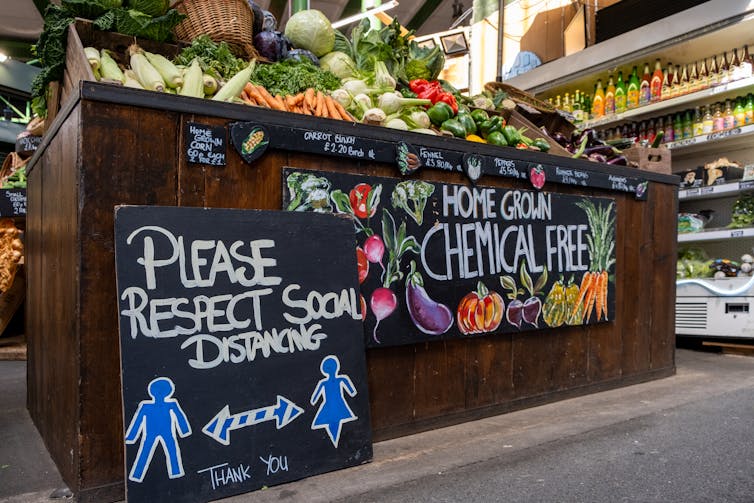
Fresh fruit and vegetable stall at Borough Market, London.
Buy local where you can. DaisyCooil/Shutterstrock

Think beyond recycling – recycling is good, but we consume more than we recycle. So avoid buying goods that you cannot recycle. This will push businesses to better design products and ultimately, design out wasteful materials.

Rethink ownership – there is a rise in new businesses adopting “rental”, “pay per use” and “on-demand” models for products ranging from clothes to furniture. So where possible do not buy things you use only occasionally; instead pay for access to these things when you need them.

Above all, it’s important to remember that even very little change to our consumption habits takes us a step closer to reducing the UK’s 26 million tonnes of household waste. Achieve that and it will ultimately put us on track for a more sustainable post-pandemic world.

Sankar Sivarajah, Head of School of Management and Professor of Technology Management and Circular Economy, University of Bradford

This article is republished from The Conversation under a Creative Commons license. Read the original article.


Tags: SB001
DMCA.com Protection Status

SUBSCRIBE to our NEWSLETTER

[mc4wp_form id=”2384248″]

Don't Miss

The evolution of Aesthetic Surgery through the lens of Dr Kourosh Tavakoli

by Pauline Torongo
4 December 2025
The evolution of Aesthetic Surgery through the lens of Dr. Kourosh Tavakoli
Health & Wellness

As global interest in Australian cosmetic surgery continues to grow, the combination of regulation, research and emerging digital tools is...

Read moreDetails

Ryan: Building real freedom through e-commerce

by Pauline Torongo
27 November 2025
Ryan: Building real freedom through e-commerce
Business & Finance

Ryan’s greatest achievement isn’t any single business or revenue milestone — it’s the ecosystem he’s built through the Change community.

Read moreDetails

Design Australia Group: Redefining Drafting as the engine of housing growth

by Pauline Torongo
26 November 2025
Design Australia Group: Redefining Drafting as the engine of housing growth
Business & Finance

Australia is under pressure to build homes faster, but design bottlenecks slow progress. Design Australia Group is fixing this by...

Read moreDetails

Louis Guy Detata builds Global Trading Empires through autonomous systems and disciplined leadership

by Pauline Torongo
25 November 2025
Louis Guy Detata builds Global Trading Empires through autonomous systems and disciplined leadership
Business & Finance

The path from investment banking to leading a global trading platform has taught Louis Detata that sustainable success requires more...

Read moreDetails

Burning Eucalyptus Wood: Tips, Advantages, Disadvantages & Alternatives

by Fazila Olla-Logday
20 November 2025
Image Supplied
Enviroment

Learn about burning eucalyptus wood for stoves and fireplaces. Discover benefits, drawbacks, harvesting tips, and better alternative firewood options for...

Read moreDetails

Everything Parents Need to Know About Baby Soft Play and Why It’s a Game Changer

by Fazila Olla-Logday
11 November 2025
Everything Parents Need to Know About Baby Soft Play
Health & Wellness

Baby soft play is a fun, safe, and educational way for little ones to explore and grow. Discover the benefits...

Read moreDetails

WOMAD Sets Up a New Camp in Wiltshire – Australian festival fans take note!

by Kris Griffiths
11 November 2025
Kumbia Boruka brought their reggae and dancehall flavour to the Taste the World Stage at WOMAD 2024 - Credit - Mike Massaro
Entertainment

With its 2026 edition moving to Neston Park in England, WOMAD offers Aussie music lovers a chance to reconnect with global...

Read moreDetails
Load More

Copyright © Blue Sky Publications Ltd. All Rights Reserved.
australiantimes.co.uk is a division of Blue Sky Publications Ltd. Reproduction without permission prohibited. DMCA.com Protection Status

  • About us
  • Write for Us
  • Advertise
  • Contact us
  • T&Cs, Privacy and GDPR
No Result
View All Result
  • News
    • Weather
    • Sport
    • Technology
    • Business & Finance
      • Currency Zone
    • Lotto Results
      • The Lott
  • Lifestyle
    • Entertainment
    • Horoscopes
    • Health & Wellness
    • Recipes
  • Travel
  • Expat Life
  • Move to Australia

Copyright © Blue Sky Publications Ltd. All Rights Reserved.
australiantimes.co.uk is a division of Blue Sky Publications Ltd. Reproduction without permission prohibited. DMCA.com Protection Status

No Result
View All Result
  • News
    • Weather
    • Sport
    • Technology
    • Business & Finance
      • Currency Zone
    • Lotto Results
      • The Lott
  • Lifestyle
    • Entertainment
    • Horoscopes
    • Health & Wellness
    • Recipes
  • Travel
  • Expat Life
  • Move to Australia

Copyright © Blue Sky Publications Ltd. All Rights Reserved.
australiantimes.co.uk is a division of Blue Sky Publications Ltd. Reproduction without permission prohibited. DMCA.com Protection Status





