• Advertise
  • About us
  • Terms and Conditions
  • Contact us
Tuesday, March 24, 2026
Australian Times News
  • News
    • Weather
    • Sport
    • Technology
    • Business & Finance
      • Currency Zone
    • Lotto Results
      • The Lott
  • Lifestyle
    • Entertainment
    • Horoscopes
    • Health & Wellness
    • Recipes
  • Travel
  • Expat Life
  • Move to Australia
No Result
View All Result
  • News
    • Weather
    • Sport
    • Technology
    • Business & Finance
      • Currency Zone
    • Lotto Results
      • The Lott
  • Lifestyle
    • Entertainment
    • Horoscopes
    • Health & Wellness
    • Recipes
  • Travel
  • Expat Life
  • Move to Australia
No Result
View All Result
Australian Times News
No Result
View All Result
Home News

Expect delays and power plays: Google and Facebook brace as news media bargaining code is set to become law

The long-awaited mandatory code that will force Google and Facebook to pay Australian media companies for news content was finally unveiled yesterday.

The Conversation by The Conversation
10-12-2020 06:11
in News
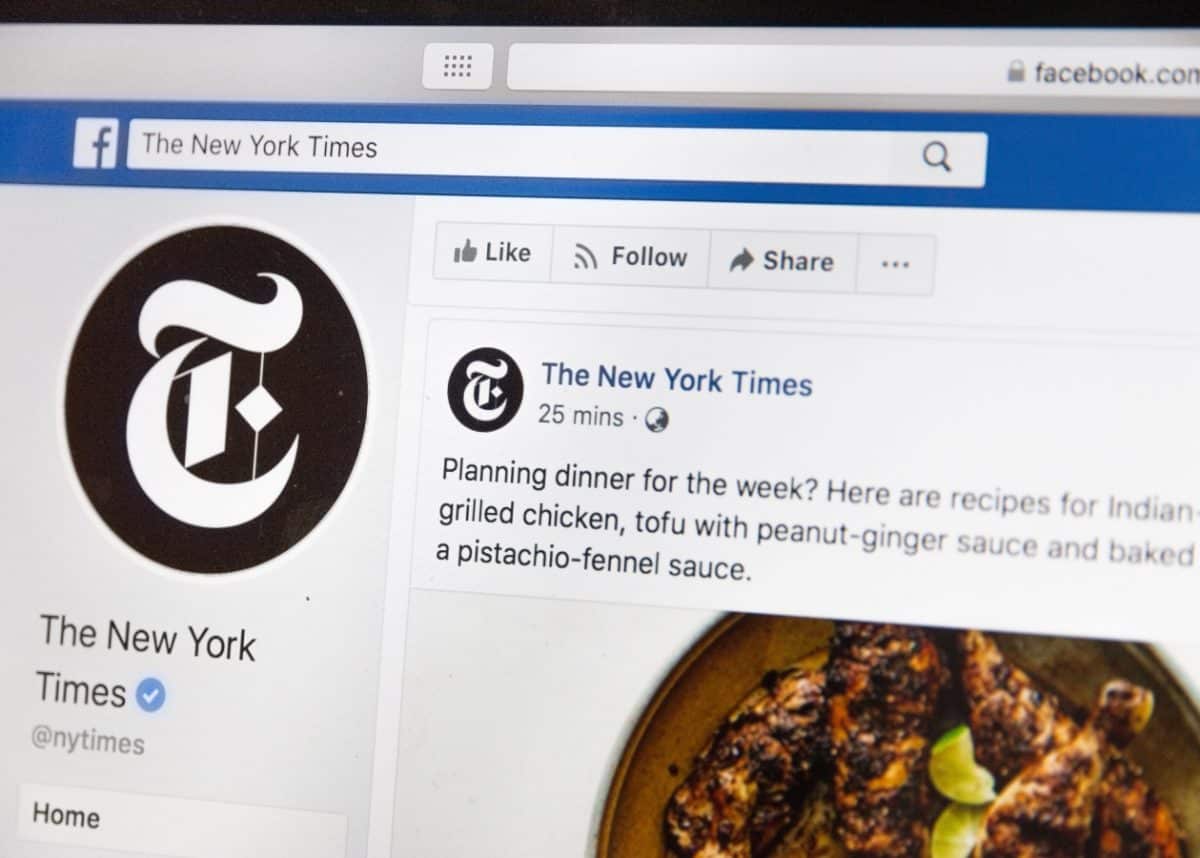
Google and Facebook to pay Australian media companies for news content

Google and Facebook to pay Australian media companies for news content Photo by Stephen Phillips - Hostreviews.co.uk on Unsplash

Tim Dwyer, University of Sydney

The long-awaited mandatory code that will force Google and Facebook to pay Australian media companies for news content was finally unveiled yesterday.

The Treasury Laws Amendment Bill 2020 (news media and digital platforms mandatory bargaining code) will be introduced to parliament today, before being referred to a Senate committee.

Many of Australia’s news businesses have been on a hiding to nothing for more than a decade, as their revenue is undercut by the targeted advertising business model used by major digital platforms.

The most visible casualty has been public interest journalism — with the prospect of a well-informed citizenry on a slower, less obvious burn.

Against a backdrop of reports suggesting intense lobbying efforts by Facebook and Google against the new legislation, it appears some key concessions have been achieved by the platforms that weren’t present in the draft code.

What’s changed in the revised code?

First, the revised code will now abide by an added “two-way value exchange” principle. This allows the monetary worth of traffic sent to news providers to be taken into account when determining the financial value of a particular news business’s content to the platforms.


AlsoRead...

Design Without Compromise: Where Gutter Protection Meets Modern Architecture

Design Without Compromise: Where Gutter Protection Meets Modern Architecture

20 March 2026
The Rise of This Lead Generation Workshop Across Australia

The Rise of This Lead Generation Workshop Across Australia

13 February 2026

How this will be calculated, however, will likely be an ongoing bone of contention for both parties.

A second major concession will see Facebook’s Instagram and Google’s YouTube exempted from the application of the new law. But the Treasurer will be able to add these (and other platforms) at a later date, should he deem it justified at the time.

A third concession is the halving of the 28-day notice period for the platforms to warn news websites of major changes to their ranking algorithms. These directly impact how news articles are displayed on Facebook’s Newsfeed and Google Search.

It seems the basic idea to “level the playing field” between platforms and news providers remains baked into the revised code, but only time will tell whether it works in practice.

A figure stands under a Google sign.
Following a year of discussion, Google last month struck a deal with French media in which the tech giant is expected to pay about €150 million (roughly A$245,003,250) over the next three years. JAE C. HONG/AP

A related objective — to implement a process that sustains public interest journalism — remains equally tricky and may hinge on the revised code’s success.

But many will be pleased the public broadcasters ABC and SBS now fall within the code’s scope, too. Both will be financially compensated for news content along with their commercial rivals.

This may seem like a win, and it may be eventually, but for now it’s unclear how this will actually play out in terms of the government’s ongoing funding of these broadcasters.

Although conjecture at this stage, it may emerge in a forum such as Senate estimates that any compensation payments should be factored into overall funding calculations for the public broadcasters.

The arbitration model

One pivotal feature of the new legislation is it will address the entrenched power of the platforms by introducing a “final offer arbitration” model for price negotiations.

This process, overseen by the Australian Communications and Media Authority, will be mandatory when parties are unable to independently reach an agreement. It will likely be central to the new code’s success, or lack thereof.

Curiously, the revised code’s framework encourages deals to be struck outside of it. In these situations, key elements of commercial negotiations between the parties can be “turned off” with mutual agreement.

This appears to be a pragmatic recognition by the ACCC the code will never be able to control the realities of commercial media deal-making, which continue to be struck despite the code’s new bargaining marketplace.

However, where negotiations break down, news media businesses will be able to trigger the code’s provisions for meeting minimum standards.

This will cover advance notice of algorithmic changes and the requirement to engage in good faith bargaining for up to three months, before participating in the mandatory arbitration process.

Smaller news publishers will be able to bargain collectively, or accept “standard” offers from the platforms.

When one party fails to engage

The code has reasonably strong enforcement provisions in cases where there is a failure to negotiate in good faith, comply with an arbitration decision, avoid participation or engage in “retaliatory action against news media companies”.

The maximum penalty for a breach by Google or Facebook is the greater of either 10% of the platform’s annual Australian turnover, A$10 million, or three times the benefit obtained as a result of hosting the specific news business’s content.

Facebook and Google have put their previous threats to switch off local news content on hold until they see the final version of the code. For now, they appear to be engaging with the ACCC.

We still need to tackle media concentration

As we await the final version of the code, the irony is not lost on those of us also waiting eagerly for events to unfold before another Senate committee on media pluralism.

The committee was set up in response to a petition started by former Prime Minister Kevin Rudd. Amassing more than 500,000 signatures, Rudd’s petition has called for a royal commission into the negative influence of News Corp’s power in Australia’s highly concentrated media landscape.

A rich history of Australia’s parliamentary inquiries into the media indicates we can expect delays, power plays and ongoing lobbying in both these committees. And clearly there will be winners and losers in both.

Tim Dwyer, Associate Professor, Department of Media and Communications, University of Sydney

This article is republished from The Conversation under a Creative Commons license. Read the original article.


Tags: SB001
DMCA.com Protection Status

SUBSCRIBE to our NEWSLETTER

[mc4wp_form id=”2384248″]

Don't Miss

Design Without Compromise: Where Gutter Protection Meets Modern Architecture

by Fazila Olla-Logday
20 March 2026
Design Without Compromise: Where Gutter Protection Meets Modern Architecture
Business & Finance

Design without compromise by integrating gutter protection seamlessly into modern architecture. Discover how innovative gutter systems enhance your home’s aesthetics...

Read moreDetails

How WageSafe Secured Australia’s Most Reputable Retail Business Among Its Premium Clients

by Fazila Olla-Logday
12 March 2026
How WageSafe Secured Australia’s Most Reputable Retail Business Among Its Premium Clients
at

Learn how WageSafe helps businesses stay compliant with payroll and wage regulations through reliable monitoring, risk management, and expert support—protecting...

Read moreDetails

Zakeke AI Agent Studio Removes the E-Commerce Content Bottleneck With Outputs in Seconds

by Fazila Olla-Logday
3 March 2026
Zakeke AI Agent Studio Removes the E-Commerce Content Bottleneck With Outputs in Seconds
at

Zakeke AI Agent Studio removes the e-commerce content bottleneck by generating product content and visuals in seconds, enabling brands to...

Read moreDetails

Empire Traveller launches to give Small and Medium Businesses Enterprise-Level Travel rates

by Pauline Torongo
20 February 2026
Empire Traveller launches to give Small and Medium Businesses Enterprise-Level Travel rates
Travel

Empire Traveller suggests the travel sector may be entering a more inclusive phase — one where advantage is shaped less...

Read moreDetails

Is Feng Shui Master Xu Really A Modern Genius?

by Fazila Olla-Logday
19 February 2026
Is Feng Shui Master Xu Really A Modern Genius?
at

Is Feng Shui Master Xu truly a modern genius, or simply a master of timeless wisdom? Blending ancient Feng Shui...

Read moreDetails

The Rise of This Lead Generation Workshop Across Australia

by Pauline Torongo
13 February 2026
The Rise of This Lead Generation Workshop Across Australia
Business & Finance

“Where U?”, is a two-day in-person lead generation workshop that teaches Australian business owners how to build their own acquisition...

Read moreDetails

Lyca Mobile Australia’s Customer-First Overhaul Pays Off with Finder Award Win

by Fazila Olla-Logday
2 February 2026
Lyca Mobile Australia's Customer-First Overhaul Pays Off with Finder Award Win
Technology

Lyca Mobile Australia’s customer-first overhaul has earned a Finder Award, recognising its improved value, service, and stronger focus on Australian...

Read moreDetails
Load More

Copyright © Blue Sky Publications Ltd. All Rights Reserved.
australiantimes.co.uk is a division of Blue Sky Publications Ltd. Reproduction without permission prohibited. DMCA.com Protection Status

  • About us
  • Write for Us
  • Advertise
  • Contact us
  • T&Cs, Privacy and GDPR
No Result
View All Result
  • News
    • Weather
    • Sport
    • Technology
    • Business & Finance
      • Currency Zone
    • Lotto Results
      • The Lott
  • Lifestyle
    • Entertainment
    • Horoscopes
    • Health & Wellness
    • Recipes
  • Travel
  • Expat Life
  • Move to Australia

Copyright © Blue Sky Publications Ltd. All Rights Reserved.
australiantimes.co.uk is a division of Blue Sky Publications Ltd. Reproduction without permission prohibited. DMCA.com Protection Status

No Result
View All Result
  • News
    • Weather
    • Sport
    • Technology
    • Business & Finance
      • Currency Zone
    • Lotto Results
      • The Lott
  • Lifestyle
    • Entertainment
    • Horoscopes
    • Health & Wellness
    • Recipes
  • Travel
  • Expat Life
  • Move to Australia

Copyright © Blue Sky Publications Ltd. All Rights Reserved.
australiantimes.co.uk is a division of Blue Sky Publications Ltd. Reproduction without permission prohibited. DMCA.com Protection Status