Felix Koenig, Carnegie Mellon University
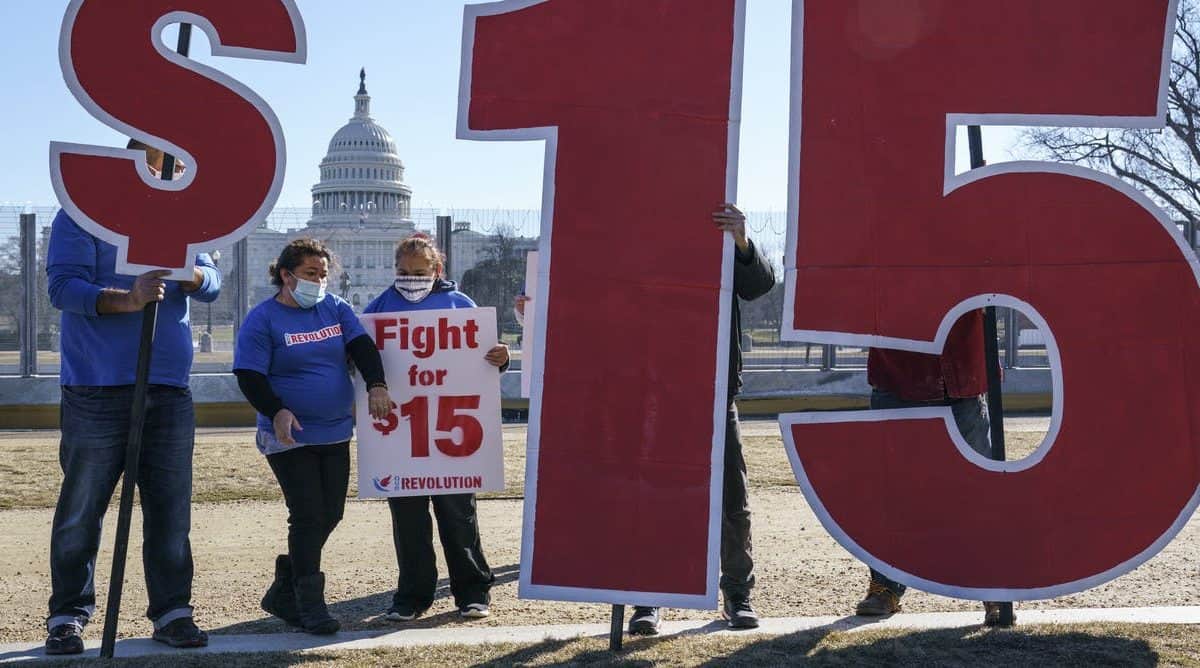
The US$1.9 trillion pandemic relief bill that the House is expected to soon pass includes a gradual increase in the federal minimum wage to $15 per hour by 2025. While its chances in the Senate appear slim, the proposal has brought national attention to the minimum wage, which has been stuck at $7.25 since 2009.
Supporters argue a higher minimum wage would translate into higher incomes for millions of low-wage employees, such as restaurant waiters, retail salespeople and child care workers, and thereby lift a lot of people out of poverty. Opponents claim it would hurt businesses and lead to a lot of job losses.
As an economist who studies labor markets and income inequality, I believe both claims exaggerate the impact and miss a key point of what the minimum wage is meant to achieve. The current debate offers a perfect opportunity to restore the wage floor’s original purpose, as laid out by FDR over 70 years ago.
Preventing employer abuses
The federal minimum wage was first implemented under the Fair Labor Standards Act in 1938 at a very modest 25 cents an hour – about $4.61 today – and applied only to “employees engaged in interstate commerce or in the production of goods for interstate commerce.” Think manufacturing workers, miners and truck drivers.
It took 18 years before Congress raised it to a buck, and the wage was soon expanded to include lots of other workers, such as retail employees, gas station attendants and nursing home aides. The latest increase, in 2009, set the wage at $7.25. It now applies to almost all workers except the self-empoyed, small-farm laborers, teenagers and those who receive tips, as well as a handful of other exempted groups.
But the principal intention was not to provide a “living wage” sufficient to live on alone. President Franklin Delano Roosevelt included it as part of his New Deal legislation to prevent the abuse of an employer’s inherent bargaining power over employees. Setting a floor, even a low one, limited an employer’s ability to underpay workers, ensured a minimum measure of purchasing power and allowed for fair competition between businesses.


Although companies decried the 25-cent wage back in 1938, FDR explained how the new minimum was both deeply significant yet hardly the revolutionary act some portrayed it to be.
“Except perhaps for the Social Security Act, it is the most far-reaching, the most farsighted program for the benefit of workers ever adopted here or in any other country,” he told Americans in one of his popular fireside chats. “Do not let any calamity-howling executive with an income of $1,000 a day … tell you … that a wage of $11 a week is going to have a disastrous effect on all American industry.”
Analyzing the impact on jobs
Nonetheless, that hasn’t stopped some businesses and advocacy groups from forecasting doom every time Congress has considered lifting it.
Many economists, think tanks and policymakers have measured the impact of raising the minimum wage over the years. Most recently, the Congressional Budget Office analyzed the latest bill and estimated that over 10 years it would cost about 1.4 million jobs by driving up business’s labor costs, while lifting 900,000 people out of poverty.
On the first point, past economic research is surprisingly clear: Raising the minimum wage doesn’t seem to lead to many job losses. One of the most exhaustive studies of the employment effects was a 2009 review of 138 U.S. state and federal minimum wage changes over the past three decades. It found that the overall number of jobs essentially stayed unchanged after previous hikes.
Furthermore, the proposed reform will really affect workers in only a little over half the states in the near term.
The current proposal in the House version of the bill would increase the minimum wage immediately to $9.50 and then incrementally by $1.50 each year until it hits $15 in 2025. It would also end the exemption for tipped employees.
Eight states representing about a third of the U.S. population already require companies to pay workers at least $15 – or will within a few years – while a few major cities have even higher minimums. A little over half of all states, representing just 41% of the U.S. population, set their wages at less than $9.50 an hour, with no plans for an increase.
Also, many major retailers, including Walmart, Amazon and Costco, beginning in March, already pay their workers at least $15 an hour.
So could it lead to a loss of over a million jobs? Possibly, but this projection is likely overly pessimistic. The experience with similar recent reforms on average suggests that the impact is less severe.
Incomes tell a similar story
As for its impact on poverty and actual incomes, the evidence also doesn’t suggest lifting the wage will be as radical as its proponents might hope.
While the research cited above shows that minimum-wage hikes do increase incomes for poorer households – and the CBO’s estimate of 900,000 people lifted out of poverty is plausible – the gains aren’t that much compared with the more than 30 million people currently in poverty. For one thing, the minimum wage is not the only source of income for many poorer families. Consider a household that receives half its income in benefits, like Temporary Aid for Needy Families, and half from a minimum-wage job. Even a doubling of the minimum wage would lead to a total income increase of just 25%.
Even more importantly, many benefits depend on earnings and are reduced when that income increases. As a result, part of the wage increase will be offset by less income from benefits, weakening the overall impact further.
How much workers can potentially gain from the higher wage will depend significantly on where they live. Living costs vary substantially across the U.S., as much as 20% above or below the average, which means the same federal minimum wage is worth a lot more in low-cost states than in high-cost ones. For example, $15 buys 35% more food, gas and other stuff in Mississippi, the least expensive state, than in Hawaii, the most expensive.
So in Mississippi, Arkansas and other low-cost states, the impact of the higher minimum wage will be substantial. But in many others that haven’t already raised their minimum wages to $15 but are costly to live in, like Hawaii and New Hampshire, the gains will be more modest.
Giving workers a share of prosperity
In other words, lifting the minimum wage to $15, on its own, isn’t that radical a change.
It’s not likely to lead to a large net reduction in jobs, and while it increases wages for low-paid workers, it is not a going to reduce poverty dramatically. Improving the minimum wage is nevertheless important for exactly the pro-competion reasons that FDR outlined.
The bill does contain a very significant change in that direction and would make the minimum wage more effective in the long run. Currently the wage level changes only when Congress acts and passes new minimum-wage legislation, which is why the minimum wage now has a buying power 20% lower than when it was last set in 2009. The real value of the minimum wage peaked in the late 1960s, when it was worth around $11 in today’s dollars.
The House legislation would index it to median hourly wages, which means it wouldn’t require a political consensus to increase it. It would just happen, automatically, every year beginning once it reaches $15 in 2025.
Similar nonpolitical decisions about minimum-wage levels are common in other high-income countries, such as the U.K. and Germany, reducing partisan tensions around the issue.
I would make one change, however. Since the purpose of a minimum wage is to prevent employers from underpaying workers and to ensure that wages grow in line with the value workers bring to companies, I believe it makes more sense to index it to changes in productivity. This would ensure that the benefits of economic growth – including gains from increased automation – are shared more evenly with workers.
While Democrats’ narrow control of the Senate means it’s unlikely a $15 minimum wage will become law anytime soon, a less generous compromise, such as $11, is still a possibility. Whatever the compromise on the headline number, I mainly hope Congress can agree to keep the automatic adjustment in there. That way the minimum wage could better serve its intended purpose of giving workers more bargaining power with their employers.
Felix Koenig, Assistant Professor of Economics, Carnegie Mellon University
This article is republished from The Conversation under a Creative Commons license. Read the original article.