• Advertise
  • About us
  • Terms and Conditions
  • Contact us
Monday, December 22, 2025
Australian Times News
  • News
    • Weather
    • Sport
    • Technology
    • Business & Finance
      • Currency Zone
    • Lotto Results
      • The Lott
  • Lifestyle
    • Entertainment
    • Horoscopes
    • Health & Wellness
    • Recipes
  • Travel
  • Expat Life
  • Move to Australia
No Result
View All Result
  • News
    • Weather
    • Sport
    • Technology
    • Business & Finance
      • Currency Zone
    • Lotto Results
      • The Lott
  • Lifestyle
    • Entertainment
    • Horoscopes
    • Health & Wellness
    • Recipes
  • Travel
  • Expat Life
  • Move to Australia
No Result
View All Result
Australian Times News
No Result
View All Result
Home News

Demand for meat is driving deforestation in Brazil – changing the soy industry could stop it

Since 2000, Brazil has doubled its total area of soy plantation to 36 million hectares and become the world’s largest producer. This expansion has erased vast swathes of forest and other habitats in some of the country’s most biodiverse regions.
The Conversation by The Conversation
19-12-2020 01:31
in News
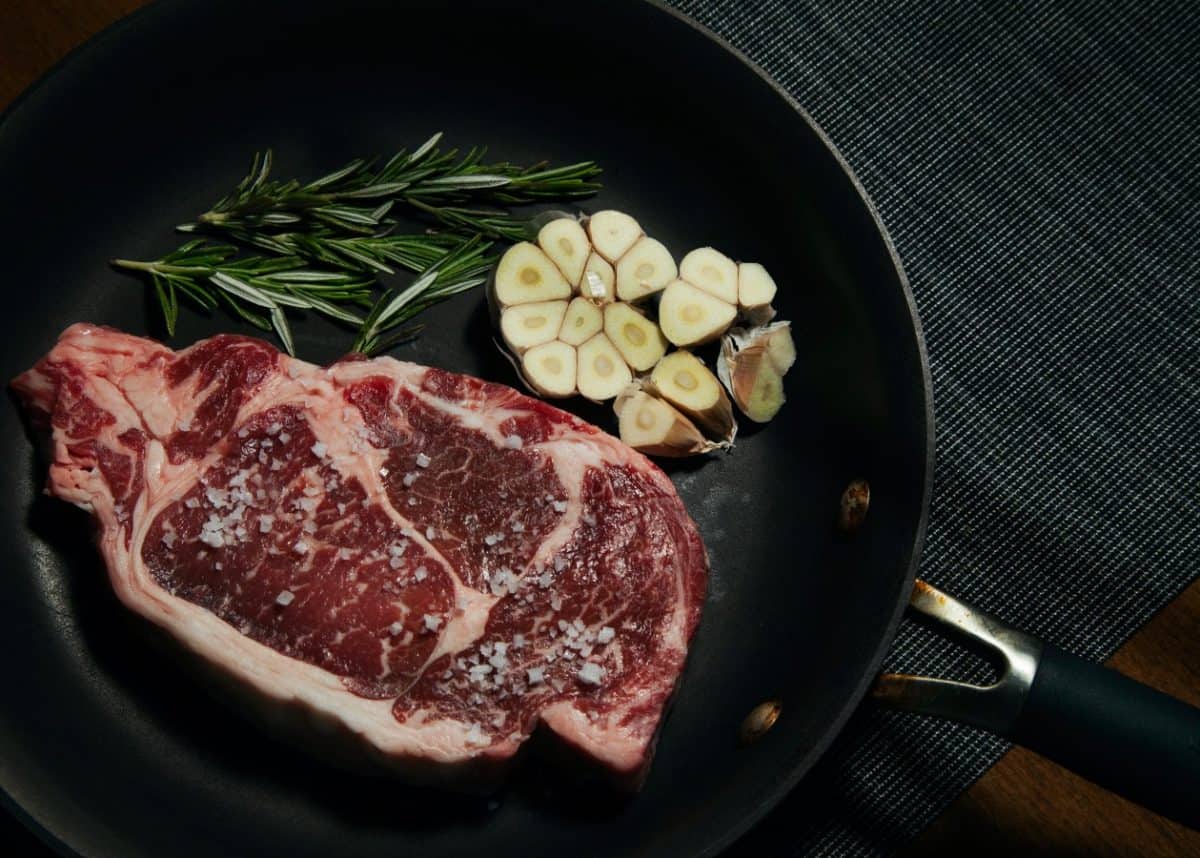
Demand for meat is driving deforestation

Demand for meat is driving deforestation Photo by Nanxi wei on Unsplash

Angela Guerrero, Stockholm University and Malika Virah-Sawmy, Humboldt University of Berlin

Soy may have a pretty innocuous reputation thanks to its association with vegan food and meat alternatives. But don’t be fooled – crops of this pale legume are behind much of Brazil’s epidemic of deforestation. Since 2000, Brazil has doubled its total area of soy plantation to 36 million hectares and become the world’s largest producer. This expansion has erased vast swathes of forest and other habitats in some of the country’s most biodiverse regions.

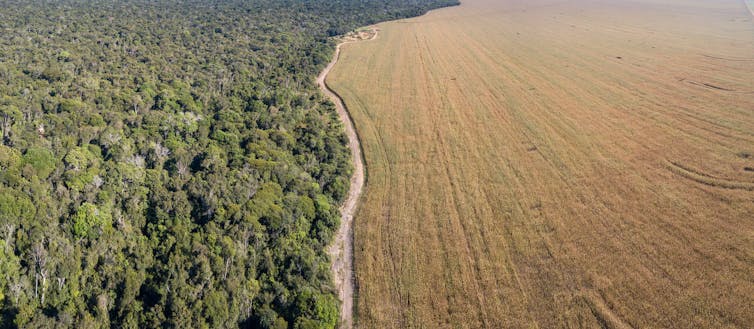
The Amazon rainforest meets soybean fields in Mato Grosso, Brazil. Paralaxis/Shutterstock

About 75% of the soy produced globally is used as animal feed, and a large proportion of soy imported to Europe goes to chicken and pig farms. As a result, the future of the rainforest and savannas of Brazil – not to mention the biodiversity and carbon storage they support – depends on the contents of dinner tables worldwide.

The connection between meat, soy and deforestation might be invisible to consumers, but that link is well known by those in the business of producing and trading both products. Together with colleagues, we investigated this supply chain to find out what’s preventing businesses from halting habitat destruction in the Cerrado of Brazil, a tropical savanna where soy agriculture is making inroads.
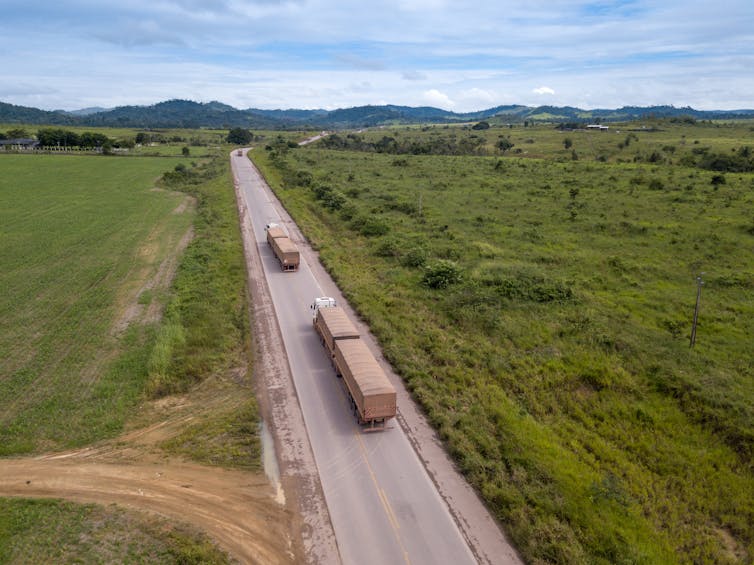
Two trucks on a motorway pass pastures.
Trucks transporting soy pass denuded land in Brazil. Paralaxis/Shutterstock

A lucrative industry

The savannas of the Cerrado surround the westerly borders of the Amazon rainforest. Much of the ongoing deforestation and habitat clearing here is legal – landholders are permitted to deforest up to 80% of their land for agriculture. Clearly, solving this problem isn’t a matter of weeding out offenders.

When we spoke with a local association of soy producers, they said that regulation compels them to reserve between 20% and 35% of the Cerrado for nature, but that it’s hard to achieve. Asking them to improve on this without compensation would apparently only elicit complaints, and could make landholders more likely to clear habitats from their property while the law still allowed them.

Making demands on Brazilian producers to stop deforesting their land because it troubles European consumers evoked Brazil’s colonial past, some argued, and threatened their rights. Soy is seen as a path to national development. Any rules imposed from abroad that threaten this are likely to make matters worse.


AlsoRead...

How Turnkey Building Group Is Restoring Trust In An Industry Known For Customer Disappointment

How Turnkey Building Group Is Restoring Trust In An Industry Known For Customer Disappointment

17 December 2025
Ryan: Building real freedom through e-commerce

Ryan: Building real freedom through e-commerce

27 November 2025
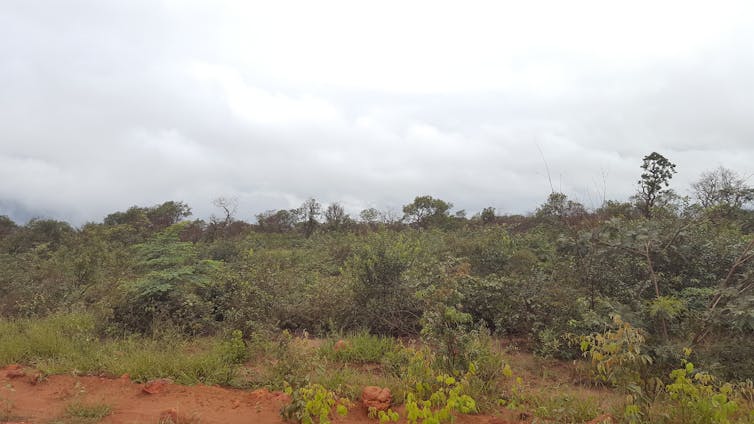
A tropical savanna habitat with shrubs and trees.
The Cerrado features tropical savanna replete with wildlife. Angela Guerrero, Author provided

Why not compensate people in the Cerrado for producing soy without deforestation? Well, it’s not clear who should pay for it. Separating deforestation-free soy from other products would increase the cost for companies sourcing and exporting the soy.

While European retailers sign agreements to end deforestation in their supply chains, implementing them depends on producers and traders cooperating. Retailers argue that passing the cost onto consumers by increasing the price of products like pork is a dead end too. Soy’s role in the meat industry is unfamiliar to most people browsing supermarket aisles, so how can consumers be convinced to pay more for a sustainable product they might not understand the benefit of?

Growing soy on deforested land is a very profitable business for those involved, from land speculators looking for cheaper plots at the forest frontier, to the growers and distributors of soy, to the banks financing it. The indigenous communities displaced by expanding farmland are the clear losers. If they fight back, they might be killed.

Such a lucrative business can only be made sustainable if there is a financial case for it. Right now, there isn’t. Soy producers are well organised with political clout, and they demand equal partnership in the transition to sustainability, rather than having green rules imposed on them.
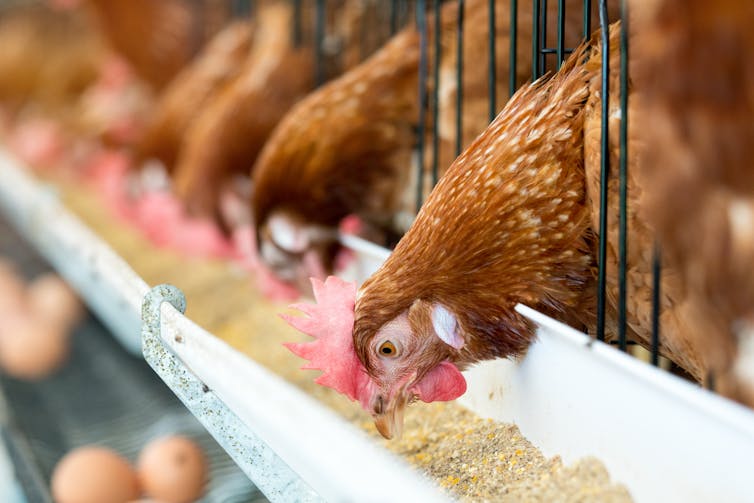
A row of caged hens peck at feed from a trough.
Much of the chicken sold in European markets was fed on Brazilian soy. BG-Studio/Shutterstock

Global cooperation for local solutions

Commodities pass between countries and markets in a dense web of exchanges. Data tools are getting better at separating these to reveal the companies and consumer countries linked to deforestation. This recently helped France to reject Brazilian soy, a move which increases pressure on Jair Bolsonaro’s government but might mean producers simply supply other markets with lower standards.

Helping soy producers comply with national laws, such as preserving habitats on at least 20% of their property, could help build trust between producers and the people and organisations demanding deforestation-free soy.

This might not sound very ambitious, but even small improvements have been difficult in Brazilian soy agriculture. The Bolsonaro government has slashed the budget for environmental inspectors and signalled to some producers that it’s reluctant to enforce national laws. Supporting partnerships between national and state government, and local and international organisations who want to uphold Brazil’s own standard could create the necessary trust for enabling bigger changes.
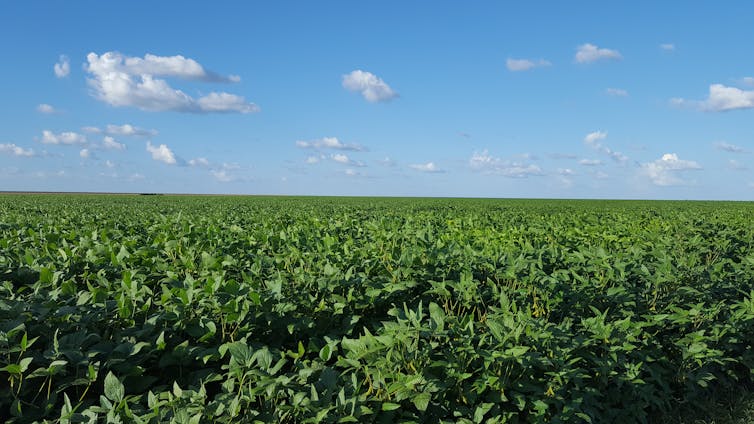
A vast green soybean crop under a blue sky.
Brazil is now the world’s largest producer of soy. Angela Guerrero., Author provided

Another option is encouraging farmers to produce on degraded land, rather than seek to convert new forest. Research shows that the amount of land where forest has been cleared could be used to double current soy production. But growing crops on degraded land is actually more expensive than starting it on forested land.

This is where international initiatives can help. The UN Environment Programme and other partners have launched the Responsible Commodities Facility to provide low-interest credit lines to Brazilian soy and corn farmers who commit to using degraded pasture and avoid clearing forests and native grassland for agriculture.

Solutions like this require people in Europe to think beyond their needs – a juicy chicken leg produced without the guilt of deforestation – to consider the values and priorities of people who work to put that chicken on the table in the first place.

Angela Guerrero, Postdoctoral Researcher in Environmental Governance, Stockholm University and Malika Virah-Sawmy, Visiting Scientist, Humboldt University of Berlin

This article is republished from The Conversation under a Creative Commons license. Read the original article.


Tags: SB001
DMCA.com Protection Status

SUBSCRIBE to our NEWSLETTER

[mc4wp_form id=”2384248″]

Don't Miss

How Turnkey Building Group Is Restoring Trust In An Industry Known For Customer Disappointment

by Fazila Olla-Logday
17 December 2025
How Turnkey Building Group Is Restoring Trust In An Industry Known For Customer Disappointment
Business & Finance

Turnkey Building Group is changing the narrative in an industry often associated with missed deadlines and broken promises. By prioritizing...

Read moreDetails

Risk Awareness for International Travellers – What Australians Should Know Before Entering Multi-State Regions

by Fazila Olla-Logday
10 December 2025
Schengen
Travel

This guide helps Australian travellers understand cross-border requirements, assess political and environmental risks, manage health and safety considerations, and prepare...

Read moreDetails

The evolution of Aesthetic Surgery through the lens of Dr Kourosh Tavakoli

by Pauline Torongo
4 December 2025
The evolution of Aesthetic Surgery through the lens of Dr. Kourosh Tavakoli
Health & Wellness

As global interest in Australian cosmetic surgery continues to grow, the combination of regulation, research and emerging digital tools is...

Read moreDetails

Ryan: Building real freedom through e-commerce

by Pauline Torongo
27 November 2025
Ryan: Building real freedom through e-commerce
Business & Finance

Ryan’s greatest achievement isn’t any single business or revenue milestone — it’s the ecosystem he’s built through the Change community.

Read moreDetails

Design Australia Group: Redefining Drafting as the engine of housing growth

by Pauline Torongo
26 November 2025
Design Australia Group: Redefining Drafting as the engine of housing growth
Business & Finance

Australia is under pressure to build homes faster, but design bottlenecks slow progress. Design Australia Group is fixing this by...

Read moreDetails

Louis Guy Detata builds Global Trading Empires through autonomous systems and disciplined leadership

by Pauline Torongo
25 November 2025
Louis Guy Detata builds Global Trading Empires through autonomous systems and disciplined leadership
Business & Finance

The path from investment banking to leading a global trading platform has taught Louis Detata that sustainable success requires more...

Read moreDetails

Burning Eucalyptus Wood: Tips, Advantages, Disadvantages & Alternatives

by Fazila Olla-Logday
20 November 2025
Image Supplied
Enviroment

Learn about burning eucalyptus wood for stoves and fireplaces. Discover benefits, drawbacks, harvesting tips, and better alternative firewood options for...

Read moreDetails
Load More

Copyright © Blue Sky Publications Ltd. All Rights Reserved.
australiantimes.co.uk is a division of Blue Sky Publications Ltd. Reproduction without permission prohibited. DMCA.com Protection Status

  • About us
  • Write for Us
  • Advertise
  • Contact us
  • T&Cs, Privacy and GDPR
No Result
View All Result
  • News
    • Weather
    • Sport
    • Technology
    • Business & Finance
      • Currency Zone
    • Lotto Results
      • The Lott
  • Lifestyle
    • Entertainment
    • Horoscopes
    • Health & Wellness
    • Recipes
  • Travel
  • Expat Life
  • Move to Australia

Copyright © Blue Sky Publications Ltd. All Rights Reserved.
australiantimes.co.uk is a division of Blue Sky Publications Ltd. Reproduction without permission prohibited. DMCA.com Protection Status

No Result
View All Result
  • News
    • Weather
    • Sport
    • Technology
    • Business & Finance
      • Currency Zone
    • Lotto Results
      • The Lott
  • Lifestyle
    • Entertainment
    • Horoscopes
    • Health & Wellness
    • Recipes
  • Travel
  • Expat Life
  • Move to Australia

Copyright © Blue Sky Publications Ltd. All Rights Reserved.
australiantimes.co.uk is a division of Blue Sky Publications Ltd. Reproduction without permission prohibited. DMCA.com Protection Status