


• Advertise
  • About us
  • Terms and Conditions
  • Contact us
Saturday, December 6, 2025
Australian Times News
  • News
    • Weather
    • Sport
    • Technology
    • Business & Finance
      • Currency Zone
    • Lotto Results
      • The Lott
  • Lifestyle
    • Entertainment
    • Horoscopes
    • Health & Wellness
    • Recipes
  • Travel
  • Expat Life
  • Move to Australia
No Result
View All Result
  • News
    • Weather
    • Sport
    • Technology
    • Business & Finance
      • Currency Zone
    • Lotto Results
      • The Lott
  • Lifestyle
    • Entertainment
    • Horoscopes
    • Health & Wellness
    • Recipes
  • Travel
  • Expat Life
  • Move to Australia
No Result
View All Result
Australian Times News
No Result
View All Result
Home News

Coronavirus: compliance with control measures will fall over the winter holidays, expert warns

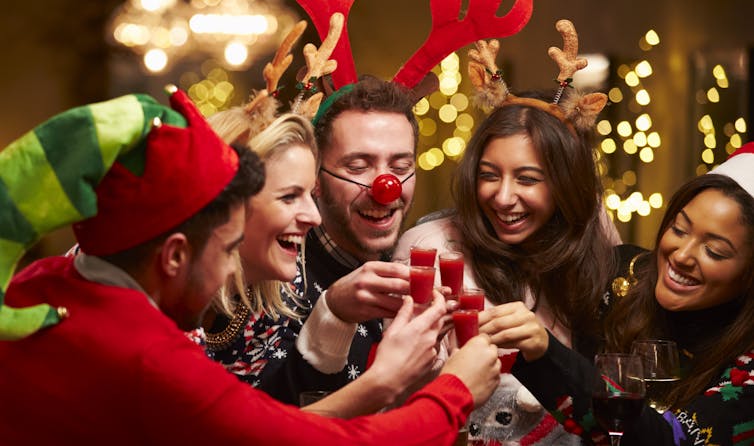
As the holiday season approaches, we need to consider what effect it will have on people’s compliance with public health rules and the spread of COVID-19. Are concerns about broken rules and increasing cases unfounded? Or should policymakers implement stricter regulations – or even go so far as to cancel Christmas?
The Conversation by The Conversation
08-11-2020 22:01
in News
Seasonal and religious holidays

Seasonal and religious holidays Photo by James Wheeler on Unsplash

Sheheryar Banuri, University of East Anglia

As the holiday season approaches, we need to consider what effect it will have on people’s compliance with public health rules and the spread of COVID-19. Are concerns about broken rules and increasing cases unfounded? Or should policymakers implement stricter regulations – or even go so far as to cancel Christmas?

Monkey Business Images/Shutterstock

In previous articles, I have discussed how perceived risk and trust in authorities affect compliance with coronavirus guidelines, arguing for an explicit policy focus on increasing trust. These pieces focus on what we call individual decision making – that is, how people make decisions based on the information they receive and who delivers this information.

However, in the upcoming holidays we face a different problem: the effects our behaviour has on one another – or what we call social norms.

Social norms are rules that guide our behaviour. They are beliefs about what other people are likely to do (descriptive norms) and what other people ought to do (prescriptive norms).

In general, they’re very useful. Norms help guide our behaviour and have been defined as the “cement of society”, the glue that holds us together. Simply put, in times of uncertainty, we often look to what others are doing to aid in our decision making.

Social norms have had a storied history in explaining cooperation, deterring crime, and promoting recycling, saving and other household behaviours. Perhaps more importantly, norms have been shown to be effective in changing behaviour.


AlsoRead...

Ryan: Building real freedom through e-commerce

Ryan: Building real freedom through e-commerce

27 November 2025
Design Australia Group: Redefining Drafting as the engine of housing growth

Design Australia Group: Redefining Drafting as the engine of housing growth

26 November 2025

The power of the festive season

This is why we need to pay attention to seasonal and religious holidays. They involve deep-rooted norms of behaviour that potentially have the power to pull us away from previous behaviours we’ve adopted.

For example, the US Thanksgiving holiday carries norms of feasting with family and friends, and its power to draw people into abnormal eating habits can be measured in people’s weight gain across the period.

Another particularly illustrative example of norms shifting behaviour is a study of credit card receipts at a restaurant in New York. It reports a significant increase in tipping during the holiday season, attributed to norms of pro-social behaviour during the holidays.
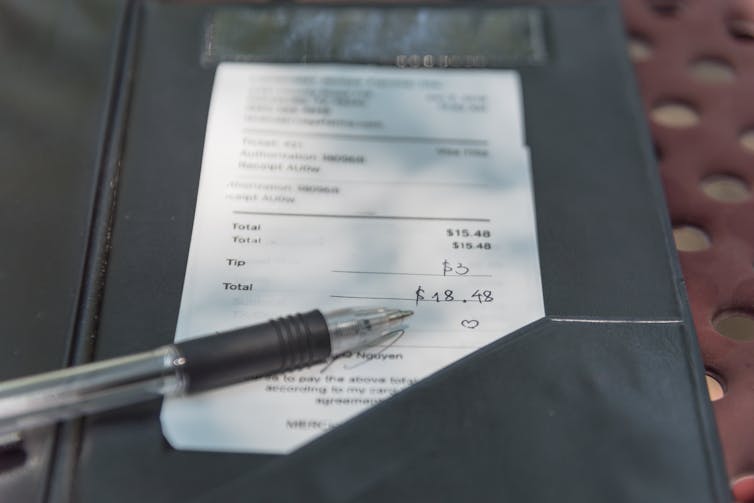
A signed credit card receipt on a restaurant table
Social norms are powerful enough to make people to spend money that they don’t need to. Trong Nguyen/Shutterstock

Many holidays similarly prescribe norms of behaviour. For example, the Christmas holidays carry norms of gift giving, church attendance, decorating the house and traditional Christmas meals. Traditions surrounding Rosh Hashanah, the Jewish new year, include attending services at synagogues and celebrating with festive meals. Eid al-Fitr (Muslim) and Diwali (Hindu) traditions similarly include meeting family, exchanging gifts and money, and celebratory meals.

Naturally, these norms of behaviour can counter existing norms of compliance during this pandemic. In fact, coronavirus cases were appreciably higher in the aftermath of the Rosh Hashanah and Sukkot holidays in Israel and of Eid al-Fitr in Pakistan. These increases occurred despite leaders calling for restrained celebrations, and were more prevalent among those that were more religious (and hence more likely to be susceptible to religious norms of behaviour).

My colleagues and I also recently issued a working paper that focuses on the effect of religious holidays on compliance with COVID-19 guidelines. Using a university student sample in Pakistan, we showed that compliance with behaviours that run counter to religious norms (leaving home, avoiding crowds and avoiding physical greetings) declined in the post-Eid period. Yet unrelated norms (such as mask wearing and shopping for groceries) remained unaffected, despite no change in either risk perceptions or trust in authorities.

Contagious behaviour

Combatting the effects of norms around the holiday season will be difficult, for two reasons. The first is that norms can be misperceived.

When this happens, individuals are likely to conform to behaviour that they think is common, rather than behaviour that might actually be commonplace. This can lead people to underestimate the prevalence of healthy behaviours or overestimate the prevalence of unhealthy behaviours, and then allow these assessments to drive their own decision making.

A man washing his hands
Research has shown that people are more likely to wash their hands if they think other people do so frequently. Maridav/Shutterstock

The second is that people react not just to the existing normative behaviour of others, but to changes in people’s behaviour too. In other words, if people see people changing from one behaviour to another, they might see that change itself as a norm to adopt.

What this means is that a small number of people changing their behaviour around the holidays could quickly snowball into lots of people subsequently changing too. The fact that people’s social networks are also one of the primary channels for spreading health behaviours adds to the potential for a contagion effect in behaviour. When it comes to health, we’re keen to see what others are doing.

So overall, it looks like we have a problem. Without significant intervention, norms of behaviour during the holiday period have the potential to overturn the norms of compliance that governments have worked so hard to establish. If this happens, cases during and after the holiday period are likely to rise.

Hence, between now and then, policymakers need to reinforce the necessity of complying with public health measures, and information campaigns need to focus on the heightened risk of not doing so. By offering clear and consistent messaging on how people should behave, we might just be able to tread a line between dangerously raising viral transmission on the one hand, and having to shutdown for Christmas altogether.

Sheheryar Banuri, Associate Professor, School of Economics, University of East Anglia

This article is republished from The Conversation under a Creative Commons license. Read the original article.


Tags: SB001
DMCA.com Protection Status

SUBSCRIBE to our NEWSLETTER

[mc4wp_form id=”2384248″]

Don't Miss

The evolution of Aesthetic Surgery through the lens of Dr Kourosh Tavakoli

by Pauline Torongo
4 December 2025
The evolution of Aesthetic Surgery through the lens of Dr. Kourosh Tavakoli
Health & Wellness

As global interest in Australian cosmetic surgery continues to grow, the combination of regulation, research and emerging digital tools is...

Read moreDetails

Ryan: Building real freedom through e-commerce

by Pauline Torongo
27 November 2025
Ryan: Building real freedom through e-commerce
Business & Finance

Ryan’s greatest achievement isn’t any single business or revenue milestone — it’s the ecosystem he’s built through the Change community.

Read moreDetails

Design Australia Group: Redefining Drafting as the engine of housing growth

by Pauline Torongo
26 November 2025
Design Australia Group: Redefining Drafting as the engine of housing growth
Business & Finance

Australia is under pressure to build homes faster, but design bottlenecks slow progress. Design Australia Group is fixing this by...

Read moreDetails

Louis Guy Detata builds Global Trading Empires through autonomous systems and disciplined leadership

by Pauline Torongo
25 November 2025
Louis Guy Detata builds Global Trading Empires through autonomous systems and disciplined leadership
Business & Finance

The path from investment banking to leading a global trading platform has taught Louis Detata that sustainable success requires more...

Read moreDetails

Burning Eucalyptus Wood: Tips, Advantages, Disadvantages & Alternatives

by Fazila Olla-Logday
20 November 2025
Image Supplied
Enviroment

Learn about burning eucalyptus wood for stoves and fireplaces. Discover benefits, drawbacks, harvesting tips, and better alternative firewood options for...

Read moreDetails

Everything Parents Need to Know About Baby Soft Play and Why It’s a Game Changer

by Fazila Olla-Logday
11 November 2025
Everything Parents Need to Know About Baby Soft Play
Health & Wellness

Baby soft play is a fun, safe, and educational way for little ones to explore and grow. Discover the benefits...

Read moreDetails

WOMAD Sets Up a New Camp in Wiltshire – Australian festival fans take note!

by Kris Griffiths
11 November 2025
Kumbia Boruka brought their reggae and dancehall flavour to the Taste the World Stage at WOMAD 2024 - Credit - Mike Massaro
Entertainment

With its 2026 edition moving to Neston Park in England, WOMAD offers Aussie music lovers a chance to reconnect with global...

Read moreDetails
Load More

Copyright © Blue Sky Publications Ltd. All Rights Reserved.
australiantimes.co.uk is a division of Blue Sky Publications Ltd. Reproduction without permission prohibited. DMCA.com Protection Status

  • About us
  • Write for Us
  • Advertise
  • Contact us
  • T&Cs, Privacy and GDPR
No Result
View All Result
  • News
    • Weather
    • Sport
    • Technology
    • Business & Finance
      • Currency Zone
    • Lotto Results
      • The Lott
  • Lifestyle
    • Entertainment
    • Horoscopes
    • Health & Wellness
    • Recipes
  • Travel
  • Expat Life
  • Move to Australia

Copyright © Blue Sky Publications Ltd. All Rights Reserved.
australiantimes.co.uk is a division of Blue Sky Publications Ltd. Reproduction without permission prohibited. DMCA.com Protection Status

No Result
View All Result
  • News
    • Weather
    • Sport
    • Technology
    • Business & Finance
      • Currency Zone
    • Lotto Results
      • The Lott
  • Lifestyle
    • Entertainment
    • Horoscopes
    • Health & Wellness
    • Recipes
  • Travel
  • Expat Life
  • Move to Australia

Copyright © Blue Sky Publications Ltd. All Rights Reserved.
australiantimes.co.uk is a division of Blue Sky Publications Ltd. Reproduction without permission prohibited. DMCA.com Protection Status





