Hugo Temby, Australian National University and Hedda Ransan-Cooper, Australian National University
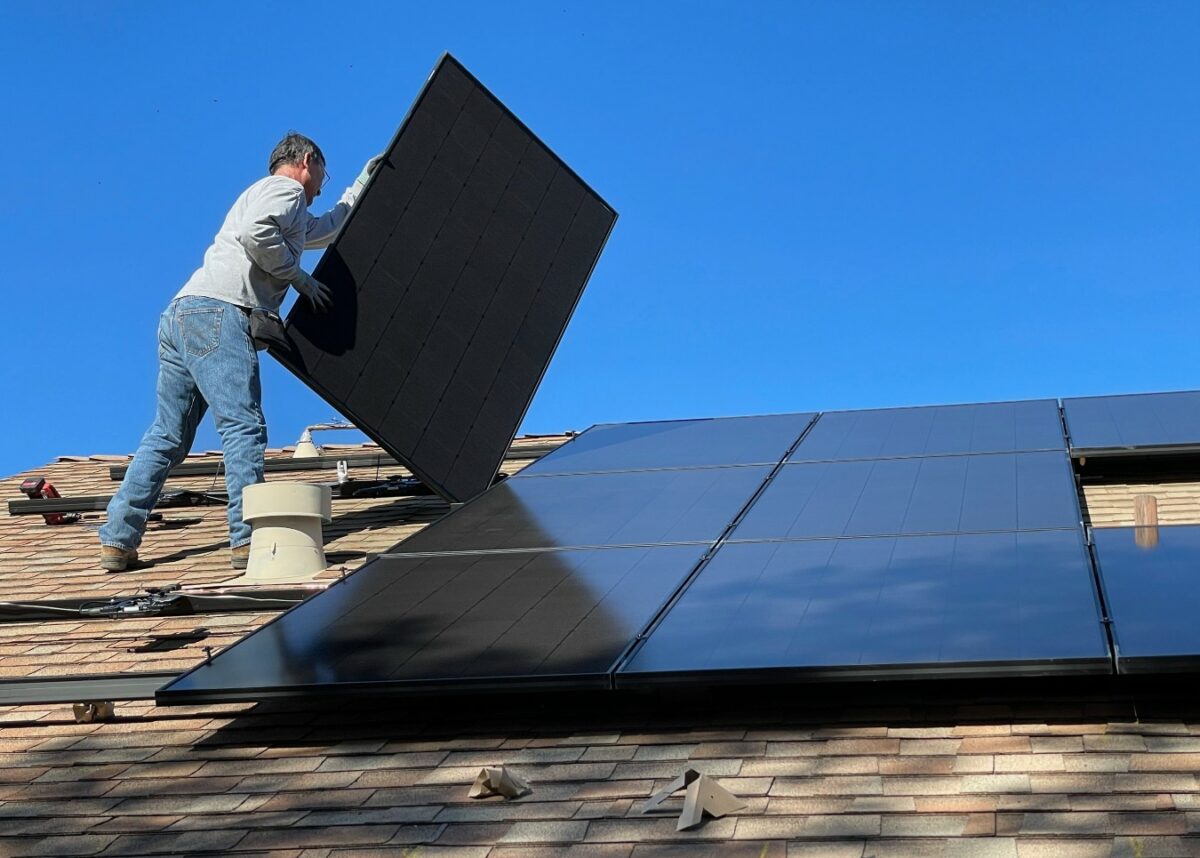
Even after A$4,000 in repairs, Heather’s $18,000 rooftop solar and battery system is still not working.
Heather worked as a nurse until a workplace accident caused her to leave the workforce. She put most of her compensation towards making a switch to clean energy, hoping to bring down her energy costs and increase her comfort.
But a solar company sold her a system that wasn’t suited to her needs. They also didn’t clearly explain how the system worked or how to maintain it.
Heather’s battery failed after roughly two years. Her system’s complexity, and the limited handover provided by the company, meant she didn’t notice its failure during the short warranty period. Reflecting on the technical written information provided to her, Heather told us it was “way over my head”.
As a result, she is fully responsible for the cost of repairs, which she cannot afford. And she has since been told the battery is irreparable.
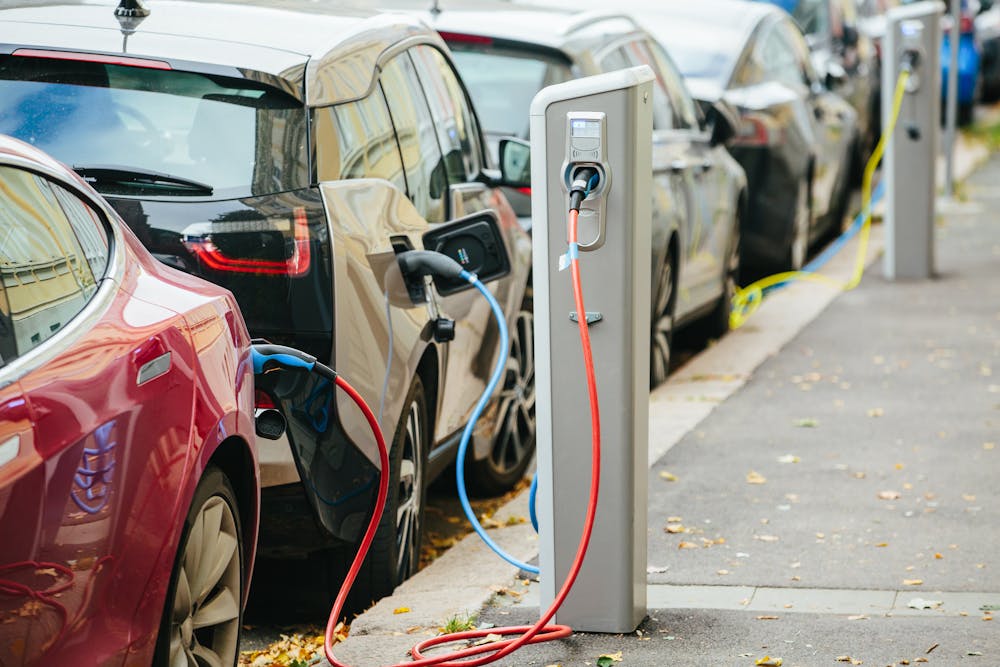
Heather’s story is one of many featured in our new report published today. It shows household clean energy technologies — such as rooftop solar, household batteries and electric vehicles — can be unnecessarily complicated, time consuming and costly.


Switching to clean energy at home
The aim of our report was to better understand stories like Heather’s to inform a Victorian Energy and Water Ombudsman review of the various new energy technology regulatory frameworks in Australia. These frameworks have not kept up with the pace of technological change.
We held in-depth interviews in 2020 and 2021 with 68 householders, businesses and industry experts based mainly in Victoria and South Australia. We asked why people were purchasing new energy technology, if it was meeting their expectations, and the issues people were encountering.

Nearly all householders we spoke with were motivated to some degree by environmental concerns, particularly the desire to reduce their emissions, and many expected some financial returns. Community mindedness, enthusiasm for technology and comfort were other common motivators.
And many wanted greater independence from untrusted energy companies. Distrust of the sector has multiple facets, but it often boils down to a sense the sector doesn’t have the long-term interests of the public in mind.
Going it alone
New energy technologies can be highly complex. It’s not always clear what differentiates one solar panel product from another. Some services, such as virtual power plants or battery aggregation, require a basic understanding of how the broader energy system works, which even energy insiders can struggle to understand.
Some householders told us they found it difficult to source reliable information about different electric vehicle products, which they felt weren’t being sufficiently well covered in mainstream car magazines.
Meanwhile, many householders felt alone and unsupported in dealing with their new technology. Heather, for example, has gone through four different electricians.
Most told us they were investing significant time, effort and funds into researching, choosing, configuring and operating their technologies, with different technologies often interacting and various energy tariffs on offer.
Increasingly, people are being seen as idealised “prosumers” in a “two-sided market”. In other words, rather than asking people how they might like to engage with the energy system, householders are given narrow options revolving around solely financial mechanisms.
Most Australians don’t have the time and resources to do this work. Without a whole-of-sector strategy to ensure all Australians benefit from new energy technologies, we risk leaving people behind. This includes renters, apartment dwellers, people who can’t afford high up-front costs, or people who simply don’t have the time to do all the extra “digital housework” to maintain these technologies.
Alternative models, such as social enterprises or community energy, could make technology more accessible to renters and low income households. One example of this is solar gardens, where people can buy a share in a solar array located nearby, which in turn provides them with a discount on their bill.
But arguably, such options wouldn’t be required if our emerging energy system had resolved the energy trilemma in the first place.
Why this is so concerning
We know householders are a key part of the solution for climate mitigation, together with businesses and government.
There are many ways householders can decarbonise their electricity and transport. While not all involve buying new energy products, we consistently heard frustration about the lack of a coherent framework for different ways they could contribute.
According to the federal government, it will be “technology, not taxes” that will get us to our Paris emissions reduction commitments.
But this assumes new technology uptake will be straightforward and downplays potential risks. It also implies new technology is always preferable to alternatives like reducing consumption.
A narrow focus on technology also ignores the rebound effect. Research has shown that without deeper engagement with Australians about the energy system, it’s possible lower electricity costs from new energy technologies could actually increase energy use and emissions.

Where do we go from here?
Our new research shows we need better support for the nearly 2.8 million (and growing) Australian households and businesses that have already purchased new, clean energy technologies.
To make this happen, we need coordinated, climate wise policy across all levels of government with an engaged, evidence-based and equitable energy policy. This would help rebuild trust in Australia’s energy system.
If our national climate policy is to rely on new energy technology, it will be critical to ensure the technology – and its implementation – is better aligned with people’s needs and aspirations.
Hugo Temby, Doctoral Researcher, Battery Storage and Grid Integration Program, Australian National University and Hedda Ransan-Cooper, Research Fellow, College of Engineering and Computer Science, Australian National University
This article is republished from The Conversation under a Creative Commons license. Read the original article.