

• Advertise
  • About us
  • Terms and Conditions
  • Contact us
Sunday, December 7, 2025
Australian Times News
  • News
    • Weather
    • Sport
    • Technology
    • Business & Finance
      • Currency Zone
    • Lotto Results
      • The Lott
  • Lifestyle
    • Entertainment
    • Horoscopes
    • Health & Wellness
    • Recipes
  • Travel
  • Expat Life
  • Move to Australia
No Result
View All Result
  • News
    • Weather
    • Sport
    • Technology
    • Business & Finance
      • Currency Zone
    • Lotto Results
      • The Lott
  • Lifestyle
    • Entertainment
    • Horoscopes
    • Health & Wellness
    • Recipes
  • Travel
  • Expat Life
  • Move to Australia
No Result
View All Result
Australian Times News
No Result
View All Result
Home News

Closed borders, travel bans and halted immigration: 5 ways COVID-19 changed how – and where – people move around the world

After the World Health Organization declared COVID-19 a pandemic, most countries in the world closed their borders – though public health experts initially questioned this strategy for controlling the spread of disease.

The Conversation by The Conversation
19-03-2021 09:17
in News
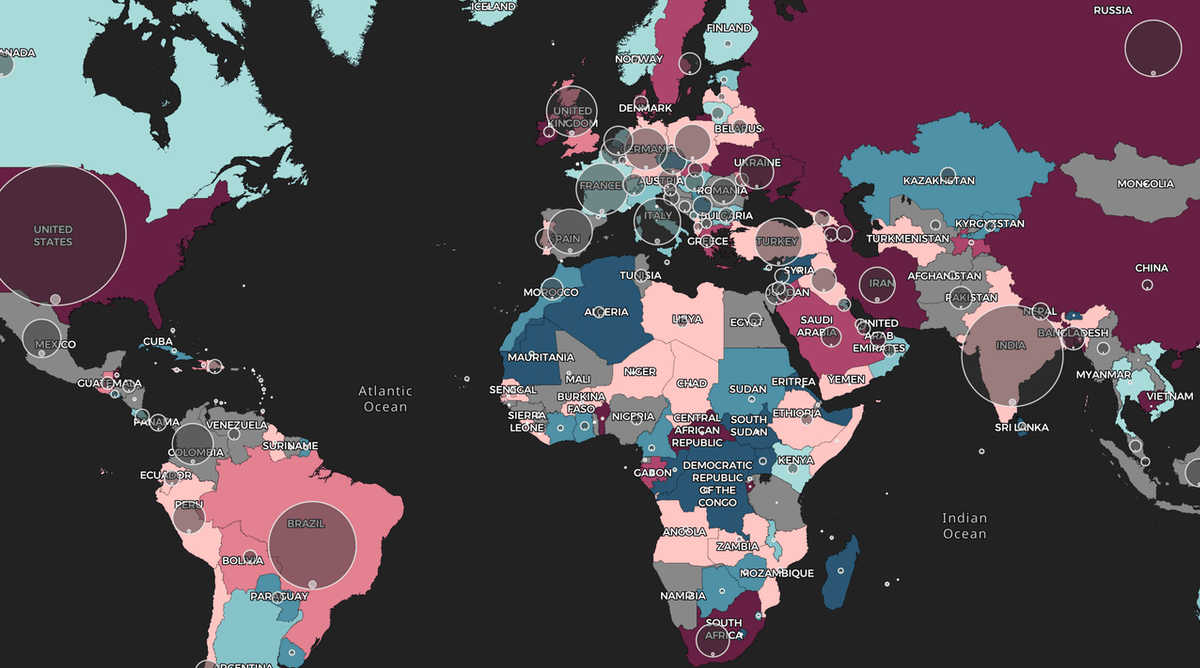
Most countries closed their borders, at least partially, at some point last year. But the world is starting to reopen. COVID Border Accountability Project, CC BY-SA

Most countries closed their borders, at least partially, at some point last year. But the world is starting to reopen. COVID Border Accountability Project, CC BY-SA

Mary A. Shiraef, University of Notre Dame

Trips canceled: 2.93 billion. International border closures: 1,299. Lives interrupted: Countless.

After the World Health Organization declared COVID-19 a pandemic, most countries in the world closed their borders – though public health experts initially questioned this strategy for controlling the spread of disease.

I study migration, so I began tracking the enormous changes in how and where people could move around the world. The COVID Border Accountability Project, founded in May 2020, maps travel and immigration restrictions introduced by countries in response to the COVID-19 pandemic.

Here is how our world shuttered – and how it’s starting to reopen.

1. March 11: It begins

Travel restrictions peaked right after the World Health Organization declared a pandemic on March 11. That week, our data shows a total of 348 countries closing their borders, completely or partially.

Complete closures restrict access to all noncitizens at international borders. Partial closures – a category encompassing border closures and travel bans – restrict access at some borders, or bar people from some, but not all, countries.


AlsoRead...

Ryan: Building real freedom through e-commerce

Ryan: Building real freedom through e-commerce

27 November 2025
Design Australia Group: Redefining Drafting as the engine of housing growth

Design Australia Group: Redefining Drafting as the engine of housing growth

26 November 2025

2. Fully closed borders

Most countries stopped all foreign travelers from entering at some point last year.

From Finland to Sri Lanka to Tonga, 189 countries – home to roughly 65% of the world’s 7.7 billion people – put a complete border closure in place in response to the COVID-19 pandemic, according to our database. The first to isolate itself from the world was North Korea, on Jan. 22, 2020. The last was Bahrain, on June 4, 2020.

Most countries eventually eased border restrictions, and many opened their borders only to close them again as COVID-19 cases spread globally. By the end of 2020, roughly half of all countries remained completely closed to noncitizens and non-visa holders except for essential travel related to health emergencies, humanitarian or diplomatic missions, commerce or family reunification.

3. Targeted bans and partial closures

Last year 193 countries closed down partially, restricting access to people from specific countries or closing some – but not all – of their land and sea borders.

Among these, 98 countries introduced targeted bans, which restricted entry to specific groups of people based on their recent travel or nationality. The first travel bans targeted China, followed soon by other countries that experienced the earliest known outbreaks of the novel coronavirus.

For instance, the United States was quick to pass a string of targeted travel bans, barring travelers from China first, then Iran, and then 26 European countries.

Most countries added land border closures to air travel bans, including the United States. In March the Trump administration closed its borders with Canada and Mexico.

4. Restrictions on US residents

Americans faced serious restrictions on their movement last year, too. People in the U.S., with its high COVID-19 spread, were barred from 190 countries either specifically – via a travel ban – or generally, due to closed borders.

The U.S. passport, usually one of the world’s most powerful for travel access to other countries, ranked 18th place in 2020. Regions newly off-limits to Americans include most of Europe and nearly all South America.

5. Visa seekers and immigrants

Of the 98 countries that implemented targeted bans, 42 specifically restricted all visa seekers from entering the country. The week following the U.S. closure of immigration offices worldwide, 20 countries, including the Philippines Benin and Nepal, stopped issuing all visas. More than 100 visa bans barred visa seekers from specific countries or groups.

In September, the Trump administration halted the U.S. asylum program, barring refugees from seeking asylum. The only other country that explicitly targeted immigrants and asylum seekers with a COVID-19 travel ban was Hungary.

The world today

I initially wondered whether international travel restrictions would stay in place after the pandemic ended, leading to more permanent restrictions on freedom of movement.

But, by and large, the world is reopening. By the end of last year, 137 of the world’s 189 complete closures had been lifted, and 66 of the 98 targeted bans had ended.

In addition to the staggering numbers of closures and the occasional international spats, I’ve been struck by the level of cooperation between countries, especially within the European Union. Virtually every EU country complied with the bloc’s travel recommendations – a testament to its ability to manage crisis as a unified region.

Travel restrictions will continue to emerge, end and evolve, dependent on context. As wealthier countries vaccinate their populations at rapid speed, less equipped countries continue to suffer severe outbreaks. International travel may soon require a COVID-19 “vaccination card.” New targeted travel bans could emerge.

“Normal” is a long way away.

Nikolas Lazar, Thuy Nguyen and the COBAP Team assisted with this story.

Mary A. Shiraef, Ph.D. Student in Political Science, University of Notre Dame

This article is republished from The Conversation under a Creative Commons license. Read the original article.


Tags: SB001
DMCA.com Protection Status

SUBSCRIBE to our NEWSLETTER

[mc4wp_form id=”2384248″]

Don't Miss

The evolution of Aesthetic Surgery through the lens of Dr Kourosh Tavakoli

by Pauline Torongo
4 December 2025
The evolution of Aesthetic Surgery through the lens of Dr. Kourosh Tavakoli
Health & Wellness

As global interest in Australian cosmetic surgery continues to grow, the combination of regulation, research and emerging digital tools is...

Read moreDetails

Ryan: Building real freedom through e-commerce

by Pauline Torongo
27 November 2025
Ryan: Building real freedom through e-commerce
Business & Finance

Ryan’s greatest achievement isn’t any single business or revenue milestone — it’s the ecosystem he’s built through the Change community.

Read moreDetails

Design Australia Group: Redefining Drafting as the engine of housing growth

by Pauline Torongo
26 November 2025
Design Australia Group: Redefining Drafting as the engine of housing growth
Business & Finance

Australia is under pressure to build homes faster, but design bottlenecks slow progress. Design Australia Group is fixing this by...

Read moreDetails

Louis Guy Detata builds Global Trading Empires through autonomous systems and disciplined leadership

by Pauline Torongo
25 November 2025
Louis Guy Detata builds Global Trading Empires through autonomous systems and disciplined leadership
Business & Finance

The path from investment banking to leading a global trading platform has taught Louis Detata that sustainable success requires more...

Read moreDetails

Burning Eucalyptus Wood: Tips, Advantages, Disadvantages & Alternatives

by Fazila Olla-Logday
20 November 2025
Image Supplied
Enviroment

Learn about burning eucalyptus wood for stoves and fireplaces. Discover benefits, drawbacks, harvesting tips, and better alternative firewood options for...

Read moreDetails

Everything Parents Need to Know About Baby Soft Play and Why It’s a Game Changer

by Fazila Olla-Logday
11 November 2025
Everything Parents Need to Know About Baby Soft Play
Health & Wellness

Baby soft play is a fun, safe, and educational way for little ones to explore and grow. Discover the benefits...

Read moreDetails

WOMAD Sets Up a New Camp in Wiltshire – Australian festival fans take note!

by Kris Griffiths
11 November 2025
Kumbia Boruka brought their reggae and dancehall flavour to the Taste the World Stage at WOMAD 2024 - Credit - Mike Massaro
Entertainment

With its 2026 edition moving to Neston Park in England, WOMAD offers Aussie music lovers a chance to reconnect with global...

Read moreDetails
Load More

Copyright © Blue Sky Publications Ltd. All Rights Reserved.
australiantimes.co.uk is a division of Blue Sky Publications Ltd. Reproduction without permission prohibited. DMCA.com Protection Status

  • About us
  • Write for Us
  • Advertise
  • Contact us
  • T&Cs, Privacy and GDPR
No Result
View All Result
  • News
    • Weather
    • Sport
    • Technology
    • Business & Finance
      • Currency Zone
    • Lotto Results
      • The Lott
  • Lifestyle
    • Entertainment
    • Horoscopes
    • Health & Wellness
    • Recipes
  • Travel
  • Expat Life
  • Move to Australia

Copyright © Blue Sky Publications Ltd. All Rights Reserved.
australiantimes.co.uk is a division of Blue Sky Publications Ltd. Reproduction without permission prohibited. DMCA.com Protection Status

No Result
View All Result
  • News
    • Weather
    • Sport
    • Technology
    • Business & Finance
      • Currency Zone
    • Lotto Results
      • The Lott
  • Lifestyle
    • Entertainment
    • Horoscopes
    • Health & Wellness
    • Recipes
  • Travel
  • Expat Life
  • Move to Australia

Copyright © Blue Sky Publications Ltd. All Rights Reserved.
australiantimes.co.uk is a division of Blue Sky Publications Ltd. Reproduction without permission prohibited. DMCA.com Protection Status





