• Advertise
  • About us
  • Terms and Conditions
  • Contact us
Saturday, December 6, 2025
Australian Times News
  • News
    • Weather
    • Sport
    • Technology
    • Business & Finance
      • Currency Zone
    • Lotto Results
      • The Lott
  • Lifestyle
    • Entertainment
    • Horoscopes
    • Health & Wellness
    • Recipes
  • Travel
  • Expat Life
  • Move to Australia
No Result
View All Result
  • News
    • Weather
    • Sport
    • Technology
    • Business & Finance
      • Currency Zone
    • Lotto Results
      • The Lott
  • Lifestyle
    • Entertainment
    • Horoscopes
    • Health & Wellness
    • Recipes
  • Travel
  • Expat Life
  • Move to Australia
No Result
View All Result
Australian Times News
No Result
View All Result
Home News

Climate change is causing tuna to migrate, which could spell catastrophe for the small islands that depend on them

Small Pacific Island states depend on their commercial fisheries for food supplies and economic health. But our new research shows climate change will dramatically alter tuna stocks in the tropical Pacific, with potentially severe consequences for the people who depend on them.

The Conversation by The Conversation
31-07-2021 09:17
in News
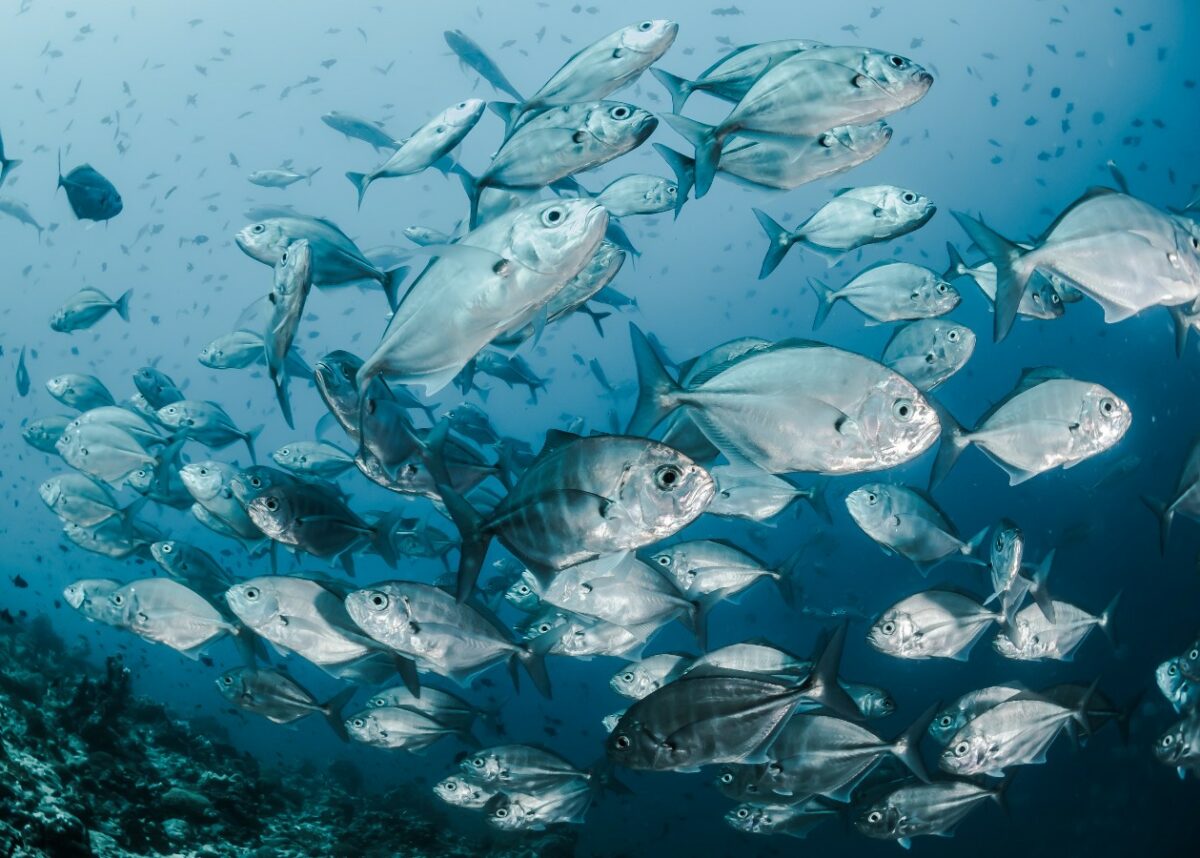
Photo by Sebastian Pena Lambarri on Unsplash

Photo by Sebastian Pena Lambarri on Unsplash

Katherine Seto, University of Wollongong; Johann Bell, University of Wollongong; Quentin Hanich, University of Wollongong, and Simon Nicol, University of Canberra

Small Pacific Island states depend on their commercial fisheries for food supplies and economic health. But our new research shows climate change will dramatically alter tuna stocks in the tropical Pacific, with potentially severe consequences for the people who depend on them.

As climate change warms the waters of the Pacific, some tuna will be forced to migrate to the open ocean of the high seas, away from the jurisdiction of any country. The changes will affect three key tuna species: skipjack, yellowfin, and bigeye.

Pacific Island nations such as the Cook Islands and territories such as Tokelau charge foreign fishing operators to access their waters, and heavily depend on this revenue. Our research estimates the movement of tuna stocks will cause a fall in annual government revenue to some of these small island states of up to 17%.

This loss will hurt these developing economies, which need fisheries revenue to maintain essential services such as hospitals, roads and schools. The experience of Pacific Island states also bodes poorly for global climate justice more broadly.

Island states at risk

Catches from the Western and Central Pacific represent over half of all tuna produced globally. Much of this catch is taken from the waters of ten small developing island states, which are disproportionately dependent on tuna stocks for food security and economic development.

These states comprise:

AlsoRead...

Ryan: Building real freedom through e-commerce

Ryan: Building real freedom through e-commerce

27 November 2025
Design Australia Group: Redefining Drafting as the engine of housing growth

Design Australia Group: Redefining Drafting as the engine of housing growth

26 November 2025
  • Cook Islands
  • Federated States of Micronesia
  • Kiribati
  • Marshall Islands
  • Nauru
  • Palau
  • Papua New Guinea
  • Solomon Islands
  • Tokelau
  • Tuvalu

Their governments charge tuna fishing access fees to distant nations of between US$7.1 million (A$9.7 million) and $134 million (A$182 million), providing an average of 37% of total government revenue (ranging from 4-84%).


https://cdn.theconversation.com/infographics/599/e53745920e5de5edcfa6ebe30437222b0d9e3e39/site/index.html

Tuna stocks are critical for these states’ current and future economic development, and have been sustainably managed by a cooperative agreement for decades. However, our analysis reveals this revenue, and other important benefits fisheries provide, are at risk.


Climate change and migration

Tuna species are highly migratory – they move over large distances according to ocean conditions. The skipjack, yellowfin and bigeye tuna species are found largely within Pacific Island waters.

Concentrations of these stocks normally shift from year to year between areas further to the west in El Niño years, and those further east in La Niña years. However, under climate change, these stocks are projected to shift eastward – out of sovereign waters and into the high seas.

Under climate change, the tropical waters of the Pacific Ocean will warm further. This warming will result in a large eastward shift in the location of the edge of the Western Pacific Warm Pool (a mass of water in the western Pacific Ocean with consistently high water temperatures) and subsequently the prime fishing grounds for some tropical tuna.

This shift into areas beyond national jurisdiction would result in weaker regulation and monitoring, with parallel implications for the long-term sustainability of stocks. https://www.youtube.com/embed/JzYqoK-xaRk?wmode=transparent&start=0 Pacific Tuna: Feeling the Heat.

What our research found

Combining climate science, ecological models and economic data from the region, our research published today in Nature Sustainability shows that under strong projections of climate change, small island economies are poised to lose up to US$140 million annually by 2050, and up to 17% of annual government revenue in the case of some states.

The Intergovernmental Panel on Climate Change (IPCC) provides scenarios of various greenhouse gas concentrations, called “representative concentration pathways” (RCP). We used a higher RCP of 8.5 and a more moderate RCP of 4.5 to understand tuna movement in different emissions scenarios.


In the RCP 8.5 scenario, by 2050, our model predicted the total biomass of the three species of tuna in the combined jurisdictions of the ten Pacific Island states would decrease by an average of 13%, and up to 20%.

But if emissions were kept to the lower RCP 4.5 scenario, the effects are expected to be far less pronounced, with an average decrease in biomass of just 1%.

While both climate scenarios result in average losses of both tuna catches and revenue, lower emissions scenarios lead to drastically smaller losses, highlighting the importance of climate action.

These projected losses compound the existing climate vulnerability of many Pacific Island people, who will endure some of the earliest and harshest climate realities, while being responsible for only a tiny fraction of global emissions.
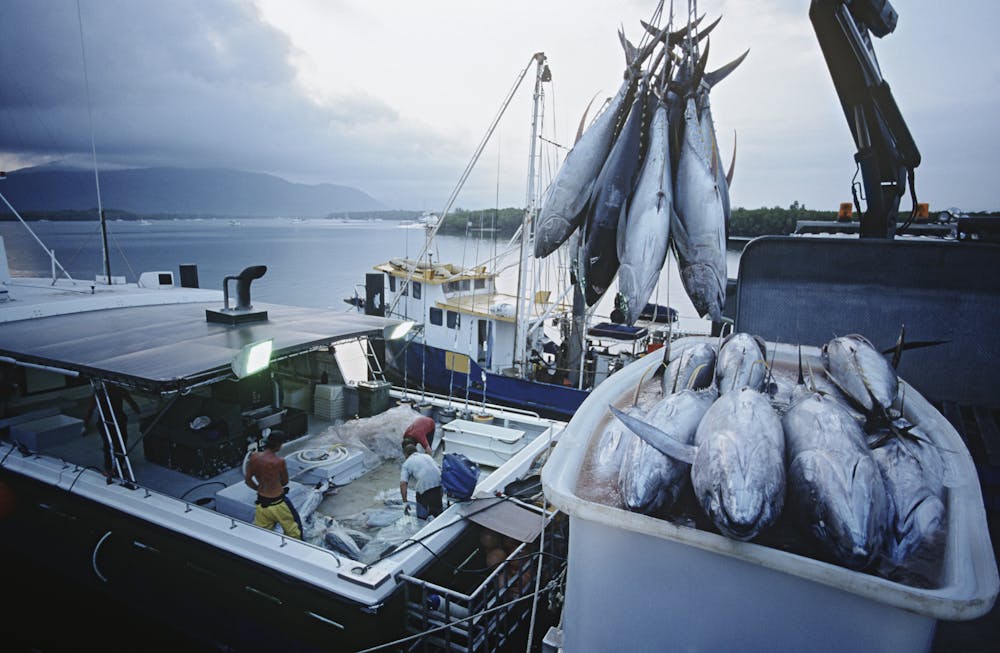
Large tuna fish on the back of a fishing boat
Fishing access fees make up a large proportion of government revenue for these Pacific Island nations. Shutterstock

What can be done?

Capping greenhouse gas emissions, and reducing them to levels aligning with the Paris Agreement, would reduce multiple climate impacts for these states, including shifting tuna stocks.

In many parts of the world, the consequences of climate change compound upon one another to create complex injustices. Our study identifies new direct and indirect implications of climate change for some of the world’s most vulnerable populations.


Katherine Seto, Research Fellow, University of Wollongong; Johann Bell, Visiting Professorial Fellow, University of Wollongong; Quentin Hanich, Associate Professor, University of Wollongong, and Simon Nicol, Adjunct professor, University of Canberra

This article is republished from The Conversation under a Creative Commons license. Read the original article.


Tags: SB001
DMCA.com Protection Status

SUBSCRIBE to our NEWSLETTER

[mc4wp_form id=”2384248″]

Don't Miss

The evolution of Aesthetic Surgery through the lens of Dr Kourosh Tavakoli

by Pauline Torongo
4 December 2025
The evolution of Aesthetic Surgery through the lens of Dr. Kourosh Tavakoli
Health & Wellness

As global interest in Australian cosmetic surgery continues to grow, the combination of regulation, research and emerging digital tools is...

Read moreDetails

Ryan: Building real freedom through e-commerce

by Pauline Torongo
27 November 2025
Ryan: Building real freedom through e-commerce
Business & Finance

Ryan’s greatest achievement isn’t any single business or revenue milestone — it’s the ecosystem he’s built through the Change community.

Read moreDetails

Design Australia Group: Redefining Drafting as the engine of housing growth

by Pauline Torongo
26 November 2025
Design Australia Group: Redefining Drafting as the engine of housing growth
Business & Finance

Australia is under pressure to build homes faster, but design bottlenecks slow progress. Design Australia Group is fixing this by...

Read moreDetails

Louis Guy Detata builds Global Trading Empires through autonomous systems and disciplined leadership

by Pauline Torongo
25 November 2025
Louis Guy Detata builds Global Trading Empires through autonomous systems and disciplined leadership
Business & Finance

The path from investment banking to leading a global trading platform has taught Louis Detata that sustainable success requires more...

Read moreDetails

Burning Eucalyptus Wood: Tips, Advantages, Disadvantages & Alternatives

by Fazila Olla-Logday
20 November 2025
Image Supplied
Enviroment

Learn about burning eucalyptus wood for stoves and fireplaces. Discover benefits, drawbacks, harvesting tips, and better alternative firewood options for...

Read moreDetails

Everything Parents Need to Know About Baby Soft Play and Why It’s a Game Changer

by Fazila Olla-Logday
11 November 2025
Everything Parents Need to Know About Baby Soft Play
Health & Wellness

Baby soft play is a fun, safe, and educational way for little ones to explore and grow. Discover the benefits...

Read moreDetails

WOMAD Sets Up a New Camp in Wiltshire – Australian festival fans take note!

by Kris Griffiths
11 November 2025
Kumbia Boruka brought their reggae and dancehall flavour to the Taste the World Stage at WOMAD 2024 - Credit - Mike Massaro
Entertainment

With its 2026 edition moving to Neston Park in England, WOMAD offers Aussie music lovers a chance to reconnect with global...

Read moreDetails
Load More

Copyright © Blue Sky Publications Ltd. All Rights Reserved.
australiantimes.co.uk is a division of Blue Sky Publications Ltd. Reproduction without permission prohibited. DMCA.com Protection Status

  • About us
  • Write for Us
  • Advertise
  • Contact us
  • T&Cs, Privacy and GDPR
No Result
View All Result
  • News
    • Weather
    • Sport
    • Technology
    • Business & Finance
      • Currency Zone
    • Lotto Results
      • The Lott
  • Lifestyle
    • Entertainment
    • Horoscopes
    • Health & Wellness
    • Recipes
  • Travel
  • Expat Life
  • Move to Australia

Copyright © Blue Sky Publications Ltd. All Rights Reserved.
australiantimes.co.uk is a division of Blue Sky Publications Ltd. Reproduction without permission prohibited. DMCA.com Protection Status

No Result
View All Result
  • News
    • Weather
    • Sport
    • Technology
    • Business & Finance
      • Currency Zone
    • Lotto Results
      • The Lott
  • Lifestyle
    • Entertainment
    • Horoscopes
    • Health & Wellness
    • Recipes
  • Travel
  • Expat Life
  • Move to Australia

Copyright © Blue Sky Publications Ltd. All Rights Reserved.
australiantimes.co.uk is a division of Blue Sky Publications Ltd. Reproduction without permission prohibited. DMCA.com Protection Status