

• Advertise
  • About us
  • Terms and Conditions
  • Contact us
Saturday, December 6, 2025
Australian Times News
  • News
    • Weather
    • Sport
    • Technology
    • Business & Finance
      • Currency Zone
    • Lotto Results
      • The Lott
  • Lifestyle
    • Entertainment
    • Horoscopes
    • Health & Wellness
    • Recipes
  • Travel
  • Expat Life
  • Move to Australia
No Result
View All Result
  • News
    • Weather
    • Sport
    • Technology
    • Business & Finance
      • Currency Zone
    • Lotto Results
      • The Lott
  • Lifestyle
    • Entertainment
    • Horoscopes
    • Health & Wellness
    • Recipes
  • Travel
  • Expat Life
  • Move to Australia
No Result
View All Result
Australian Times News
No Result
View All Result
Home News

Chang’e-5 samples reveal Moon rocks dating back less than 2 billion years – the youngest we’ve seen

Lava was still flowing on the surface of the Moon 1.97 billion years ago – and now we have the rocks to prove it. This is the result of new work from an international collaboration of planetary scientists, of which we’re a part, published in the journal Science.

The Conversation by The Conversation
10-10-2021 22:03
in News
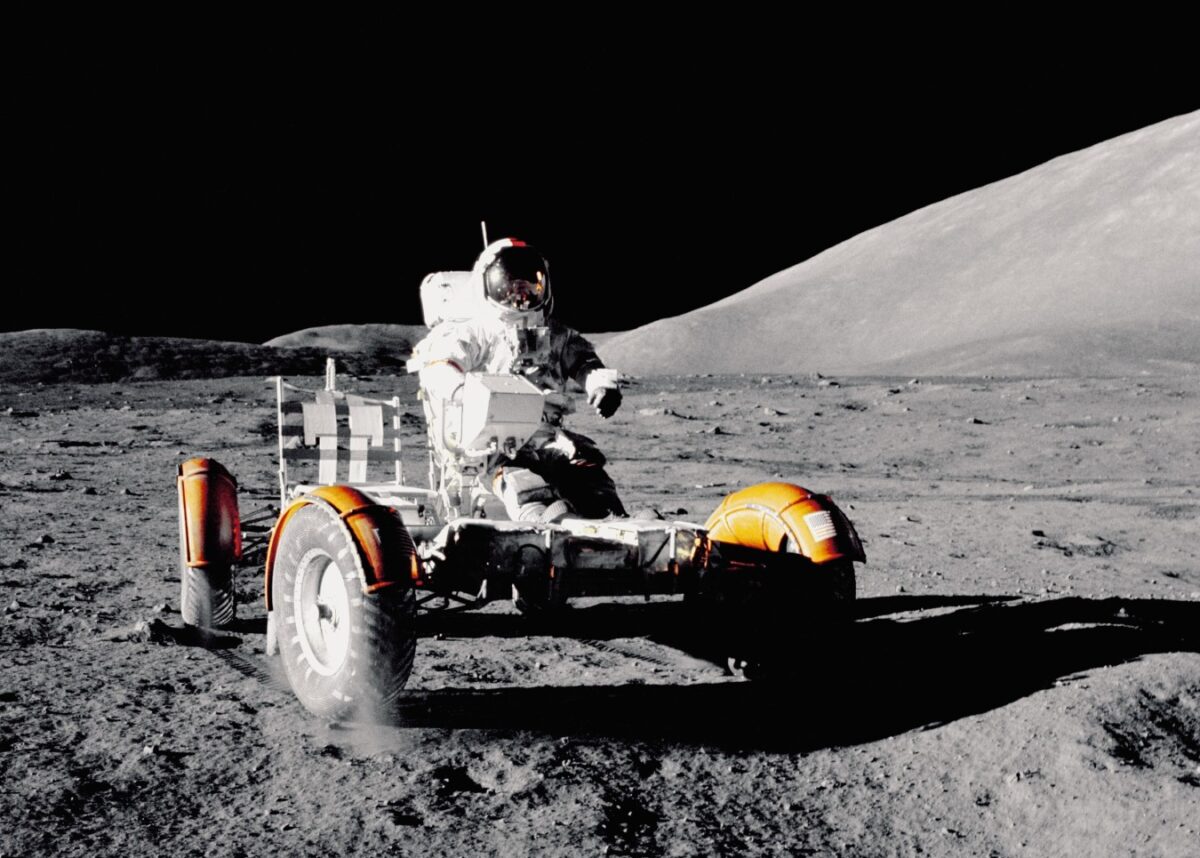
Photo by NASA on Unsplash

Photo by NASA on Unsplash

Joshua Snape, University of Manchester; Katherine Joy, University of Manchester, and Romain Tartese, University of Manchester

Lava was still flowing on the surface of the Moon 1.97 billion years ago – and now we have the rocks to prove it. This is the result of new work from an international collaboration of planetary scientists, of which we’re a part, published in the journal Science.

Together with researchers from China, Australia, Sweden and the US, we’ve been studying samples collected from the Moon by the Chinese National Space Agency during the Chang’e-5 mission.

Chang’e-5 was an uncrewed mission including a robotic lander, which landed on the near side of the Moon (the Earth-facing side) in December 2020. The mission returned 1.7 kilograms of lunar rocks to Earth — the first samples collected from the Moon since 1976 with the Soviet Union’s Luna 24 mission.

A goal of the Chang’e-5 mission was to find evidence of some of the youngest volcanic eruptions on the Moon. Although scientists have previously been able to predict volcanic rocks of this age on the Moon by studying the number of impact craters on the lunar surface, it is impossible to confirm this without having samples to examine.

Analysis of the samples took place using the sensitive high-resolution ion microprobe (Shrimp) instrument, at the Shrimp centre in Beijing, China. First, the material was sorted. Our colleagues in China manually picked out several tiny fragments of basalt (a volcanic rock), roughly 2 millimetres in size, for investigation. This was followed by laboratory analyses, building on techniques developed in the 1970s for the analysis of the first Apollo samples.
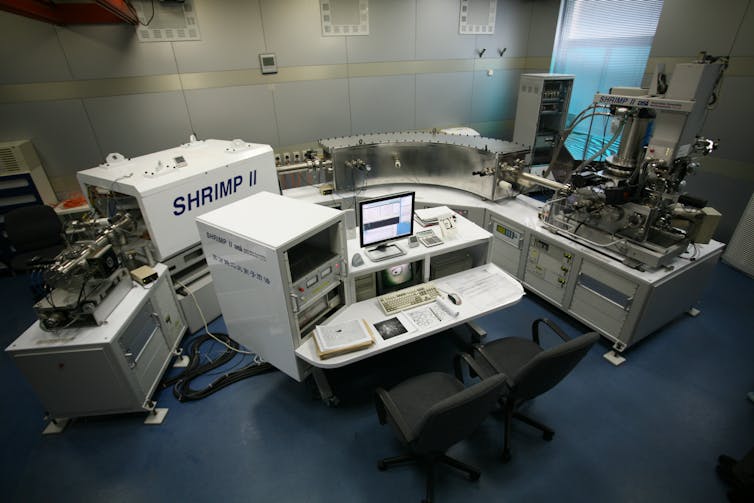
The SHRIMP II instrument used for dating the basalt chips.
This SHRIMP II instrument was used for dating the basalt chips. Beijing SHRIMP Center, Institute of Geology, CAGS, Author provided

The process of determining the age of the rocks was complex, but in essence, we used a focused beam of charged particles to eject material from various mineral phases in the rocks and analysed the ejected material.


AlsoRead...

Ryan: Building real freedom through e-commerce

Ryan: Building real freedom through e-commerce

27 November 2025
Design Australia Group: Redefining Drafting as the engine of housing growth

Design Australia Group: Redefining Drafting as the engine of housing growth

26 November 2025

Our efforts were rewarded when we were able to determine an eruption age for these lavas of 1.97 billion years, a whole billion years younger than any previously dated basaltic lava from the Moon.


A new scientific mystery

Many volcanic eruptions occurred on the Moon’s surface over its geological history, forming large sheets of basaltic rock, referred to as the lunar mare. These can be seen as dark patches looking up at the Moon.

But most of the volcanic activity occurred between 3 and 4 billion years ago. Planetary scientists have confirmed this by dating basalts from the Apollo and Luna rock collections, as well as meteorites that originated from the Moon. Until now though, younger volcanic rocks predicted by crater counting studies had remained elusive.
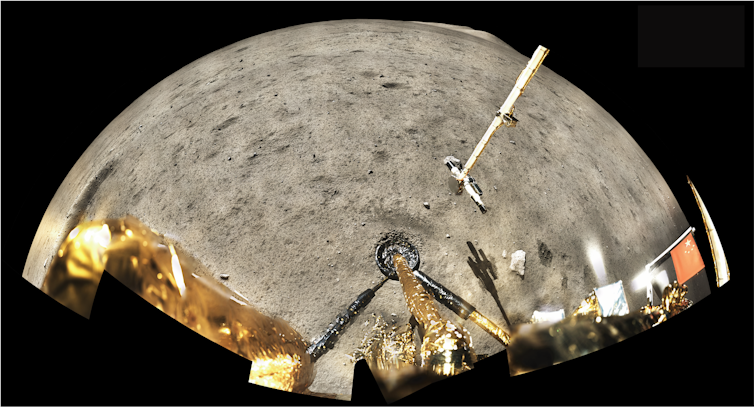
The Chang’e-5 landing site, photographed by the lander.
Chang’e-5 landed on the moon in December last year, and brought samples back to Earth. CNSA Lunar Exploration and Space Engineering Center, Author provided

In order for volcanic eruptions to occur, heat is required on the inside of a planet to generate the molten material involved in the process. For a planet the size of the Moon, it is thought that this heat would have been lost long before these eruptions 2 billion years ago.

This work has therefore opened up a new scientific mystery of how a small rocky planetary body like the Moon could have retained enough interior heat to continue producing volcanic eruptions 2.5 billion years after it first formed 4.5 billion years ago.

So what’s going on? While scientists have previously suggested that high concentrations of radioactive elements in the lunar interior could have melted rocky material inside the Moon, the compositions of these samples indicate this was not the driving force in this case.

It remains to be seen whether so-called tidal heating could have played a role, where heat was generated in the Moon’s interior by the stretching and squeezing (think of an elastic band warming up through friction as you stretch it) due to gravity between the Moon, Earth and Sun.

Alternatively, it may be that a unique aspect of the Moon’s mantle composition could have resulted in a lower melting temperature, therefore explaining how the molten material was formed. Work is now continuing on the samples to try to shed light on this question.


Analysing samples from the Apollo missions in the early 1970s revolutionised our understanding of how dynamic our Solar System is, and how planets form and evolve. Now, once more, this new study proves the incredible scientific value of returning samples from other planetary bodies to decode their secrets in laboratories on Earth.

Importantly, validating the crater counting approach with lunar samples also has key implications for dating the surfaces of other planets from which we haven’t yet collected samples (such as Mars, Venus and Mercury). It will enhance our understanding of the Solar System more broadly.

Joshua Snape, Royal Society University Research Fellow, Department of Earth and Environmental Sciences, University of Manchester; Katherine Joy, Royal Society University Research Fellow / Reader, School of Earth and Environmental Sciences, University of Manchester, and Romain Tartese, Senior Research Fellow, Department of Earth and Environmental Sciences, University of Manchester

This article is republished from The Conversation under a Creative Commons license. Read the original article.


Tags: SB001
DMCA.com Protection Status

SUBSCRIBE to our NEWSLETTER

[mc4wp_form id=”2384248″]

Don't Miss

The evolution of Aesthetic Surgery through the lens of Dr Kourosh Tavakoli

by Pauline Torongo
4 December 2025
The evolution of Aesthetic Surgery through the lens of Dr. Kourosh Tavakoli
Health & Wellness

As global interest in Australian cosmetic surgery continues to grow, the combination of regulation, research and emerging digital tools is...

Read moreDetails

Ryan: Building real freedom through e-commerce

by Pauline Torongo
27 November 2025
Ryan: Building real freedom through e-commerce
Business & Finance

Ryan’s greatest achievement isn’t any single business or revenue milestone — it’s the ecosystem he’s built through the Change community.

Read moreDetails

Design Australia Group: Redefining Drafting as the engine of housing growth

by Pauline Torongo
26 November 2025
Design Australia Group: Redefining Drafting as the engine of housing growth
Business & Finance

Australia is under pressure to build homes faster, but design bottlenecks slow progress. Design Australia Group is fixing this by...

Read moreDetails

Louis Guy Detata builds Global Trading Empires through autonomous systems and disciplined leadership

by Pauline Torongo
25 November 2025
Louis Guy Detata builds Global Trading Empires through autonomous systems and disciplined leadership
Business & Finance

The path from investment banking to leading a global trading platform has taught Louis Detata that sustainable success requires more...

Read moreDetails

Burning Eucalyptus Wood: Tips, Advantages, Disadvantages & Alternatives

by Fazila Olla-Logday
20 November 2025
Image Supplied
Enviroment

Learn about burning eucalyptus wood for stoves and fireplaces. Discover benefits, drawbacks, harvesting tips, and better alternative firewood options for...

Read moreDetails

Everything Parents Need to Know About Baby Soft Play and Why It’s a Game Changer

by Fazila Olla-Logday
11 November 2025
Everything Parents Need to Know About Baby Soft Play
Health & Wellness

Baby soft play is a fun, safe, and educational way for little ones to explore and grow. Discover the benefits...

Read moreDetails

WOMAD Sets Up a New Camp in Wiltshire – Australian festival fans take note!

by Kris Griffiths
11 November 2025
Kumbia Boruka brought their reggae and dancehall flavour to the Taste the World Stage at WOMAD 2024 - Credit - Mike Massaro
Entertainment

With its 2026 edition moving to Neston Park in England, WOMAD offers Aussie music lovers a chance to reconnect with global...

Read moreDetails
Load More

Copyright © Blue Sky Publications Ltd. All Rights Reserved.
australiantimes.co.uk is a division of Blue Sky Publications Ltd. Reproduction without permission prohibited. DMCA.com Protection Status

  • About us
  • Write for Us
  • Advertise
  • Contact us
  • T&Cs, Privacy and GDPR
No Result
View All Result
  • News
    • Weather
    • Sport
    • Technology
    • Business & Finance
      • Currency Zone
    • Lotto Results
      • The Lott
  • Lifestyle
    • Entertainment
    • Horoscopes
    • Health & Wellness
    • Recipes
  • Travel
  • Expat Life
  • Move to Australia

Copyright © Blue Sky Publications Ltd. All Rights Reserved.
australiantimes.co.uk is a division of Blue Sky Publications Ltd. Reproduction without permission prohibited. DMCA.com Protection Status

No Result
View All Result
  • News
    • Weather
    • Sport
    • Technology
    • Business & Finance
      • Currency Zone
    • Lotto Results
      • The Lott
  • Lifestyle
    • Entertainment
    • Horoscopes
    • Health & Wellness
    • Recipes
  • Travel
  • Expat Life
  • Move to Australia

Copyright © Blue Sky Publications Ltd. All Rights Reserved.
australiantimes.co.uk is a division of Blue Sky Publications Ltd. Reproduction without permission prohibited. DMCA.com Protection Status





