


• Advertise
  • About us
  • Terms and Conditions
  • Contact us
Saturday, December 6, 2025
Australian Times News
  • News
    • Weather
    • Sport
    • Technology
    • Business & Finance
      • Currency Zone
    • Lotto Results
      • The Lott
  • Lifestyle
    • Entertainment
    • Horoscopes
    • Health & Wellness
    • Recipes
  • Travel
  • Expat Life
  • Move to Australia
No Result
View All Result
  • News
    • Weather
    • Sport
    • Technology
    • Business & Finance
      • Currency Zone
    • Lotto Results
      • The Lott
  • Lifestyle
    • Entertainment
    • Horoscopes
    • Health & Wellness
    • Recipes
  • Travel
  • Expat Life
  • Move to Australia
No Result
View All Result
Australian Times News
No Result
View All Result
Home News

Celebrity diets and food fads have been around for centuries – and some of them even worked

The word diet originates from the Greek dieta meaning to live normally. However, nowadays it mostly refers to restricting food to help weight loss rather than a way to enjoy food and health.

The Conversation by The Conversation
03-12-2021 22:17
in News
Photo by Sebastian Coman Photography on Unsplash

Photo by Sebastian Coman Photography on Unsplash

James Brown, Aston University and Duane Mellor, Aston University

The word diet originates from the Greek dieta meaning to live normally. However, nowadays it mostly refers to restricting food to help weight loss rather than a way to enjoy food and health.

Throughout history diets have come and gone. Celebrity diets are popular and often bizarre, but are not a new thing. The Daniel Fast, which resembles a vegan diet, and which has its roots in the Book of Daniel, is perhaps one of the earliest examples of a diet. In around 450BC Daniel apparently asked if his men were as strong as the Babylonians after a couple of weeks just eating vegetables. This highlights our deep cultural links to diet: for identity, spirituality and, of course, health.

Fasting diets appear throughout our cultural history, seen in Muslim, Hindu and Christian practices. These vary from not eating during daylight through to just eating a simple vegetarian diet. In the Christian calendar, for instance, historically specific days used to be designated as meat free. The data is mixed in relation to the health effects of religious fasting, as it depends on how people eat in between fasts.

Fasting may have little to no additional benefits beyond simply inducing a calorie deficit, which itself can have metabolic benefits (lower blood fats and sugars) and weight loss.

Meat-free diets

Another theme from fasting is the abstinence from meat and animal products. This was seen in the rise of the vegetarian movement in northern England during the 19th century. This movement inspired food entrepreneurs, including William Kellogg (famous for cereals) and Sylvester Graham (crackers), to develop alternative products.

The principle behind these being to follow a simple and pious diet to improve the body, mind and spirit. The followers of this movement linked eating animal products to sin and poor health.


AlsoRead...

Ryan: Building real freedom through e-commerce

Ryan: Building real freedom through e-commerce

27 November 2025
Design Australia Group: Redefining Drafting as the engine of housing growth

Design Australia Group: Redefining Drafting as the engine of housing growth

26 November 2025

The merits of this argument are more philosophical than physiological. But in the age of climate change awareness, the argument to reduce animal produce in our diets has perhaps reemerged as one of the tools we have to save the planet.

The first diet doctor?

The 18th-century doctor George Cheyne was mocked in the press due to his weight (at one point estimated at 220kg). Many of the wealthier Georgian households would have at the time consumed a high-calorie diet, with large meals of many meats including beef sirloin and pigeon.

Cheyne developed the “vegetable and milk” diet with fewer calories. His own diet included milk, tea, coffee, bread, butter, mild cheese, fruits, nuts and tender roots including turnips and carrots. He drank no alcohol, barring an occasional small glass of cider.
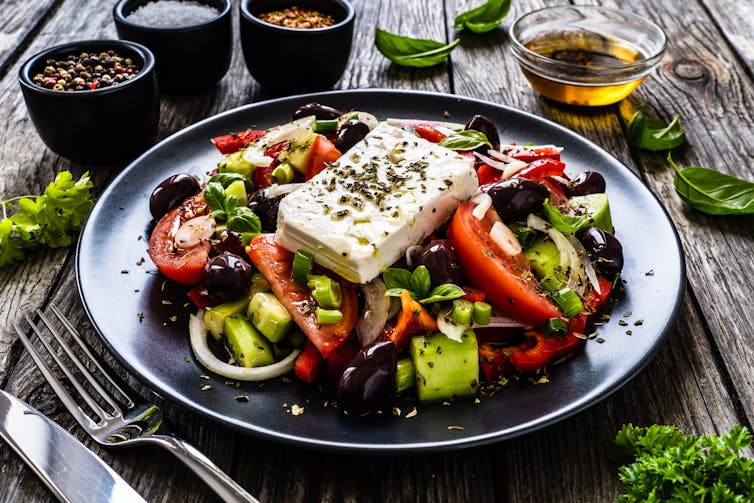
Greek food today is not the same as the historic healthy diets, but still often includes fresh vegetables and olives. Jacek Chabraszewski/Shutterstock

In the 19th century, undertaker William Banting – trying to manage his own weight – wrote “Letters on Corpulence”. This is seen as the forerunner of many of the popular low-carbohydrate diets, including keto – we see today. Banting’s version did include a few ounces of rusk a day, but it also included more sherry or other alcoholic drinks in a day than is recommended.

Worms, cigarettes and cotton balls

Throughout history some incredibly strange and dangerous diets have been championed. During the 1920s, the slim androgynous popular look for women may have led to a drive for weight loss.

This led to a range of unhealthy practises of varying effect on weight – from ingesting tapeworms, which could have led to malnutrition as vital minerals would not have been absorbed, through to instead of snacking having a cigarette, when tobacco companies added appetite suppressants to cigarettes. This was before the causal link between smoking and cancer was known, so although may have this reduced food intake, it is possibly one of the least healthy diets to follow.

The cotton ball diet is said to have been developed by models as a method of reducing food intake by swallowing cotton balls to fill the stomach and soak up stomach juices. Most cotton balls today are bleached polyester fibres and therefore this nonsensical approach to calorie restriction is neither effective nor safe.

The Mediterranean diet’s history goes back to at least ancient Roman times. However, it is subtly different across the Mediterranean region.

The best-known healthy version is recorded in rural Greece, a simple diet of foods including fish, vegetables, fruit, grains, nuts and some olive oil and wine – as well as a little dairy and meat – as part of a food-orientated lifestyle. This is very different to the foods seen in the Mediterranean today. Global food culture changed with more highly processed foods containing fat, sugar and salt becoming available.

If we learn one thing from diets across history it is that enjoying simple food with others, and not too much, is the best way to both be, and stay, healthy.

James Brown, Associate Professor in Biology and Biomedical Science, Aston University and Duane Mellor, Lead for Evidence-Based Medicine and Nutrition, Aston Medical School, Aston University

This article is republished from The Conversation under a Creative Commons license. Read the original article.


Tags: SB001
DMCA.com Protection Status

SUBSCRIBE to our NEWSLETTER

[mc4wp_form id=”2384248″]

Don't Miss

The evolution of Aesthetic Surgery through the lens of Dr Kourosh Tavakoli

by Pauline Torongo
4 December 2025
The evolution of Aesthetic Surgery through the lens of Dr. Kourosh Tavakoli
Health & Wellness

As global interest in Australian cosmetic surgery continues to grow, the combination of regulation, research and emerging digital tools is...

Read moreDetails

Ryan: Building real freedom through e-commerce

by Pauline Torongo
27 November 2025
Ryan: Building real freedom through e-commerce
Business & Finance

Ryan’s greatest achievement isn’t any single business or revenue milestone — it’s the ecosystem he’s built through the Change community.

Read moreDetails

Design Australia Group: Redefining Drafting as the engine of housing growth

by Pauline Torongo
26 November 2025
Design Australia Group: Redefining Drafting as the engine of housing growth
Business & Finance

Australia is under pressure to build homes faster, but design bottlenecks slow progress. Design Australia Group is fixing this by...

Read moreDetails

Louis Guy Detata builds Global Trading Empires through autonomous systems and disciplined leadership

by Pauline Torongo
25 November 2025
Louis Guy Detata builds Global Trading Empires through autonomous systems and disciplined leadership
Business & Finance

The path from investment banking to leading a global trading platform has taught Louis Detata that sustainable success requires more...

Read moreDetails

Burning Eucalyptus Wood: Tips, Advantages, Disadvantages & Alternatives

by Fazila Olla-Logday
20 November 2025
Image Supplied
Enviroment

Learn about burning eucalyptus wood for stoves and fireplaces. Discover benefits, drawbacks, harvesting tips, and better alternative firewood options for...

Read moreDetails

Everything Parents Need to Know About Baby Soft Play and Why It’s a Game Changer

by Fazila Olla-Logday
11 November 2025
Everything Parents Need to Know About Baby Soft Play
Health & Wellness

Baby soft play is a fun, safe, and educational way for little ones to explore and grow. Discover the benefits...

Read moreDetails

WOMAD Sets Up a New Camp in Wiltshire – Australian festival fans take note!

by Kris Griffiths
11 November 2025
Kumbia Boruka brought their reggae and dancehall flavour to the Taste the World Stage at WOMAD 2024 - Credit - Mike Massaro
Entertainment

With its 2026 edition moving to Neston Park in England, WOMAD offers Aussie music lovers a chance to reconnect with global...

Read moreDetails
Load More

Copyright © Blue Sky Publications Ltd. All Rights Reserved.
australiantimes.co.uk is a division of Blue Sky Publications Ltd. Reproduction without permission prohibited. DMCA.com Protection Status

  • About us
  • Write for Us
  • Advertise
  • Contact us
  • T&Cs, Privacy and GDPR
No Result
View All Result
  • News
    • Weather
    • Sport
    • Technology
    • Business & Finance
      • Currency Zone
    • Lotto Results
      • The Lott
  • Lifestyle
    • Entertainment
    • Horoscopes
    • Health & Wellness
    • Recipes
  • Travel
  • Expat Life
  • Move to Australia

Copyright © Blue Sky Publications Ltd. All Rights Reserved.
australiantimes.co.uk is a division of Blue Sky Publications Ltd. Reproduction without permission prohibited. DMCA.com Protection Status

No Result
View All Result
  • News
    • Weather
    • Sport
    • Technology
    • Business & Finance
      • Currency Zone
    • Lotto Results
      • The Lott
  • Lifestyle
    • Entertainment
    • Horoscopes
    • Health & Wellness
    • Recipes
  • Travel
  • Expat Life
  • Move to Australia

Copyright © Blue Sky Publications Ltd. All Rights Reserved.
australiantimes.co.uk is a division of Blue Sky Publications Ltd. Reproduction without permission prohibited. DMCA.com Protection Status





