

• Advertise
  • About us
  • Terms and Conditions
  • Contact us
Saturday, December 6, 2025
Australian Times News
  • News
    • Weather
    • Sport
    • Technology
    • Business & Finance
      • Currency Zone
    • Lotto Results
      • The Lott
  • Lifestyle
    • Entertainment
    • Horoscopes
    • Health & Wellness
    • Recipes
  • Travel
  • Expat Life
  • Move to Australia
No Result
View All Result
  • News
    • Weather
    • Sport
    • Technology
    • Business & Finance
      • Currency Zone
    • Lotto Results
      • The Lott
  • Lifestyle
    • Entertainment
    • Horoscopes
    • Health & Wellness
    • Recipes
  • Travel
  • Expat Life
  • Move to Australia
No Result
View All Result
Australian Times News
No Result
View All Result
Home News

Buried lakes of salty water on Mars may provide conditions for life

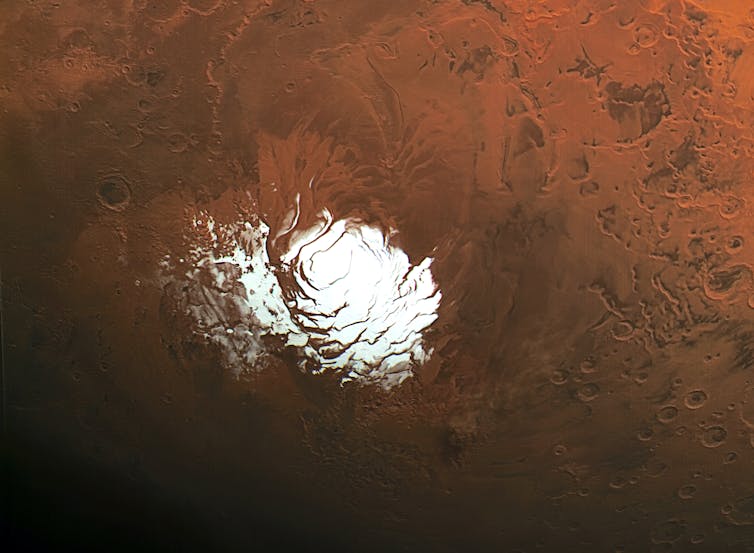
In 2018 a team of Italian scientists announced to the world that there was a lake on Mars. Using satellite radar data, the team detected a very bright area approximately 20 kilometres across located about 1.5 kilometres deep under the ice and dust of the south polar cap.
The Conversation by The Conversation
01-10-2020 22:15
in News
Buried lakes of salty water on Mars

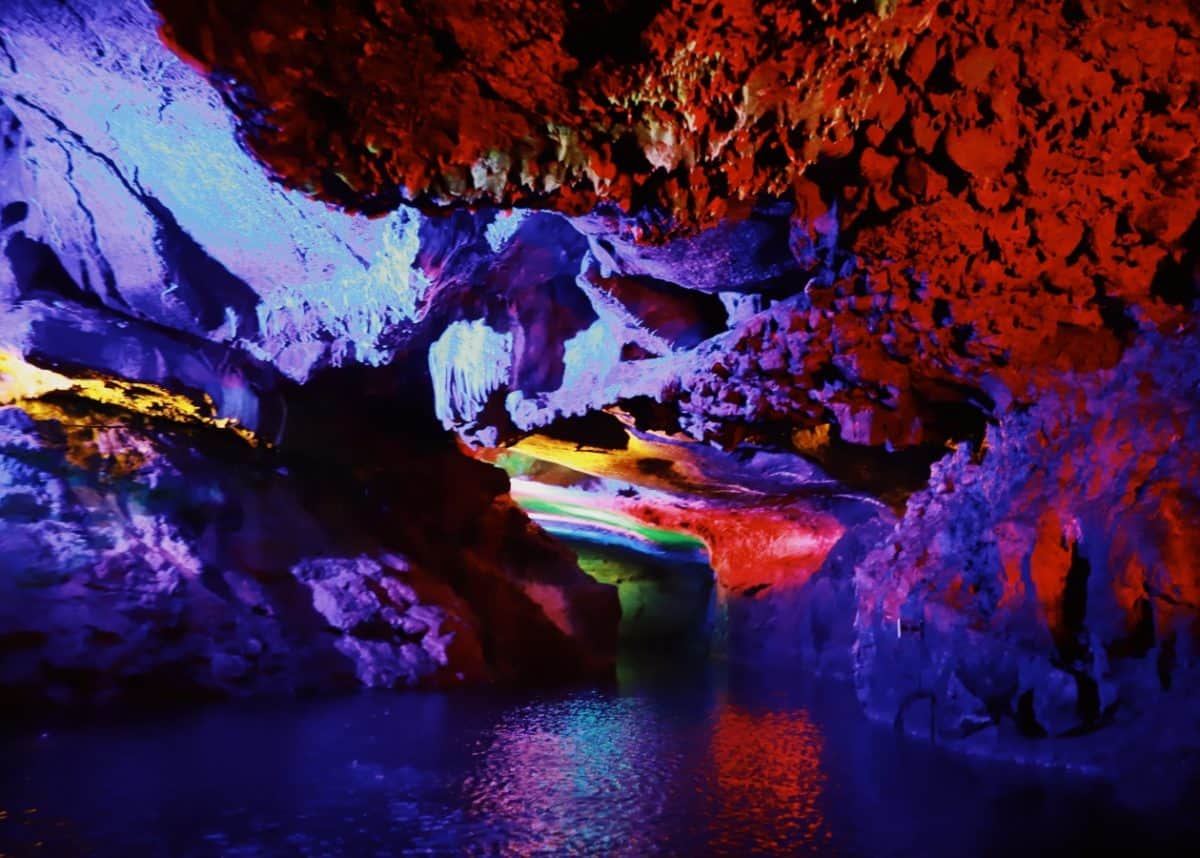
Buried lakes of salty water on Mars Photo by Raychan on Unsplash

Graziella Caprarelli, University of Southern Queensland

In 2018 a team of Italian scientists announced to the world that there was a lake on Mars. Using satellite radar data, the team detected a very bright area approximately 20 kilometres across located about 1.5 kilometres deep under the ice and dust of the south polar cap.

ESA / DLR / FU Berlin, CC BY-NC-SA

After analysis, they concluded that the bright area was a subglacial lake filled with liquid water. The discovery raised some fundamental questions.

Was this the only lake hidden beneath the ice on Mars? How could liquid water exist in the extreme cold of the Martian south polar region, where the average surface temperatures are lower than -100 °C?

After acquiring additional satellite data, my colleagues and I have discovered three more distinct “lakes” near the one found in 2018 and confirmed that all four bodies contain liquid water.

How can we see lakes under the ice on Mars?

The radar sounder MARSIS (Mars Advanced Radar for Subsurface and Ionosphere Sounding) is one of eight instruments on board the European Space Agency orbiter Mars Express. This scientific spacecraft has been circling the red planet since December 2003.

The orbiting radar directs radio “chirps” toward the planetary surface. These signals are partly reflected back by the surface, and partly penetrate deeper, where they may be absorbed, scattered, or reflected back to the radar. Liquid water reflects radar signals better than many other materials, so the surface of a body of liquid water shines brightly in a radar image.


AlsoRead...

Ryan: Building real freedom through e-commerce

Ryan: Building real freedom through e-commerce

27 November 2025
Design Australia Group: Redefining Drafting as the engine of housing growth

Design Australia Group: Redefining Drafting as the engine of housing growth

26 November 2025

Radar sounders are used on Earth to detect subglacial lakes in Antarctica, Greenland and Canada. Here, a technique called radio-echo sounding (RES) is commonly used to analyse the signals.

There are some obvious differences between how radar sounding is used on Earth and on Mars. For a start, MARSIS operates from altitudes between 250 km and 900 km above the surface, it has a 40-metre long antenna, and it operates at much lower frequencies (1.8-5 MHz) than Earth-based radar sounders.
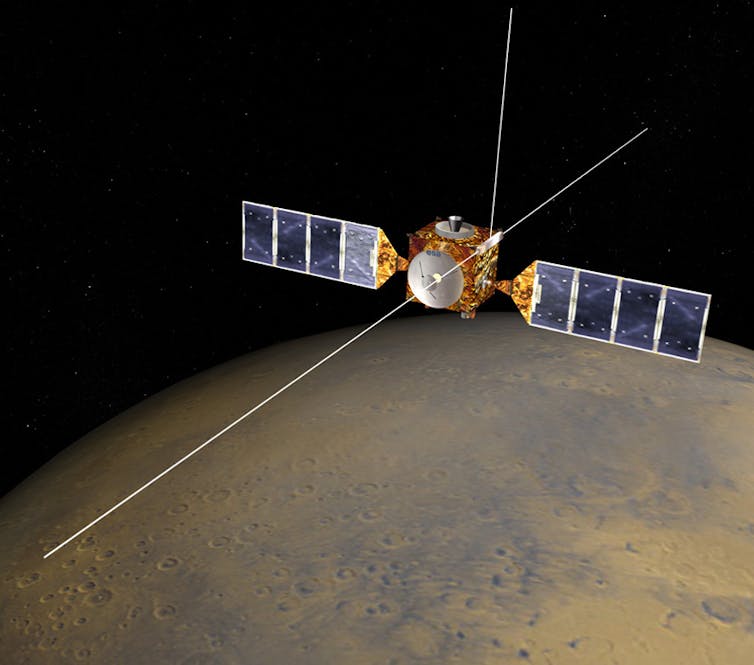
An illustration of a satellite with Mars in the background.
An illustration of the Mars Express satellite with the 40-metre MARSIS radar antenna. NASA / JPL / Corby Waste

These differences meant we had to do some work to adapt standard radio-echo sounding techniques for use with signals from MARSIS. However, we were able to analyse data from 134 MARSIS tracks acquired between 2010 and 2019 over an area 250 km wide and 300 km long near the south pole of Mars.

In this area, we identified three distinct bright patches around the lake already “seen” in 2018. We then used an unconventional probabilistic method to confirm that the bright patches really do represent bodies of liquid water.

We also obtained a much clearer picture of the shape and extent of the lake discovered in 2018. It is still the largest of the bodies of water, measuring 20 km across on its shortest axis and 30 km on its longest.

How could liquid water exist beneath the Martian ice?

The surface temperatures in our study area are around -110 °C on average. The temperatures at the base of the ice cap may be slightly warmer, but still way below the freezing point of pure water.

So how can bodies of liquid water exist here, let alone persist for periods of time long enough for us to detect them?

After the first lake was found in 2018, other groups had suggested the area might be warmed from below by magma within the planet crust. However, there is to date no evidence this is the case, so we think extremely high salt levels in the water are a more likely explanation.

Perchlorate salts, which contain chlorine, oxygen, and another element, such as magnesium or calcium, are everywhere in the Martian soil. These salts absorb moisture from the atmosphere and turn to liquid (this process is termed “deliquescence”), producing hypersaline aqueous solutions (brines), which crystallise at temperatures far below the freezing point of pure water. Furthermore, laboratory experiments have shown that solutions formed by deliquescence can stay liquid for long periods even after temperatures drop below their own freezing points.

We therefore suggested in our paper that the waters in the south polar subglacial lakes are “salty”. This is particularly fascinating, because it has been shown that brines like these can hold enough dissolved oxygen to support microbial life.

Could conditions be right for life beneath the ice?

Our discoveries raise new questions. Is the chemistry of the water in the south polar subglacial lakes suitable for life? How does this modify our definitions of habitable environments? Was there ever life on Mars?

To address these questions new experiments and new missions must be planned. In the meantime, we are gearing up to continue acquiring MARSIS data to collect as much evidence as possible from the Martian subsurface.

Each new piece of evidence brings us one step closer to answering some of the most fundamental scientific questions about Mars, the solar system and the universe.

Graziella Caprarelli, Adjunct Research Fellow, University of Southern Queensland

This article is republished from The Conversation under a Creative Commons license. Read the original article.


Tags: SB001
DMCA.com Protection Status

SUBSCRIBE to our NEWSLETTER

[mc4wp_form id=”2384248″]

Don't Miss

The evolution of Aesthetic Surgery through the lens of Dr Kourosh Tavakoli

by Pauline Torongo
4 December 2025
The evolution of Aesthetic Surgery through the lens of Dr. Kourosh Tavakoli
Health & Wellness

As global interest in Australian cosmetic surgery continues to grow, the combination of regulation, research and emerging digital tools is...

Read moreDetails

Ryan: Building real freedom through e-commerce

by Pauline Torongo
27 November 2025
Ryan: Building real freedom through e-commerce
Business & Finance

Ryan’s greatest achievement isn’t any single business or revenue milestone — it’s the ecosystem he’s built through the Change community.

Read moreDetails

Design Australia Group: Redefining Drafting as the engine of housing growth

by Pauline Torongo
26 November 2025
Design Australia Group: Redefining Drafting as the engine of housing growth
Business & Finance

Australia is under pressure to build homes faster, but design bottlenecks slow progress. Design Australia Group is fixing this by...

Read moreDetails

Louis Guy Detata builds Global Trading Empires through autonomous systems and disciplined leadership

by Pauline Torongo
25 November 2025
Louis Guy Detata builds Global Trading Empires through autonomous systems and disciplined leadership
Business & Finance

The path from investment banking to leading a global trading platform has taught Louis Detata that sustainable success requires more...

Read moreDetails

Burning Eucalyptus Wood: Tips, Advantages, Disadvantages & Alternatives

by Fazila Olla-Logday
20 November 2025
Image Supplied
Enviroment

Learn about burning eucalyptus wood for stoves and fireplaces. Discover benefits, drawbacks, harvesting tips, and better alternative firewood options for...

Read moreDetails

Everything Parents Need to Know About Baby Soft Play and Why It’s a Game Changer

by Fazila Olla-Logday
11 November 2025
Everything Parents Need to Know About Baby Soft Play
Health & Wellness

Baby soft play is a fun, safe, and educational way for little ones to explore and grow. Discover the benefits...

Read moreDetails

WOMAD Sets Up a New Camp in Wiltshire – Australian festival fans take note!

by Kris Griffiths
11 November 2025
Kumbia Boruka brought their reggae and dancehall flavour to the Taste the World Stage at WOMAD 2024 - Credit - Mike Massaro
Entertainment

With its 2026 edition moving to Neston Park in England, WOMAD offers Aussie music lovers a chance to reconnect with global...

Read moreDetails
Load More

Copyright © Blue Sky Publications Ltd. All Rights Reserved.
australiantimes.co.uk is a division of Blue Sky Publications Ltd. Reproduction without permission prohibited. DMCA.com Protection Status

  • About us
  • Write for Us
  • Advertise
  • Contact us
  • T&Cs, Privacy and GDPR
No Result
View All Result
  • News
    • Weather
    • Sport
    • Technology
    • Business & Finance
      • Currency Zone
    • Lotto Results
      • The Lott
  • Lifestyle
    • Entertainment
    • Horoscopes
    • Health & Wellness
    • Recipes
  • Travel
  • Expat Life
  • Move to Australia

Copyright © Blue Sky Publications Ltd. All Rights Reserved.
australiantimes.co.uk is a division of Blue Sky Publications Ltd. Reproduction without permission prohibited. DMCA.com Protection Status

No Result
View All Result
  • News
    • Weather
    • Sport
    • Technology
    • Business & Finance
      • Currency Zone
    • Lotto Results
      • The Lott
  • Lifestyle
    • Entertainment
    • Horoscopes
    • Health & Wellness
    • Recipes
  • Travel
  • Expat Life
  • Move to Australia

Copyright © Blue Sky Publications Ltd. All Rights Reserved.
australiantimes.co.uk is a division of Blue Sky Publications Ltd. Reproduction without permission prohibited. DMCA.com Protection Status





