


Grant Wilson, University of Birmingham; Joseph Day, University of Birmingham, and Noah Godfrey, University of Birmingham
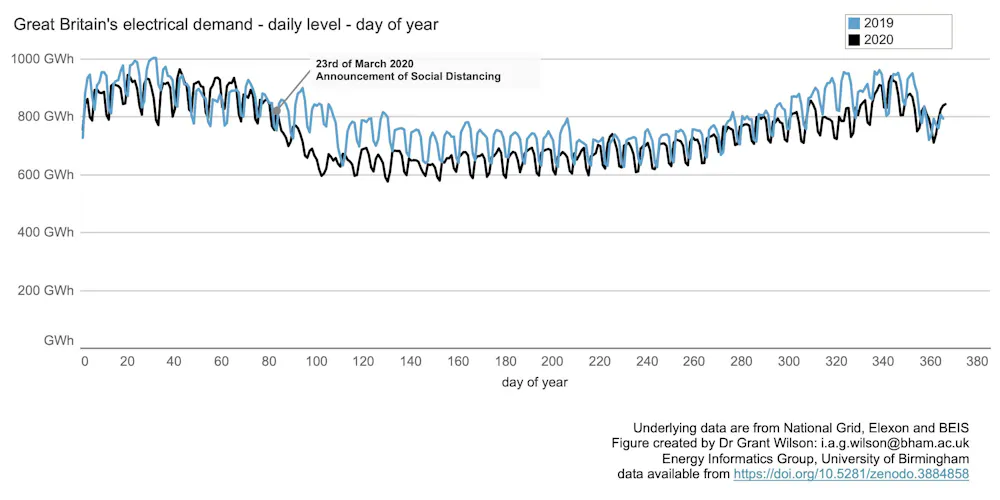
In 2020, Britain’s electrical use was the lowest it had been since 1983. This wasn’t entirely due to COVID – demand for electricity had been falling for more than a decade anyway, thanks to savings from energy-efficient appliances, moving industry offshore and consumers becoming more careful as costs increased.
But demand will bounce back after COVID. And the electrification of transport and heat, both critical to achieving net-zero emissions, will require lots more electricity in future.
We have looked at the data for electricity use in Great Britain (Northern Ireland is part of a single market on the island of Ireland) over the past year and we believe that there will never again be a year when so little electricity is used.
COVID meant less electricity use
Pandemic measures reduced the overall amount of electricity used by 6% in 2020, to the lowest level since 1983. When you look at usage per person the fall in recent years is even more extreme. To find a similar level of electricity use per capita you would have to go back more than 50 years to a time when black and white TVs were still the norm.
Overall, 2020 was not a particularly windy year but wind still managed to generate more than a quarter of Britain’s electrical energy. Broadly speaking, generation from other renewables and coal were all similar to 2019. Reductions in generation came mostly from gas, while nuclear output also dropped to its lowest level since 1982. Net imports were also down on recent years.
From a climate perspective, major power production was coal-free for more than 5,000 hours in 2020 – more than half the year. This meant the electricity that was generated was on average Britain’s cleanest ever.


The chart above and table below show that over the past decade, Britain has switched its electricity generation from coal to gas and renewables. The challenge is to continue to substitute the remaining fossil-fuels while at the same time increasing the total amount generated.
How to power millions of electric cars?
Britain will need to generate more electricity because low-carbon transport and heating rely on it. To get a sense of the scale of the electricity needed for transport, let’s imagine what would happen if all cars and taxis suddenly went electric.
Cars and taxis currently travel nearly 280 billion miles a year in Great Britain. Multiply that by the 24-25 kilowatt hours per 100 miles that the current best electrical vehicles technologies can reach, and you have a total of around 70+ terawatt hours of electricity needed each year (interestingly, a similar value to the total amount of wind generation in 2020).
Generating enough electricity to cover these cars and taxis – even ignoring other forms of transport – would take Britain’s annual demand back up to its peak year in 2005.
From gas to electricity
Unlike the trend towards much cleaner power generation, more than 80% of the energy used to provide warmth in Britain is still provided by burning fossil fuels, most commonly through a gas boiler. As with transport, decarbonisation will mean shifting a significant portion of this energy demand from fossil fuel to electricity.
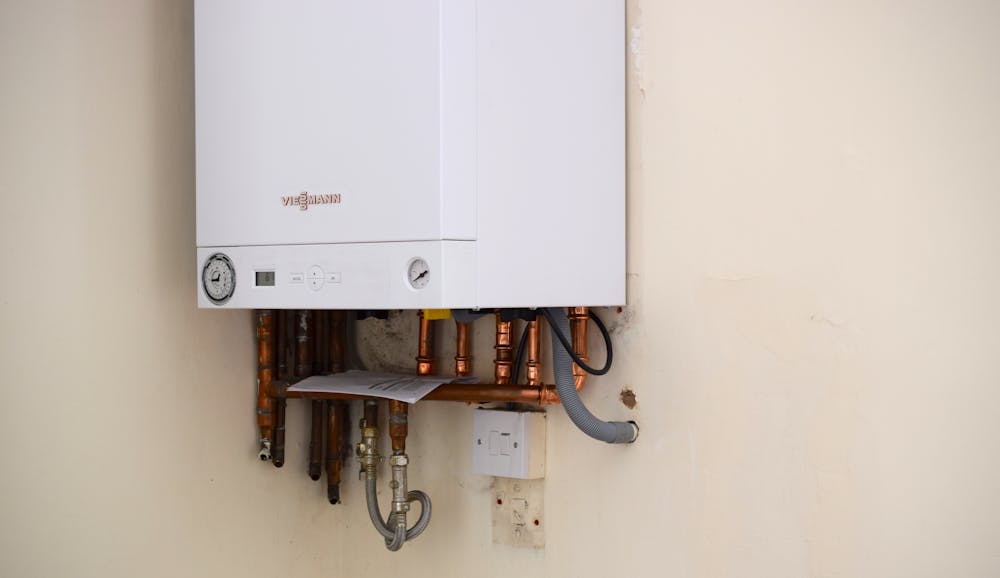
Specifically, this will mean replacing gas boilers with a variety of heat pumps. These devices use electricity to extract ambient thermal energy from the surroundings – the air or the ground – and to “pump” this heat into a building. Around 28,000 heat pumps were installed in 2019, though the government’s target is to fit 600,000 a year by 2028. Clearly a massive and sustained increase in deployment will be required.
Just as electric vehicles require less energy than petrol cars, heat pumps require less input energy than their fossil fuel counterparts. Despite this efficiency benefit, the decarbonisation of heat will probably still require Britain to generate hundreds of terawatt hours more electricity every year. The exact amount ultimately depends on the mix of different low-carbon heating technologies and reduction in heat demand from climate change and building improvements.
All this extra electricity will have to be carefully managed to avoid the network being overloaded at peak times. Demand for heat is currently seen as less flexible, and it always will be highly seasonal – people want warm houses in colder weather, during the daytime. This differs markedly from transport, which shows a much more consistent pattern of demand throughout the course of the year (notwithstanding the temporary impacts of COVID).
Managing that extra electricity isn’t impossible: users can be provided with incentives to shift their behaviour (why not charge your car overnight, or on particularly windy days when electricity is clean and cheap?), and longer-term energy storage options are being developed. Innovations such as thermal energy storage and active buildings also aim to provide more flexibility to heating.
For those of us who study energy systems, it’s an exciting time. As demand from transport and heat increases, Great Britain will never again use as little electricity as it did in 2020 – and as this means using less fossil fuels, it’s something to celebrate.
Grant Wilson, Lecturer, Energy Informatics Group, Chemical Engineering, University of Birmingham; Joseph Day, Postdoctoral Research Assistant in Energy Informatics, University of Birmingham, and Noah Godfrey, Energy Data Analyst – PhD in Modelling Flexibility in Future UK Energy Systems, University of Birmingham
This article is republished from The Conversation under a Creative Commons license. Read the original article.







