

• Advertise
  • About us
  • Terms and Conditions
  • Contact us
Saturday, December 6, 2025
Australian Times News
  • News
    • Weather
    • Sport
    • Technology
    • Business & Finance
      • Currency Zone
    • Lotto Results
      • The Lott
  • Lifestyle
    • Entertainment
    • Horoscopes
    • Health & Wellness
    • Recipes
  • Travel
  • Expat Life
  • Move to Australia
No Result
View All Result
  • News
    • Weather
    • Sport
    • Technology
    • Business & Finance
      • Currency Zone
    • Lotto Results
      • The Lott
  • Lifestyle
    • Entertainment
    • Horoscopes
    • Health & Wellness
    • Recipes
  • Travel
  • Expat Life
  • Move to Australia
No Result
View All Result
Australian Times News
No Result
View All Result
Home News

Brain drain is a hidden tax on the countries left behind

In 2010, the World Health Organization agreed the Global Code of Practice on the International Recruitment of Health Personnel. This agreement encouraged source countries to hold onto their healthcare workforce by improving education, living standards and working conditions.

The Conversation by The Conversation
23-07-2021 22:19
in News
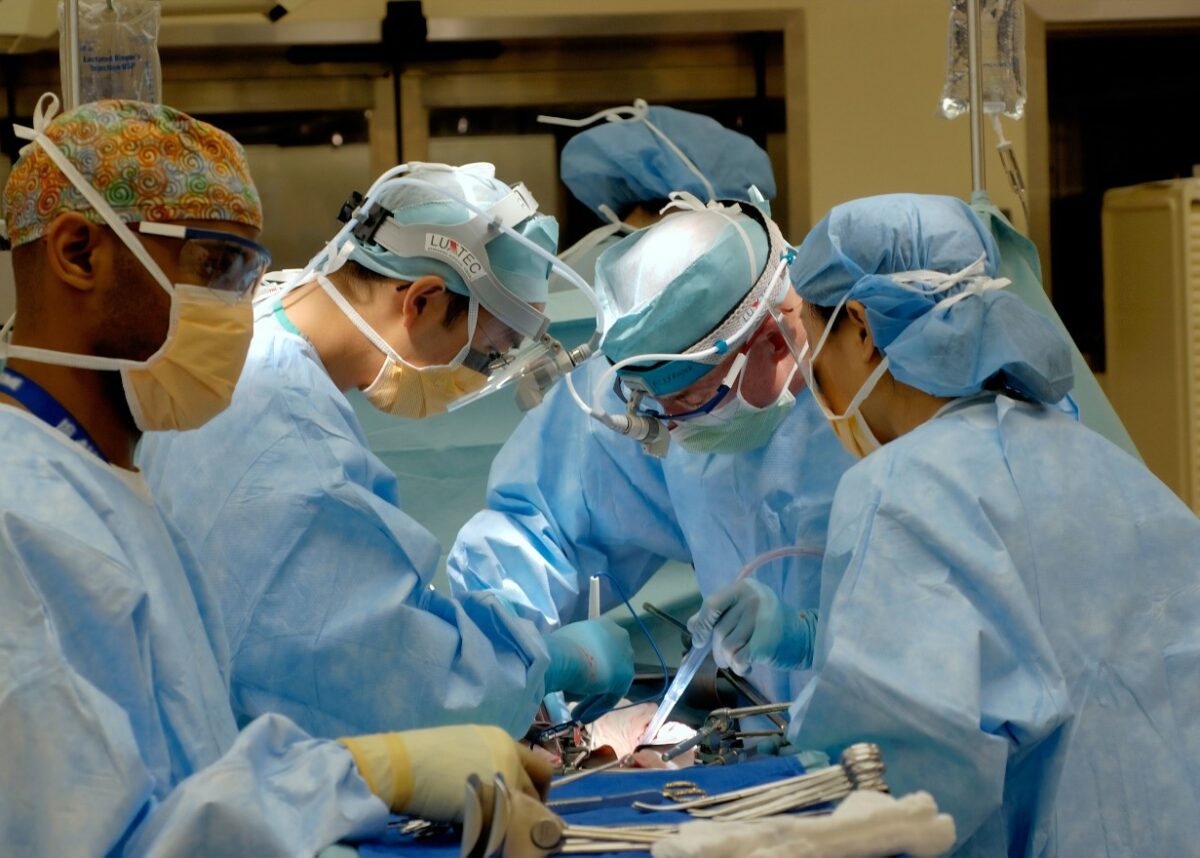
Photo by National Cancer Institute on Unsplash

Photo by National Cancer Institute on Unsplash

Mark Shrime, RCSI University of Medicine and Health Sciences

Dr John Baptist Mukasa, or JB Neuro, as his colleagues called him, “was always at the beck and call of everyone who needed neurosurgical care”, according to his colleague Dr Sabrina Kitaka. Mukasa’s death from COVID on June 29, in the middle of Uganda’s most lethal wave so far, robbed the country’s medical fellowship of a friend and a mentor.

It also cut the total number of neurosurgeons in Uganda by 25%.

Only three neurosurgeons remain in Uganda, a country of 44 million people (although some estimates put the workforce as high as ten). By comparison, Canada, with a population of 35 million, has over 150 neurosurgeons. New York City’s Columbia Presbyterian Hospital, where I did my residency, has 17 neurosurgeons in one department alone – several times larger than the entire neurosurgical workforce of Uganda.

There are many reasons for this disparity, including a lack of training facilities and hospitals capable of supporting complex surgical care. And then there’s the brain drain – the migration of trained professionals out of a country to other, often wealthier, locations.

Brain drain is taxation

There are many reasons doctors leave. A higher salary, access to education, stable political conditions, improved standards of living, increased perceived quality of life, and greater personal safety all draw doctors away from their homes and often to countries that previously colonised theirs.

It’s a multi-billion–dollar industry. Recently, my colleagues and I published an estimate of the economic effect of the migration of doctors (we didn’t have enough information to look at the migration of nurses or other health professionals). We found that countries lose somewhere between US$3.5 billion and US$38 billion a year as a result of the excess deaths that brain drain causes. The countries exporting the greatest number of doctors incur the largest costs: India, Nigeria, Pakistan and South Africa.


AlsoRead...

Ryan: Building real freedom through e-commerce

Ryan: Building real freedom through e-commerce

27 November 2025
Design Australia Group: Redefining Drafting as the engine of housing growth

Design Australia Group: Redefining Drafting as the engine of housing growth

26 November 2025

In other words, not only do the countries to which doctors migrate benefit from an influx of trained, experienced professionals, they also inflict what is essentially a tax on the economies of source countries — all for the privilege of attracting away their clinical staff.
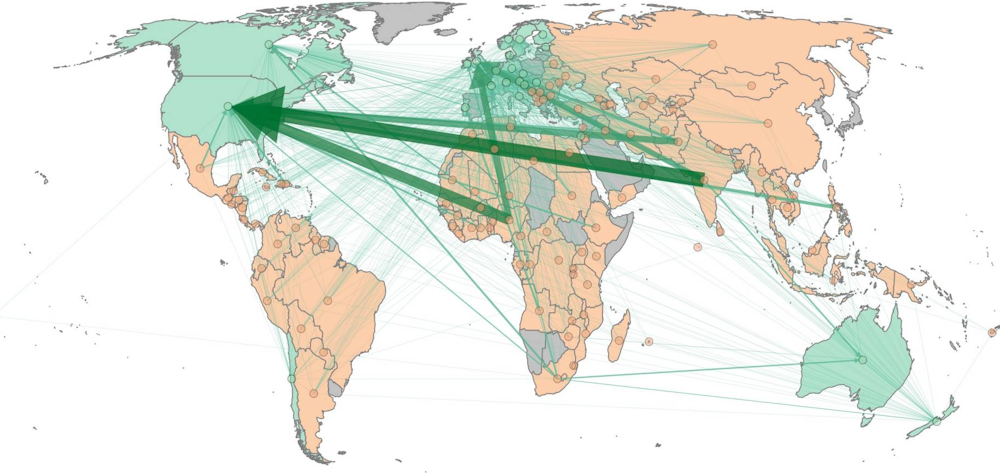
Map showing main routes of migration by doctors from poorer to richer countries.
Migration of doctors from source (orange) countries to destination (green) countries. Saluja, Rudolfson, Massenburg, Meara, Shrime/BMJ Global Health, CC BY-NC

Brain drain and COVID

In 2010, the World Health Organization agreed the Global Code of Practice on the International Recruitment of Health Personnel. This agreement encouraged source countries to hold onto their healthcare workforce by improving education, living standards and working conditions (it didn’t address how this could be achieved in the face of limited resources). The agreement also required destination countries to stop recruiting from countries with a shortage of healthcare workers.

But that never happened. In fact, at the beginning of the COVID pandemic, active recruitment of doctors from these source countries stepped up as the scale of the crisis became clear.

COVID initially hit richer countries in Europe and the US hard, pummelling Italy, Spain and New York City, leaving countries in Africa relatively unscathed. It seemed pretty miraculous, prompting commentators to offer reasons for Africa’s relative success.

Calls rose for medical professionals from resource-constrained regions to help shoulder the burden of the pandemic in these wealthier countries — flying in the face of the WHO code of practice. These calls went beyond simple recruitment. Some offered additional incentives to entice doctors to stay: for example, the UK fast tracked registration of doctors trained outside the country.

Now that the pandemic has swung back to ravage Africa, India and other parts of the world, this is a favour that the more wealthy nations have not returned.

Since I began writing this piece, Uganda also lost a 36-year-old ENT surgeon, Dr Ian Bwete Apuuli. During the pandemic, he performed tracheotomies on COVID patients, allowing them the chance to breathe without ventilation. But tracheotomies generate aerosols, and aerosols carry infection. Apuuli succumbed to the disease, leaving Uganda with only one surgeon trained to remove tumours from the head and neck.

The brain drain of healthcare workers from countries that can scarcely afford to lose them is not an emotionless, economic discussion. When we actively entice doctors not just to come and help, but to and come and stay, the effect is more than temporary. It is more than monetary. It undermines the entire health systems of the countries these doctors leave behind.

Mark Shrime, Chair of Global Surgery, RCSI University of Medicine and Health Sciences

This article is republished from The Conversation under a Creative Commons license. Read the original article.


Tags: SB001
DMCA.com Protection Status

SUBSCRIBE to our NEWSLETTER

[mc4wp_form id=”2384248″]

Don't Miss

The evolution of Aesthetic Surgery through the lens of Dr Kourosh Tavakoli

by Pauline Torongo
4 December 2025
The evolution of Aesthetic Surgery through the lens of Dr. Kourosh Tavakoli
Health & Wellness

As global interest in Australian cosmetic surgery continues to grow, the combination of regulation, research and emerging digital tools is...

Read moreDetails

Ryan: Building real freedom through e-commerce

by Pauline Torongo
27 November 2025
Ryan: Building real freedom through e-commerce
Business & Finance

Ryan’s greatest achievement isn’t any single business or revenue milestone — it’s the ecosystem he’s built through the Change community.

Read moreDetails

Design Australia Group: Redefining Drafting as the engine of housing growth

by Pauline Torongo
26 November 2025
Design Australia Group: Redefining Drafting as the engine of housing growth
Business & Finance

Australia is under pressure to build homes faster, but design bottlenecks slow progress. Design Australia Group is fixing this by...

Read moreDetails

Louis Guy Detata builds Global Trading Empires through autonomous systems and disciplined leadership

by Pauline Torongo
25 November 2025
Louis Guy Detata builds Global Trading Empires through autonomous systems and disciplined leadership
Business & Finance

The path from investment banking to leading a global trading platform has taught Louis Detata that sustainable success requires more...

Read moreDetails

Burning Eucalyptus Wood: Tips, Advantages, Disadvantages & Alternatives

by Fazila Olla-Logday
20 November 2025
Image Supplied
Enviroment

Learn about burning eucalyptus wood for stoves and fireplaces. Discover benefits, drawbacks, harvesting tips, and better alternative firewood options for...

Read moreDetails

Everything Parents Need to Know About Baby Soft Play and Why It’s a Game Changer

by Fazila Olla-Logday
11 November 2025
Everything Parents Need to Know About Baby Soft Play
Health & Wellness

Baby soft play is a fun, safe, and educational way for little ones to explore and grow. Discover the benefits...

Read moreDetails

WOMAD Sets Up a New Camp in Wiltshire – Australian festival fans take note!

by Kris Griffiths
11 November 2025
Kumbia Boruka brought their reggae and dancehall flavour to the Taste the World Stage at WOMAD 2024 - Credit - Mike Massaro
Entertainment

With its 2026 edition moving to Neston Park in England, WOMAD offers Aussie music lovers a chance to reconnect with global...

Read moreDetails
Load More

Copyright © Blue Sky Publications Ltd. All Rights Reserved.
australiantimes.co.uk is a division of Blue Sky Publications Ltd. Reproduction without permission prohibited. DMCA.com Protection Status

  • About us
  • Write for Us
  • Advertise
  • Contact us
  • T&Cs, Privacy and GDPR
No Result
View All Result
  • News
    • Weather
    • Sport
    • Technology
    • Business & Finance
      • Currency Zone
    • Lotto Results
      • The Lott
  • Lifestyle
    • Entertainment
    • Horoscopes
    • Health & Wellness
    • Recipes
  • Travel
  • Expat Life
  • Move to Australia

Copyright © Blue Sky Publications Ltd. All Rights Reserved.
australiantimes.co.uk is a division of Blue Sky Publications Ltd. Reproduction without permission prohibited. DMCA.com Protection Status

No Result
View All Result
  • News
    • Weather
    • Sport
    • Technology
    • Business & Finance
      • Currency Zone
    • Lotto Results
      • The Lott
  • Lifestyle
    • Entertainment
    • Horoscopes
    • Health & Wellness
    • Recipes
  • Travel
  • Expat Life
  • Move to Australia

Copyright © Blue Sky Publications Ltd. All Rights Reserved.
australiantimes.co.uk is a division of Blue Sky Publications Ltd. Reproduction without permission prohibited. DMCA.com Protection Status





