

• Advertise
  • About us
  • Terms and Conditions
  • Contact us
Saturday, December 6, 2025
Australian Times News
  • News
    • Weather
    • Sport
    • Technology
    • Business & Finance
      • Currency Zone
    • Lotto Results
      • The Lott
  • Lifestyle
    • Entertainment
    • Horoscopes
    • Health & Wellness
    • Recipes
  • Travel
  • Expat Life
  • Move to Australia
No Result
View All Result
  • News
    • Weather
    • Sport
    • Technology
    • Business & Finance
      • Currency Zone
    • Lotto Results
      • The Lott
  • Lifestyle
    • Entertainment
    • Horoscopes
    • Health & Wellness
    • Recipes
  • Travel
  • Expat Life
  • Move to Australia
No Result
View All Result
Australian Times News
No Result
View All Result
Home News

Bob Brown is right – it’s time environmentalists talked about the population problem

In all the talk of tackling environmental problems such as climate change, the problem of population growth often escapes attention. Politicians don’t like talking about it. By and large, neither do environmentalists – but former Greens leader Bob Brown has bucked that trend.
The Conversation by The Conversation
22-10-2020 22:27
in News
Population growth, by the numbers

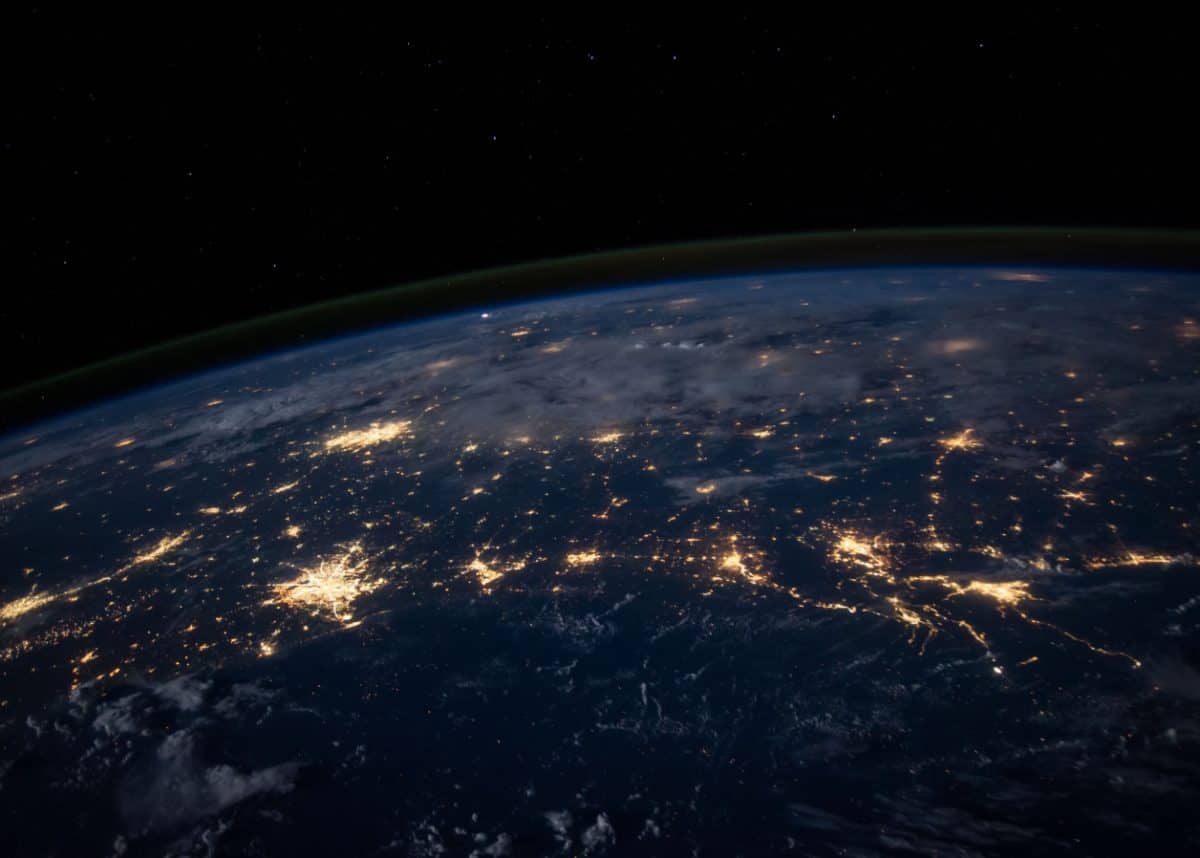
Population growth, by the numbers Photo by NASA on Unsplash

Colin D. Butler, Australian National University

In all the talk of tackling environmental problems such as climate change, the problem of population growth often escapes attention. Politicians don’t like talking about it. By and large, neither do environmentalists – but former Greens leader Bob Brown has bucked that trend.

Shutterstock

Brown recently declared the world’s population must start to decline before 2100, telling The Australian newspaper:

We are already using more than what the planet can supply and we use more than the living fabric of the planet in supply. That’s why we wake up every day to fewer fisheries, less forests, more extinctions and so on. The human herd at eight billion is the greatest herd of mammals ever on this planet and it is unsustainable to have that growing.

Research suggests our species has far exceeded its fair share of the planetary bounty, and Brown is right to call for the global population to peak. It is high time others joined the chorus – not only other environmentalists, but those concerned with international development and human rights.
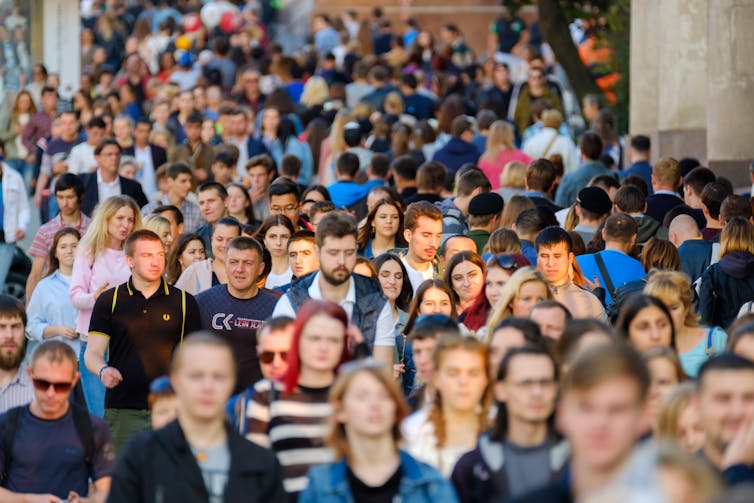
people walking on a crowded street
Bob Brown says the global population should peak before 2100. Shutterstock

Population growth, by the numbers

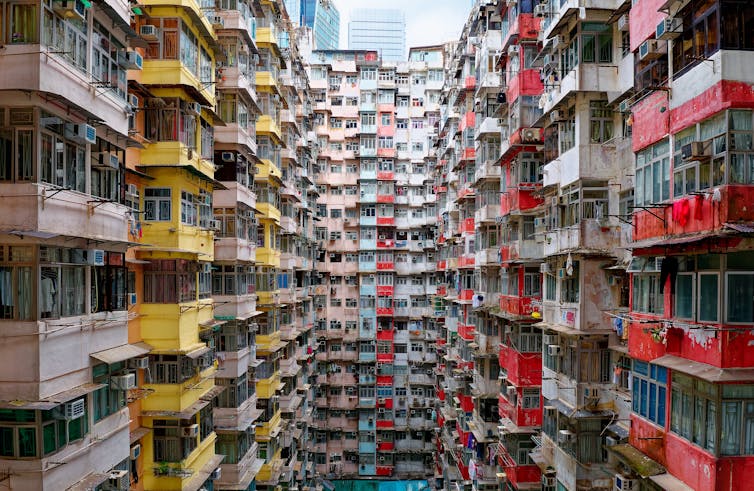
COVID-19 has killed more than one million people. While undeniably tragic, the figure is minor compared to world’s annual growth in population, estimated by the United Nations at about 83 million.

In 1900, the world’s population was about 1.6 billion people. By 2023 it’s expected to hit 8 billion. According to the UN, it will reach 9.7 billion by 2050 and 11.2 billion by 2100.

(The US-based Institute for Health Metrics and Evaluation recently forecast a lower peak of about 9.7 billion by 2064, falling to about 8.8 billion by 2100.)


AlsoRead...

Ryan: Building real freedom through e-commerce

Ryan: Building real freedom through e-commerce

27 November 2025
Design Australia Group: Redefining Drafting as the engine of housing growth

Design Australia Group: Redefining Drafting as the engine of housing growth

26 November 2025

Why is the population growing so fast? Much of it is due to advanced fertilisers and intensive farming practices, leading to higher crop yields that can sustain more people. Health care has improved, and people are living much longer. And many parts of the world have historically had high fertility rates.

There is no expert consensus on how many people the planet can support. The answer will largely depend on how much humans produce and consume, now and in the future. Some experts believe we’ve already hit the limit.

The “planetary boundaries framework” is one way to measure Earth’s carrying capacity. Introduced about a decade ago, it involves nine planetary boundaries such as biodiversity loss, climate change and ozone depletion. If the boundaries are crossed, Earth’s capacity to support civilisation is at risk. Research suggests in some parts of the world, multiple boundaries have already been breached.
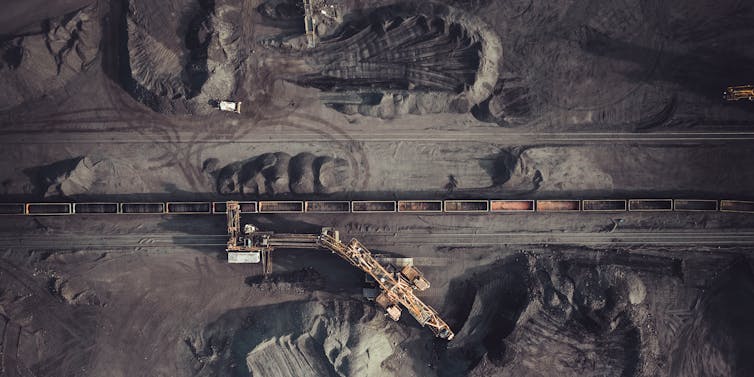
Aerial view of coal mine
In some places, Earth’s limits have already been exceeded. Shutterstock

It’s time to talk

In recent decades, many conservationists, politicians and scientists have been reluctant to talk about population growth.

When The Australian approached Greenpeace, the Australian Conservation Foundation and the Wilderness Society regarding Brown’s remarks, the groups said they did not comment on population growth. Brown told the newspaper environmentalists avoided the issue because they were “frightened” of being targeted by News Corp.

In an address to the National Press Club this month, Greens leader Adam Bandt reportedly wouldn’t say whether he is concerned about population growth, saying “my priority is getting energy at running on 100% renewable. That makes much more of a difference than […] population size.”

Bandt wouldn’t be the first environmental advocate to avoid the topic. But why? I believe there are three main reasons.

Most obvious is the fear of being accused of racism. Some past advocates of population “control” supported eugenics and coercion, including forced sterilisation and abortion. In fact, eugenics and forced sterilisation has been reported in both rich and poor countries.

Second, the Catholic Church has played a big role in suppressing the topic. In the 1960s a papal commission suggested the church’s decades-long ban on birth control be dropped. But in 1968, Pope Paul VI rejected the advice, and declared artificial birth control to be morally wrong.
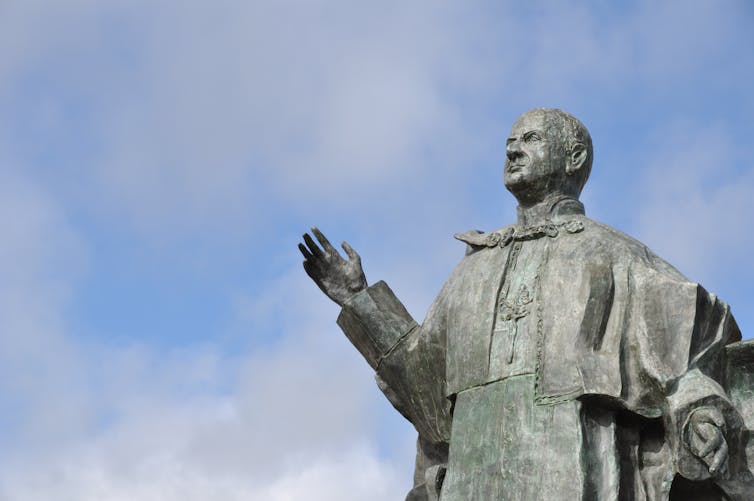
A statue of Pope Paul VI
A statue of Pope Paul VI, who believed birth control was morally evil. Shutterstock

Third is the ascendancy of free-market economics. High population growth in low-income countries is convenient for capitalism, because these populations depress wages worldwide.

In 1984, the Reagan administration became the first in a long line to deny the importance of population problems. Its views were influenced by economic theorist Julian Simon, who believed adding to the world’s population was good for human well-being.
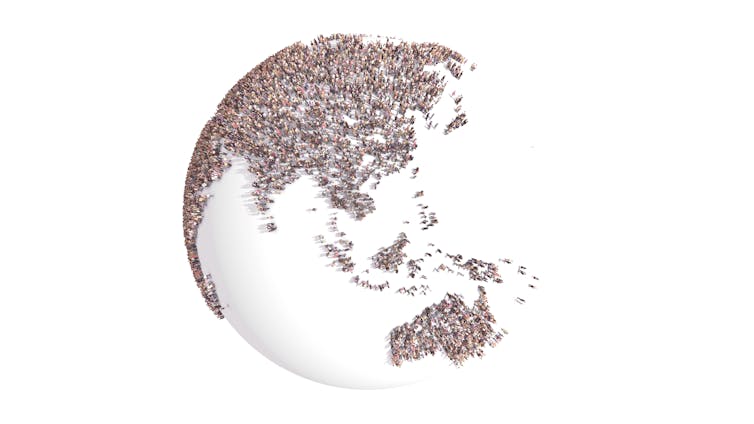
Globe populated by people
Julian Simon argued adding to the world’s population was good for human well-being. Shutterstock

Starting the conversation

As Brown said, we should be “having a mature debate” about population growth. But where to start?

An obvious beginning is the unmet demand for contraception. For example, a UN report in 2015 reported fewer than half of African women who are married or in a union, and who need contraception, have their family planning needs satisfied.

Slowing global population growth will be helped by promoting the UN Sustainable Development Goals. One goal seeks to ensure “universal access to reproductive health and family planning” by 2030. Improving female literacy – especially when combined with internet access – is also an important way to empower women.

Apart from reproductive health care, general improvements to health, including well-funded health systems, would give couples greater confidence their children will thrive. This would reduce their perceived need for additional children in case one or more dies.

These measures all require increased investment and public attention. The environmental movement, in particular, must awaken to the link between population growth and environmental degradation. “Business as usual” will hinder human development, further oppress women and magnify many forms of environmental damage.

Colin D. Butler, Honorary Professor, Australian National University

This article is republished from The Conversation under a Creative Commons license. Read the original article.


Tags: SB001
DMCA.com Protection Status

SUBSCRIBE to our NEWSLETTER

[mc4wp_form id=”2384248″]

Don't Miss

The evolution of Aesthetic Surgery through the lens of Dr Kourosh Tavakoli

by Pauline Torongo
4 December 2025
The evolution of Aesthetic Surgery through the lens of Dr. Kourosh Tavakoli
Health & Wellness

As global interest in Australian cosmetic surgery continues to grow, the combination of regulation, research and emerging digital tools is...

Read moreDetails

Ryan: Building real freedom through e-commerce

by Pauline Torongo
27 November 2025
Ryan: Building real freedom through e-commerce
Business & Finance

Ryan’s greatest achievement isn’t any single business or revenue milestone — it’s the ecosystem he’s built through the Change community.

Read moreDetails

Design Australia Group: Redefining Drafting as the engine of housing growth

by Pauline Torongo
26 November 2025
Design Australia Group: Redefining Drafting as the engine of housing growth
Business & Finance

Australia is under pressure to build homes faster, but design bottlenecks slow progress. Design Australia Group is fixing this by...

Read moreDetails

Louis Guy Detata builds Global Trading Empires through autonomous systems and disciplined leadership

by Pauline Torongo
25 November 2025
Louis Guy Detata builds Global Trading Empires through autonomous systems and disciplined leadership
Business & Finance

The path from investment banking to leading a global trading platform has taught Louis Detata that sustainable success requires more...

Read moreDetails

Burning Eucalyptus Wood: Tips, Advantages, Disadvantages & Alternatives

by Fazila Olla-Logday
20 November 2025
Image Supplied
Enviroment

Learn about burning eucalyptus wood for stoves and fireplaces. Discover benefits, drawbacks, harvesting tips, and better alternative firewood options for...

Read moreDetails

Everything Parents Need to Know About Baby Soft Play and Why It’s a Game Changer

by Fazila Olla-Logday
11 November 2025
Everything Parents Need to Know About Baby Soft Play
Health & Wellness

Baby soft play is a fun, safe, and educational way for little ones to explore and grow. Discover the benefits...

Read moreDetails

WOMAD Sets Up a New Camp in Wiltshire – Australian festival fans take note!

by Kris Griffiths
11 November 2025
Kumbia Boruka brought their reggae and dancehall flavour to the Taste the World Stage at WOMAD 2024 - Credit - Mike Massaro
Entertainment

With its 2026 edition moving to Neston Park in England, WOMAD offers Aussie music lovers a chance to reconnect with global...

Read moreDetails
Load More

Copyright © Blue Sky Publications Ltd. All Rights Reserved.
australiantimes.co.uk is a division of Blue Sky Publications Ltd. Reproduction without permission prohibited. DMCA.com Protection Status

  • About us
  • Write for Us
  • Advertise
  • Contact us
  • T&Cs, Privacy and GDPR
No Result
View All Result
  • News
    • Weather
    • Sport
    • Technology
    • Business & Finance
      • Currency Zone
    • Lotto Results
      • The Lott
  • Lifestyle
    • Entertainment
    • Horoscopes
    • Health & Wellness
    • Recipes
  • Travel
  • Expat Life
  • Move to Australia

Copyright © Blue Sky Publications Ltd. All Rights Reserved.
australiantimes.co.uk is a division of Blue Sky Publications Ltd. Reproduction without permission prohibited. DMCA.com Protection Status

No Result
View All Result
  • News
    • Weather
    • Sport
    • Technology
    • Business & Finance
      • Currency Zone
    • Lotto Results
      • The Lott
  • Lifestyle
    • Entertainment
    • Horoscopes
    • Health & Wellness
    • Recipes
  • Travel
  • Expat Life
  • Move to Australia

Copyright © Blue Sky Publications Ltd. All Rights Reserved.
australiantimes.co.uk is a division of Blue Sky Publications Ltd. Reproduction without permission prohibited. DMCA.com Protection Status





