


• Advertise
  • About us
  • Terms and Conditions
  • Contact us
Saturday, December 6, 2025
Australian Times News
  • News
    • Weather
    • Sport
    • Technology
    • Business & Finance
      • Currency Zone
    • Lotto Results
      • The Lott
  • Lifestyle
    • Entertainment
    • Horoscopes
    • Health & Wellness
    • Recipes
  • Travel
  • Expat Life
  • Move to Australia
No Result
View All Result
  • News
    • Weather
    • Sport
    • Technology
    • Business & Finance
      • Currency Zone
    • Lotto Results
      • The Lott
  • Lifestyle
    • Entertainment
    • Horoscopes
    • Health & Wellness
    • Recipes
  • Travel
  • Expat Life
  • Move to Australia
No Result
View All Result
Australian Times News
No Result
View All Result
Home News

Bank of England is considering negative interest rates – it doesn’t need to yet

Central banks are stretched to the limit, trying to support the economy during the unprecedented COVID-10 recession. The Bank of England is now considering cutting its base rate to below zero.

The Conversation by The Conversation
08-08-2020 01:33
in News
Bank of England is considering negative interest rates

Bank of England is considering negative interest rates Photo by Joshua Hoehne on Unsplash

Panicos O. Demetriades, University of Leicester

Central banks are stretched to the limit, trying to support the economy during the unprecedented COVID-10 recession. The Bank of England is now considering cutting its base rate to below zero. The bank has so far shied away from negative rates, not least because they are much harder to explain to the public and the banks, whose technology systems may not even be able to handle this change.
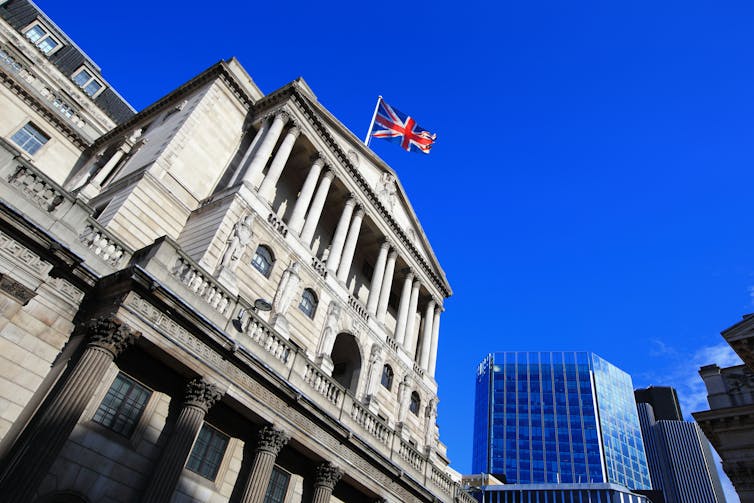
Big decisions for the bank loom large. Shutterstock.com

At 0.1%, the current base rate is already lower than it has ever been. The decision was made in March 2020 when the bank acted aggressively to ease the pain inflicted on the economy by the coronavirus pandemic.

Besides cutting rates to unprecedented levels, the bank also expanded its bond purchase programme, known as quantitative easing or QE. QE has been used by all major central banks as an alternative to cutting rates below zero. It involves largescale purchases of financial assets, which raises their price and reduces yields.

Major central banks around the world have used QE, including the US Federal Reserve and the European Central Bank, as an effective way to boost liquidity and confidence in markets, while allowing financial institutions to rebalance their portfolios. It has helped central banks to prevent deflation – a negative spiral of falling prices, increasing debt burdens and insolvencies.

But even QE has its limits. There are only so many financial assets that a central bank can buy without putting taxpayer money at risk. QE expands central bank balance sheets, which ultimately means bigger risks for taxpayers and higher asset prices – making monetary policy more political than is normally the case, by making asset holders wealthier.
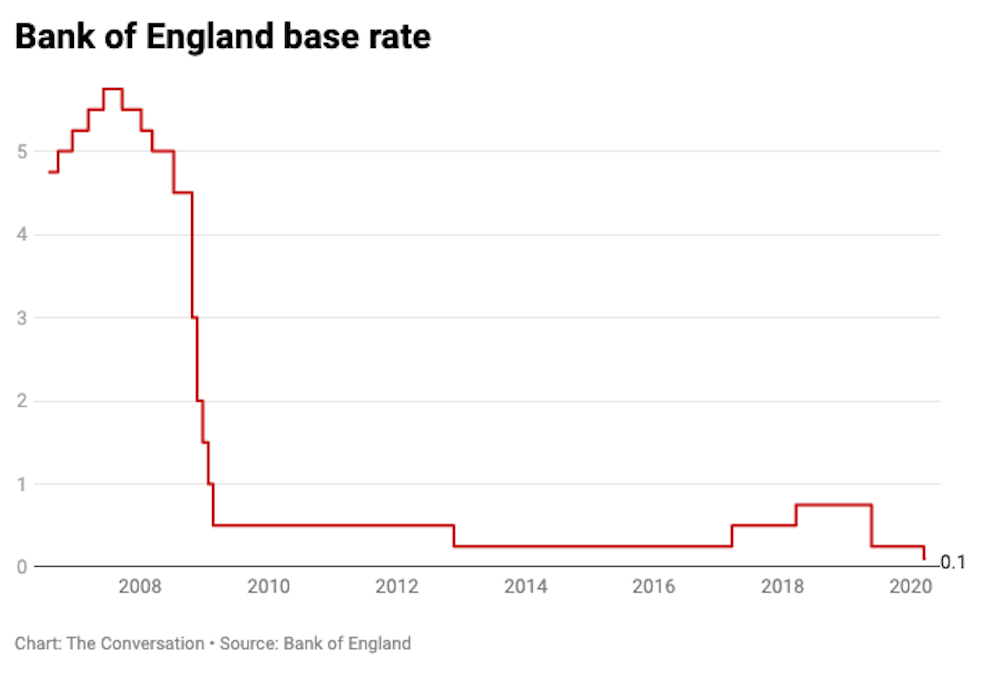
CC BY-SA

Running out of fire power

There’s a risk that negative interest rates will hurt bank lending and financial stability. Hence, central banks normally avoid this territory – unless they are running out of firepower.


AlsoRead...

Ryan: Building real freedom through e-commerce

Ryan: Building real freedom through e-commerce

27 November 2025
Design Australia Group: Redefining Drafting as the engine of housing growth

Design Australia Group: Redefining Drafting as the engine of housing growth

26 November 2025

Negative rates can result in savers and investors hoarding cash. After all why would anyone put their savings in a bank if it means that it loses value compared to cash? If people hoard cash, banks will have less money to lend to firms and households. This cannot be a good thing for the economy.

Bank profits will inevitably be affected – and that may make the financial system more fragile and prone to crises. Cutting into bank profits may sound good but the reality is that weaker banks are a headache for policymakers and a big risk for taxpayers, as big banks are often bailed out with taxpayers’ money to prevent financial meltdown.

So why is the Bank of England considering using negative rates now? Well, one obvious reason is that QE has reached its limits and the economy remains in deep recession. Another reason is that other central banks have used it with some success.

For example, the European Central Bank’s deposit facility inflicts a penalty of 0.5% per annum for banks using it. This discourages banks from parking their excess reserves with the central bank and instead encourages them to lend at positive but low rates. Meanwhile, the ECB’s main refinancing rate – what banks pay to borrow from the ECB – has been 0% since 2016, so banks themselves do not pay a negative rate to borrow from the ECB.

This model offers a possible blueprint for the Bank of England. It could reduce the base rate to 0% and charge banks when they choose to keep their reserves at the Bank.

Alternative to negative rates

But in my view there is an alternative involving a more aggressive use of forward guidance. Forward guidance is when a central bank is more active in explaining the likely future course of its rate policy decision-making. It can make a big difference when it comes to investment decisions, which depend not only on current rates but also on their future levels.

For example, if businesses and households know that rates will remain at the current low levels for the next two to three years, they will be more likely to borrow and spend more. This is because they will be certain that borrowing costs will remain low into the foreseeable future – exactly what is needed to stimulate the economy in a deep recession.

In fact the ECB started using forward guidance in 2013 – well before it launched its asset purchase programme – and continues to do so today. Its forward guidance has been effective in lowering long-term rates and has helped to anchor expectations on the future path of interest rates.

In contrast to the ECB, the Bank of England has not used forward guidance on rates very much. Perhaps the change of governor in March 2020 made it reluctant to make any big commitments. But now, with Andrew Bailey in post and nearly eight years of his term ahead of him, a commitment to low rates for an extended period makes a lot of sense. And it would help the bank to avoid entering controversial negative interest rate territory.

Panicos O. Demetriades, Professor of Financial Economics, University of Leicester

This article is republished from The Conversation under a Creative Commons license. Read the original article.


Tags: SB001
DMCA.com Protection Status

SUBSCRIBE to our NEWSLETTER

[mc4wp_form id=”2384248″]

Don't Miss

The evolution of Aesthetic Surgery through the lens of Dr Kourosh Tavakoli

by Pauline Torongo
4 December 2025
The evolution of Aesthetic Surgery through the lens of Dr. Kourosh Tavakoli
Health & Wellness

As global interest in Australian cosmetic surgery continues to grow, the combination of regulation, research and emerging digital tools is...

Read moreDetails

Ryan: Building real freedom through e-commerce

by Pauline Torongo
27 November 2025
Ryan: Building real freedom through e-commerce
Business & Finance

Ryan’s greatest achievement isn’t any single business or revenue milestone — it’s the ecosystem he’s built through the Change community.

Read moreDetails

Design Australia Group: Redefining Drafting as the engine of housing growth

by Pauline Torongo
26 November 2025
Design Australia Group: Redefining Drafting as the engine of housing growth
Business & Finance

Australia is under pressure to build homes faster, but design bottlenecks slow progress. Design Australia Group is fixing this by...

Read moreDetails

Louis Guy Detata builds Global Trading Empires through autonomous systems and disciplined leadership

by Pauline Torongo
25 November 2025
Louis Guy Detata builds Global Trading Empires through autonomous systems and disciplined leadership
Business & Finance

The path from investment banking to leading a global trading platform has taught Louis Detata that sustainable success requires more...

Read moreDetails

Burning Eucalyptus Wood: Tips, Advantages, Disadvantages & Alternatives

by Fazila Olla-Logday
20 November 2025
Image Supplied
Enviroment

Learn about burning eucalyptus wood for stoves and fireplaces. Discover benefits, drawbacks, harvesting tips, and better alternative firewood options for...

Read moreDetails

Everything Parents Need to Know About Baby Soft Play and Why It’s a Game Changer

by Fazila Olla-Logday
11 November 2025
Everything Parents Need to Know About Baby Soft Play
Health & Wellness

Baby soft play is a fun, safe, and educational way for little ones to explore and grow. Discover the benefits...

Read moreDetails

WOMAD Sets Up a New Camp in Wiltshire – Australian festival fans take note!

by Kris Griffiths
11 November 2025
Kumbia Boruka brought their reggae and dancehall flavour to the Taste the World Stage at WOMAD 2024 - Credit - Mike Massaro
Entertainment

With its 2026 edition moving to Neston Park in England, WOMAD offers Aussie music lovers a chance to reconnect with global...

Read moreDetails
Load More

Copyright © Blue Sky Publications Ltd. All Rights Reserved.
australiantimes.co.uk is a division of Blue Sky Publications Ltd. Reproduction without permission prohibited. DMCA.com Protection Status

  • About us
  • Write for Us
  • Advertise
  • Contact us
  • T&Cs, Privacy and GDPR
No Result
View All Result
  • News
    • Weather
    • Sport
    • Technology
    • Business & Finance
      • Currency Zone
    • Lotto Results
      • The Lott
  • Lifestyle
    • Entertainment
    • Horoscopes
    • Health & Wellness
    • Recipes
  • Travel
  • Expat Life
  • Move to Australia

Copyright © Blue Sky Publications Ltd. All Rights Reserved.
australiantimes.co.uk is a division of Blue Sky Publications Ltd. Reproduction without permission prohibited. DMCA.com Protection Status

No Result
View All Result
  • News
    • Weather
    • Sport
    • Technology
    • Business & Finance
      • Currency Zone
    • Lotto Results
      • The Lott
  • Lifestyle
    • Entertainment
    • Horoscopes
    • Health & Wellness
    • Recipes
  • Travel
  • Expat Life
  • Move to Australia

Copyright © Blue Sky Publications Ltd. All Rights Reserved.
australiantimes.co.uk is a division of Blue Sky Publications Ltd. Reproduction without permission prohibited. DMCA.com Protection Status





