

• Advertise
  • About us
  • Terms and Conditions
  • Contact us
Sunday, December 7, 2025
Australian Times News
  • News
    • Weather
    • Sport
    • Technology
    • Business & Finance
      • Currency Zone
    • Lotto Results
      • The Lott
  • Lifestyle
    • Entertainment
    • Horoscopes
    • Health & Wellness
    • Recipes
  • Travel
  • Expat Life
  • Move to Australia
No Result
View All Result
  • News
    • Weather
    • Sport
    • Technology
    • Business & Finance
      • Currency Zone
    • Lotto Results
      • The Lott
  • Lifestyle
    • Entertainment
    • Horoscopes
    • Health & Wellness
    • Recipes
  • Travel
  • Expat Life
  • Move to Australia
No Result
View All Result
Australian Times News
No Result
View All Result
Home News

Antarctica’s ice shelves are trembling as global temperatures rise – what happens next is up to us

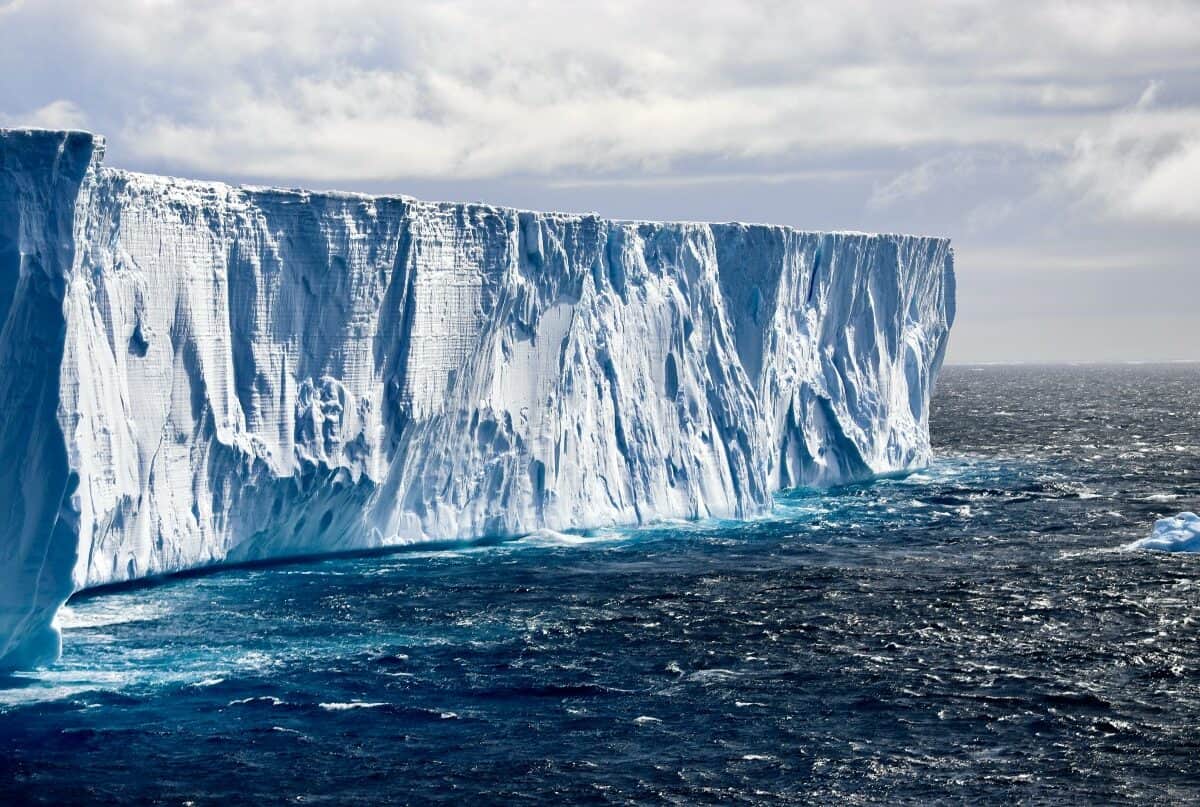
Ice shelves are gigantic floating platforms of ice that form where continental ice meets the sea. They’re found in Greenland, northern Canada and the Russian Arctic, but the largest loom around the edges of Antarctica.

The Conversation by The Conversation
11-04-2021 22:05
in News
Photo by 66 north on Unsplash

Photo by 66 north on Unsplash

Ella Gilbert, University of Reading

Images of colossal chunks of ice plunging into the sea accompany almost every news story about climate change. It can often make the problem seem remote, as if the effects of rising global temperatures are playing out elsewhere. But the break-up of the world’s vast reservoirs of frozen water – and, in particular, Antarctic ice shelves – will have consequences for all of us.

Before we can appreciate how, we need to understand what’s driving this process.

Ice shelves are gigantic floating platforms of ice that form where continental ice meets the sea. They’re found in Greenland, northern Canada and the Russian Arctic, but the largest loom around the edges of Antarctica. They are fed by frozen rivers of ice called glaciers, which flow down from the steep Antarctic ice sheet.

Ice shelves act as a barrier to glaciers, so when they disappear, it’s like pulling the plug in a sink, allowing glaciers to flow freely into the ocean, where they contribute to sea level rise.

If you cast your mind back to 2002, you may remember the sudden demise of Larsen B, an ice shelf on the Antarctic Peninsula – the tail-like land mass which stretches out from the West Antarctic mainland – which splintered over just six weeks.
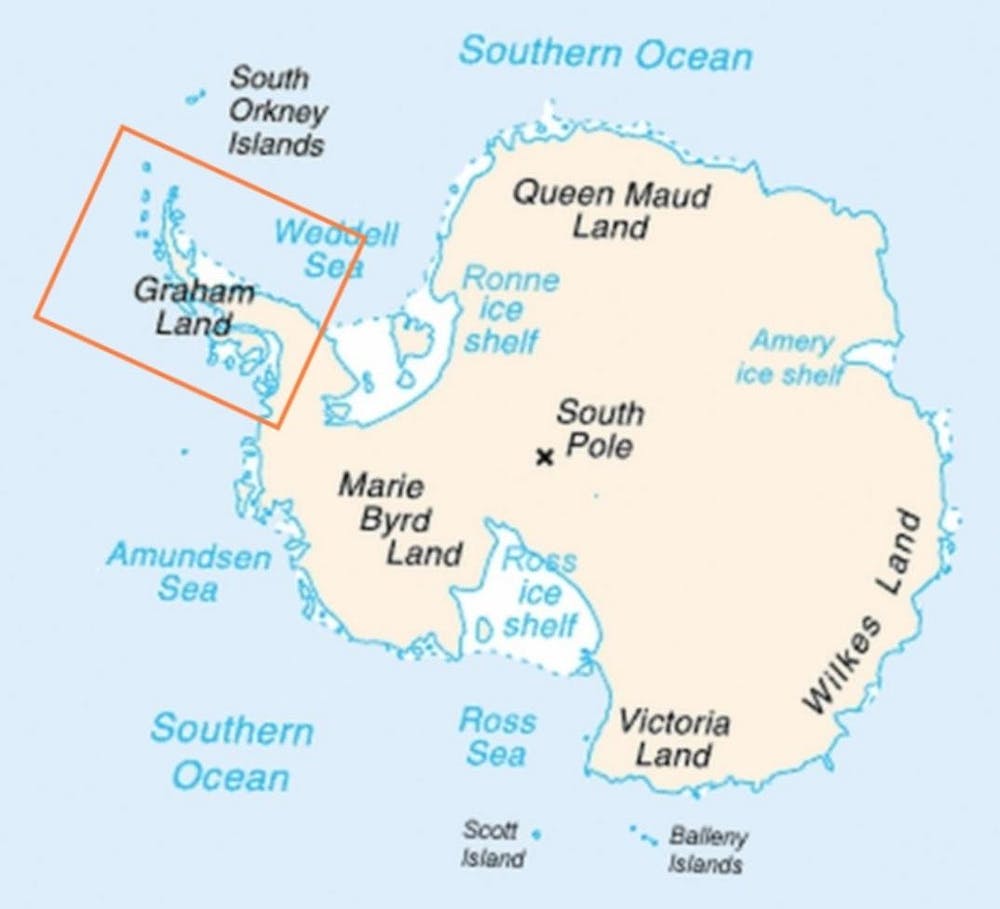
A map of Antarctica with the peninsula highlighted by a red box.
The Antarctic Peninsula, highlighted in red, is the northernmost part of the continent. Anna Frodesiak/Wikipedia

Before Larsen B broke up, satellite images showed meltwater collecting in huge ponds on the surface, the precursor to a process called “hydrofracturing”, which literally means “cracking by water”.


AlsoRead...

Ryan: Building real freedom through e-commerce

Ryan: Building real freedom through e-commerce

27 November 2025
Design Australia Group: Redefining Drafting as the engine of housing growth

Design Australia Group: Redefining Drafting as the engine of housing growth

26 November 2025

Ice shelves are not solid blocks of ice: they’re made up of layers with fresh snow at the top, which contains lots of air gaps. Over many seasons, layers of snow build up and become compacted, with the bottom of the shelf containing the densest ice. In the middle, there is a porous medium called firn, which contains air pockets that soak up meltwater every summer like a sponge.

In the Antarctic summer, ice shelves get warm enough to melt at the surface. That meltwater trickles into the firn layer, where it refreezes when temperatures dip below freezing again. If the rate of melting every year is greater than the rate at which that firn can be replenished by fresh snow, then those air pockets eventually fill up, causing the ice shelf to become one solid chunk.

If that happens, then the following summer when melting occurs, the water has nowhere to go and so collects in ponds on the surface. That is what we can see in the satellite images of Larsen B before it collapsed.

At this stage, meltwater begins to flow into crevasses and cracks within the ice shelf. The weight of water filling these rifts causes them to widen and deepen, until suddenly, all at once, the cracks reach the bottom of the shelf and the whole thing disintegrates.

Scientists believe the collapse of Larsen B was caused by a combination of persistently warm weather and a background of ongoing atmospheric warming, which drove unusually high melt rates.

After its collapse, the glaciers that previously fed Larsen B sped up, spitting more ice into the ocean than before. Currently, the Antarctic Peninsula, an area that has seen more than half its ice shelves lose mass, is responsible for around 25% of all ice loss from Antarctica. It holds enough ice to raise global sea levels by around 24cm.

Three future outcomes

But what might happen to the rest of Antarctica’s ice shelves in the future is still uncertain. As the climate warms, ice shelves are more likely to collapse and accelerate global sea level rise, but by how much? This is something myself and a colleague have explored in a new study.

We used the latest modelling techniques to predict the susceptibility of ice shelves to hydrofracturing at 1.5°C, 2°C and 4°C of global warming – scenarios that are all still plausible. Like with Larsen B, the presence of liquid water on the surface of an ice shelf indicates that it is becoming less stable, and so vulnerable to collapse by hydrofracturing.

In our paper, we identified four ice shelves – including two on the Antarctic Peninsula – which are at risk of collapse if global temperatures rise 4°C above the pre-industrial average. If both were to disintegrate, the glaciers they hold back could account for tens of cm of sea level rise – 10-20% of what’s predicted this century.

But limiting global warming to 2°C would halve the amount of ice shelf area at risk of collapse around Antarctica. At 1.5°C, just 14% of Antarctica’s ice shelf area would be at risk. Cutting that risk reduces the likelihood of this vast and remote continent significantly contributing to sea level rise.

Clearly, reducing climate change will be better not just for Antarctica, but for the world.

Ella Gilbert, Postdoctoral Research Associate in Climate Science, University of Reading

This article is republished from The Conversation under a Creative Commons license. Read the original article.


Tags: SB001
DMCA.com Protection Status

SUBSCRIBE to our NEWSLETTER

[mc4wp_form id=”2384248″]

Don't Miss

The evolution of Aesthetic Surgery through the lens of Dr Kourosh Tavakoli

by Pauline Torongo
4 December 2025
The evolution of Aesthetic Surgery through the lens of Dr. Kourosh Tavakoli
Health & Wellness

As global interest in Australian cosmetic surgery continues to grow, the combination of regulation, research and emerging digital tools is...

Read moreDetails

Ryan: Building real freedom through e-commerce

by Pauline Torongo
27 November 2025
Ryan: Building real freedom through e-commerce
Business & Finance

Ryan’s greatest achievement isn’t any single business or revenue milestone — it’s the ecosystem he’s built through the Change community.

Read moreDetails

Design Australia Group: Redefining Drafting as the engine of housing growth

by Pauline Torongo
26 November 2025
Design Australia Group: Redefining Drafting as the engine of housing growth
Business & Finance

Australia is under pressure to build homes faster, but design bottlenecks slow progress. Design Australia Group is fixing this by...

Read moreDetails

Louis Guy Detata builds Global Trading Empires through autonomous systems and disciplined leadership

by Pauline Torongo
25 November 2025
Louis Guy Detata builds Global Trading Empires through autonomous systems and disciplined leadership
Business & Finance

The path from investment banking to leading a global trading platform has taught Louis Detata that sustainable success requires more...

Read moreDetails

Burning Eucalyptus Wood: Tips, Advantages, Disadvantages & Alternatives

by Fazila Olla-Logday
20 November 2025
Image Supplied
Enviroment

Learn about burning eucalyptus wood for stoves and fireplaces. Discover benefits, drawbacks, harvesting tips, and better alternative firewood options for...

Read moreDetails

Everything Parents Need to Know About Baby Soft Play and Why It’s a Game Changer

by Fazila Olla-Logday
11 November 2025
Everything Parents Need to Know About Baby Soft Play
Health & Wellness

Baby soft play is a fun, safe, and educational way for little ones to explore and grow. Discover the benefits...

Read moreDetails

WOMAD Sets Up a New Camp in Wiltshire – Australian festival fans take note!

by Kris Griffiths
11 November 2025
Kumbia Boruka brought their reggae and dancehall flavour to the Taste the World Stage at WOMAD 2024 - Credit - Mike Massaro
Entertainment

With its 2026 edition moving to Neston Park in England, WOMAD offers Aussie music lovers a chance to reconnect with global...

Read moreDetails
Load More

Copyright © Blue Sky Publications Ltd. All Rights Reserved.
australiantimes.co.uk is a division of Blue Sky Publications Ltd. Reproduction without permission prohibited. DMCA.com Protection Status

  • About us
  • Write for Us
  • Advertise
  • Contact us
  • T&Cs, Privacy and GDPR
No Result
View All Result
  • News
    • Weather
    • Sport
    • Technology
    • Business & Finance
      • Currency Zone
    • Lotto Results
      • The Lott
  • Lifestyle
    • Entertainment
    • Horoscopes
    • Health & Wellness
    • Recipes
  • Travel
  • Expat Life
  • Move to Australia

Copyright © Blue Sky Publications Ltd. All Rights Reserved.
australiantimes.co.uk is a division of Blue Sky Publications Ltd. Reproduction without permission prohibited. DMCA.com Protection Status

No Result
View All Result
  • News
    • Weather
    • Sport
    • Technology
    • Business & Finance
      • Currency Zone
    • Lotto Results
      • The Lott
  • Lifestyle
    • Entertainment
    • Horoscopes
    • Health & Wellness
    • Recipes
  • Travel
  • Expat Life
  • Move to Australia

Copyright © Blue Sky Publications Ltd. All Rights Reserved.
australiantimes.co.uk is a division of Blue Sky Publications Ltd. Reproduction without permission prohibited. DMCA.com Protection Status





